
Read This Before You Visit an Amusement Park, Museum, or Zoo
Here’s what experts advise
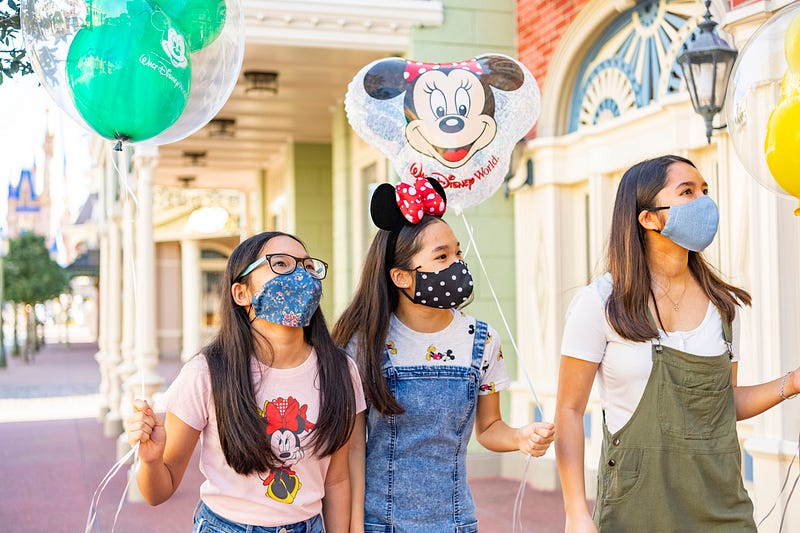
As many states across continue to ease lockdown restrictions, reopening leisure-focused businesses like gyms, retail, and hair salons, another cadre of nonessential recreation is beginning to open their doors: Popular visitor attractions like amusement parks, museums, gardens, and zoos. With kids out of school for the summer and larger vacations likely put on hold, spending the day on a riverboat tour or snapping masked selfies in front of Cinderella Castle at the newly reopened Disney World can be a refreshing way to spend the day — but is it safe?
The short answer: It may be, or it may not be, and like any decision to leave your home right now, there’s a checklist of factors to think about. And it’s important to remember that these activities aren’t things you have to do, so depending on your situation, it may be smarter to keep holding off: “A grocery store I would consider an essential thing to do — and going to a museum is not essential,” says Dean Blumberg, MD, chief of pediatric infectious diseases at UC Davis Children’s Hospital.
Of course, not all attractions are created equal, and experts say there are science-backed ways to enjoy leisurely activities while limiting exposure. If you’re itching to go somewhere fun, here’s what to consider.
Where is the attraction?
Before making plans to visit any theme park, zoo, or museum, first determine if where you’re headed is in the middle of a Covid-19 hotspot as well as the rate of community transmission — that is, how quickly the virus is spreading and how prevalent the virus is among the local population, says Molly Fleece, MD, an assistant professor in the Division of Infectious Diseases at the University of Alabama at Birmingham. “People should know that the higher rates of community transmission that the amusement is in, the higher the spreading of Covid-19 [is] in that location,” she says. You can find case information on the state or city’s community Covid-19 dashboard.
In Florida, for instance, where Walt Disney World Resort is located, cases are rapidly climbing, therefore visitors to the park are at a greater risk for infection. “That’s going to affect everyone in Florida, including the visitors and the employees and staff in those locations,” Blumberg says. If you’re traveling to an attraction, “you need to be very thoughtful,” he says.
Aside from the geographic location of the attraction, consider whether you’ll be indoors or outdoors. Experts agree the risk of transmitting Covid-19 is far lower outside because fresh air disperses respiratory droplets. “The indoor environment doesn’t dilute the virus as much because the air volume is more limited and you’re not going to be able to social distance,” Blumberg says. “Even if people have the best intentions indoors, it’s much more difficult [to distance] because there are going to be more constraints.” A zoo, therefore, is a safer option than a museum, he says — just avoid indoor exhibits, such as reptile enclosures.
“Attractions that have clear safety guidelines and enforcement may be safer to go to.”
What safety guidelines have been put in place?
Chief among your planning procedures is to get familiar with the attraction’s safety protocols. Many nonessential businesses, like Disney World, are requiring guests to wear facial coverings at all times (except while eating) and to practice social distancing, and are encouraging frequent hand sanitization thanks to new hand-washing stations throughout the facility; most amusements are operating at reduced capacity. “Attractions that have clear safety guidelines and enforcement may be safer to go to,” says Amira Roess, PhD, a professor of global health and epidemiology at George Mason University.
When facial coverings, social distancing, and reduced capacity are strictly enforced at the attraction, experts say, it greatly reduces your risk of contracting the virus, so make sure the tour, museum, or other attraction displays and adheres to these regulations.
While frequent sanitizing of the facility is important, you’re far less likely to pick up the coronavirus from a surface than from respiratory droplets, and all the washing and wiping may be for show, Blumberg says: “The deep cleaning, the sanitization, that’s good also, but to me, that’s more of a PR stunt than really protecting anybody.”
However, if the sight of long lines, unmasked patrons and employees greet you when you arrive, consider them red flags, Roess says. Feel empowered to make a beeline back to your car.
Does air circulation matter?
Although outdoor excursions are preferable to indoor activities, some of them still involve spending time in an enclosure of some sort. When it comes to rides that are more ambiguous, like a roller coaster whose boarding area is under an enclosure or a boat tour in which the vessel has open sides and a roof, as long as fresh air is readily flowing through the space, you should feel safer than if, say, you were walking around inside a shopping mall. “Certainly a boat that’s open that may have a covering on the top is pretty much like outdoors,” says Dean Winslow, MD, an infectious disease physician at Stanford Health Care. “If it’s moving at any significant rate, you’re getting a very free exchange of air. For something like that, the risk is pretty small.”
For indoor spaces, size matters. For example, a large gallery in a spacious museum would have a significantly greater volume of air than a small museum, such as a historical home turned visitor attraction, Blumberg says, so if there’s an asymptomatic patron or employee, “that means the virus is going to be diluted so you can decrease your risk,” he says. “A large room is going to have a large volume of air [and] the fewer the people in the larger room, that’s going to decrease risk.” Even better if the museum has excellent ventilation and fresh air is continually pushing out old, potentially infected air. However, this kind of information is not likely readily available to visitors or possibly even staff, Blumberg says.
Is it safe to eat there?
Since there’s no evidence that Covid-19 can spread through food, you can feel safe ordering a funnel cake on your day out. Experts agree eating outside at the attraction — avoid indoor dining since you won’t be able to wear a mask while eating — is safe so long as you’re able to keep more than six feet away from other picnickers. Don’t forget to wash your hands before and after eating; if you touched a contaminated surface, your hands can transfer the virus to your face.
At the end of the day, going to a carnival, taking a tour, and other leisurely activities are hardly essential tasks and should be taken with caution. So do your research, act responsibly, and don’t hesitate to leave at any time if you feel unsafe.


