
Baseball Was Once ‘America’s Pastime’
It is now a microcosm for a lost way of life
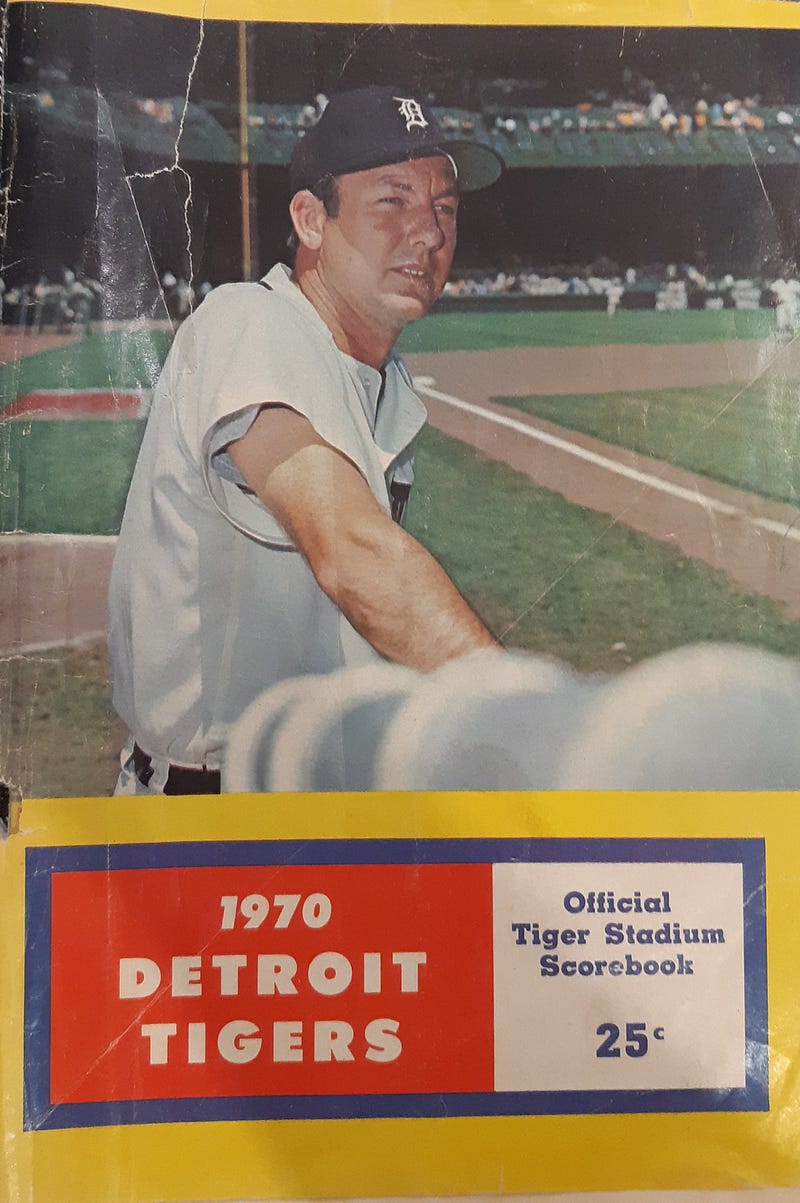
I love this game. I have always loved baseball. I can still remember my first Major League game at old Tiger Stadium, walking out from the stadium grotto to the sight of fresh-cut grass and finely painted white lines. A perfect diamond in the dirt.
We took our seats in the upper deck, directly above first base. The heroes of my youth took the field to warm up. They were so close now. I was in awe.
I can still hear the hawking of peanut vendors, and slap of balls hitting leather. The Tigers wore fresh white uniforms with black leggings. They’re opponent for the day, the Boston Red Sox, came out donned in visitor gray with red numbering.
My dad bought me a hotdog and ice cream, and a program where he taught me how to fill in the boxscore. I watched the game unfold with excitement as future Hall of Famers Al Kaline, Norm Cash, and Carl Yastremski all hit home runs for their respective teams.
I always loved this game.
Growing up, I became a pretty good player too. When most Canadian kids were dreaming of being the next Bobby Orr or Guy Lafleur, I was taking grounders and perfecting my swing. Eventually, in early adulthood, I was presented with the opportunity to face big-league pitching in a local men’s league. These weren’t stars of the game, but rather men who had spent time on an MLB roster. Just the same they hurled some nasty stuff at me.
During the season, I managed to loop an occasional double or two, but I knew pretty quickly that I wouldn’t rise any further in the ranks. “How did they make those curveballs dance like that?” Still, it was a game I would continue to play and enjoy for most of my life.
When traveling to American cities, I always checked the daily schedules, getting to see games played in Pittsburgh, Cincinnati, Chicago, and more. When Montreal received Canada’s first franchise, we traveled to Jarry Park to watch Les Expos. Then, when the Blue Jays came along, I was in my glory.
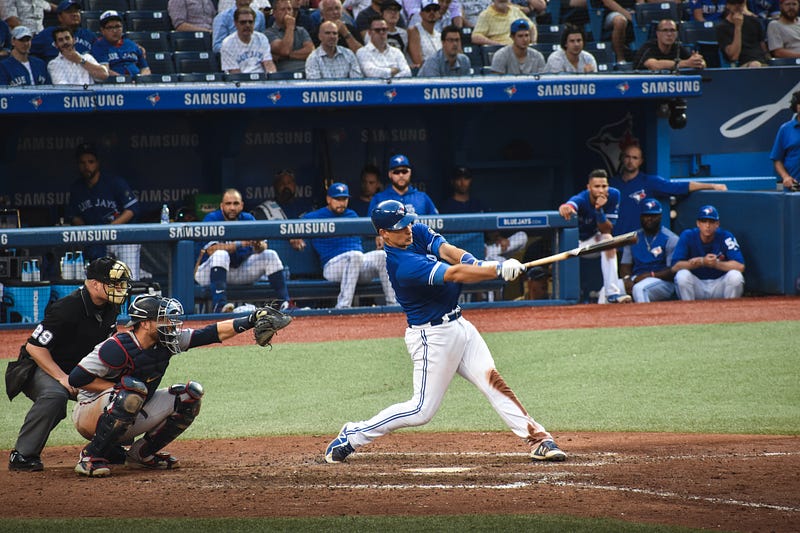
Gradually, I started to see changes in the game I love. Changes were occurring in all professional sports and suddenly, the boyhood charm of sports was becoming tarnished. At first, it seemed to me that pitching changed. Bullpens began to fill up with specialists; a hard-throwing lefty, a set-up man, a closer. Offenses followed suit and ultimately, the game was being performed with engineered fragmentation.
I still loved the game.
Then, the business of sport became a harsh reality. Over the past half-century, every major American sport has gone through labor disagreements, rule changes, and concerns for the safety of athletes; and fans. Understandably, players started demanding better working conditions. Revenues grew as the games grew, and salaries rose to dizzying heights. Baseball players are signing deals in the hundreds of millions.
Still, I love this game.
Now, faced with COVID-19 and its incendiary effects on daily life, sports have been forced to shut down for the last several months, following in the footsteps of businesses, cities, and entire countries.
People the world over are living as shut-ins with nothing more, if they are lucky than streaming channels and personal libraries to watch again. They want their live games back. They crave any return to normal possible, and sports are woven into the fabric of daily life.
I get it. But, something in the back of my mind had been simmering for some time. It took a pandemic for it to rear its ugly head.
The NBA put together a disciplined plan to build a virtual bubble on the property of Disney World, where teams would sequester to play out their schedule. The NHL followed suit, choosing two cities in Canada, Toronto, and Edmonton, to achieve a similar goal. The logic was that by keeping league members entirely to themselves, they would reduce the threat of infection. Not unlike what most governments have asked citizens to do.
Then Major League Baseball began the process of spring training, keeping teams limited to a small sampling of opponents. The Toronto Blue Jays eventually traveled north to their home park to play inter-squad games in anticipation of a regular-season schedule. The attached hotel served as a suitable home of isolation for players and staff. There was just one problem.
Opening Day approached and the Canadian Government decided that border crossings would not be allowed for other teams. They determined that since the Canada-U.S. border was already closed to non-essential traffic, baseball would be treated the same. The Blue Jays would have to play their games elsewhere.
Now, I’m not naive. I understand that most Americans couldn’t care less if there was a team playing in Canada. That’s ok, as long as we love our team. Something is happening here that is far more important than civic or national pride.
When the Government of Canada handed down their decision about turning Baseball away, most Canadians agreed with it. Why?
It’s not because we consider ourselves smugly superior. You know that’s not the Canadian way. Sorry, eh.
We don’t harbor ill feelings for our American neighbors either. We wish we could restore our relationship to the way it used to be, for the benefit of all. We want our southern friends to prosper in health. But it takes a concerted effort.
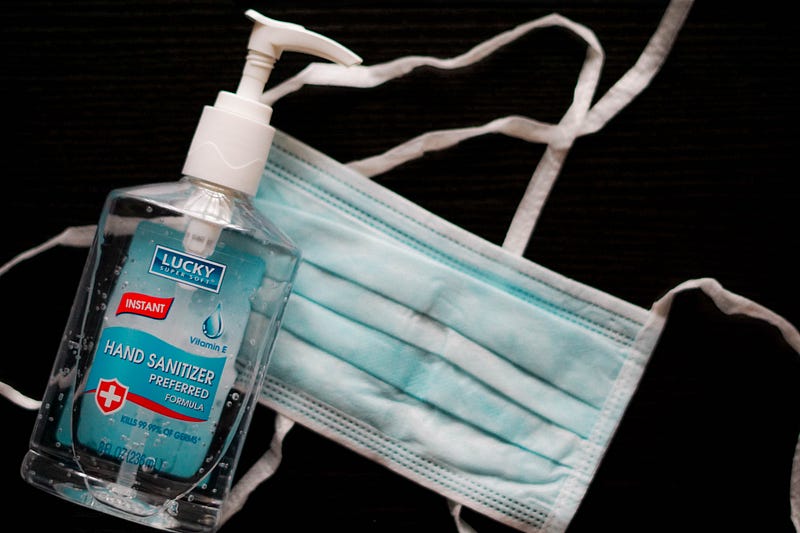
We applauded our government’s decision because, other than the few imbeciles who still believe they are smarter than medical experts, most people had made the sacrifice to stay home or wear masks to protect the health of themselves and everyone around them. To allow a professional sports team to move back and forth across the border for the sake of a game, would undermine everything we as a nation were trying to achieve.
The season began anyway while the Blue Jays looked for a temporary home south of the border. We resigned to the idea that temporarily, our team would call someplace else home.
Then news broke about the Florida Marlins’ COVID breakout. The current epicenter of America’s COVID crisis had reached into the supposed protective bubble of professional athletics and infected more than a dozen people. In turn, the Marlins breakout infected members from five other teams. In this small sample size, we gained a better picture of how quickly this virus spreads. All of this is now forcing Major League Baseball to re-schedule and hopefully, rethink the way games will be played.
I’m not sure why anyone would be surprised by this news. It all comes down to the common denominator, $$$. A resurgence of sports viewing could be a welcome kickstart to the economy. But, if the recent outbreak in baseball doesn’t give us a clearer view of the random and rapid movement of COVID-19, then nothing will.
I get it! We’re all struggling financially. Most of us have been shut away from the world we once knew before the pandemic took it all away. A sense of normal would be a great thing, but at what cost?
What do we do when people start going to bars to watch games again? Lost in the excitement of a big score, folks are apt to forget themselves, high-fiving, and cheering their team on. An airborne virus thrives on these actions, and suddenly, the pandemic is compounded again.
Put aside the doom and gloom scenario I’ve just described for a moment. There is another much bigger question at stake here, and it goes to the very struggles that have emerged from recent events.
What makes athletes so special? Why are they given access to wider testing and medical facilities than the general population? Why are these mostly wealthy individuals being provided with special accommodation when millions are suffering, with no hope of assistance?
Isn’t that called ‘Privilege’? Isn’t that what people worldwide are protesting about?
I applaud the players who have the wisdom to opt-out. If nothing else, they are protecting their own families. They at least, understand that the paycheck is secondary to personal health.
Most astounding of all though is that the mavens at Major League Baseball still think they can do this. There are twenty-six players, numerous coaches, and supporting staff moving across the country. Do they think they won’t at least be carriers of the virus wherever they travel? How does baseball intend to take responsibility for an eventuality such as this?
What’s worse, if you factor those numbers threefold with the proposed opening of the NFL season, you have a recipe for inevitable disaster. But, I guess as long as we get our sports fix…
I love baseball. I love all sports, but seriously.
Think about this. Professional sports is an incubator for the spread of COVID-19, even without fan attendance. This experiment has become a microcosm for what’s happening around the world.
Do we get it yet?
Does anybody believe these guys are going to keep a lid on their activity in the cities they visit? We’re already hearing horror stories about players breaking protocol in ‘bubble’ environments.
They’re human, lest we forget. There will be mistakes made. That’s human nature, and right now, “human nature” is our worst enemy.
Four months ago, I shared a personal story about the collateral effects of COVID-19.
I hope you will take a moment to read it.
Four months later, I’m still asking the same question. Why does sacrifice for the good of all seem so hard? What part of protecting others does not equate to protecting yourself?
I miss the game of baseball. The sights, the sounds, the smells. I know you do too.
There’s a new game in town now. It’s an old one come to think of it.
In the great struggle between the value of human life and the almighty buck, the dollar signs are winning. This isn’t sport though, is it?
Ninth inning folks. Time to step up to the plate.
Thanks for taking the time to read this. Please feel free to contact me at aremarkablelife.ca