
Day 3 of 𝘋𝘪𝘢𝘯𝘢 𝘊.’s 30-Day Poetry Challenge
Baruch Hashem, Salaam Alaikum, Et Al
Tanka of all gods and goddesses are avatars of the Great All
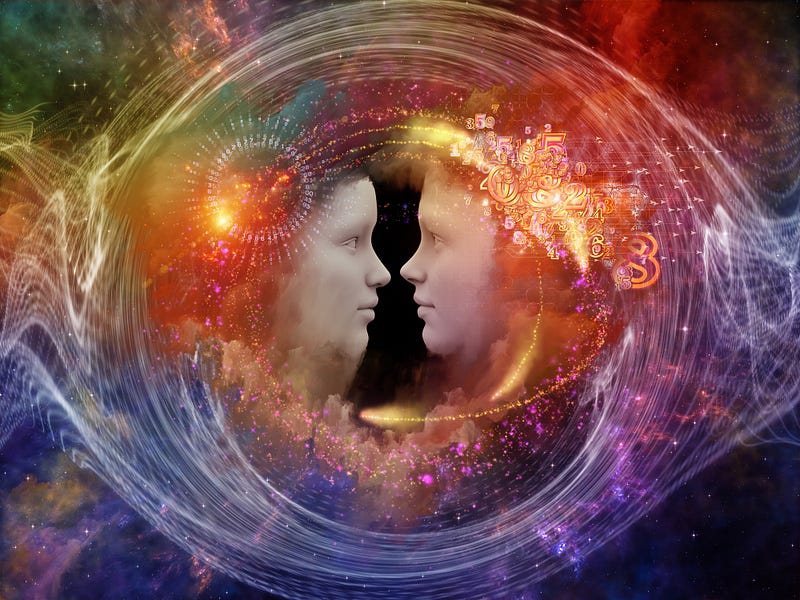
Gods and Goddesses Earth Air Fire and Water Elementary Ancestral soul connections Defy labeled constructions
I struggled all day with the prompt “ancient and eternal connection with Gaia.”
I knew my message:
“The only reason why we are talking about a God is because we have no explanation for the Creation. There is such a phenomenal creation and we don’t know how.” — Sadhguru
I discovered that quote several suns and moons ago in this story by Kimberly B
in which Kim eloquently and deeply articulates the meaning of the quote thusly:
Sadhguru posits that God for humanity is a conceptual phenomenon. We created God to explain the universe around us because we cannot say that we do not know. Our ideas of God are cultural. We try to limit and explain the boundless within the boundaries of the mind. We cannot put a definition on the Source of Creation. We cannot define it or know it through knowledge, we can only experience it.
I also wanted my poem to reflect this related work by Gavin Sher
and these thoughts of Gavin’s in particular:
In Judaism, the progenitor of monotheism, there are 72 names for ‘God’, each referring to some aspect of the Divine, yet in day to day practice the Divine is referred to simply as Hashem, ‘The Name’, precisely because it is considered better to leave undefined a concept that is too expansive to fit into a single word.
Outside of the religion itself, I have seldom seen anyone adequately explain the Jewish concept of ‘God’. Most folk seem to think Jews believe in some vengeful ‘God’ named Jehova, or Yahweh, but that is not the case. The same understanding of ‘God’ that is found in Judaism, properly understood, can also be found within streams of all the major religions, including Hinduism and Buddhism, which typically aren’t considered monotheistic.
The holiest prayer in Judaism is the Shema, in which the holiest line, affirmed by Jews repeatedly every day, is often translated as ‘Hear O Israel, the Lord is your God, the Lord is One’.
Obviously Hebrew is not English and translation can be a subtle thing. A more truthful translation of that holy line would be ‘Hear O Israel, The Lord is your God, the Lord is a Oneness,’ i.e. that ‘God’ is a Unity.
Thank you Keri Mangis for this:
I am not this hair, I am not this skin. I am the soul that lives within. — Rumi
I could keep decoding but it’s time for the reader to think.
Here is the link to 𝘋𝘪𝘢𝘯𝘢 𝘊.’s the 30-day poetry challenge:
Here is the link to my day-2 entry:
Here is the link to my day-4 entry:
In Rama I create,


