
Barrow, Alaska. Where Day Becomes Night
The difference between Dubai and Barrow — between + 40C and -7C degrees — seemed to be more spiritual than a physical experience.
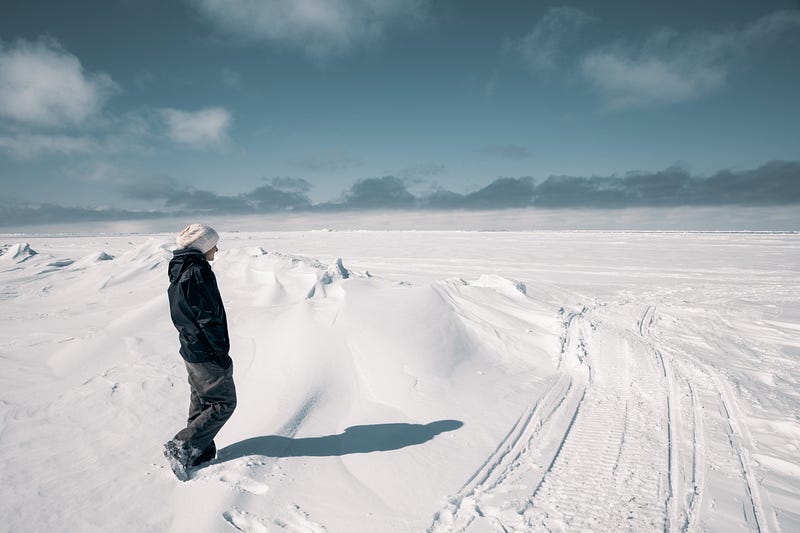
The penetrating chill, supported by the arctic breeze, slowly enveloped the body and pierced me to the bone of my soul. A feeling well known to me, but here, in this place — at the “end of the world,” a thought was unexpectedly born with it; it was an excitement… and the awareness of not belonging.
Barrow, the northern tip of Alaska Population: 4,700 The average temperature in July, the warmest month: 8 ° C (around 46 F) The lowest temperature recorded: -49 ° C (around -56 F)
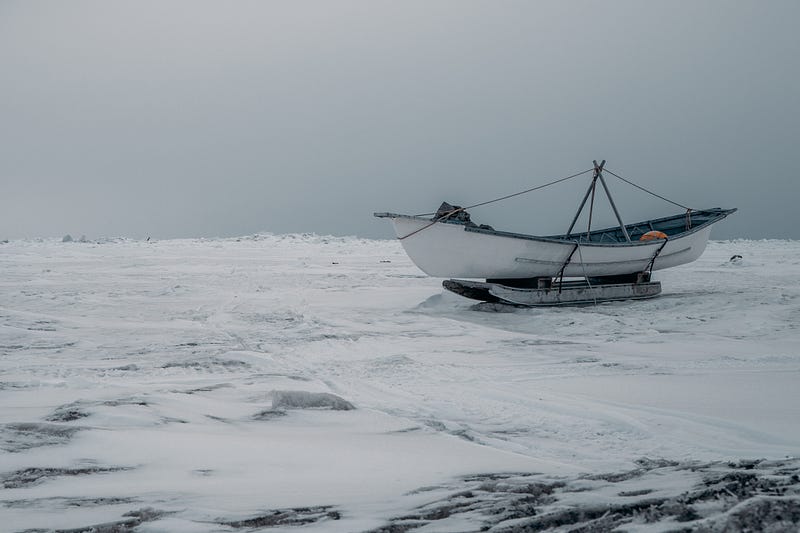
Barrow, the northernmost city of Alaska, lies 515 km above the Arctic Circle. It is cut off from the north by the Arctic Ocean, from the south by the Brooks Mountains — the world’s most empty, least exposed, and least visited mountain range. Separated and forgotten by all, it is accessible only by air or sea in the summer season, when the ocean ceases to be a frozen surface of the water — an endless snow-white land of snow and ice.
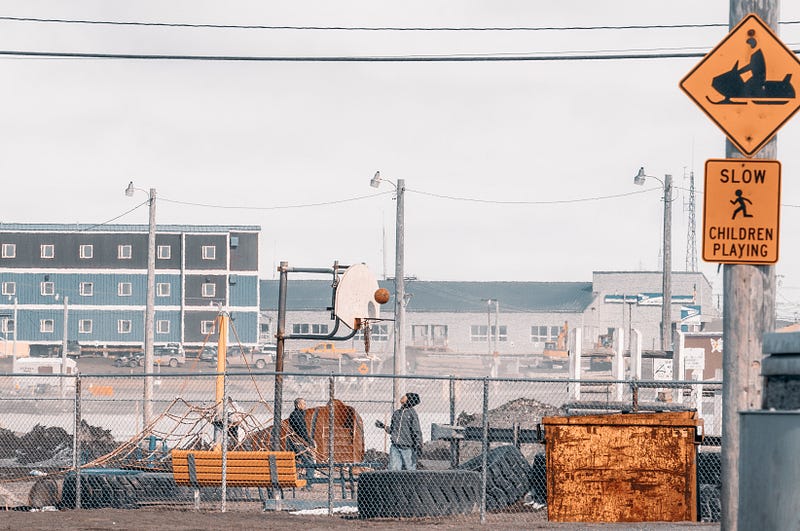
The city was already visited by the first thaws. The ice in the ocean was cracking, giant ice floes were slowly moving away from the shore, thus enabling the commencement of hunting expeditions in search of whales, walruses, and seals. For me, it was freezing cold, whereas, for the local community, it was a sign of the coming summer. When I was rubbing my cold hands, dressed in countless layers of clothes, carefree children were running in shorts and galoshes, enjoying a beautiful, sunny — but still frosty — day.
-Short sleeve? — I asked Mike with slight disbelief. He was a tall, slightly lame bear-sized man, who was waiting for us next to the Inupiat Heritage Center, the only museum in the city devoted entirely to the Inuit — indigenous peoples of these regions [1].
-Sure, I can’t miss summer. He laughed out loud in greeting.
Mike was from Seattle, Washington. Shortly after leaving school, he started working at the Boeing factory. With a head full of dreams and faith in a beautiful future, he dreamed of a great career and even more money. However, one conversation with a retired neighbor turned out to be a turning point in his life. He always thought that this man had to earn a lot of money. After all, he had everything: a house, a car, and once a year a proper holiday.
The friend’s answer was far from Mike’s ideas about the adultery life. There is no way I will spend my entire life paying back bank debts and saving every cent — he thought.
Though he didn’t have much, he dropped everything and went to Barrow, where he began a career in school and an education institute. He took a warm job at the city office a few years later. It was 40 years ago.
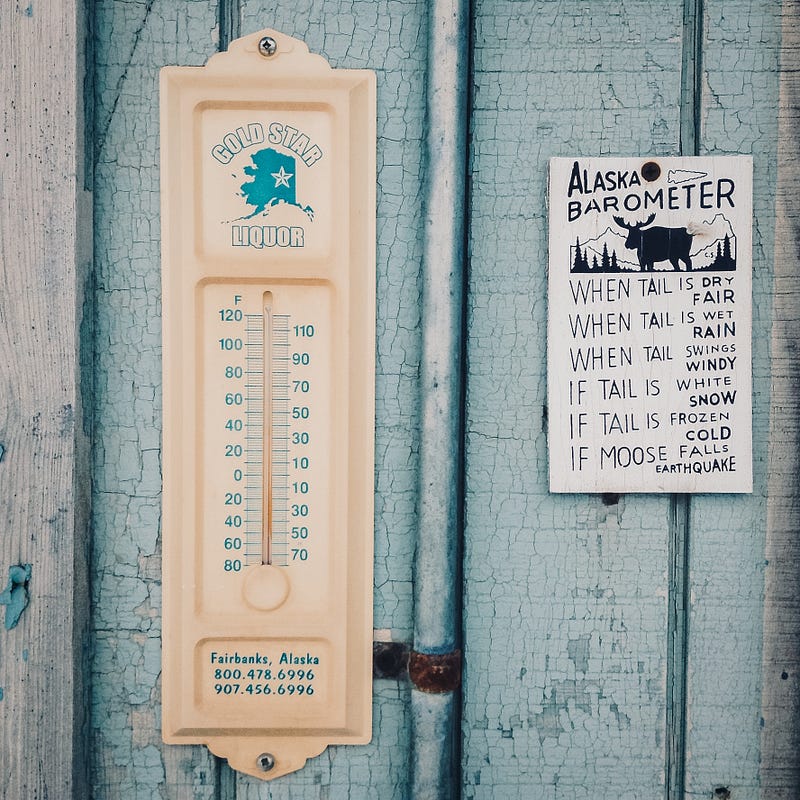
-We have this local weather joke here — he added when we broke the first ice — How did you spend last summer? — Oh, I remember it perfectly. It was Tuesday, and we were grilling all day.
In a place where snowfall can be expected at any time, the average wind speed is 20 km/h [2], the air temperature is below zero for more than 240 days, and only 24 is above the blessed 10 ° C every warm day is precious.
And when the sun disappears below the horizon for more than two months, when the town is shrouded in dark and frosty darkness, everyday worries cease to matter. You don’t think about trifles — a sore head, overdue errands, financial problems; There are also no existential dilemmas, the sky above the clouds doesn’t care — because there is no hell for sure. At least not in Barrow; it’s just too cold. All you think about is the chill that monopolizes every part of life. It’s a bit like falling in love — that strong and irresistible feeling that makes everything else cease to exist except for this one person.
This first frosty experience is like a long-awaited, longed-for attraction for visitors. For me, an arctic dilettante, the weather in Barrow was a completely new experience, and it gave me incredible pleasure after wiping the sweat pouring from my forehead, 10,000 kilometers away in Dubai.
-There were only 6 cars here 40 years ago,- said Mike, then paused for a moment to concentrate his eyes on the yellow contrasts on the icy horizon. This is the color of the skin and fur of polar bears, whose a la carte dishes at this time of the year consist mainly of natchiq, oily seals. Or defenseless old dogs chained in front of the house.
- But this part of the city did not exist — he pointed to the northern side of the settlement, where sloping roofs of pastel houses filled the entire horizon. — Today there are over 600 cars … and they all run on a 30 km stretch of road, can you imagine?
Somehow I could because this short stay in the city has already convinced me that this place has nothing to do with my earlier imagination.
Before we left, I remember sitting in my apartment wondering if Barrow — one of the largest Eskimo communities in the world — should be on our route. I dreamed of something new, something big, fresh, unheard of, something that would make my blood spin in my veins again.
Then I looked at the map. I imagined these empty spaces, untamed nature, this arctic whiteness, remoteness. And I tried to imagine all those people who, in search of themselves, decided to live in this particular place. Because — now I’m sure — you can’t choose it just like that, by chance.
Who were these people? What were they running from? And most importantly: did they find what they were looking for in an area so unimaginably unchanged by human presence?
The first shock, right after this dangerous white desert seen from the plane windows and the frosty wind right after landing, was guaranteed by a taxi driver who took us to the address indicated.
-What is this language? — I asked when I sat down in a taxi. I couldn’t believe my eyes. Next to the driver, between the seats, there was a notebook, on the cover of which I recognized …
- Thai. — a man from the happiest country on earth replied with a massive smile. It was only then that I noticed the Asian features hidden deep inside the fur hood of his winter coat.
- Thai? Here? As? When? WHY?
In this short way from the airport to the apartment, the taxi driver shared his story, which over time, with each new person I met, sketched one of the few outlines of the Alaskan pattern. The least romantic one was simply a “money-chasing” race. Apart from the 60% of Inuit, the colorful wooden houses scattered around the area are occupied by Whites (22%) and Asians (9%), Latinos, and Afro-Americans. Where does this cultural mix come from in a place where cold is nature’s most potent and frightening weapon?
I found the answer in the Barrow story.
The turning point was the discovery of crude oil in the nearby Prudhoe Bay, which changed everything according to many Alaskans. Unexpectedly, drastically and permanently. It was then that the Whites began pouring in in flocks with a desire to grab something for themselves, to get rich on something that was under the feet of the Inuit, on their own land. With the oil, the previously buried racist hatred that initially appeared in the early days of whale hunting was revived. The white men came only to take, raise their own living standards, and never do anything for the local population. The story did a full circle as the vision of black gold, and thick petrodollars appeared. White men made themselves at home in foreign territory. They brought alcohol, money, and technology that disrupted the quiet, self-sufficient life that the Inuits had led for generations.
To ease the escalating conflict, the government gave the indigenous peoples millions of hectares of land and tens of millions of dollars to stop them from blocking the construction of a pipeline across the state.
However, other problems are much more terrible than the struggle of the conflicting human races.
-We buried six suiciders last year; all of them were Inuit. Very disproportionate statistics for such a small society. Mike commented as we drove past the town graveyard.
It’s not just a side effect of the polar climate that has been around for centuries.
- These kids are unconsciously struggling with their own identity. On the one hand, they dream of breaking out of this hole, tasting the “real” life they watch on a TV screen, and on the other hand, they are unable to get rid of their own roots. — explained Mike — You know, there is a saying that perfectly illustrates the situation here “you can leave a village, but a village will never leave you .”They just don’t fit in anywhere else.
They sink deeper and deeper into the arctic depressions with every Hollywood movie they watch. They see all those fast cars, fancy life, beautiful people living the American dream. Something those teenagers will never experience here. So they drink and smoke, and every bottle pulls them down, deeper and deeper until it becomes unbearable.
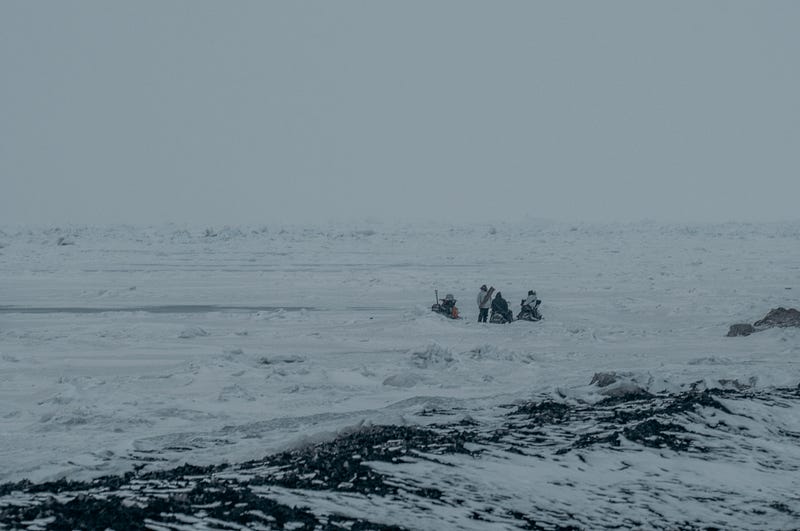
Some of them still commit suicide in the traditional way. They step out onto the ice, and with the wind blowing on their backs, they keep walking until they are too tired to come back. But then, on the verge of exhaustion, they turn around and set off against the wind, which freezes their lungs with icy air. It doesn’t take long when they freeze to death.
Due to unfavorable weather conditions, the residents who are condemned to each other often become closer. They spend those dark, long days and nights surrounded by people they usually wouldn’t get along with. Alcohol seems to be the only solution, the only escape from loneliness, unfulfilled dreams, unfulfilled ambitions, and restless thoughts. It makes time pass faster, frosts become less bothersome, and the polar nights seem to be shorter and more pleasant.
- You can get used to everything. Besides, there are also percentages. A few or a dozen deeper ones until you finally believe that the sun will definitely appear on the horizon again in a moment. I wasn’t sure Mike was still joking.
It didn’t take long for the government to realize that the tragedies of alcohol abuse had become epidemic. Too many fists and knife fights, too much death, rape, domestic violence ultimately led to its total prohibition. Barrow for 18 months became the so-called “dry city,” a dry city.
The ban was reviewed and modified in 1997 to allow residents to import alcoholic beverages from Fairbanks or Anchorage upon presentation of a license [3]. The introduced restrictions aimed to maintain at least minimal control over the city; therefore, so far in the entire North Slope District, there is no legal store where you can stock up on alcohol. However, each resident can legally import monthly:
- 6 bottles (750 ml) of strong liquor, i.e., vodka, whiskey, rum, etc.
- 5 x 24 cans of beer
- 4 boxes/packages of wine
- This prohibition is a joke. Do you know how much alcohol came to us for Christmas? Mike asked, and without waiting for an answer, he added after a moment: — Over 6 tons.
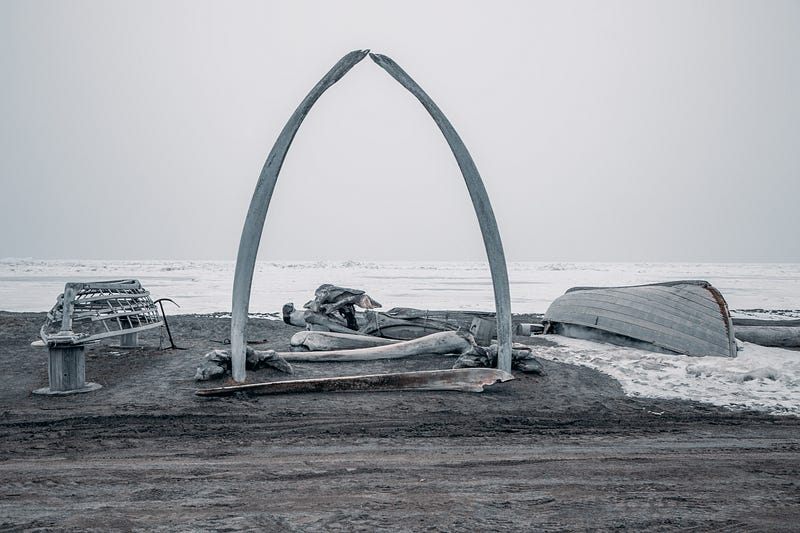
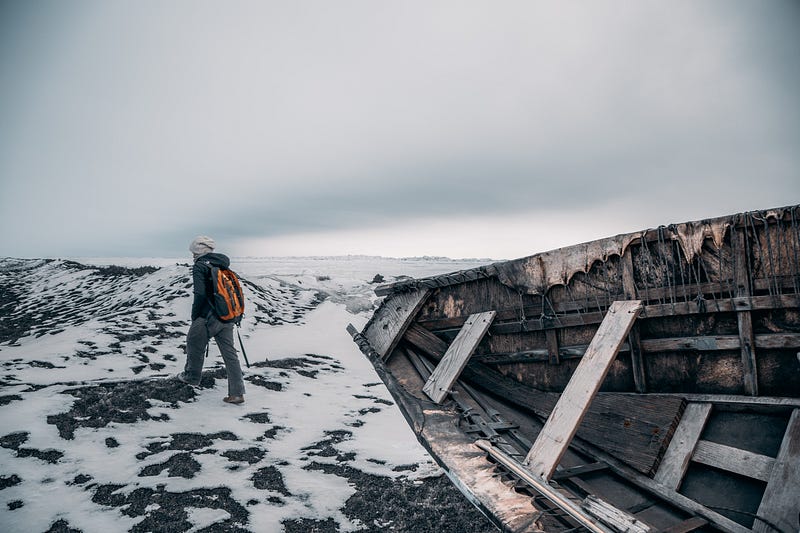
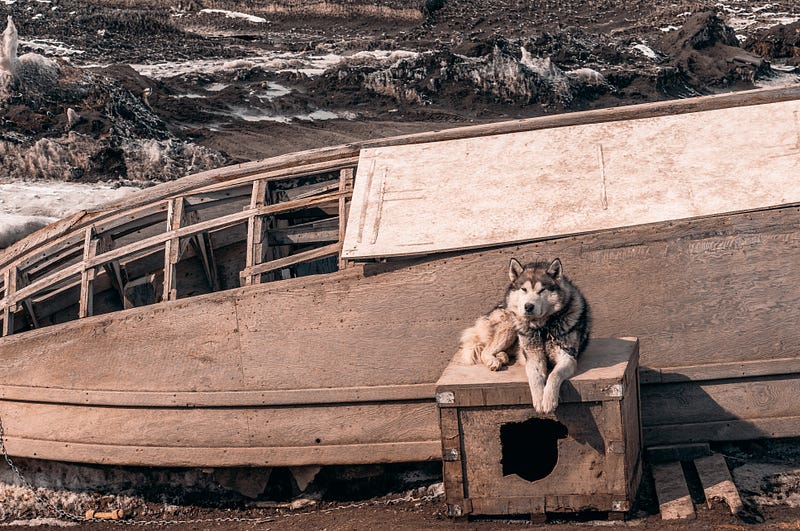
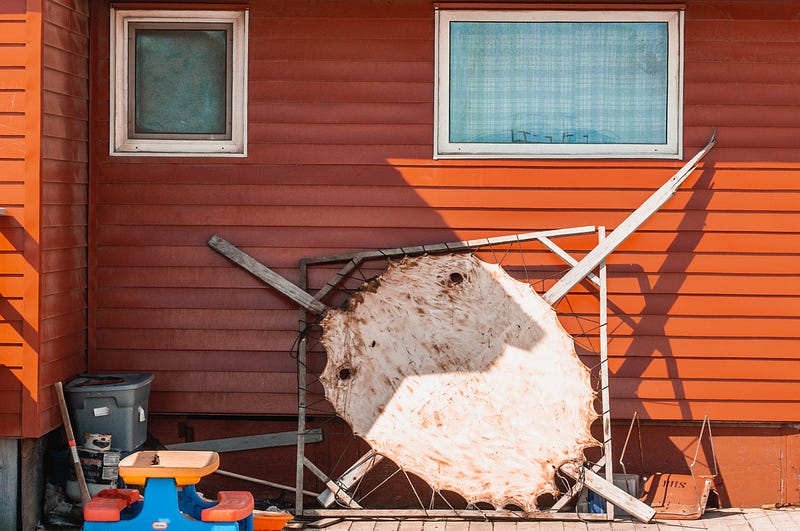
We stopped at the side of the road, right by the wooden skeleton of the boat. Made of seal skins, the miak is used for hunting whales and transporting belongings during summer hiking. The flesh scattered on the ice, the remains of a skeleton looming far in the distance, and the nauseating odor of drying underwires that accompanied me from the morning [4], was suitable proof that the hunting season had already begun.
Although whaling is prohibited in the United States, the Inuit — one of the best hunters in the world — still belong to the elite group of license holders [5]. The International Whaling Commission is responsible for who and how often can catch them. Apart from ensuring complete protection for the most endangered species, the main goal is to limit the number and multiplicity of mammals caught.
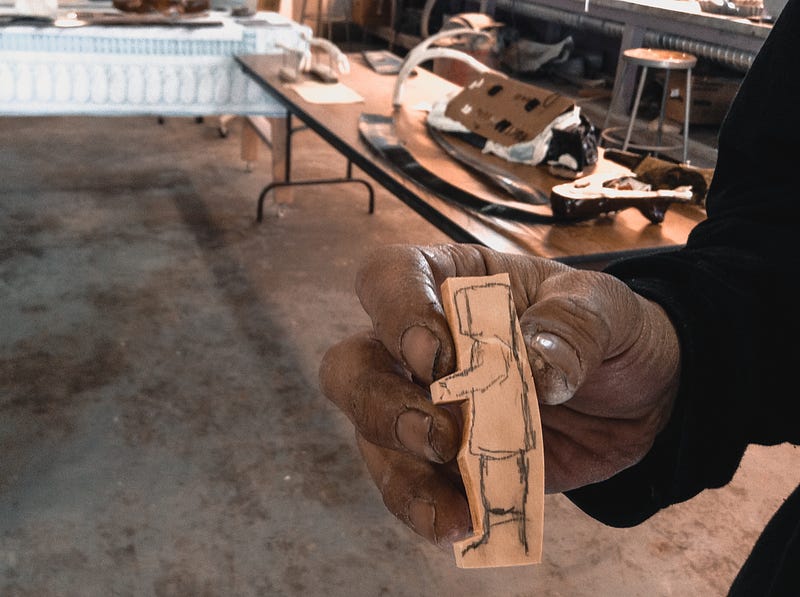
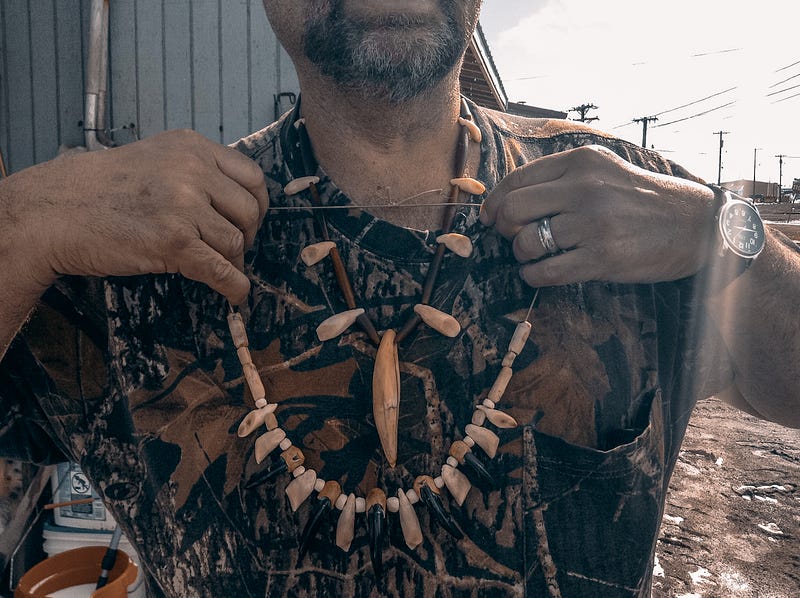
While contact with the outside world has influenced traditional hunting methods, the basic pattern has not changed much. Equipped with new technology, GPS, weapons, and explosives, the Inuit still mainly use harpooners — their own invention. They fish in the same waters, in precisely the same traditional way, primarily relying on cooperation, trust, knowledge, and skills gained by a lifetime. One of the conditions for obtaining hunting rights, which the population carefully adheres to, is using meat for their own needs. However, the regulations don’t mention anything about the crafts. Therefore, those arguing with the Inuit about the rights bring to the attention the ubiquitous figurines, knives, and bas-reliefs; in general, souvenirs with a value of up to $ 10,000. Another highly controversial argument against traditional fishing has been put forward by environmentalists. Death is unequal, and the conventional methods used by the Inuit extend the suffering of animals to about 20 minutes. A whale hit by a Norwegian harpoon will die after 2 minutes.
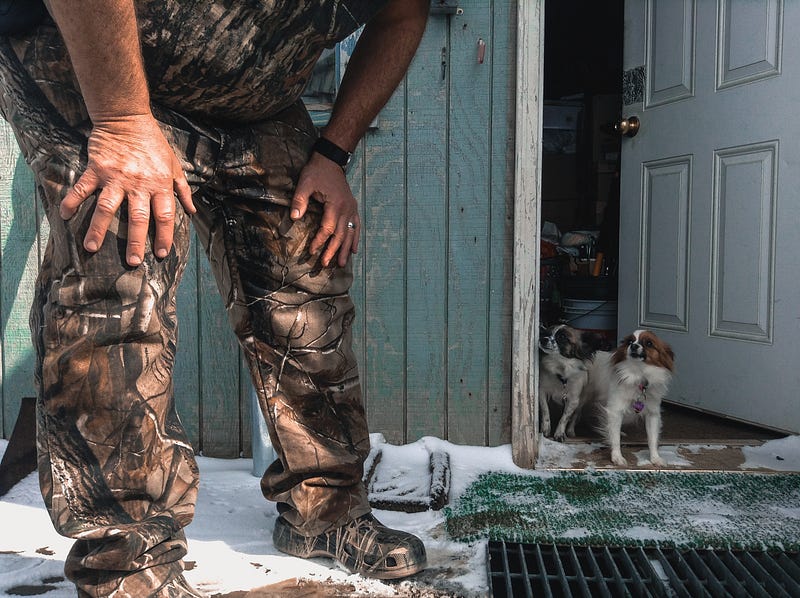
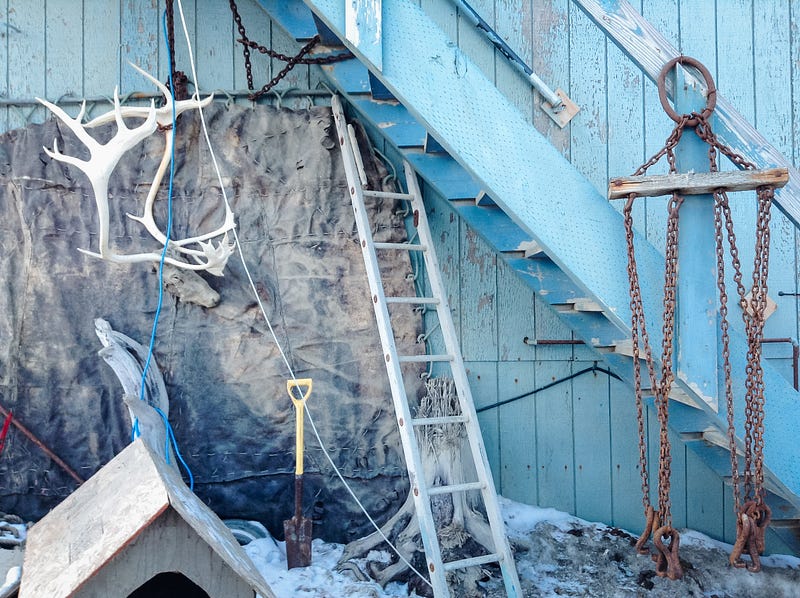
I looked back at the boat. The dog, which had been lazily dozing on the roof of the wooden kennel a moment ago, was now peering uncertainly in our direction, stretching on the frozen ground. I scanned the area; the low houses amazed me all the time. Some were new; others should be renovated right now. All wooden made on stilts and painted with pastels. Blue, patina, red. Huts decorated with antlers, stuffed elk heads, drying seal skins, and whale meat.
Next to each house, there is at least one car, a sleigh, a snowmobile. One working and at least a few museum exhibits, rusty, often in pieces. And the boat. In the worst case, just a commoner.
- If something in Barrow breaks, no one bothers to fix it and just throws it out. After all, you can buy a new one in a moment, with oil money and money from the government. — In Mike’s voice, I sensed a slight irritation this time.
White people in Barrow are very unusual people. They have to be, or they wouldn’t be here at all. They came to the very end of the continent searching for money, adventure, the meaning of life or freedom… running away from something or someone. Whatever the reason was, probably the city still surprised them. Hostile, strange, isolated. Cruel? I couldn’t disagree with the statement that survival at Barrow for at least a few sane years requires an unusual degree of psychological stability.
Later, walking in snow high up to my knees, I remembered the surprised expressions of Alaskans in Anchorage, who shrugged when I asked them about this place.
-Why do you even bother? There is nothing to be discovered there. — they replied.
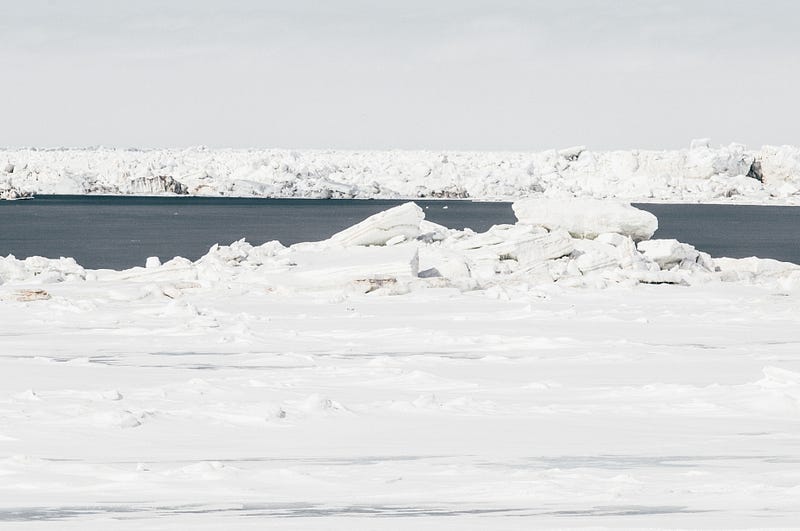
I looked around. The horizon stretched; it seemed tens of kilometers in every direction of the world. Only a frozen land in sight, piles of ice forming snow-white mountains, and my own breath forming thick clouds in the air. There was no sign of a living soul anywhere. No movement but ours. No sounds except howling wind. Just me and Cape Barrow — the edge of life of the United States — unconventional city, which from a distance, for the first time, seemed not to be the end of the world, but it’s beginning. I was balancing at the edge of the earth, divided by a sharp line of what’s new and unfamiliar; the fall and rise of the human race.
My stay in Barrow turned out to be the essence of the trip to Alaska. It was a journey from the future to the offbeat world, from an illusion to harsh reality, from deceptively sanitized and soulless skyscrapers to an arctic town, where life is still dictated by mother nature. To a place that may be the real Alaska, some people have stopped believing in.
[1] Eskimo-Aleutian people belong to the family of people of Asian origin. The common name Eskimo is now considered offensive as it is believed to be derived from the phrase “raw meat-eaters.” [2] The extremes reach dizzying speeds of 60 to 100 km / h [3] The so-called A permit is issued only upon presentation of relevant documents, including a police report on no criminal record. The license is valid for one year and costs $ 50. [4] Horn plates hang down on either side of the palate in the mouth of the whale. Their number varies from 150 to 300, and the length of one can be up to 3–4 meters. [5] This year’s allocation is 22 whales, of which 9 may be hunted in the spring season. The Inuit can also hunt only non-endangered species with a population of around 10,000 in the vicinity of Barrow.
About me: My name is Joanna Skladanek. I was born in Poland but for the last 15 years, I’ve worked as a flight attendant and was based in Dubai, United Arab Emirates. I studied Tourism, as well as Human Rights and Humanitarian Law. I am a photographer, writer, and content creator (mainly) on Instagram. On Medium I am planning to write about my perspective on life, and everything that interests me: traveling, photography, cultures, wellness, self-improvement, self-development, and a tiny bit of fictional short stories.
Want to stay in touch? Follow me and join my e-mail list here.


