
What Barbie Gets Wrong About Diversity
What one toymaker easily gets right, Mattel hasn't accomplished in 60 years.
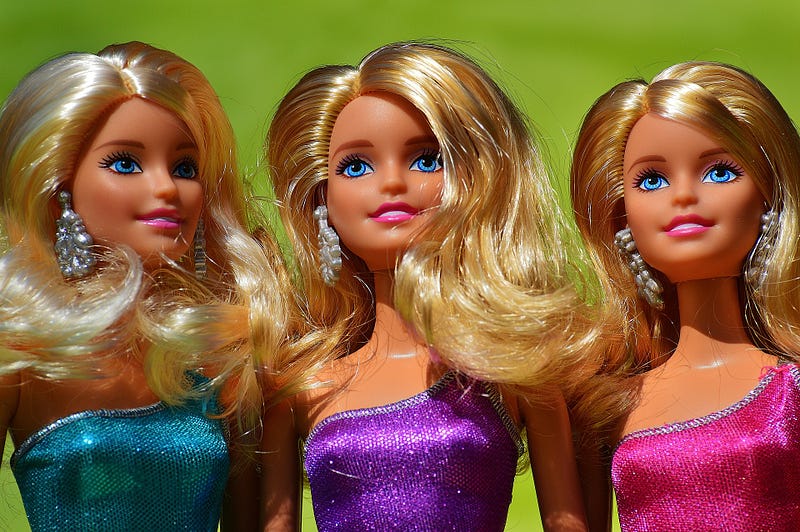
Last summer, like so many other parents before me, I begrudgingly began to buy Barbie dolls for my 4-year-old daughter Sophie. For a long time, I vowed against having them in the house at all, but call me a sucker for my daughter’s joy, because once she started noticing--and asking for--those damn dolls, I couldn’t resist when I saw how much they made her smile.
Along the way, I’ve made a point to get a variety of Barbies in different skin tones and body types. But this Christmas, when my sister sent my daughter a few different types of Barbies, I was mortified when Sophie told me that she didn’t like the dark-skinned Barbies, and didn’t want to play with them.
I’m pretty sure the blood drained from my face as I pictured a future where my daughter was that kid. The one who noticed different skin colors and took note of it in a negative way. It’s not just an embarrassing picture--it’s scary. I was raised in the Twin Cities, where diversity is normal and no big deal.
But now that we live in Tennessee, we’re in Trump country. A lot of people down here see diversity as some terrible, horrible, no good, very bad liberal agenda.
Teaching my daughter to be a kind, compassionate, and open-minded person sometimes feels like an unnecessarily uphill job in the bible belt. I recognize that we carry a great deal of privilege as white women in America, and I don’t want her to walk through life blissfully unaware of that reality.
Sure, some people might think it’s silly to believe that a children’s toy could help or hinder real-life diversity, but we already know that creativity in playtime opens (or closes) possibilities among young children. That’s why Barbie’s website now talks about “closing the dream gap.”
Oh, yes, haven’t you heard? According to Mattel:
“Starting at age 5, many girls begin to develop limiting self-beliefs. They stop believing their gender can do or be anything. This is the Dream Gap, and this is the year Barbie begins working to close it. As the original girl empowerment brand, we’re proud to announce the Dream Gap Project, an ongoing global initiative that aims to give girls the resources and support they need to continue to believe that they can be anything.”
That’s all well and good, but for millions of children, Mattel’s commitment to diversity and female empowerment is more about lip service and PR than anything else.
Barbie has a history of making diversity awkward.
In 1959, the first Barbie doll was created by Ruth Handler, a white woman and co-founder of Mattel. That first Barbie came with either brunette or blonde hair, and then red hair was added in 1961.
In 1969, Mattel introduced Barbie’s black friend, Christie. But in 1979, the company released the first official “Barbies” in African American and Hispanic varieties.
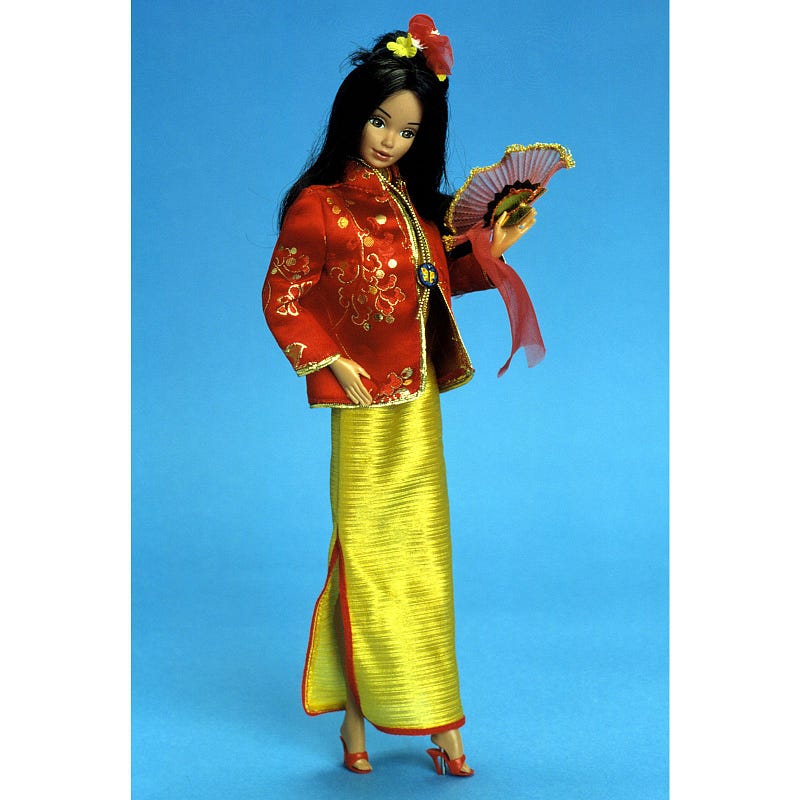
For more than 30 years, Barbie didn’t get much more inclusive than that. Well, Mattel did go ahead and release an “Oriental Barbie” in 1981 as part of their special edition Dolls of the World collection. So sure, the company went on a global safari in the 80s where they made embarrassing cultural stereotypes and faux paus. Like calling the Asian Barbie “Oriental.” So there’s that.
It wasn’t until 2016 that Mattel introduced us to the supposedly groundbreaking Fashionistas line of dolls which included three new body shapes (curvy, petite, and tall), seven different skin tones, along with multiple new hair shades, eye colors and facial features.
The move sounded like a promising start, and the toymaker famously tweeted #thedollevolves. But more than two years later, the Barbie aisle in stores is still swamped with white, (mostly) blonde, and blue-eyed dolls.
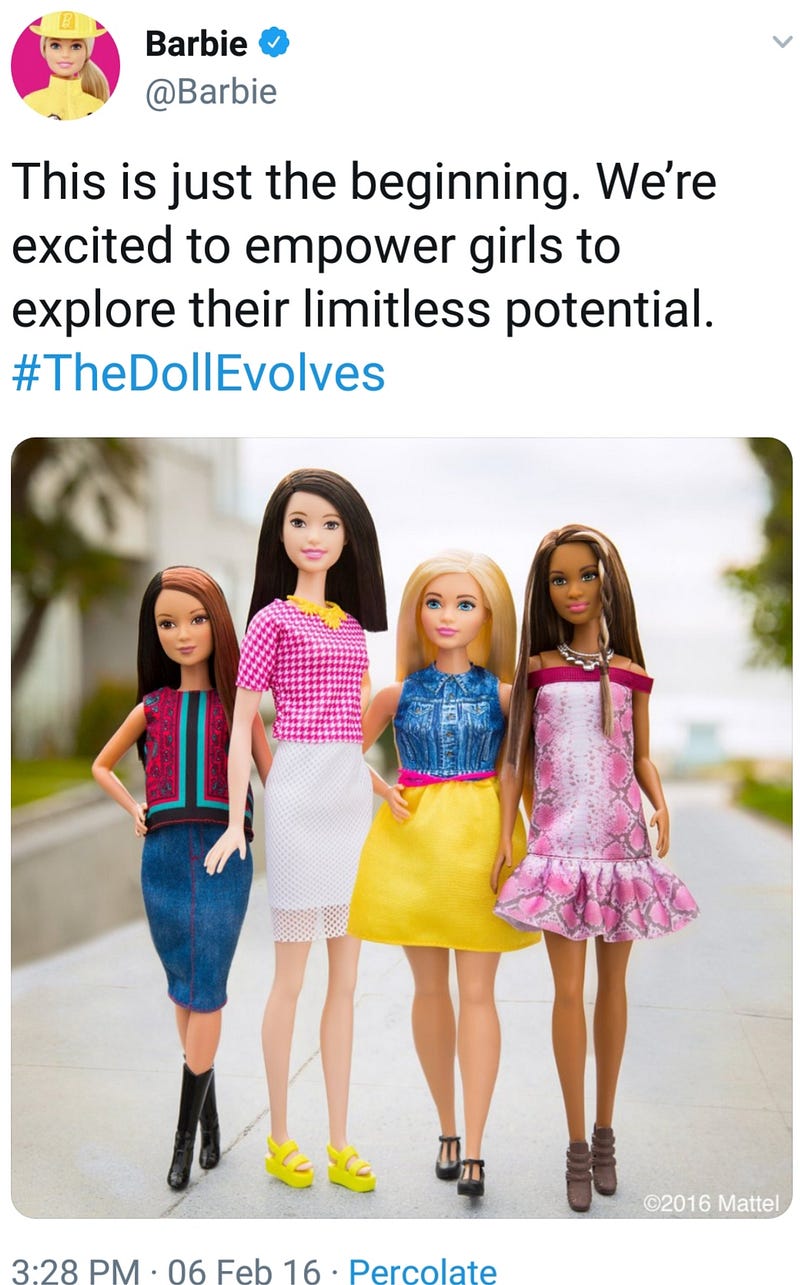
Two years after #thedollevolves, diversity is not standard for Barbie.
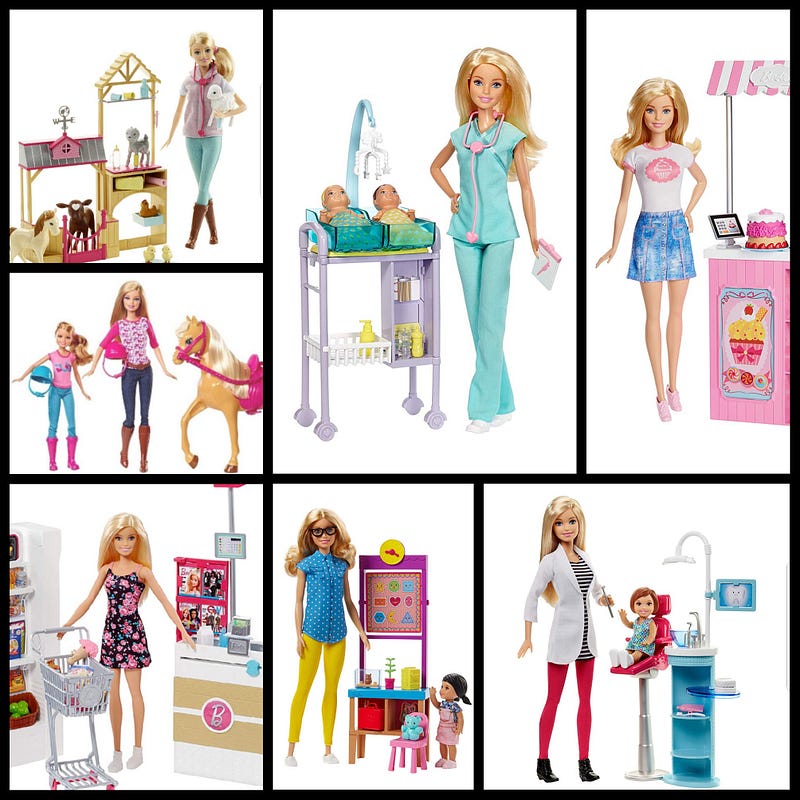
Keep in mind that anytime you buy a Barbie doll playset, the default is white. Barbie pizza maker? White. Farmer, doctor, dentist or teacher? All white. The Barbie Dreamhouse is filled with white faces. Same thing with the camper van and ultimately every single other Barbie playset.
If you want a black Barbie, sometimes stores will carry the black alternative. But make no mistake--the black set is always other and therefore not the norm.
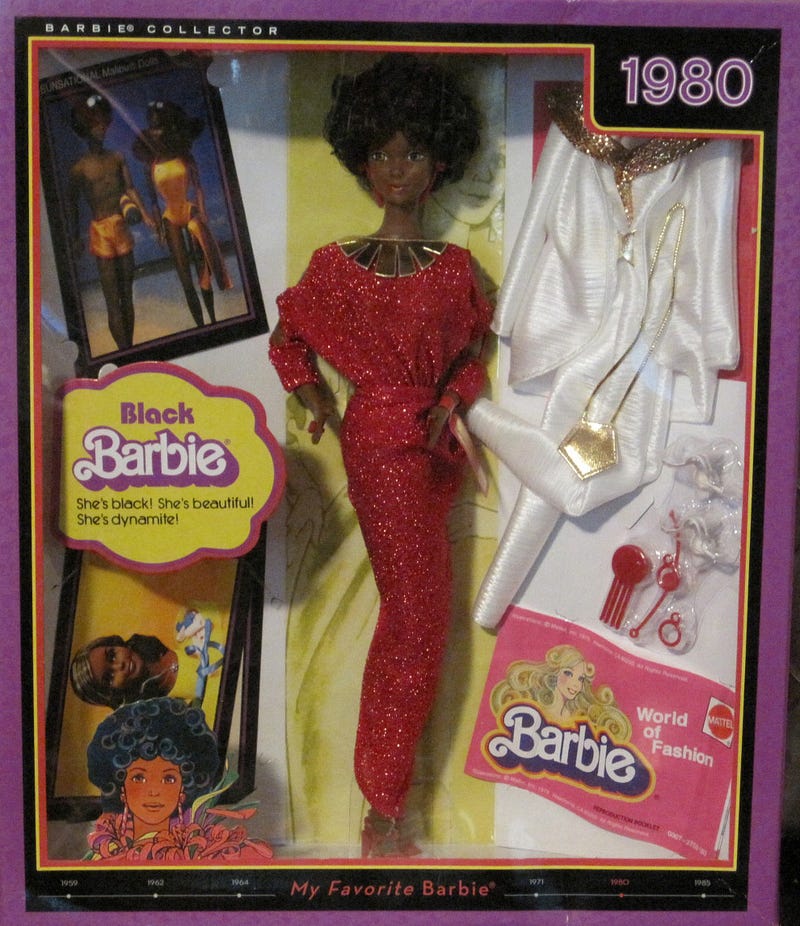
Back in 1979, even on the packaging, women of color couldn’t just be "Barbie," like the standard white version was. Those first dolls of color said "Black Barbie," or "Hispanic Barbie." And even though Mattel doesn’t typically label Barbies by race on the box today, their message is still clear. White is right. The standard.
For parents or children who want a different doll, say one that’s less white, or even less perfectly proportioned? You’ve got to shop a different line altogether. Make no mistake here--diversity is still not the norm. Those Fashionistas? They are a cheap, separate line of individual dolls. That’s it.
In fact, when it comes to parents purchasing playsets, Mattel is more than happy to offer the same damn white Barbies to add to your already excessively white collections at home.
Barbie’s whiteness is a repetitive nightmare for parents.
Take Skipper. My daughter is especially enthralled by all of the baby-related gear that comes with the various Skipper playsets. Now to be fair, Barbie’s babysitting sister Skipper underwent a makeover not too long ago. Now she’s brunette with a purple streak in her hair. So inclusive, right?
Well, if your child is anything like mine, she’ll want the pack n' play, the stroller, the high chair, and the potty playsets--all of which come with essentially the same white doll in different clothes.
Yes, they have an alternative black Skipper. And yes, she’s harder to find.
It’s really no different if your kid wants any of the career playsets. Virtually every standard Barbie playset features the same white “Barbie” with blonde hair and ever so slightly different features.
When the playset options still look like this…
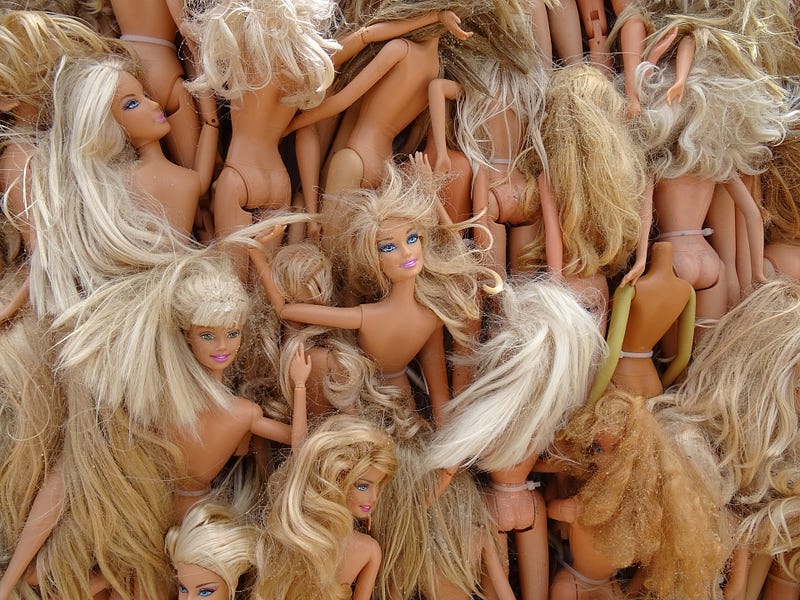
Is it any wonder that our Barbie boxes at home look like this?
Is Barbie really that inspiring?
The doll's creator, Ruth Handler, has been quoted to say that Barbie represents choices:
“Barbie has always represented that a woman has choices. Even in her early years, Barbie did not have to settle for only being Ken’s girlfriend or an inveterate shopper. She had the clothes, for example, to launch a career as a nurse, a stewardess, a nightclub singer. I believe the choices Barbie represents helped the doll catch on initially, not just with daughters — who would one day make up the first major wave of women in management and professionals — but also with mothers.”
I’m not even sure how to unpack that quote. Maybe Barbie has represented choices for conventionally attractive white women. But what about everyone else? Are white women the only ones still so enamored by Barbie and her "clothes make the career" identity?
It was recently announced that Margot Robbie will play the iconic fashion doll in an upcoming Warner Bros. movie. Robbie says she wants the film to be inspirational for young girls--but for which girls? For how long should women of color be “inspired” by white women who are so obviously proud of themselves but utterly blind to their own privilege?
Mattel’s Barbie dolls have had about 60 years to get it right and be the inspirational and empowering movement they so boldly claim to be. But it seems they still keep coming up short.
When you go to the Mattel Barbie website, you can read about the brand’s purpose:
Since 1959, Barbie has been inspiring girls to be anything. From princess to president, astronaut to zoologist, there isn’t a plastic ceiling Barbie hasn’t broken. Today, with over 200 careers and counting, she continues to inspire the limitless potential in every girl.
Clearly, nobody at Mattel knows how to “inspire the limitless potential in every girl” when they can’t get diversity right in even six decades. Apparently, it’s yet to occur to Mattel that they could easily diversify by including different dolls with each playset. Every parent knows their child wants as many Barbie sets as they can get their hands on, so why keep giving buyers a plethora of white blondes?
Other toy companies are doing diversity better.
Some folks might insist that consumers don’t want more diverse dolls, but other toy manufacturers might beg to differ. American Girl and MGA Entertainment routinely offer consumers diverse and inclusive choices.
See, I was jarred for a while about the incident with my daughter’s newest black Barbie. I already bought her supposedly diverse Barbies, so I wondered what else I could do to normalize racial diversity.
"Sophie, you’ve never complained about your L.O.L. Surprise! dolls and their skin color. Those are all different, but you love them all."
Sophie thought for a moment and then smiled with bright eyes. "Oh yeah! Mom, you’re right!"
Yup. This mom was right. The truth is that my daughter has never brought up skin color with any of her other toys-- only Barbie. She has never been alarmed about Doc McStuffins and Baby Cece being black, but those characters are presented as standard. Stars of the show.
It’s also true that she’s never once complained about getting an L.O.L. Surprise! doll with dark skin.
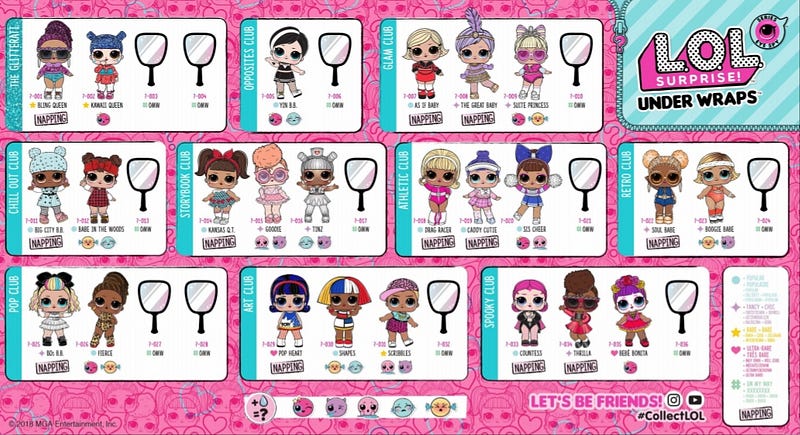
To be fair, L.O.L. Surprise! dolls don’t come with some altruistic mission statement about empowering little girls. These toys are aiming to be pure fun. With names like Funky Q.T. and P.H.D.B.B., they don’t aim for realism, and I don’t know that the (male) creator Isaac Larian ever even intended to foster diversity.
What I do know is that as a parent, I’m sure as hell preferring the L.O.L. dolls. These curvy, colorful cuties might live in a fantasy land where “babies rule the world,” but I see my daughter getting much more out of her playtime with these dolls over her Barbies.
“Successful diversity” is best done simply.
It’s given me pause to wonder what these L.O.L. Surprise! dolls by MGA have done so much better than Mattel’s Barbie, and it seems pretty simple. From the moment the toys were released in 2016, MGA made diversity standard.
What L.O.L. Surprise! instantly got right about diversity, Barbie has failed to manage in 60 years.
Just like Barbie, the L.O.L. dolls occupy more than one line of toys. There are single dolls and playsets. But unlike Barbie, none of the lines or playsets push whiteness.
In fact, the whole draw of L.O.L. Surprise! is the fact that your child is unveiling a mystery, and at this point there are more than 140 different dolls. The only exception is that when you buy a special edition playset like the dollhouse, or a limited edition case, every buyer will get the same dolls. So if your kid got the L.O.L. dollhouse for Christmas, they opened up a black family for the new home.
But guess what? Our white kids don’t care what skin color their L.O.L. dolls have. Each one has its own unique style and personality. My daughter doesn’t seek out the white dolls over the others at all. She seeks out the lil' sister that has a pacifier, or the big sister with pink hair.
My theory is that skin color never comes up with L.O.L. dolls in my home because MGA has done such a fine job of making characters of color mainstream. Many of the dolls have “black” hairstyles my daughter Sophie will never be able to wear with her caucasian hair, but the dolls are making it normal for my girl to associate beauty in a variety of forms.
MGA has taken diversity even further by using black girls in their YouTube videos and commercials. In fact, I had to watch this one several times the other day:
Meanwhile, Barbie’s Youtube channel and plethora of home videos point to a mere effort to court greater diversity. So why do they always fall flat? Once again, Mattel only knows how to market diversity as something “other.”
Sure, Barbie might have black friends and god forbid even “fat” friends today, but within the Barbie world, anybody who’s other will never be the star of the show.
As a white woman and mother, I know there’s nothing unusual about a white girl telling everybody that they “can be anything they want to be.” Let’s face it--that’s a hallmark trait of the basic white bitch. Somebody who calls herself accepting and diverse while crowding out and overshadowing all others.
For Mattel, diversity is an afterthought they plug into an already bloated line of repetitive dolls in an effort to make more money. Diversity is their money grab, and they’re not even very good at it.
On the other hand, MGA sure schooled this parent on how to make diversity a mainstay. You make it normal from the start.
Diversity matters more than you might think.
As a white woman, I have never had to think much about my skin. I can go anywhere mainstream and find whiteness to be the norm. I have never felt uncomfortable about my whiteness as I flip through magazines or watch television because my skin tone is always well-represented.
So it may not mean a whole lot to my daughter right now to see many different skin tones in her pile of L.O.L. Surprise! dolls. And she’s utterly unphased by the fact that the L.O.L. spokeswomen are black girls. Though she does want to dress like them and play with the entire line of diverse toys.
But I’m pretty sure that there are tons of little girls (and their parents) who personally do appreciate seeing people of color inhabit what have typically been white spaces of playtime surrounding dolls, fashion, and beauty. And for that, I’ve got to give MGA and its male CEO mad props.
Right out of the gate, L.O.L. Surprise! has done what Barbie refused to do. They made people of color standard rather than sideline characters, and our kids’ collective response has shown that it works. In the first five months, MGA sold more than 2.5 million dolls, and they continue to surprise and delight our kids, inspiring them to believe that beauty belongs to more than white, conventionally beautiful people.
(We’ll just talk about the packaging and waste factor of the L.O.L. Surprise! toys another day.)