
Barbara Kingsolver and the Dehumanization of the Appalachian People
How Has Rural vs. Urban Propaganda Shaped Our Skewed Perception of Who Is Living a “Valuable” Life?

Dear ones,
Last week, my family and I crammed into a rented four-door to road trip for eight hours to bury my abuelo in the same cemetery where my grandmother, Olga, has been softly resting since 2006.
The drive was long and uncomfortable, and I passed the time by listening to audiobooks and podcasts, as I often do.
On a whim, I began searching the name of one of my favorite authors, Barbara Kingsolver, whom I’ve revered since high school, largely for her star-making works The Poisonwood Bible and Bean Trees, both masterclasses in the writing of fiction, and interesting case studies of the isolated and often misunderstood grief of mothers, who under orders from systems outside of their control, are often forced to become martyrs on the alters of their own kin’s becoming.
The episode, from The Ezra Klein Show, featured Barbara the person in a way I’ve never experienced before, sharing her history as an Appalachian woman, and the profound anger that many Appalachians feel toward city dwellers who often dehumanize the citizens of Appalachia, erasing their history of forced labor, and chalking them up to junkies, hillbillies, and a whole host of other harmful stereotypes that we know quite well are used often when people are discussing “flyover country.”
This term, “flyover country,” in and of itself, is a horrific term that within just two words deems one group important and one group invisible. Something to be quickly and expeditiously escaped.
Barbara talks thoughtfully about how media and popular culture, largely mouthpieces for city-dweller capitalism, have created a common cultural consensus that those who survive on their own, who hunt their own meet, who farm their own land, are deemed in the public imagination as somehow backward or lesser, for the reason she posits, that they cannot be taxed on every minute of their lives.
To a society built upon extracting resources from the working class, this simply would not do, so propaganda and media machines have worked overtime to demonize and degrade Appalachians, lest other capitalist workhorses in tiny overpriced studio apartments suddenly start to harbor big ideas about returning to the land and going “off-grid.”
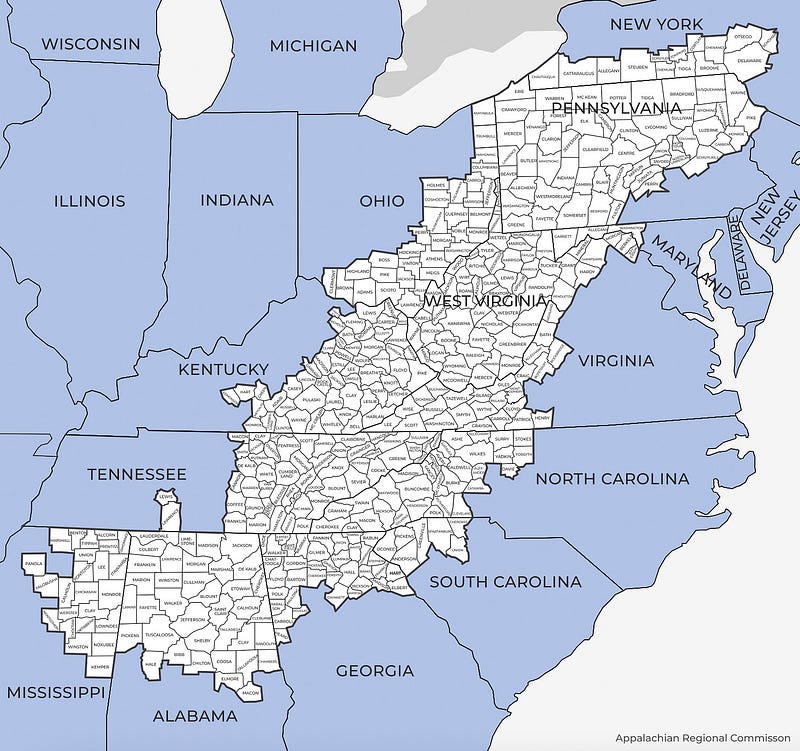
Demonizing these people as dirty, smelly, ugly, stupid, the list goes on, is not only a tactic to demonize the non-taxable but also a way to manufacture consent for the horrific policies that often leave these people behind, members of our human family, who are currently at the epicenter for the opioid crisis.
Kinsolver, a fan of Beth Macy’s Raisizing Lazarus, is careful and correct to note that our treatment of the addicted is entirely inhumane and utterly shameful, often leading to people casting aside those addicted as “failures” and ignoring that they are in fact suffering from a major disease.
One shutters to think of a world where all disease patients are treated this way. What if, say, your 90-year-old grandmother who has cancer was kicked out of the house for her “habit” and told that she was a “failure” and a “screw-up,” simply because of the fact that she has cancer?
Worse even, further investigation reveals that these opioid-producing companies, helmed by some of the most infamously heinous billionaire clans in the world, like the Sacklers, released these harmful drugs into the marketplace knowing full well their lethal potential and deliberately targeting the people of Appalachia.
Kingsolver thoughtfully, in just a handful of minutes, invited us to reconsider our preconceived notions of what we thought Appalachia might be, and what Appalachian people have historically endured.
You can listen to the episode here:
Her new book, Demon Copperhead, a novelization of her attempt at the great Appalachian story is a spell-binding and often heartwrenching tale of the human cost of the opioid crisis, and the lives of Appalachian people, who are demonized from birth and live as societal pariahs, cartoonishly infantilized in popular media and the modern political discourse and imagination.
Demon Copperhead recently won the 2023 Pulitzer Prize for Fiction.
The talk is only an hour, and I’d strongly recommend you give it a listen. I found it to be profound, and I hope you will too. Let me know your thoughts in the comments below!
With love & liberation,
Alex