
Baobab Trees Are Pure Magic
Legend says that they are planted upside down!
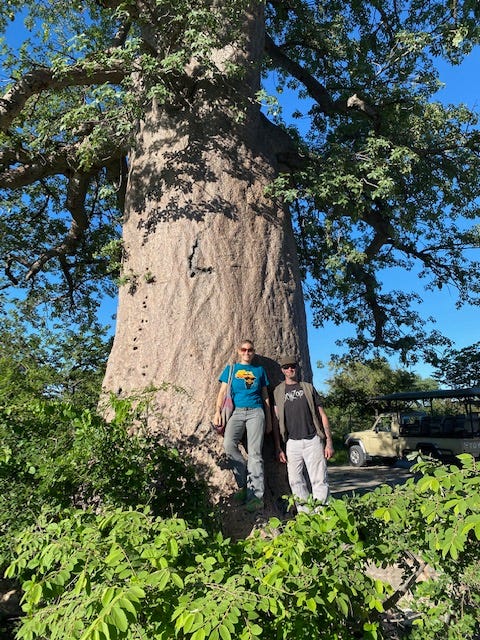
From the beginning of December 2021 until mid-January 2022 we housesat in Maun, Botswana. While there, we met a man who owned a safari lodge in a town a couple of hours away. A town named Gweta.
When we were finished with our housesit, he invited us to be guests at his lodge and promised to take us on a few excursions around the area.
One such excursion was to the Baobab Forest.

We were ecstatic to hear that there was a whole FOREST of these beauties. We had seen numerous of them through the bus and train windows on our travels overland coming from Uganda to Botswana but had never had the chance to get up close and personal with them.
Baobab trees (Scientific Name Adansonia Digitata) can grow as much as 25 meters (82 feet) in height, and as wide as 14 meters (46 feet) in diameter.
They are one of the most iconic trees in Africa.
The first one we saw (photo above) was at a bar that he took us to the first night we were in town. We already thought that we had died and gone to heaven by being able to see this behemoth up close, but we had no idea what we were really in for.
One evening we loaded up into his safari truck, the two of us sitting high in the back, able to get a 360-degree view of the surrounding area. It was a peaceful night, not a breath of wind, and we bumped our way out into the wilderness along a dirt track.
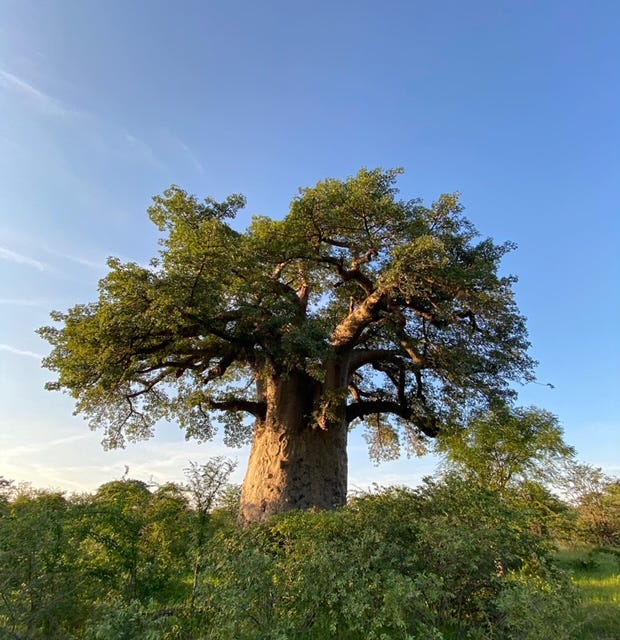
We arrived at a point where we could see about 6 huge trees a little ways off the road, and we all hopped out of the truck. We made our way through the bushes towards them and were gobsmacked when we arrived at the base of one.
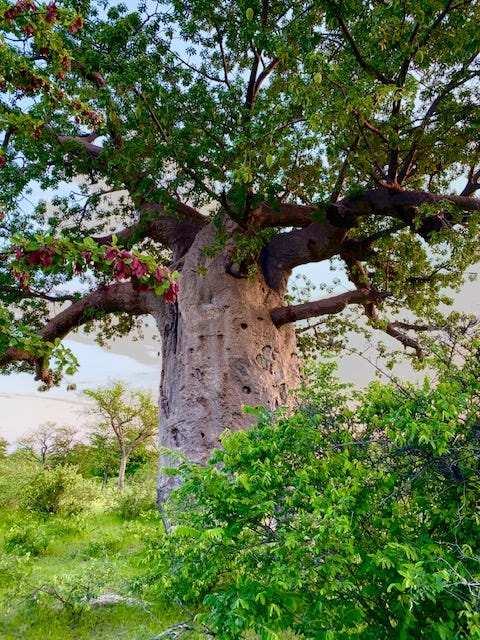
Our host brought us to the biggest of them all and was shocked when he saw that the largest limb on the tree had broken off. He was a little dumbfounded since in all the years he had stayed there, he had never seen that happen.
Was it because the changing of the climate?
Not enough rainfall?
It’s hard to say.
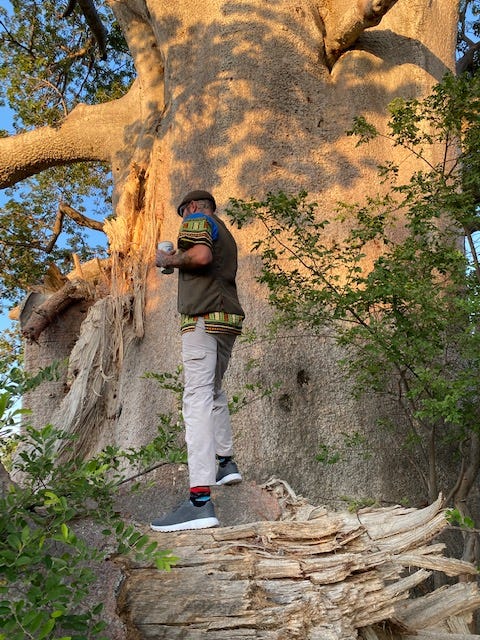
These trees actually are considered more of a succulent, than a tree. And in fact, when I looked at it closely, the bark reminded me of a giant jade plant.
Also known as The Tree Of Life, our host told us that their trunk is actually hollow and can provide shelter, plus the branches and bark hold an immense amount of water. During long drought periods, the locals carve hand and footholds into the side of them, then climb them to access the life-saving liquid.
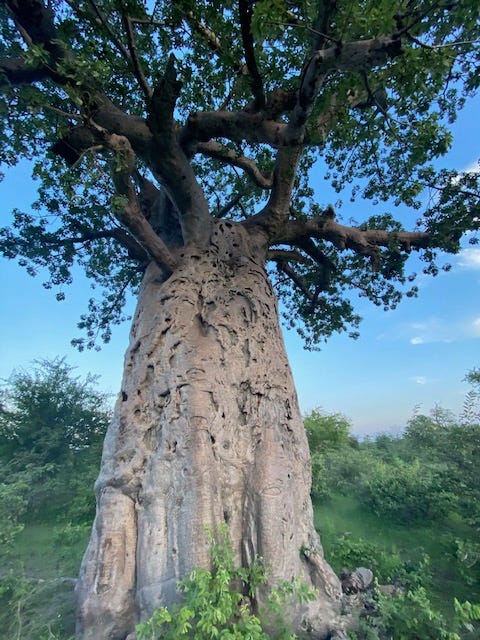
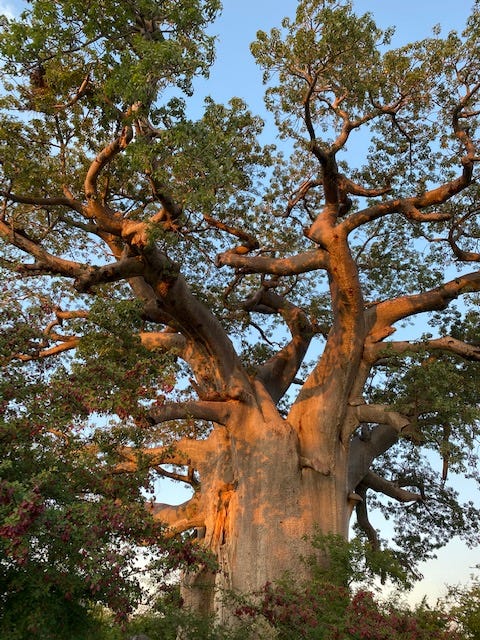
We were also told that local legend says that they are planted upside down, and what we are really seeing on the top is the roots.
One can only imagine what these giants look like below the ground!
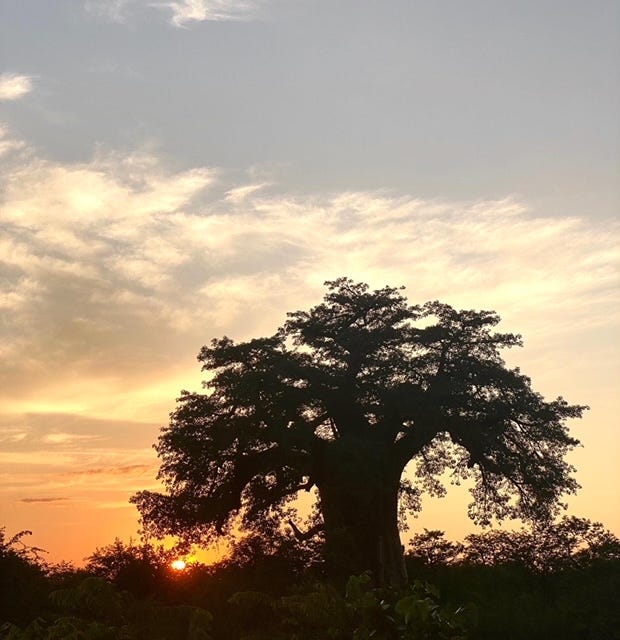
We stayed around these amazing trees for as long as we dared, not wanting to stay out too late. We still had a 40-minute drive to get back to the lodge.
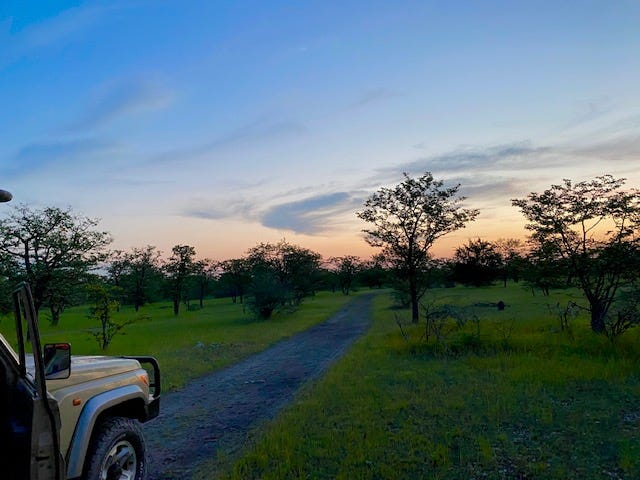
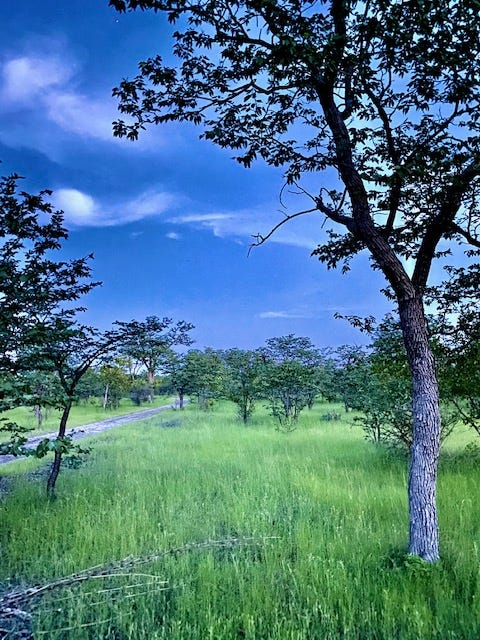
We bumped our way back into the stillness of the day's end and reflected on just how magnificent this planet is, and how lucky we are to be living on it.
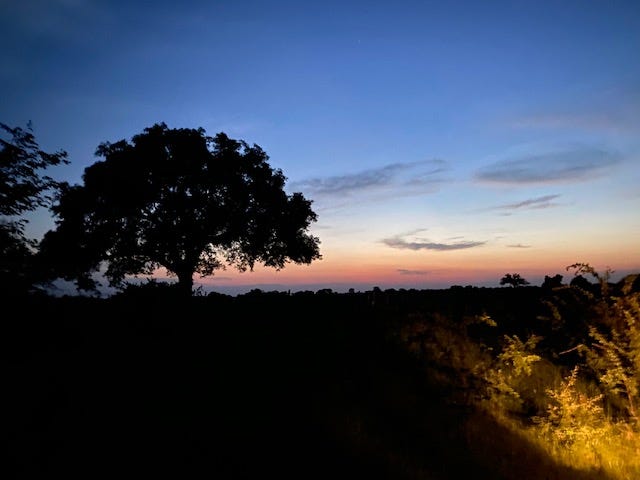
We will always remember this perfect night of being up close to these magnificent trees. To us, these experiences are what make traveling our top priority, and we will never tire of the quantity and variety of life on our planet.
To learn more about Baobab trees, check out this informative article:
Hi there, we are 2 Canadians, Jill and Chris from Artistic Voyages. We have been nomadic since 2017 living in numerous different countries, and experiencing the life and diversity of our planet on the ground and firsthand. We have now been on the African continent for over 2 years! Join our adventure by hitting the links below! Subscribe to Medium to get full access to my writing plus thousands of others!
Website | Instagram | Facebook | Twitter | Patreon| YouTube | Medium


