
Banning Cryptocurrency Isn’t Going To Fix Inflation
Should I have listened to my 16-year-old self?
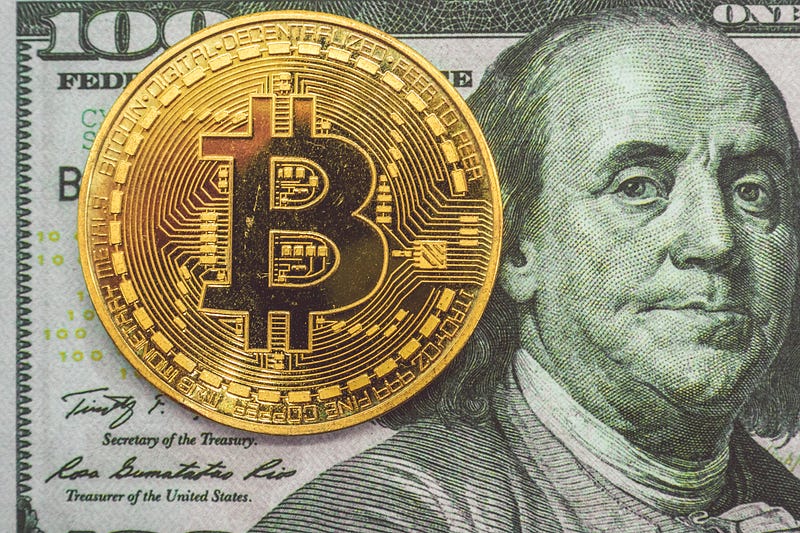
Investing is rather risky hobby or profession. I’ve tried investing in some things at some points in my not so long life.
When I was 16 I was really obsessed with Bitcoin when it was around $1000/$2000 — that period. Now I wish that I would have invested in Bitcoin.
But I was 16, didn’t have much money so that my money doubled in a week was a big achievement after all. God knows how much money that my Bitcoin would have been worth right now.
Of course, my $50 wouldn’t have made me a millionaire of the back, but I could have continued investing and have a nice portfolio now.
Inflation rates go up & crisis causes government trust issues
Cryptocurrency and Bitcoin have been popular for many years now, but since the outbreak of a global pandemic, the popularity of non-printable assets like crypto, gold and silver are sky-high.
Inflation doesn’t help either.
Politicians worldwide have said for two years long that the inflation was something temporary, which it obviously doesn't.
A lot of economics and financial journalists have warned us for this moment of quick increasing inflation rates — and now the politicians are telling us that it suddenly isn’t temporary anymore.
What?
Of course, people are buying reliable assets like gold and silver.
And politicians are scared, the European Union is trying to ban Bitcoin — luckily that draft has been rejected.
What are they thinking? That cryptocurrency is the cash of criminals — which may have been the case around 2009 to buy weapons on the dark web. But the Blockchain has such a bigger purpose in 2022.
On the other hand, the European Union and the central banks (ECB) are trying to develop their own kind of cryptocurrency — the Central Bank Digital Currency.
Which is basically Bitcoin, owned by a world government.
What could go wrong?
Governments haven’t really proven themselves to be trusted with these kinds of technologies.
Is hyperinflation around the corner?
The big question is: is hyperinflation around the corner?
Perhaps it is. The Russian-Ukrainian war/crisis isn’t helping either, with gas prices surging even more in Europe.
Prices of food and other products are increasing and governments aren’t taking off the taxes on healthy food and nutrition.
Current inflation rate is set around 7.5%, and it is predicted that this will be 7.9% in March — that’s a 0.4 percent point increase in a month!
Hyperinflation might seem far away, and it might be, but we see daily increases in gas prices every day — which is a sign of hyperinflation. How long will it take until we see this with food and other products?
How to beat inflation?
Funny thing. You can’t.
You can’t actually beat inflation — you need to protect yourself and your money from it.
How?
Investing in a couple of things, like things the government can’t print:
- Gold & Silver
- Bitcoin & Ethereum
- Real Estate
Very important is to have a diverse portfolio. Don’t go all-in on one asset like Bitcoin or Ethereum.
This is to avoid as much risk as possible. Another thing to avoid: banks.
Banks are only increasing their mortgage interests and lowering their saving interests.
Disclaimer: this is not financial advice — I only try to raise awareness among the population. Do your own research.


