
Banish writer’s block and spark your creativity
Top 25 hacks to kick-start your writing.
Writer’s block affects everyone, whether you are writing a book, blogpost or paid article. Use this list of 25 techniques to get you out of the rut and march forward with your writing tasks. These methods all work, but not everything is appropriate for every genre. Use the ones that suit you best.
Without much ado, here are the strategies:
1] Use Templates.
If there is a single tip I would give, this would be it! Never, ever start with a blank page.
Whether it is a blog post or book or paid article, always use a template. For my book review blog, I have a specific outline and 3 questions that I want to answer about the book. This ensures I can churn out 500+ word blog posts in under 30 minutes. If you are writing a fictional book, create an outline or break the plot into sections like a play. If it is a non-fiction topic, create the table of contents first and then move on.
For books, use a pre-formatted Word template. This will save you hours of editing and formatting after you finish the book.
2] Use writing prompts
There are hundreds of websites that provide writing prompts. My favorite is from the Reedsy website with ideas of all types of genres. Just set a timer for 10 minutes and then answer the prompt, aiming to write a minimum 100 words. This will get your creative juices flowing. Once the timer ends, go back to your original task.
3] Role play
Imagine you were Bill Gates or Leonardo da Vinci, what would you do? If you were a tribal chief from the Peruvian jungle, and this was your first visit to a cosmopolitan city, how would you approach the problem?
How would you write if you were a tribal chief from the Peruvian jungle?
This seems like a bizarre way to write; tribal chiefs would never think about creativity exercises. However, this method works very well because stepping into a different mindset allows us to shed our prejudices and limiting mental models. For example, many leading actors and authors found success only after using a “stage” name or pseudonym.
This method works for all different genres, even a fiction book as you could incorporate it like a dream or the hero meeting this person. Be innovative!
4] Use a trending topic on Google.

Head over to Google trends and search for a broad topic related to your target article. Under the time graphs, you will see terms of interest, some with tags called “Breakout” or “Rising” as these are the topics folks are searching the most. Google trends allows you to explore by date ranges (default is 12 months and country = US). See what terms come up terms by changing the location to “worldwide” and date range to “30 days” or “7 days”. Not only are these amazing keywords to incorporate for higher SEO, but you also get some material to write by adding your unique spin to a topic that is truly relevant to readers.
5] Take a leaf out of Medium.com
Head over to the tab named “Popular” on Medium.com. Simply read the headlines for the top 25 articles. See any patterns? If yes, then see if you can combine that topic to your writing.
If not, then pick one at random and use at least one word from the headline into your article. This forced linking will coax your brain to fire in new directions.
If you are using the app or browsing the Medium site on your phone, then you will have to scroll down quite a bit to find this section.
6] Food fun, aka the Ariadne Oliver technique.
I first heard this idea from Niru, an award-winning writer and blogger with hundreds of followers! The technique is super fun. Read more about it here.
7] Mind maps & Drill down trees.
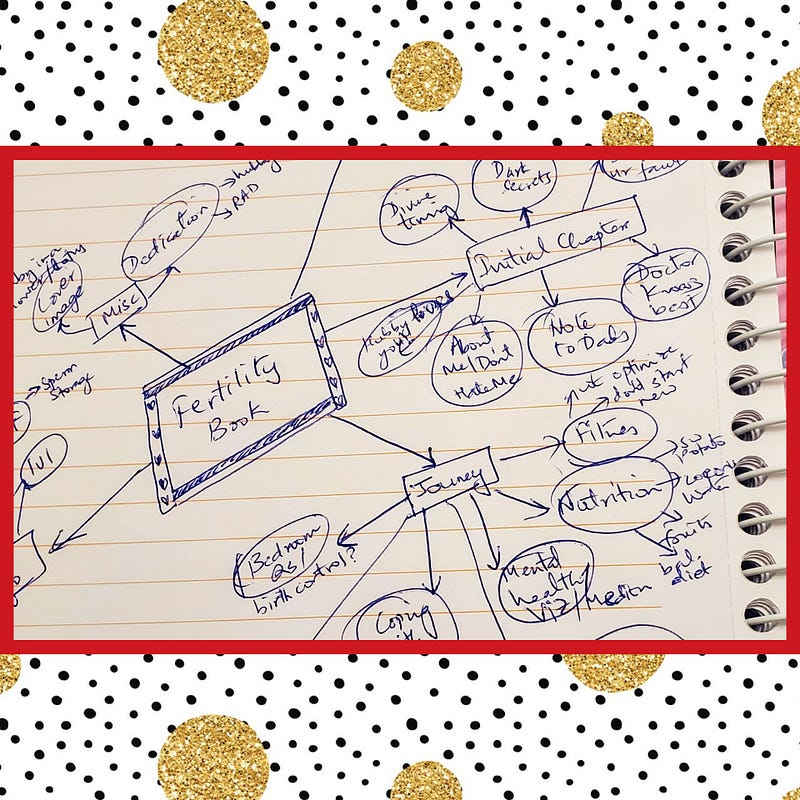
Always be thinking about a drill-down type series of posts. For example, let us say you write about skincare and fashion. Post #1 would be overall skin care routine. Post #2 would be routines for different skin types or age groups or ethnicity. Post #3 would deal with actual brands that anyone can use, especially on a budget. Post #4 = brands for special skin types. Post #5 = Top 5 best books on skin care and diet. Post #6 = homemade beauty tips from across the world. I could go on forever. Aim to write at least 500 words on each.
See how I drilled down from broad to narrow? No matter what your blogging niche, you will find topics to write this way. You may argue that everything has already been written this way, but nothing has yet been written with your exact personal perspective. Go for it!
Mind maps are awesome!
If you are writing a non-fiction book, this method is amazing for building out a table of contents. Use a mind map to design this, where broader topics become chapters and nodes become sub-headings.
For fictional stories, you might want to use the main plot then flesh out the attributes and backgrounds/likes/dislikes of primary characters, flesh out the settings (office, jungle, wedding, etc.) Mind maps are fantastic for this and the physical act of drawing the notations will aid you immensely!
8] Listicles
I love listicles because you can craft it with so many permutations. Top 7, 10 best things about ___, 5 things NOT to do for ___. How to achieve xx in 5 different ways.
You get the point. For a fictional book, you might have a scene where a mentor or parent is telling the hero or the heroine this type of advice. Get imaginative, but use your writing as much as possible. Does not make sense to invest effort in writing that you cannot use to publish! 😊
9] Quora

Head on to Quora and search for your topic. Manually look through all the relevant questions and identify 5 which have at least 50 followers, or 5000+ views. How would you answer that question — convert to blogpost or article. This method is an ingenious way of writing about topics that readers care about. In addition, post a precise on Quora and link to your article for people who are looking for more details. Viola, an easy way to generate traffic to your site!
10] Random word triangle.
Head over to the site Random Word Generator and select 3 words. I typically pick 2 nouns and 1 verb. No matter what you are writing, make sure you add these 3 words in somehow. Bonus points if you apply them within the first 100 words. More kudos to you if at least one word occurs in the headline, if applicable.
11] Genius ideas from Niru

Again, I am linking to this brilliant article by Niru with 5 surprising methods to overcome writer’s block. I have tried all 5 and they are super useful! The last one is the best.
Remember to check out the last one on the above article!
12] What do Scholars say?
Step 1 — Set a timer for 20 minutes.
Step 2 — Head over to Google Scholars page. Yes, I know you are not an academic. Yes, most of those research papers are boring and stuffy. However, remember these are FREE ideas backed with research. Someone got paid to validate those topics.
Type in your topic — keep it a bit generic though. Once the results come back, make sure you unchecked the boxes on the left that say, “include patents” and “include citations”. Unless you loved the headline, disregard anything that says book as Google indexes a lot of books. Ideally you are looking for anything that says “pdf” next to the title. However, this is not mandatory as you will at least see the abstract.
Step 3 — Read at least 1 article from the first page, then directly navigate to the bottom of the page and head over to results on the 5th or 12th page. These will not be directly relevant, but they will BE interesting. Aim to read at least 5 abstracts or 3 articles — skim, not learn.
Step 4 — Once you are finished, or the timer finishes, head back to your original article and explore how you can employ what you just read into your task.
This seems a little out of the way, but I have successfully found article on everything under the sun. Skeptics, type “werewolf fantasy”? Cha-ching with 9,580 results. “Metaphysics + Peru”? 12,100 results!
13] Compare & Contrast.

Blog post comparing the pros and cons of items related to your theme. This could be product reviews, software, the heroine musing about her 3 potential suitors, the bestselling books in your niche or anything else.
14] Alternative History
What would have happened if the Nazis had won, or dinosaurs still existed? If you could go back in time and change a key decision? If you were advising your 16-year old self, what would you write?
This is similar as role play, but it forces you to think more deeply.
19] Use a Famous Quote.

Google search for a famous quote and start your article with that line. Use your imagination to connect your task and the quote or even the person who wrote it. Worst case, you can always start with “I love this quote by so-and-so” and then start your article.
Do use a timer set for 5 minutes, to ensure you do not get sucked into an hour of useless “research” on quotes.
20] TED talks.
Watch a TED talk on your topic and summarize the information or tie back to your original task. Bonus points if you watch the talk at 1.5x speed or 2x.
21] Write for a Contest.
There are many sites which offer weekly and quarterly contests. Even if you write only specific genres, participating in such contests flexes your thinking muscles and helps you generate original ideas, write faster and become more creative.
22] Fuel your Creativity.
Garbage in, garbage out. You must stimulate your brain with interesting ideas on a regular basis. I wrote this article with 7 easy (and FREE) methods that are guaranteed to turbocharge your creativity. Take a look!
Stimulate your brain with creative inputs — link above
23] Interview an expert.

Self-explanatory, I think. Real people for non-fiction books or blogs. A scene about interviews for works of fiction.
24] Rinse and repeat.
Do you have older blog posts or content? Can you combine some and reuse? Do you have any unpublished draft? Polish those and publish!
25] Write about writing.
This is a bit sneaky but useful for the long term!
Have you noticed when you get writers block? Did you sleep late, have a fight, or eat junk food for the last meal? Sometimes, fatigue and health issues can reduce our productivity and cause writer’s block. Noting such occurrences will help you prevent them in the future.
In Conclusion
Overall, the idea is to keep writing even when you have writer’s block. Once you set a pattern and create a disciplined writing, your brain will automatically cave in!
Again, not all the methods work in every situation, experiment until you find your groove.


