
“How the Mighty” Chapter 10 — Roland
Banging on the Beach
The hunt for the damn torpedoes
He’d never forget that day. But at least once they reached the dubious protection of the shingle bank, they were out of direct machine-gun fire from the heights.
Mortar rounds came crashing in, sending the rounded sea stones howling and moaning. Shell fragments sliced through air and flesh. Machine-guns swept the crest, rattling the stones down and keeping heads low. Snipers were active from somewhere above. One soldier, braver than the rest, peered over the top and fell back immediately, a round between his lifeless eyes.
Sergeant Osmond and Roland looked at each other, and together they pushed the body up to form a makeshift parapet. Bullets slammed into the warm flesh every few minutes, adding a drumbeat to nightmare music in the years ahead.
All along the beach a thin line of soldiers clung to the shingle. All were wet, covered in sand. Wounded were everywhere, medics crouching over them, seemingly heedless of the storm of bullets sweeping over the beach. And many were dead. Those that weren’t lay as low as they could, huddled into whatever cover they could find.
The beach was shrinking with the rising tide. The grim debris of battle lay along the sand. Obstacles of steel and wood placed by the Germans, and everywhere corpses and discarded weapons and equipment. A wrecked tank sent up a plume of dark smoke. Landing craft were tilted over the obstacles, many of them not just holed by the logs and rails, but wrecked by the mines which studded them.
Despite the prophylactic stretched over the muzzle, Roland’s rifle was solid with sand. Wet, salty sand. It would surely be rusty by the evening. If there was one.
“No future here,” Sergeant Osmond shouted to Roland, a foot away. “We’ll drown when the tide gets in.”
“We’ll be dead by then,” he responded, a mortar round cutting off his last words, and beginning a horrid shrieking a few yards along the beach. An arm whirled lazily overhead, trailing red drops against the clear morning sky.
The noise of battle rose to a crescendo. Another landing craft dropped its ramp, a few hundred yards away, and every German weapon that could bear fired at the crowd of men suddenly exposed. Roland stared at the slaughter. Welcome to France.
“Fucking wire.” Sergeant Osmond had poked his head up for a few seconds. “Barbed wire between us and the bluff.”
Roland rearranged the corpse’s legs, peering under one bent knee. Thick coils of wire barred progress, beginning three yards from his nose.
“A couple of Bangalore torpedoes will clear that away,” Osmond said. “Then there’s cover climbing the slope. Bushes, rocks, all kinds of crap. You got a torp on you, Rollie?”
Roland didn’t bother responding. Bangalore torpedoes were tubes five feet long, stuffed with high explosive. You didn’t stick them in your pockets. He worked the bolt on his rifle. There was a grinding feel to it, but it would work.
“Private Harris was carrying three of them. Where are you, Harris?” the sergeant yelled the last out at the top of his lungs.
“Blown to shit, Sarge,” Roland shouted back. Something had set off his bundle of bangers and he had gone out in an impressive way.
It seemed pretty straight forward from here. Anyone moving past the shingle bank would get hung up on the barbed wire before they could get to the cover of the bluffs. Every German gun in sight would zero in on the helpless target.
“There’s got to be some torpedoes around. If we can get five or six of them together, we can blow the wire from cover and make a rush through the gap.”
“What about mines?” Roland shouted. The Bangalore torpedoes would explode any mines in the wire, but there were bound to be more in the soil beyond. The Germans had a nasty type which bounced up to testicle height before exploding.
“That’s where you earn your pay.”
Fair enough. He had the marker flags. Another was supposed to use a probe to locate the mines for him, but that guy had been run over by a tank.
“I’ll go search out some torps,” offered Roland. He pulled off his pack, and began stripping off his outer clothing. Like every man in the company, he was wearing two layers of uniform, and had been burdened with equipment of every sort.
“Good man,” said Osmond, following his example, and standing the bundle of markers upright against the shingle. “You go that way, and I’ll go the other. Back here in ten by the flags, okay? Stay low!”
In the end, it was more like half an hour. The low cover offered by the shingle bank was almost completely taken up by men doing their best to hide from the ceaseless cascade of bullets and mortars and cannon fire from above. Roland crawled, occasionally jumping up, running, and falling prone again to pass an exposed area, every moment expecting a bullet or worse.
There was no organisation at all. Where were all the officers, supposed to lead the assault teams as they had practiced? Hell, where were the NCOs yelling at the men to get them moving?
Just a line of crouching men in soiled green clothes waiting to die.
Roland made his slow progress, looking for the distinctive shapes of Bangalore tubes. He spotted some long cylinders, but when he reached the man holding them, he found they were mortar aiming poles. No mortar, but the private holding the poles had a death grip on them.
“Stop!”
Roland turned at the call and automatically dropped to the beach. A line of small geysers of sand zipped across where he would have been if he hadn’t reacted.
He lizard-crawled closer to the shingle bank. A soldier sat with his back to the stones, seemingly enjoying the ocean view. He beckoned to Roland.
“Shit me, that was close!” Roland said. “Thanks!”
“Fixed line,” the other man said. “He gives a squirt every five seconds. No imagination at all, but he’s used up a lot of our guys. Say, you wouldn’t have a smoke on you?”
As it happened, Roland had a pack in his tunic pocket. A little damp and crushed, but he dug one out and offered it.
“Ah, that’s the stuff!” The soldier sucked the smoke down greedily.
“You seen any bangers?”
“There are my three, just over there. Along with my foot.”
Roland followed the other man’s gaze. Twenty yards away was a bundle of three torpedoes. And a little further on, a leg.
“Shit.”
“Yeah. I guess my bit of the war is over, right? It’s okay. They wrapped me up tight and gave me a shot. Said I’d be on a hospital ship in time for lunch.”
“Apple pie and a pork chop, buddy.” Roland handed over the rest of his cigarettes. “Have these while you wait. And thanks again!”
The water came steadily closer, and the beach had narrowed visibly by the time Roland returned to his marker flags with the bundle of Bangalores.
Sergeant Osmond hadn’t returned — maybe he wouldn’t, thought Roland, contemplating the amount of lead flying around the beach — but a few more from the company had trickled in, sent back by Osmond. They moved along the beach in short rushes, sprinting, and then falling prone. Sometimes they didn’t get up again. Few of them had managed to keep their equipment or weapons intact, but one man had a Browning Automatic Rifle, and there were two sections of Bangalore torpedo.
Roland used the sergeant’s authority to improve their position. More bodies hoisted up in front to give a little more protection. Sandbags would have been better, but they didn’t have sandbags. Plenty of corpses, though, and more every minute.
And a count of weapons and ammunition. Damned few. He set those with weapons to cleaning them, and those without to go find replacements. Anything other than just lying in the sand waiting for death, which so far as he could see was all that anybody else wanted to do.
Those he could see, sharing the same narrow line of shingle, were unfamiliar. Other regiments mostly, and even a few from the other division supposedly landing at the far end of the beach. Miles away from where they should be.
Or maybe Roland was in the wrong place. None of the landmarks he had memorised were visible.
Nor any officers, and precious few NCOs. In exercises, the colonel had been prominent, walking up and down, yelling at everyone to get them going in the right directions. He could be a real asshole sometimes.
Roland had pretty much given up on seeing Sergeant Osmond again, when he plopped down beside him.
“You’re wounded, Sarge!”
Osmond had a sleeve ripped and covered in blood, a field dressing applied to a rent in his upper arm.
“Yeah. I’ll be okay. They didn’t get my jerking arm. Believe it or not, Rollie, but this is the quiet part of the war. We should be a mile that way.” He pointed along the beach.
“Are we going there?”
It would be better to be in the place they had memorised and trained to assault. And the colonel would tell them what to do.
“Nuts we are,” Sergeant Osmond said. “We wouldn’t make it. You saw the map. All the defense is on the beach. There’s nothing inland. That way.”
He pointed up the slope. Through the wire. Through the minefields.
“And,” he added, “we got to get all these swinging dicks off their asses. Kill some Krauts. Do our fucking jobs.”
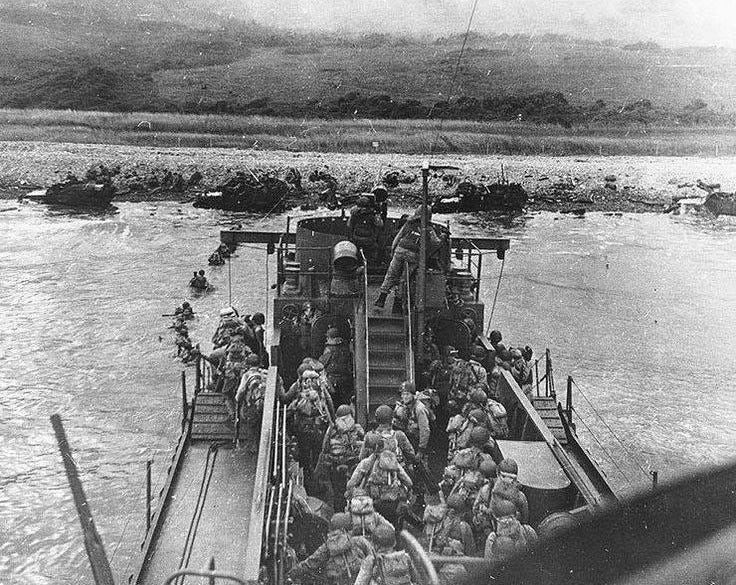
On Omaha Beach, I discovered as I read through the various books and web resources, a major problem for the Americans was the initial failure of command systems. There were two divisions allocated to Omaha, and their units were thoroughly mixed in the landings. Coupled with the failure of the bombardment to do more than dent the defences, this meant that individual soldiers often found themselves pinned down, separated from their superiors, and/or distant from their planned objectives.
Soldiers did their best to stay alive while waiting for orders. Junior leaders had to assess an unfamiliar situation with inadequate resources and make plans that would both advance the assault and not get them immediately killed.
Here and there along the beach officers and NCOs began to do what they were trained to do, and began working to penetrate the barbed wire and minefields, eliminate the defence positions — and their defenders — and move inland to open up roads so that vehicles and combat units could begin moving off the beach to their first day objectives several kilometres inland.
In many cases, two different leaders would make the same assessment at the same time and place and act independently, each unaware of the activities of the other until much later, if at all.
I wrote a story about this phenomenon:
My answer was that they were so focussed on the immediate and important details of their task that they simply did not have attention to spare on other things.
Leadership — heroic leadership — emerged at Omaha Beach and eventually led to a limited victory. What had seemed like disaster at dawn turned into a reasonably secure beachhead by mid-afternoon, with larger landing vessels able to unload vehicles and not have them immediately shot up or swamped by the waves.
Britni
The whole story:


