
GROWING UP
Ballpark Days: Growing Up With Baseball
America’s national pastime proved a constant companion throughout my childhood and adolescence
In America, everything moves fast. People talk fast, interrupting each other mid-sentence, “Oh my gosh! I know, right?” You drive to places that are a five-minute walk away to get there faster.
Even when it comes to food, speed is of the essence. People will stop at the drive-thru of their local fast-food chain on the way home to have dinner, sometimes while still driving.
Careers move fast too. The idea, now often disputed, is that if you work your rear end off from the beginning, you can accelerate your career immensely. And who would not want to get a higher paycheck earlier?
After all, in the US everything is about winning. Being the class valedictorian. Winning the state tournament. Beating the quarterly growth number. Being employee of the month.
In fact, at the moment of writing, there is a contentious debate brewing in the American press about whether participation trophies in kids’ sports incentivize the wrong behaviors.
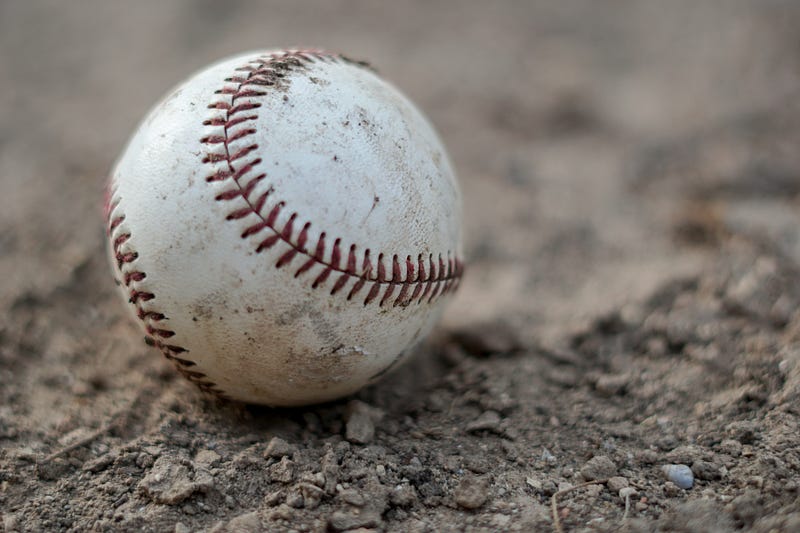
And yet, none of those cornerstone values matter when it comes to the most American of pastimes: baseball.
To the outsider, baseball games take too long — sometimes well over three hours. They can be overly tactical consisting of a bunch of undecipherable signals from the catcher telling the pitcher which type of spin to put on his ninety-mile-per-hour pitch which often prove to be inconsequential theatrics. And, ultimately, it is not really about winning.
Going to a baseball game can eat up an entire day of productivity for the average American and yet they still flock there routinely. Understanding the game fully requires years of patient statistical deep dives and first-hand experience. And, since your team plays one-hundred-sixty-two games over six months, the chance they will lose on the day you go to watch them is relatively high.
There is not much running or jumping involved and ninety percent of the throwing is done by one player from each team who, in most cases, does not get to swing a bat.
It is difficult to understand whether a ninety-mile-per-hour throw has been good (a strike) or bad (a ball) without signaling from the umpire. Imagine if in soccer, a goal would only count when it hit a specific part of the net, and you would only know this by the referee flashing a cryptic signal.
When compared to other sports on offer, baseball does not have the show-stopping contact of hockey or the NFL, it lacks the raw athletic spectacle of the NBA and does not have the free-flowing dynamic of soccer. None of these however match the experience of a day at the ballpark.
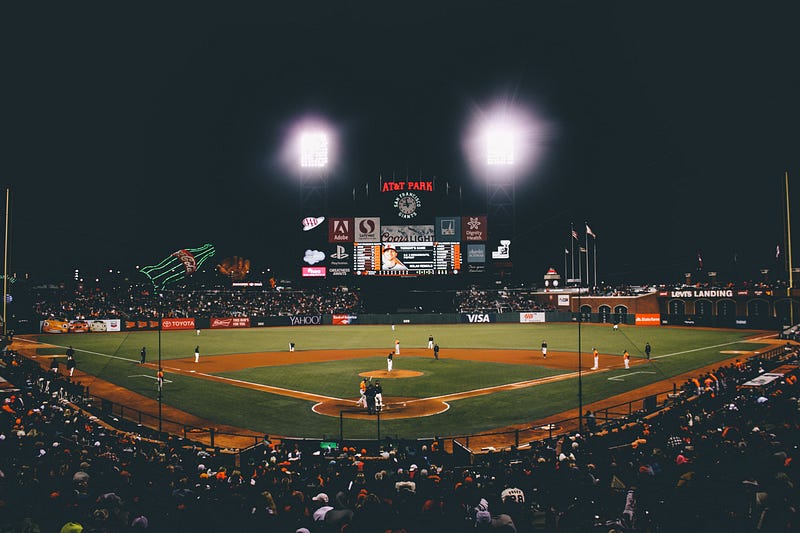
I quickly came around to the idea that there was no better place to spend a sunny summer day than at the ballpark with friends and family. The atmosphere at baseball stadiums is quite different from the terraces at European football matches. Belligerent drunk hooligans in black Stone Island hoodies looking for a fight are replaced by families in ball caps that could just as well have been out for their weekend picnic.
Much like a weekend family picnic, baseball is all about rituals. Some local celebrity or lucky fan gets to throw the ceremonial first pitch, usually missing the mark but getting applauded enthusiastically nonetheless. Then everyone rises, takes their cap off, and places their hand over their heart as the national anthem is sung. Many sing along and some get visibly emotional, despite having heard it at every single sports event they have been to in their life, it remains a beautiful melody.
Pitches are thrown, runs are batted in, fly balls are dropped and foul balls are caught by toddlers who brought their mits to the game. Everyone holds their breath as a deep fly ball is suspended in the air working its way into the outfield to see if it will be caught on the outfield track or make it into the bleachers for a homerun resulting in a mellowed groan or in an ecstatic roar followed by fireworks — that is about as suspenseful as baseball can get.
Some old-timers listen to the radio commentary in one ear to get a strategic perspective on what they are watching while simultaneously and unnecessarily keeping score on paper as if on a golf outing. People work their way up to the concourse for hot dogs, corn dogs, and cotton candy shaped like dogs, without minding the missed half-inning of action.
Then after a couple hours of morse code signals from catchers to pitchers, spitting and hand licking for a better grip, it’s time for the seventh-inning stretch to the tune of Take Me Out To The Ball Game. This reminds all those who have not already consumed some peanuts and cracker jacks to do so along with another cold one.
Coming into the eighth inning, if the home team is up by a slim margin Bon Jovi’s Living On A Prayer is blasted from the loudspeakers. If they are getting blown-out Journey’s Don’t Stop Believing re-invigorates even the most cynical of home fans. Then, soon enough, whether following the euphoria of a walk-off grand slam in the bottom of the ninth or a save by the away team, everyone leaves in an orderly fashion having enjoyed their day at the park.
Who won? It doesn’t matter. “They’ll get ’em next time.” “Oh shucks. At least we had a nice day out in the sun.” This is the spirit of baseball. No ultras groups contesting the club hierarchy decisions or drunks throwing flares onto the field of play. (Unless, like me, you are a Minnesota Twins fan who has seen his team get swept by the Yankees in the first round despite being up going into the seventh inning of every game — thanks Joe Nathan.)
Some of the best baseball players in the history of the MLB have been Italian — or Italian-American at least. There was Joe DiMaggio who was introduced to — and subsequently immortalized by — non-baseball-loving audiences by Simon and Garfunkel. There was New York’s wisest philosopher Yogi Berra who coined the oft-repeated mantra by sportscasters the world over “It ain’t over ’til it’s over.” Mike Piazza, one of my idols as a boy, in part because my uncle had a friend in Italy called Paolo Piazza who he convinced me was his cousin. Mike Napoli — guess where his ancestors came from? Rocco Baldelli — can you have a more Italian name than that? My beloved, albeit unremarkable, Minnesota Twin Nick Punto. Barry Zito. Bobby Valentine. Frank Viola! The list goes on and on. Within a few months of living in America, I had made up my mind that I would follow in their footsteps.
As an aspiring Italian-American baseball player, I studied re-runs of the 2000 home run derby, read kids’ biographies of Ken Griffey Junior and A-Rod, bought a Sammy Sosa jersey (before I knew what corking a bat meant), and adorned my walls with posters of the legends of the game.
I had my mom sign me up for the same North Carolina recreational league as my neighbor Robert. We had green uniforms, spat a lot to emulate our heroes, hit quite a few balls because our coaches were pitching them underhand to us, and, for the most part, had no clue what on earth we were doing.
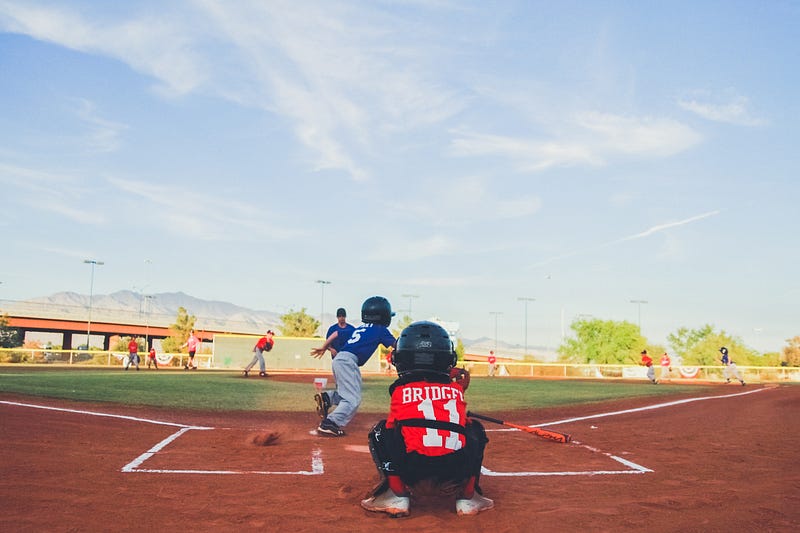
Baseball is probably the worst game for a restless seven-year-old to play. It requires patience, strategic acumen, exceptional hand-eye coordination and, well, more patience.
My parents hated coming to the games. Who can blame them, the pros were boring enough as it was, and people actually paid to watch them. Their favorite part though, was the coaches’ obsession with saying “good eye” when one of us would just stare at a passing pitch in the hope that it would not hit us and “good contact” when we would manage to make the slightest bunt and guide the ball a couple of inches ahead of the plate.
On one occasion when one of my stellar teammates was stung in the face by a ball, I could hear my dad murmur in Italian to my mom on the sidelines “What’s he going to say now? Good eye?”
“Good contact.” She replied, holding back a laugh.
I shook my head, thinking “Those Italians will never understand this game” as I picked some flowers along the first baseline.
That year I became obsessed with playing catcher. Mike Piazza was a catcher after all and it seemed like such a cool position. It was the position with the most gear and hence at that age, the most prestige.
At one point I finally convinced my coach to let me play catcher. I was so interested in all the protective padding, the mask, and giving the coach who was pitching fake signals like Mikey-P himself, that I rarely actually caught anything. None of it mattered though, I got to play catcher and emulate Mr. Piazza himself. (In reality, although I saw Mike Piazza when I looked in the mirror, I was much more akin to Smalls from The Sandlot.)
I tried baseball another couple of times after that year. The summer we moved to Minnesota I joined a little league developmental team in our neighborhood of Woodbury. It was third-grade ball and would be the first year of kid-pitch. Like many aspiring baseball prodigies, I was glad the time was finally here. I had only played some games as a catcher the year before because we were not allowed to pitch yet.
Now was the time. I could step up to the mound and answer my true calling. I had seen a video of Randy Johnson on TV explaining how to grip a ball to throw his famous two-seam ninety-nine mile-per-hour fastball and I felt it was only a matter of time before I got up to those speeds.
At that age, you still rotate positions multiple times throughout a game but it seemed no matter how much we rotated I never got to the mound. At one point I begged one of the coaches to let me practice pitching with the starting rotation and learned that you could not just rely on your arm to generate the power necessary to pitch in the high nineties. I learned how to do a full big-league wind-up kick. Now I was all set to lead my team in strikeouts.
Unfortunately, it was not until the last game of my season — I was leaving early, before the playoffs, to go on holiday to Italy — that I was finally called up from the bullpen. My parents were there, watching on, not really understanding the rules but knowing this was an important moment for their son.
I took a few warmup pitches, then looked around to make sure all my basemen were set and got ready for the first pitch. Then like the pros, I shook off a few signals that my catcher was not actually giving me, glanced nervously at first base a few times to throw the runner off his balance, and wound up.
All I remember was a couple of wild pitches, at least one walk but somehow coming off with my coach yelling “Two outs baby!” Although I did not get any strikeouts, I would retire from pitching that summer with two outs to my name. My parents were glad it did not go worse and we could all head to the blistering heat of Tuscany for the summer.
By high school, I had dropped baseball altogether and chosen the route of the lackluster two-sport athlete. When I wasn’t riding the benches of the soccer and tennis teams, though, I was watching insane amounts of baseball. I followed my Minnesota Twins through thick and thin. In a sense, my life revolved around the baseball calendar.
My friends and I spent entire chunks of our summers sitting in the outfield bleachers — first at the gloomy Metrodome and then at the state-of-the-art Target Field — cheering on our team. We never gave up the hope that one day they would make it to a World Series, but unfortunately, we grew accustomed to the incessant heartbreak of first-round playoff losses to the dreaded Yankees. Mornings consisted of checking the box scores in my family’s daily copy of the Star Tribune, watching highlights on SportsCenter, and, of course, arguing with my brother who was a Red Sox fan.
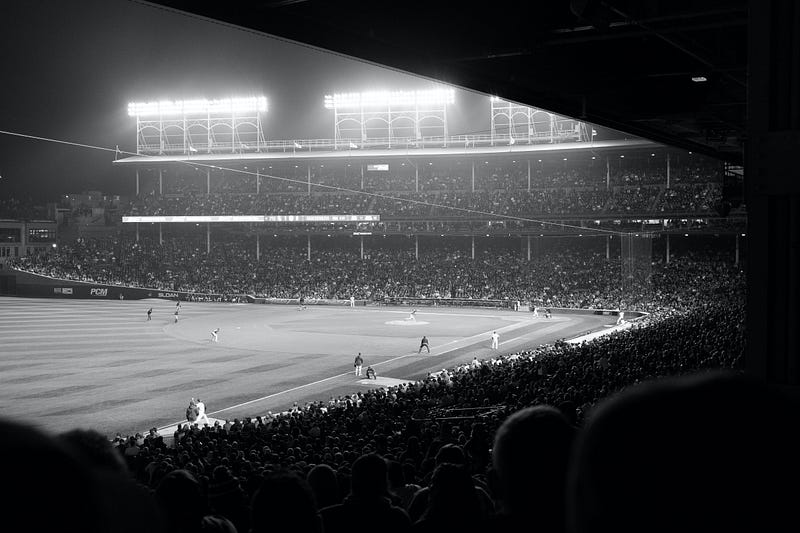
The early 2000s were a strange time to be a baseball fan in America. In many ways, they were emblematic of the US in that period. Payroll and salary cap discussions increasingly revealed something not so pretty about the inequality in the sport. One steroid scandal after another broke out and parents all over the country had to explain to their kids that their heroes were, all of a sudden, cheats. The game consistently failed to adapt and lost fans.
There were some slivers of hope as well. The Oakland As and Moneyball inspired a data-driven renaissance that saw the Red Sox break an eighty-six-year curse and provided mid-market teams throughout the country with the hope that it could be won a different way. Various pitchers threw no-hitters and perfect games — something that all baseball fans cheered for regardless of what team they were on.
The country came together around moments of silence and ceremonial first pitches following 9/11. As politics polarized more and more, it was to baseball that people turned to for a semblance of unity.
No matter what happened — wars, elections, scandals — it seemed that the only thing nobody could touch was the beloved national pastime.
Nowadays, living back in Europe, it is quite rare that I catch even half an inning of baseball due to the time difference and the general lack of interest in it around me.
I do, however, think back rather fondly on my adventures with baseball and hope to one day experience another day out at the ballpark, perhaps with my son. Whenever I catch myself thinking this though, I remind myself that it was not about baseball after all. It never was. It was about everything that came with it.
My travel storytelling centers on long form first-hand accounts with a focus on vivid depictions of the local culture through the people I meet along the way. I also work as a travel advisor tailoring travel adventures all over the world, more info here: https://www.foratravel.com/advisor/nicola-volpi and am host of the Lost In Postulation podcast: a podcast exploring the intersection of pop culture and the mundanity of daily life.