avatarAvi Kotzer

Free AI web copilot to create summaries, insights and extended knowledge, download it at here

2961

Abstract

heroid</a> with their hand.</p><p id="e454">Professor Sheree King includes descriptive definition of ballon in her Fundamentals of Ballet glossary: “The springy quality of a jump.”</p><p id="8641"><i>Ballon</i> is also used as the surname for a wine glass, as in <i>verre ballon</i>. So, to honor all this Frenchness today, I am sipping some <i>vin</i> from a <i>verre ballon</i> as I write about <i>le ballet</i>. I am in Spain, so the wine is actually a Rioja. But the chocolate I’m nibbling as I sip the wine is French. Hope that’s okay with you guys.</p><p id="58af">By the way, pay no mind to those who claim that <i>ballon</i> comes from the ballet dancer Claude Balon. I mean, look at him:</p><figure id="b103"><img src="https://cdn-images-1.readmedium.com/v2/resize:fit:800/0*HTS5H3ZHqzzqQdDM.jpg"><figcaption></figcaption></figure><p id="d011">He was just “jesting” when he said that.</p><h2 id="8017">Up in the air</h2><p id="6191">Remember that photo at the beginning of the article? Geez, you really don’t feel like scrolling up today, do you? Here it is, then.</p><figure id="9bcc"><img src="https://cdn-images-1.readmedium.com/v2/resize:fit:800/1*XWasyPGPokQsYrjMQgVLDA.jpeg"><figcaption>To again be redundant again: Photo by <a href="https://unsplash.com/@fabecollage?utm_source=medium&amp;utm_medium=referral">Fabe collage</a> on <a href="https://unsplash.com?utm_source=medium&amp;utm_medium=referral">Unsplash</a></figcaption></figure><p id="6bfa">Now imagine this scene without the perv sitting there, pretending to read a magazine, and without the subway pole. Let’s keep the subway car, though, because without those other two elements, it’s even more badass. Okay, you’re picturing it in your mind?</p><p id="8cfd">The ballerina would appear to be floating in the air. That is the objective of leaping “with <i>ballon</i>”: you seem to defy the laws of physics.</p><p id="5847">Now, several years ago, T. Thomas, J. Murray, L. Stanley, P. Galler, and D.G.E. Robertson, of the School of Human Kinetics at the University of Ottawa in Canada published a study called “Analysis of the Aerial and Landing Phases of the Grand Jeté”. They included this graphic:</p><figure id="f908"><img src="https://cdn-images-1.readmedium.com/v2/resize:fit:800/1*DxCw6S9amS9_aaQb1RaNxA.png"><figcaption>Screenshotted by Iva Reztok</figcaption></figure><p id="ae9a">Frankly, I think they just slapped in a photo of an early 1990s screensaver, figuring no one would read their <a href="https://web.archive.org/web/20170810235636/http://health.uottawa.ca/biomech/lab/docs/isbs22_tt.pdf">article</a>… or know the difference.</p><p id="dbed">Their conclusion about why we think a ballerina with <i>ballon</i> seems to float in the air for quite a while is interesting and technical. Also, technically interesting.</p><blockquote id="729f"><p>“The human eye perceives the aerial phase of the grand jeté movement to be horizontal in nature, however, as expected, the e

Options

xperimental data showed the center of gravity clearly traversing a parabolic path (figure 1). The dancers extended one leg forward and one backwards, which resulted in positions where both legs were perpendicular to the torso.” <i>— chorus of voices of T. Thomas, J. Murray, L. Stanley, P. Galler, and D.G.E. Robertson</i></p></blockquote><p id="7a29">By the way, Figure 1 refers to the screensaver.</p><p id="2e44">Although the dancer’s body follows the path of an arc, people watching her get distracted by the moving limbs, so they don’t see the curvature. The illusion created is that of a body moving slowly in a horizontal trajectory. Like this:</p><figure id="ede3"><img src="https://cdn-images-1.readmedium.com/v2/resize:fit:800/1*7N8KKzTMvKcLAGhtz_5H4w.png"><figcaption>Screenshot collage: Iva Reztok</figcaption></figure><p id="be2d">Here’s a challenge for you: is she moving from left to right or right to left?</p><p id="d8d7">First correct answer gets a million <a href="https://en.wikipedia.org/wiki/Twelve-and-a-half_c%C3%A9ntimo_coin">lochas</a>. Or the equivalent in <a href="https://en.wikipedia.org/wiki/Telephone_token">asimons</a>.</p><p id="3b77">Next time you go to the ballet and read about it in the New York Times, you can expect to see words like <i>jeté</i>, <i>plié</i>, <i>assemblé</i>, and <i>pas de chat</i> in the review.</p><p id="c1fd">Just don’t expect to see <i>ballon</i>. Because the editors of the Spelling Bee puzzle decided that <i>ballon</i> is a <a href="https://www.merriam-webster.com/words-at-play/dord-a-ghost-word"><b>dord</b></a><b>.</b></p><p id="ab51">Please check out my previous entry on another <b>dord</b></p><div id="b277" class="link-block"> <a href="https://readmedium.com/cuck-6270e15d28ab"> <div> <div> <h2>Cuck</h2> <div><h3>No worries; you can do an online search for this word in Safe Mode</h3></div> <div><p>medium.com</p></div> </div> <div> <div style="background-image: url(https://miro.readmedium.com/v2/resize:fit:320/0*JpKQYjAcsQs5ytxC.png)"></div> </div> </div> </a> </div><p id="db45">*What the heck is a <b>dord, </b>you ask? Here’s the answer:</p><div id="ede7" class="link-block"> <a href="https://www.merriam-webster.com/words-at-play/dord-a-ghost-word"> <div> <div> <h2>'Dord': A Ghost Word</h2> <div><h3>One of the questions people like to ask lexicographers is this: Can you sneak something into the dictionary? Can you…</h3></div> <div><p>www.merriam-webster.com</p></div> </div> <div> <div style="background-image: url(https://miro.readmedium.com/v2/resize:fit:320/0*woPZfjJkLgKmx9bV)"></div> </div> </div> </a> </div></article></body>

Ballon

Float like a butterfly, sting like a ballerina

Photo by Fabe collage on Unsplash

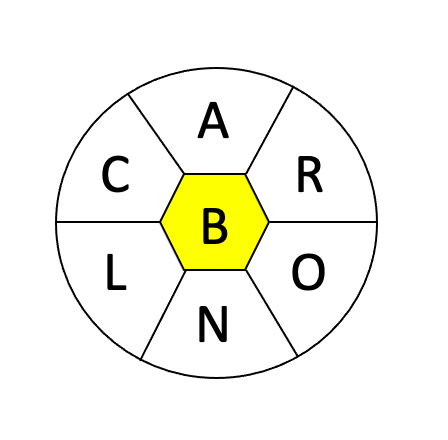
Today’s New York Times Spelling Bee letters:
Art: Iva Reztok

A, C, L, N, O, R, and center B (all words must include B).

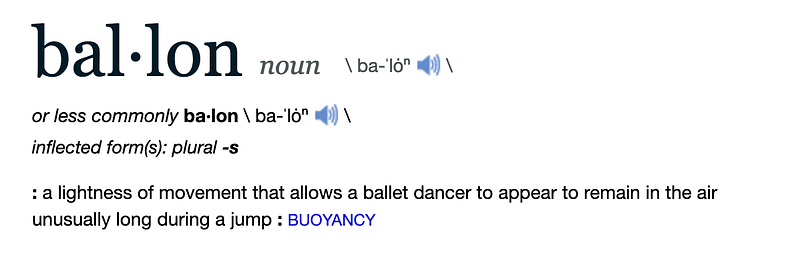
Merriam-Webster says…
Credit: merriam-webster.com

Silly little dictionary! Don’t you know ballon can’t possibly be a word if the New York Times says it ain’t?

For further fascinating facts, check out the Spelling Bee Master.

What’s your favorite dord* from today’s puzzle?

My Two Cents

Considering the amount of time and columns the New York Times spends discussing ballet in its newspaper, you would think ballon would be a perfectly acceptable word for today’s Spelling Bee.

The editors of the puzzle disagree.

Ballon is a fun word to say, because you get to use that funky nasal tone that makes everyone think you actually know French. Unfortunately, I don’t know how to embed audio on Medium. But no worries. If you’re curious, you can clink on the link I provided for Merriam-Webster earlier, and press the audio button.

Don’t feel like scrolling all the way back up on your phone? Fine… here it is.

What can I say. I love to spoil my readers.

Mysterious origin… not!

If ballon sounds like balloon to you, it’s because that’s what it means in French. In Spanish it sounds like “balón”, which means ball. Usually in reference to a football ball. Complaints about my bad syntax can be sent here:

And, as usual, when I say football I mean the game in which players actually kick a ball around with their feet, not the one in which they throw a prolate spheroid with their hand.

Professor Sheree King includes descriptive definition of ballon in her Fundamentals of Ballet glossary: “The springy quality of a jump.”

Ballon is also used as the surname for a wine glass, as in verre ballon. So, to honor all this Frenchness today, I am sipping some vin from a verre ballon as I write about le ballet. I am in Spain, so the wine is actually a Rioja. But the chocolate I’m nibbling as I sip the wine is French. Hope that’s okay with you guys.

By the way, pay no mind to those who claim that ballon comes from the ballet dancer Claude Balon. I mean, look at him:
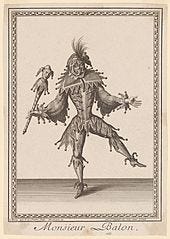
He was just “jesting” when he said that.

Up in the air

Remember that photo at the beginning of the article? Geez, you really don’t feel like scrolling up today, do you? Here it is, then.

To again be redundant again: Photo by Fabe collage on Unsplash

Now imagine this scene without the perv sitting there, pretending to read a magazine, and without the subway pole. Let’s keep the subway car, though, because without those other two elements, it’s even more badass. Okay, you’re picturing it in your mind?

The ballerina would appear to be floating in the air. That is the objective of leaping “with ballon”: you seem to defy the laws of physics.

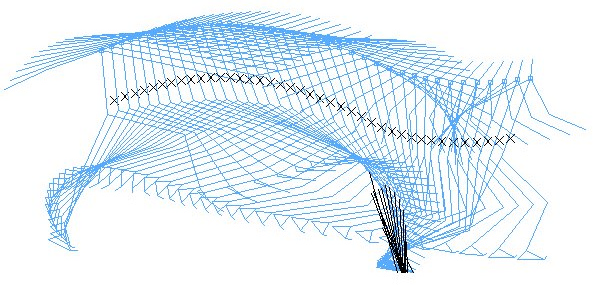
Now, several years ago, T. Thomas, J. Murray, L. Stanley, P. Galler, and D.G.E. Robertson, of the School of Human Kinetics at the University of Ottawa in Canada published a study called “Analysis of the Aerial and Landing Phases of the Grand Jeté”. They included this graphic:
Screenshotted by Iva Reztok

Frankly, I think they just slapped in a photo of an early 1990s screensaver, figuring no one would read their article… or know the difference.

Their conclusion about why we think a ballerina with ballon seems to float in the air for quite a while is interesting and technical. Also, technically interesting.

“The human eye perceives the aerial phase of the grand jeté movement to be horizontal in nature, however, as expected, the experimental data showed the center of gravity clearly traversing a parabolic path (figure 1). The dancers extended one leg forward and one backwards, which resulted in positions where both legs were perpendicular to the torso.” — chorus of voices of T. Thomas, J. Murray, L. Stanley, P. Galler, and D.G.E. Robertson

By the way, Figure 1 refers to the screensaver.

Although the dancer’s body follows the path of an arc, people watching her get distracted by the moving limbs, so they don’t see the curvature. The illusion created is that of a body moving slowly in a horizontal trajectory. Like this:
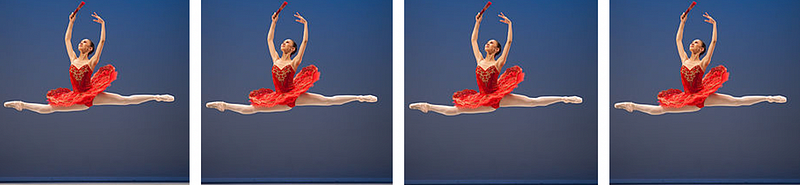
Screenshot collage: Iva Reztok

Here’s a challenge for you: is she moving from left to right or right to left?

First correct answer gets a million lochas. Or the equivalent in asimons.

Next time you go to the ballet and read about it in the New York Times, you can expect to see words like jeté, plié, assemblé, and pas de chat in the review.

Just don’t expect to see ballon. Because the editors of the Spelling Bee puzzle decided that ballon is a dord.*

Please check out my previous entry on another dord*

*What the heck is a dord, you ask? Here’s the answer:

Spelling Bee
Language
Culture
Science
Ballet
Recommended from ReadMedium