
Balance — the physical connection in your mind
Once upon a time, in a place far away — in a dusty classroom of a middle school, two kids stood in Vrksasana (‘tree pose’). I was standing next to them with a stopwatch in hand, waiting for one of them to lose their balance. It seemed like an eternity as my friends continued their flamingo pose with a focus that would have put monks to shame. As the designer of this game, I was aghast at their impressive feat. I could barely hold my balance for few seconds let alone what looked like long minutes to me. I called the game off in a tie as neither relented.
The reason this memory came screaming back to me was that I have been thinking more about mental and physical balance. Physical balance is a very intriguing process. Anyone who has experienced vertigo or had an inner ear infection has experienced the feeling of imbalance quite vividly. Sometimes, when I am on the treadmill, I close my eyes briefly (CAUTION — Do NOT close your eyes while running on a treadmill). I can immediately feel the imbalance sets in where I either hit the sides of the treadmill. Why couldn’t my body run in a straight line?
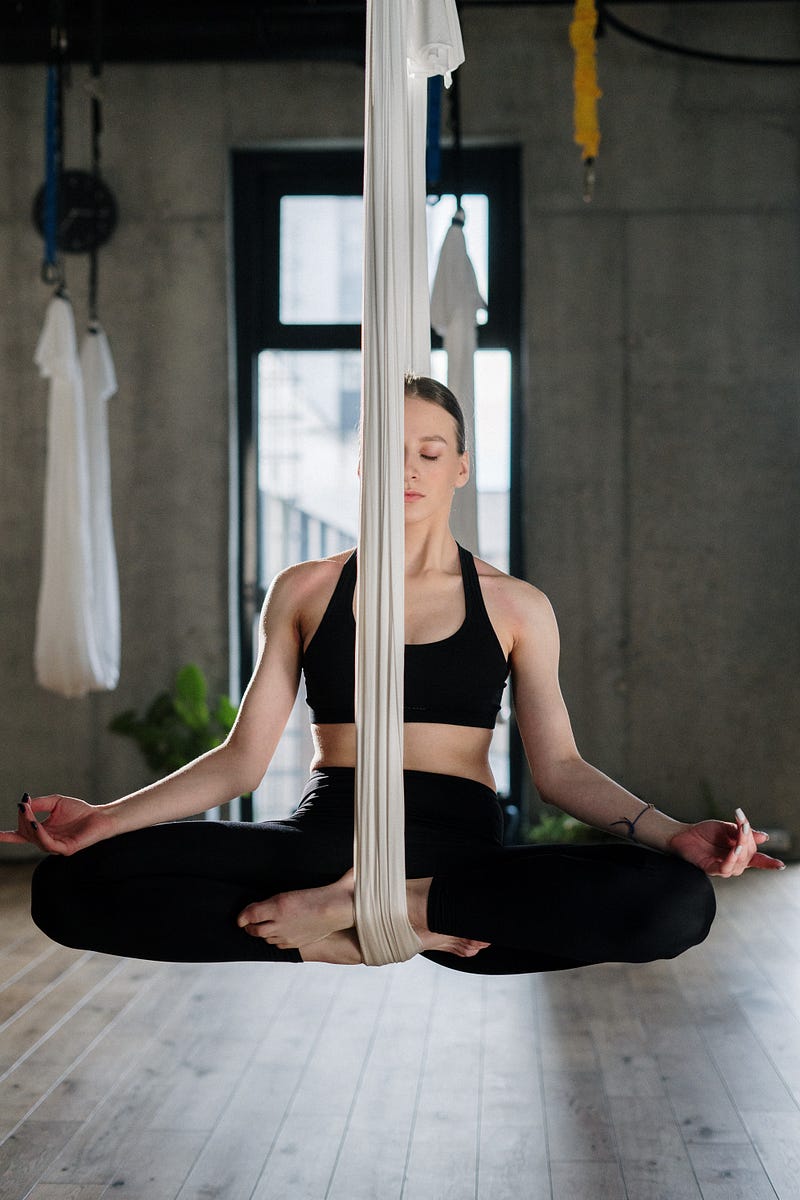
Yoga is another good example. The simplest one would be during any of the warrior poses or if I was doing the Garudasana, it is very easy to lose balance if I do not focus on a single spot on the floor. Why did my mind or eyes need to be focused for my body to maintain balance?
The recognition of the connection of the mind to the physical balance is an ancient one. Yoga is a fantastic method that is often prescribed to improve flexibility, movement intelligence feeding into an overall stronger balance. Another ancient technique that directly feeds into improving balance is Tai Chi. I came across some good videos of Tai Chi on YouTube and going through the comments section was pretty insightful. The value of Tai Chi (& Yoga) was instantly apparent to senior citizens. In Atul Gawande’s brilliant book called Mortality, he talks about how critical a ‘fall’ is for the overall life quality for senior citizens. So, it is not a surprise that senior citizens are keen on improving their balance to prevent falls.
Another technique that comes to mind that emphasizes the connection between the aforementioned mind and body balance is the ‘Alexander technique. The emphasis lies on just that — placing an almost meditative emphasis on movement. Soft, slow movements that you think before the movement.
There is a lot of spiritual wisdom in paying attention to your body movement and focus as witnessed in techniques developed independently by our wise ancestors. How about certain scientific insights? What does science have to say about this?
Your glorious Cerebellum
It is amazing on two fronts — how much we understand and how much we don’t. Our brains are fascinatingly complex and almost alien-like in their adaptability to the variety of things that the body is exposed to. Researchers have dedicated their entire lives to studying the simplest forms of brain structures. And, that shouldn’t surprise anyone. So, even though the Cerebellum is referred to as the ‘little brain’ — there is nothing little or simple about it.
Is there a better way to learn science than to understand the references in the hit sitcom The Big Bang Theory? In this hilarious scene, Sheldon’s assistant (Alex) references the father of Neuroscience — Santiago Ramon Y Cajal. One of the most remarkable drawings of the Purkinje neuron cells is still textbook material after over 150 years. The Purkinje cell is what determines the output of the cerebellum’s processing would do.
As it is common in science and our everyday lives, we often go from “Oh yeah, I totally understand this” to “I had no idea it was this complex”. The study of the cerebellum has gone through similar pendulum swings. Since Santiago’s deeply intricate drawings, there have been extensive studies that clarified the role of the cerebellum in movement control. Researchers started dismissing the cerebellum because they understood it so well. And, then the pendulum swung.
A few years ago, there was an article on NPR about a certain Jonathan Keleher. As a child growing up, Jonathan was regularly missing his milestones associated with sitting, standing, walking, and running. It was not until much later that the doctors realized that he was completely missing his cerebellum! In brain studies, such cases provide a wealth of information and other related instances of missing cerebellum have put us back into the “We really don’t understand this at all” realm.
From these studies, the cerebellum emerges as a master learner. It sits on top of the sensory information gateway and then streamlines our movements to such a delicate level that makes it easy for me to type this article, instead of doing a jerking spider dance on my keyboard. From the slow, delicate movement of a batting eyelid to a furious golf swing, it orchestrates multi-limb motion. It learns how to ride a bike but it, also, learns how to have meaningful conversations.
And, all that is just in our species. It is amazing how life replicates these fundamental constructs. In birds, the cerebellum manages the movement of the beak to controlling their flight. Imagine learning to keep a perfectly balanced head while running at a cheetah’s speed. The one instance that was sort of a surprise to me was elephants. I did not realize that they had any such demanding needs on their cerebellum because — they do not move so quickly or are involved in spectacular movement feats. But, elephants have the largest volume of cerebellum compared to the size of their brains. This is because of their trunk. Elephants cannot bend their heads and so have to use their trunks in an extended fashion. The trunk is capable of precise, delicate movements and is loaded with sensors that need a strong manager.
Getting back to what we were talking about in the first place — two things became evident. First, the cerebellum thrives on practicing. It is a learning machine and wants to keep learning. Repeated and smart variations of the motion that you throw at it help training the cerebellum in that context (apart from strengthening your muscles and joints). When we look at some of our elite athletes and especially, in the world of gymnastics, it is clear what our minds and bodies are capable of under a strong training regimen.
Second, the cerebellum works based on rich sensory inputs (audio, visual, gravity, and rotation information among others possibly). If you deprive the cerebellum of any of the sensory inputs that are trained in that particular context, it will struggle (till it re-trains probably).
After consuming all these interesting stories, I decided to call it a night. As I laid on my bed, it suddenly hit me. The reason I feel out of balance when I try to close my eyes on the treadmill — I suddenly removed a part of the sensory input that my cerebellum needed to stay balanced. Focusing on a spot during Yoga might be helping the cerebellum to lock in on that visual response.
Including a focus on balance
Experiencing the wonder of getting a glimpse of this tremendous machinery in action is a revelation. Unexpectedly, it made me grateful to enjoy such a privilege. Gratitude emerges from contrast (sometimes). Our ability to simply run down a trail, while holding a deep conversation with our friends is miraculous. It opened my mind to how folks who lose their eyesight for some reason might be struggling with balance (till the cerebellum adjusts to this lack of sensory information, I think).
It is no surprise that there is an emphasis on experiencing the movement during Yoga or Tai Chi through our mind. Every time we do that, we are intentionally experiencing our cerebellum in action. More and regular practice of these methods will strengthen the body, mind, and their connection. As you pay attention to your calorie intake, your weight, or VO2 max — pay attention to your balance. Have you been improving your balance? That question will truly open up your mind.
Ok. Now, that I understand so much better the role of the cerebellum in physical balance — can I put it to good use? Or use it for evil? If I were to go back in time and tell my younger self, all I had to do to throw my teammates off balance was ask them to close their eyes or have them blindfolded. That should work, right?


