
Bail Bonds Don’t Work
Except to perpetuate poverty, racism, and inequality

There are no wealthy people on Rikers Island because if you are wealthy, you go free because you make bail.
Kerry Kennedy- Lawyer and human rights activist, President of Robert F. Kennedy Human Rights
The bail bond industry has been under siege for several years now. Yet the majority of states are slow to adopt the practice of no longer requiring bail bonds for those accused of a crime. Justice in America works like this: if you’re poor, charged with a crime and are arrested, you may sit in jail for weeks, sometimes even years waiting for a trial to prove your innocence. It doesn’t matter if there’s a lot of evidence against you or barely any at all.
The familiar tale of rich vs. poor
Kalief Browder, 16 years old, was arrested in New York for allegedly stealing a backpack. Because his family couldn’t raise the $10,000 bond amount, he was locked up at Riker’s Island for three years waiting for a trial. During that time, he endured horrendous conditions, beatings by guards and fellow inmates, and two years of solitary confinement. The depression he suffered from his time at Riker’s ultimately became more than he could overcome. Despite his eventual release, he was unable to overcome the damage done to his mental health. Within two years after his release, he committed suicide.
There are, unfortunately, many examples of poor people across the country who suffer because of the inability to raise bail. But just as easily can we find stories of the ease at which wealthy people pay bail and spend little to no time incarcerated.
Bernie Madoff ruined tens of thousands of people’s lives. Prosecutors estimated he had 37,000 victims who had losses up to $65 billion.
Many lost all of the savings they had by investing with him. Retirees had to go back to work because their retirement was no longer solvent. Others committed suicide because of the loss of their funds. And many nonprofits invested in his funds. Their losses meant cutting back on the charitable work they were doing.
Yet Madoff was able to avoid initial incarceration by paying bail of $10 million. A small amount for him, in light of the money he made from his Ponzi schemes. Thus, he was not only able to easily pay the bond; he used the money he stole to do so.
What is the justice? When bail is set unreasonably high, people are behind bars only because they are poor. Not because they’re a danger or a flight risk-only because they’re poor. They don’t have money to get out of jail and they certainly don’t have money to flee anywhere.
Loretta Lynch
Presumed innocent until proven guilty?
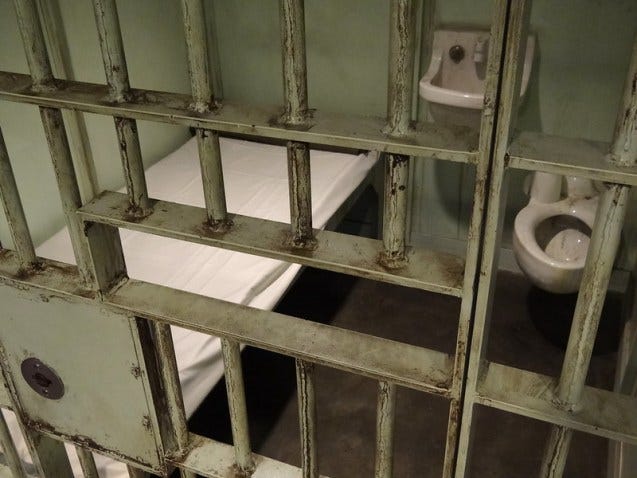
But can we really say a person is presumed innocent until proven guilty if we lock them up before their trial? Those that have jobs, homes, and families can, and often do, lose everything because of the arrest. Many employers feel they can’t risk the liability of keeping such people employed. Others simply don’t want to wait for that person to be available to come back to work.
And what about the trauma to the children of those incarcerated? The time spent away from their families can affect a child’s mental health for a lifetime. The incarcerated parent could have been home with the children, or supporting the family financially and emotionally. They could have attended milestones in the children’s lives, such as school plays, sporting events, etc.
And it’s taxpayers who pay to keep people in jail before trial. Money that could instead pay for schools, mental health assistance, homeless populations, and much more.
It costs Americans over 22.2 billion dollars annually to detain people in local jails. More than 60 % of the jail population consists of people that have not been convicted. The median bail set nationwide in 2015 was $10,000, while the median pre-incarceration annual income of those incarcerated was only $15,000.
The bail bond system in the US is fatally flawed
The nonprofit, Center for American Progress, researches, and advocates for policies for people on issues such as criminal justice. Their post cites how Washington D.C.’s elimination of bail proved it wasn’t necessary. Because “94% of defendants who were released pretrial and 91% came for trial.”
Some states, such as New Jersey, California, and Illinois, have reformed the bail system. But it hasn’t been easy, and it hasn’t always been done correctly. Arrests keep police funds high as people believe crime rates don’t justify changes. Bail bonds companies, and the insurance companies that back them lobby politicians to keep the system the same.
If the majority of people in jail before trial are poor, it brings into question the fairness of pretrial incarceration. It has also lead to worse results for their case outcomes. The Brennan Center found “those who are held pretrial are four times more likely to be sentenced to prison than defendants released prior to trial.” They’re also less likely to make a quick decision to plead guilty to a lower charge than taking the risk of getting a higher charge at trial.
In America, the color of your skin puts you at an even bigger disadvantage, especially in the criminal justice system. The Brennan Center also found “Black and Latino men were given higher bail amounts than white men for similar crimes by 35 and 19 % respectively”
In a previous post- The Pandemic Turns Incarceration into a Death Sentence, I provided a snapshot of the $182 billion industry incarceration in the U.S. There is a strong financial incentive to keep things the way they are to preserve this lucrative business.
What can you do about it?
Support local and state efforts to replace the bail bond system in your state. We have New Jersey and Washington D.C. as role models, it can work. It can also save taxpayers money. So be sure you also make friends and family aware of the issues. Ask them to support and advocate for change as well.
Many people have no idea of the unfairness of the bail bonds system. Not knowing allows the system to stay the same. By exposing the flaws we can build support for change.
Some organizations already doing this work are:
Consider donating to National Bail Out, a nonprofit that raises bail money to get black mothers and caregivers out of jail for Mother’s day. They also provide fellowships and employment opportunities for these women afterword.
Final Note: Another part of criminal justice reform that many of the same organizations are working on is rehabilitating the systems themselves. Many states arrest people for things that shouldn’t still be a crime. As we saw in Kalief Browder’s case, the right to a speedy trial isn’t reality. The courts are so busy that if an attorney requests a slight delay, it can be months before getting back on the calendar for the next date. We must change all of these things if we want to make a difference.


