
Bad News for your earnings. Medium is now a Podcast.
Is this Goodbye to our precious member reading time?
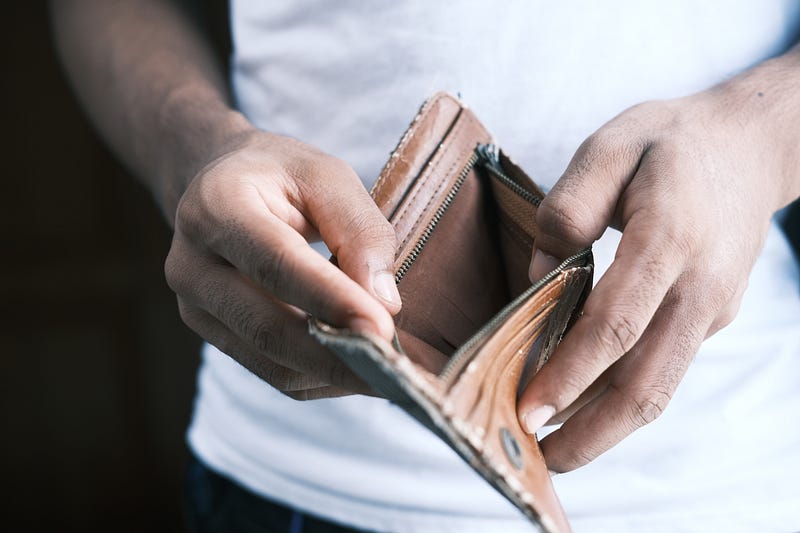
Things are changing whether we like it or not.
We’re not sure if it’s for better or for worse.
Recently, Medium has made a lot of updates that culminated in numerous concerns amongst the reader and writer community. Minor tweaks such as the new design was improved in terms of formatting and visuals.
However, that came at the expense of convenience from the previous version of the website (according to some opinions).
Meanwhile, a multitude of bugs were discovered. The temporarily malfunctioning clapping system received lots of complaints and created confusion amongst writers.
But the most significant change of all can potentially mean bad news for Partner Program writers on medium.
Medium, The “Podcast”
The newest feature on Medium is the listening function that allows readers to listen to articles, similar to an audiobook or a podcast.
For readers, this provides a convenient alternative to “reading” the articles of their favourite writers.
However, for writers, there are still several unanswered questions which generate the possibility of dealing a fatal blow to their earnings.
The problem lies in the fact that we don’t know if listening time will count as member reading time.

For all we know, we may be starting to lose precious bucks to readers who are listening to our articles as opposed to reading them.
If you’re confused, here’s a quick crash course on how member reading time is calculated.
Medium measures a variety of factors to determine if you’re actually actively reading. This includes detecting scrolling and perhaps mouse movement.
Therefore, if you’re not really reading an article (e.g. you’re on another tab or you’re simply inactive), medium would eventually be able to tell.
Otherwise, people can farm for reading time by not actually reading articles, and cheat the algorithm. So it’s not just about how much time the article tab/site is open.
Although the specifics of Medium’s algorithms aren’t divulged to the public, we know that they are able to make an educated guess on how much time a reader spends reading an article, based on all these indicators.
This connects back to the problem. Most of the time, when someone’s listening to an article, they aren’t reading it or being active on the same webpage.
Therefore, medium would think that a listener is an inactive reader, and deduct member reading time.
At this point, you may be thinking: “The solution is simple. Just designate listening time as part of member reading time.”
Unfortunately, it’s not that easy.
Medium wants to accurately calculate member reading time. But so far, we don’t know if they can determine whether if a listener is active or inactive (how do they know that they’re actually there?).
Therefore, to prevent miscalculating reading time, Medium may decide to not pay writers for listening time at all.
Moreover, if Medium hasn't even realized this issue, we would already be getting paid for a significantly less amount (although we wouldn’t realize/confirm this, except for speculations surrounding comparatively lower earnings).
Worry, or Not to Worry?

Thus far, this issue has not been addressed by Medium or other writers (to my knowledge). So yes, this is something we should all worry a little about, and perhaps we should contact medium in pursuit of some answers.
Medium wants writers to make money. Chances are, they might have already considered this issue, and implemented measures to ensure writers can still earn from listening time.
It all comes down to their solution, and whether or not they care about inactive listeners, miscalculated earnings, and their writers (which may lead to unfairness in terms of earning distribution).
People who want to farm for reading time can just play the audio and it would automatically help a certain writer/friend earn significantly more money without spending actual time.
The Thin Line Between Less Money and More Money
On the bright side of things, if listening time will fully count as member reading time, then our earnings will actually increase quite significantly.
Not only will we profit off of the occasional reader who just forgot to stop the audio playing, but overall the audio may read at a slower pace than the given reader.
This means more time is spent on the article, and essentially no skimming (skimming through an article probably makes up a huge chunk of our non-read views).
A lot of readers may be multi-tasking while listening to your article, and so there is a lower chance of them clicking away because they are mildly uninterested in your topic.
As long as you put effort in your article and writing style to keep things interesting, you’d be getting a lot more money. And if you don’t, then that’s on you.
The audio will read through everything, include any little notes you make, links, descriptions, and etc. So if you want to be optimistic, you can look forward to a response to the issue rather than worry.

Possible Queries
- Considering the worst case scenario of Medium choosing not to pay writers for listening time, to what scale would this affect earnings?
Without a doubt, writers will experience losses. The scale of how much we actually lose is dependent on how popular the new audio feature is, and how often it is used.
However, if Medium makes the audio feature official, it can be inferred that it has a certain degree of popularity considering they’ve spent a while testing this feature with some Medium users (they wouldn’t add the feature if no one likes/uses it).
2. What will Medium most likely do regarding this issue?
Of all of the possibilities illustrated above, I think that it’s most likely that Medium will either remain oblivious to the issue, or not take action and leave us with lower earnings.
From my past experience with Medium support, they aren’t the most organized (no shame, management isn’t easy), so our concerns may not even be passed on to higher levels of management.
According to some other writers who had contacted the CEO of Medium when stats were low, the response they received wasn’t necessarily positive.
They probably won’t consider spending time and resources to develop a new method to accurately determine listening time, in order to satisfy the minority of writers who brought up this issue.
However, with the negatives being said, Medium is still a great platform that does care about its writers. So the possibility that they’ll be willing to adhere to our concerns isn’t impossibly low, especially if we raise awareness of this issue amongst the community.
It’s just that it’s slightly more probable for them to ignore it, due to past evidence and trends.
Solutions + Next Steps
The relevant question here is: What can writers do?
A possible solution is to publish less until this problem is addressed and resolved. Keep your best article ideas as drafts for now.
Of course, there’s the possibility that Medium’s answer to this issue may not be one we are looking for.
If that happens, then we have no choice but to follow. One of the major disadvantages of being a content creator is that they are heavily dependent on their platform.
We need to follow the rules, and adapt to any changes whether we like it or not.
The only possible way we can get Medium to change their mind is by raising awareness of the issue and persuading readers to not use the audio function.
However, there’s no guarantee that as article writers, we have such great influence on our audience. This isn’t YouTube or some streaming platform, so naturally, we aren’t as close knit to our followers and colleagues.
In the end, we can only hope for the better.
Thank you for reading. Follow and subscribe to Shu Hasegawa for more tips & stories on entrepreneurship, building your business, earning money, and writing. Help me by sharing this story; if you think it’s been worth your time.
Get Unlimited Access to All My Articles and Every Article on Medium:


