
Bad Apples
Hunger is a chronic problem around the world. But most of us don’t realize that it impacts around 15% of American society.
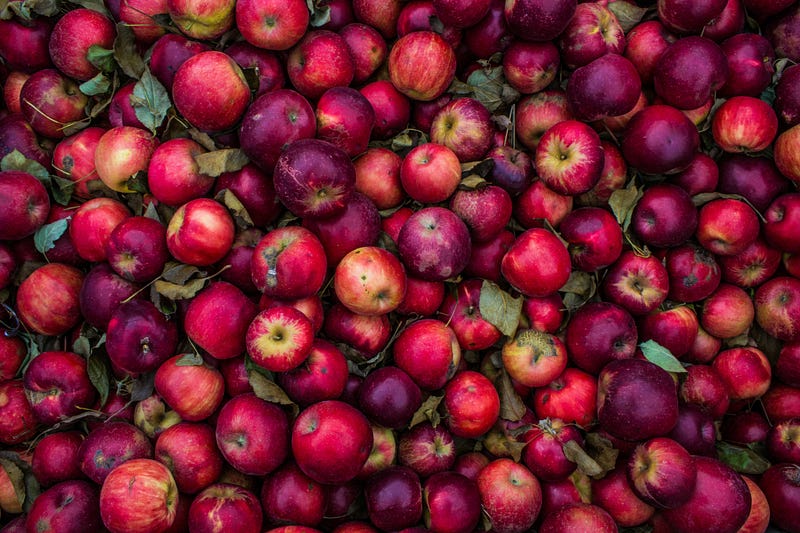
Hunger does not impact America!
Wrong! The perception is that most people living in Western countries live a life of abundance. We are so used to having anything we desire is just a click away. Two-day delivery, next-day delivery, 4-hour delivery, and so on. This not only includes pieces of clothing that end up in our closets but we never wear, electronics that we never plug in but also groceries that that is to our kitchen but we never eat. America produces enough food to feed its 330 Million population, but still around 10–15% (30–45 Million) of the population goes hungry every night.
Why is Hunger all around us?
There is a chronic problem of food wastage throughout the supply chain. It is estimated that around 30–40% of food grown in America is wasted. Here are some of the sources:
- Wastage of food at Homes & Restaurants
- Wastage during processing and transportation
- Wastage due to certain crops never being harvested due to low prices
- Wastage at Grocery stores due to some food not being visually appealing
Most of the produce that does not make it onto our plates is still high quality. It just did not meet the right price, wasn’t shiny enough, or just got forgotten in our refrigerators.
An eye opening experience
Recently I made a trip to Raleigh, North Carolina to meet my extended team. During the trip as part of a team-building exercise, a group of around 20 from my team volunteered at a food bank (Food Bank of North Carolina). We were required to be at the food bank at 8:45 AM on a Wednesday. The first half of my drive was typical of any morning commute; clogged highways, impatient drivers, etc. But the second half could not have been more different. Highways were left behind, I was driving on a one-way road in the middle of nowhere and as I got closer to the location the buildings became more run down by the second. As I approached the food bank, the building was equally pedestrian.
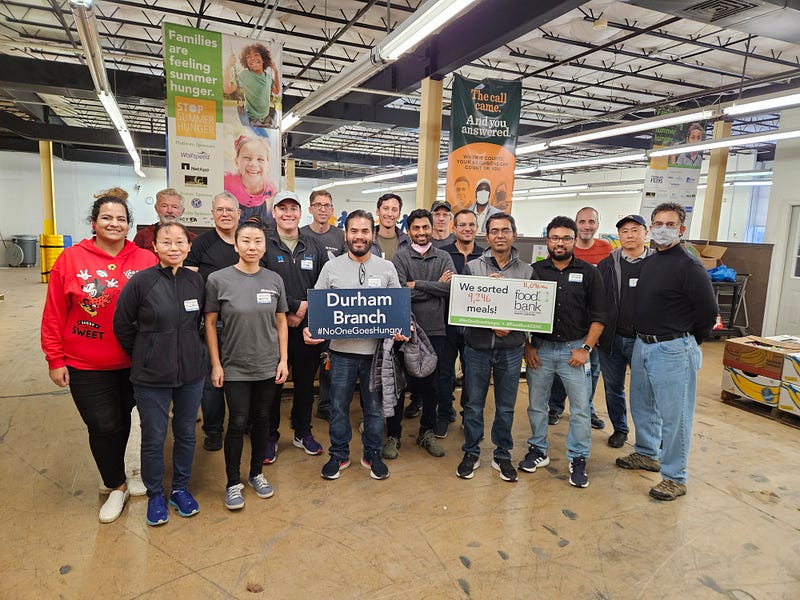
But the inside could not have been more different. The person checking us in at the reception was extremely warm and excited to have us there. Our task for the day for sorting apples. There were at least a dozen pallets of apples in the sorting area. All these pallets came from various sources, grocery store discards, processing rejects, donations, etc. Our chaperone walked us through the logistics of the exercise:
- Fill a bag with apples to feed a family of four for four days
- Weird shapes of apples that you’ll never see in a grocery store are OK
- Small cuts on the apples are OK
- Small rots on the apples that can be cut off are OK
- Apples with fungus are NOT OK
We divided ourselves into groups of 3–4 and each group was assigned a pallet of apples. Sorting was hard since we are all used to shiny perfectly shaped apples from grocery stores. Most apples did not meet those criteria. Some pallets had good apples and we discarded only 20–30% of all apples. While other pallets were 90–95% bad, put it differently only 1 out of 20 apples were somewhat acceptable. Some of them were completely rotten, the majority were slimy and the whole pallet had a pungent smell. We did our best to salvage a few bags from these unpleasant pallets.
Almost all of this fruit was GMO. We can be critical about this process but as I articulated in this article (Can GMO foods save humanity?) , GMO has played a big role in reducing hunger around the world. And I would guess that these apples would have been completely unsalvageable if they were not GMO.
This was hard work. As we got closer to the end of our shift at the three-hour mark, most of us were tired and famished. It was an enlightening team-building activity and all of us were humbled by the experience. Overall, the team sorted over 11,000 pounds of apples and produced enough bags to make over 9000 meals. On my drive back I could not stop thinking that this fruit was good in the beginning but just was mishandled. However, knowing that we played a small part in reducing some of the food waste gave me some sense of hope.
Let’s be grateful
I feel very fortunate to have the privilege to participate in such an event, to work for a company that encourages and gives 5 days of volunteer time per year, have colleagues who organize these events. This was eye-opening and extremely humbling. In the 21st century, with all the advancements in science and supply chains, hunger should be a thing of the past. But it is present everywhere, even if not visible on the surface.
Can I do something?
There is no silver bullet, but each one of us can take small steps to reduce wastage:
- Choose the ugly apple at the grocery store, it definitely tastes the same as the shiny good apples
- Don’t throw out perfectly good food in your refrigerator just because it has passed the best-by date (those are suggestions and most of the time not accurate).
- Volunteer some of your time and money for food preservation
If you like my article and would like to see more of this, make sure to: