
Backspin: Run-DMC — Raising Hell (1986)
35 years after rocking the world, Run-DMC’s opus still stands as hip-hop’s most important album. (90/100)
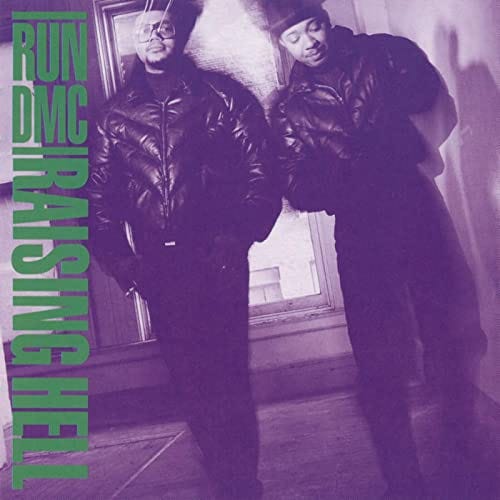
If Run-DMC’s 1984 debut created the “rap star” prototype, 1986’s Raising Hell retrofitted it, laying the blueprint for the rapper as rock star.
It was a natural fit, really. From the day the earliest mic rockers prompted block party goers to throw their hands in the air, rappers exuded all the hallmarks of rock ’n roll royalty: colorful personality, the impressible energy of youth, and enough counter culture edge to confound the squares and make parents of the world shout, seemingly in unison, “turn off that noise!”
Yet, it took an act with arena-sized presence to make the leap into rock stardom. It also required an unimpeachable stature within hip-hop to attempt that leap without alienating a fickle and notoriously territorial base. It’s a testament to the greatness of Run-DMC that Raising Hell, their third long player, makes it feel so effortless. As integral to the album’s outsized success as Run-DMC’s willingness to experiment was their confidence to stay true to themselves. Underneath the screeching guitars and high decibel hooks, Raising Hell remain’s rooted in hip-hop sonically, lyrically, and culturally.
The album opener, “Peter Piper,” is quite simply hip-hop in its purest form. Built atop the break from Bob James’ “Take Me to the Mardi Gras,” a b-boy favorite from the earliest park jams, the track offers a barebones canvas for the two emcees to wittily adapt classic nursery rhymes in homage to their DJ, Jam Master Jay. For his part, Jay’s punctuative cuts are every bit as precise as the impeccable interplay between Run and DMC.
While tributes to the DJ were fairly standard on first generation rap albums, the choice to open Raising Hell with “Peter Piper” is not only a testament to Jay’s centrality within the group, but also the centrality of hip-hop conventions to the album. Rock audiences entering the rap world for the first time are doing so on hip-hop terms, where DJing and b-boying are every bit as intrinsic to the culture as MCing.
The percussive thump of “Peter Piper” segues with surprising ease into the guitar fueled romp of “It’s Tricky.” The album’s forth single boasts all the hallmarks of a rock ’n roll anthem, from the rowdy shouts of the chorus to the sharp guitar riff that drives it forward. The elementary rhyme schemes and chanted delivery of the verses are a far cry from the microphone mastery displayed elsewhere on the album, but its a canny concession to the virgin ears, still untrained to rapid fire flows, that the track was clearly aiming to seduce. The interplay between the two MCs keeps the song rooted in hip-hop aesthetics, even as the lyrics of groupie misadventures clearly position the “tricky” lifestyle of “rocking a rhyme” in the vain of the rock star’s lavish live.
“My Adidas” brings hip-hop fashion to the big stage. While D touts the group’s laceless shell toe sneakers as an essential accessory on their troubadour escapades, Run embraces them as an anchor rooting the group to the New York City streets that shaped them.
[D.M.C.] My Adidas Walk through concert doors And roam all over coliseum floors I stepped on stage, at Live Aid All the people gave and the poor got paid And out of speakers, I did speak I wore my sneakers, but I’m not a sneak My Adidas touch the sand of a foreign land With mic in hand, I cold took command My Adidas and me close as can be We make a mean team, my Adidas and me We get around together, we down forever And we won’t be mad when caught in bad weather My Adidas!
[Run] My Adidas Standin’ on two fifth street Funky fresh and yes, cold on my feet With no shoe string in ’em, I did not win ‘em I bought ’em off the ave with the black Lee denim I like to sport ’em, that’s why I bought ‘em A sucker tried to steal ’em, so I caught ’em and I fought ‘em And I walk down the street and bop to the beat With Lee on my leg and Adidas on my feet And now I’m just standin’ here shootin’ the gift Me and D and my Adidas standing on two fifth My Adidas!
Was “My Adidas” free advertising for the athletic apparel company? Perhaps initially. But in bringing the waning brand back to the forefront of popular culture, the track also elevated Run-DMC to the status of brand ambassadors, ultimately resulting in paid sponsorship deals, not only with Adidas, but also Coca-Cola and others. To this day, shell toes are inextricably associated with hip-hop. Every one of the hundreds of rappers who have cashed checks from blue chip designers or reaped the benefits of their own clothing lines has Run-DMC to thank.
While the first three tracks alone would be more than sufficient to solidify Raising Hell as a landmark album, the fourth one was the paradigm shifter. 1984’s “Rock Box” and 1985’s “King of Rock” flirted hard with rock n’ roll. “Walk This Way,” a frenetic remake of Aerosmith’s classic with accompaniment from the rock legends themselves, scooped it off the corner, checked it into the Bristol Hotel, and had its merry way with the aging boomer genre.
The truly remarkable revelation of “Walk This Way” was not how good the cross pollination sounded, but the ease with which it flourished. Tyler’s syncopated lyrics adapt organically to Run and D’s rhythmic flows. Likewise, the replacement of the double time drum pattern that backs the original’s verses with a 4 bar loop of the break that opens the Aerosmith track renders the remake even more potent, even while adapting it squarely into hip-hop’s breakbeat tradition.
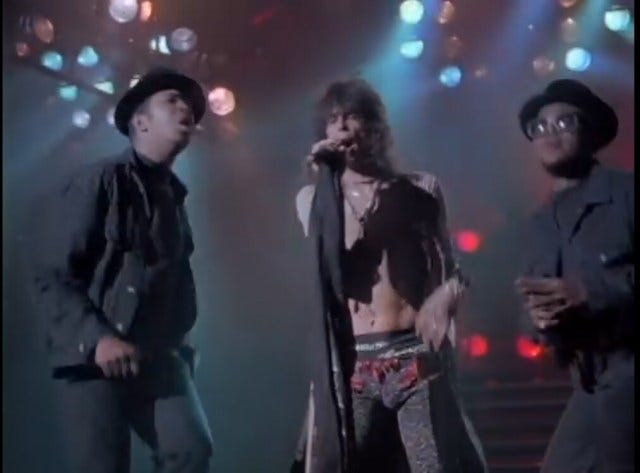
“Walk This Way” fundamentally changed the trajectory of both genres. In dominating Top 40 radio and MTV, it established rap music and hip-hop culture as commercially viable to a mass audience, while also representing the first stop down a now labyrinthian road of rockers incorporating hip-hop elements like rapping, looping, and breakbeats into their arsenals.
While the iconic singles give Raising Hell its import, the often overlooked album cuts provide the heft, making it a treat to revisit even if the hits are already seared into memory. “Is It Live” is perhaps the clearest example of executive produce Rick Rubin’s ethos of “reduction.” Consisting of little more than percussion, the track feels like a symphony of rhythm as the two MCs trade rapid fire rhymes building to a go-go influenced conga breakdown in lieu of a chorus. The dynamic A-B-B-A rhyme scheme works in dialogue with the drums, adding yet another rhythmic motif to the cacophony. The rhyme pattern, which appears throughout the album, was a subtle but powerful evolution from the more simplistic schemes of their earlier releases.
“Hit It Run” opens the B-Side with the energy of a school yard rhyme session rendered with the refinement of seasoned veterans. DMC steps to the forefront, his bareknuckled bars building brutally to Run’s spirited beatboxing, which serves as the song’s hook. While not as deft as Doug E. Fresh or the Fat Boys’ Buff Love, Run’s vocal percussion more than got the job done, introducing yet another hip-hop staple to the unsuspecting ears of rock purists and Top 40 teeny boppers alike.
Following Side A’s pattern of one for the hood, one for the headbangers, the title track is all swirling guitars and rock star swagger. It’s arguably the album’s most rock ’n roll moment. Even the drums hit with the reverbed weight of a stadium anthem as opposed to the traditional breakbeat that keeps the bop in “Walk This Way”’s step. Concluding the near flawless track run of the album’s first seven songs, “Raising Hell” plays like a coronation of the conquering kings of rap and rock. Rather than riding the rhythm, Run and D wrestle the unruly guitars into submission with grandiose braggadocio worthy of ascending royalty.
[DMC] It’s highly appraised when the hell is raised So demanding and commanding that you all stand dazed The unbelieving receiving prophecy so true I cut the head off the Devil and I throw it at you My mighty mic control already bought his soul The rock king is so bold when he rocks and roll A black hat is my crown, symbolizin’ the sound Signifyin’, we won’t play around Bust it!
If Raising Hell stumbles a bit down the home stretch with the transparent novelty play of the jokey “You Be Illin’” and the sonically dated (even in ’86) “Dumb Girl,” it closes on a bold note.
“Proud to Be Black” is a full throated embrace of American blackness, both in the universal sense and the profoundly personal. The MCs name check their own ancestors alongside icons of black history like Harriet Tubman and Malcolm X. While it falls a few degrees short of the feverish militance of future conscious classics, the very act of closing their meticulously calculated crossover album with an affirmation of their roots speaks volumes. It also greased the skids within the Rush Management family, and for audiences of all hews, for the black power broadsides that Public Enemy would deliver the following year.
Though commonly credited as the album that began hip-hop’s vaunted golden era, Raising Hell is better contextualized as the apex of the genre’s first chapter; the culmination of 8 years of recorded rap music that combusted to create an entire ecosystem. While few would still classify it as hip-hop’s best album, 35 years after its release, Raising Hell still stands as the most important.
In the transient world of popular culture, you’re either growing or dying. By moving hip-hop into the epicenter of the culture and media, Run-DMC commandeered the land upon which the eclectic evolutions of the golden era were soon cultivated. After Raising Hell, the suburbs were watching. The college campuses were watching. The world was watching.
Public Enemy and N.W.A shook up the world precisely because they reached ears outside of their own neighborhoods. Those ears were opened by Run-DMC. MTV and Top 40 radio made MC Hammer a household name. But had Run-DMC not proven that rap could play to a pop audience, would mass media have dared to touch him? How many iconic golden era rappers would never even have been signed had it not been for the explosive proliferation of hip-hop record labels in the wake of Raising Hell?
Run-DMC’s magnum opus will never be replicated because it can’t be. A caterpillar can only grow into a butterfly once. Raising Hell represented the perfect storm of the right output from the right artists at the right time. When its reign on the charts finally wound down and the last arena had been rocked, the chrysalis was shed. Hip-hop had its wings.
By the Numbers
Production: 9 Lyrics (how the words are put together): 9 Delivery & Flow: 9.5 Content (Substance): 8.5 Cohesiveness: 8 Consistency: 8 Originality: 8 Listenability: 10 Impact/Influence: 10 Longevity: 10
Total — 90
Related
Next
Previous
Backspin is a look back at the albums that shaped and defined hip-hop. It explores what made them resonate, the impact they had on the culture, and where they fit in today’s ever-expanding hip-hop canon.


