
Backspin: Outkast — Southernplaylisticadillacmuzik (1994)
When hip-hop’s coastal rivalry was at its most fierce, Outkast reminded the world that the south had something to say. (90.5/100)
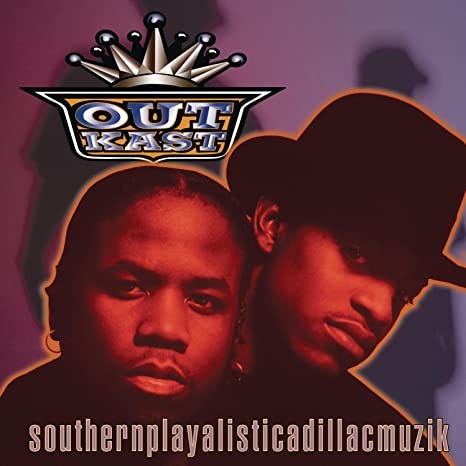
It’s safe to say the south won hip-hop’s Civil War. While the creative renaissance of the early and mid ’90s produced an unprecedented volume of great music, it also sparked the culture’s most heated, and ultimately tragic feud. But while the east and west fired cross-coastal shots, the seeds for the genre’s next crop of disruptors was being planted in the rich soil of the storied south.
While Outkast did not tend the first field to bear fruit, their 1994 debut certainly represented the sweetest crop to date. Southernplaylisticadillacmuzik delivered a tantalizing teaser of what was to come from the region and from a dynamic duo that would go on to become arguably hip-hop’s greatest group.
Lest listeners get mired in the fierce debate over New York’s jazz-tinged boom-bap vs. LA’s funk-fueled gangsta boogie, Southernplaylisticadillacmuzik wasted little time reminding us that the tree from which they all branched was rooted in the south. The album stimulates the ear like a finely seasoned gumbo, deftly balancing an array of spices ranging from blues and soul to funk and bass.
After “Peaches (Intro)” sets the stage, with a twangy female voice preparing the uninitiated for a musical experience that’s “fat like hambone and tight like gnat booty,” “Myintrotoletuknow” cascades from the speakers, first with familiar scratches straight out of NYC, followed by a brief synth line reminiscent of LA’s g-funk sound. But, when the beat kicks in it’s clear we‘re in for a different experience entirely. Drums bang out a faintly tribal rhythm, while a subdued guitar weeps ominous blues. Intermittent scratches conjure restless b-boy spirits in a dialog of black music past, present, and future. Big Boi draws the connection explicitly, with the album’s very first bars:
Time and time again see I be thinkin’ about that future Back in the day when we was slaves, I bet we was some cool ass n****s
Indeed, a trip through the south is inherently a journey through time, and a flexible space-time continuum would only go on to feature more prominently in Outkast’s later work.
To borrow a phrase from the movie Inside Llewyn Davis, the magic of Southernplaylisticadillacmuzik is that it never felt new and never gets old. Despite being a fairly significant departure from what was dominating the airwaves at the time, “Ain’t No Thang,” with it’s chant-along hook, and the title track, propelled by hypnotic keys and a seductively melodic chorus, feel instantly lived in, like Sunday dinner at your country cousin’s crib. Both tracks were instrumental in helping Outkast maneuver over and around the regional barriers that limited the reach of earlier southern acts.
Even more sublime is “Player’s Ball.” The album’s lead single is pure ear candy. Lush instrumentation atop a driving beat transports even the most jaded Timberland and hoodie clad New Yorker from the cold steel of the subway to the plush leather of a vintage Caddy, as it makes its way across Atlanta. Like much of the album, it’s as musical as the west and as lyrical as the east, with Dre and Big Boi delivering more than a simple ode to pimpin’, but a treatise on the conditions that make a night of holiday indulgence (fun fact: “Player’s Ball” was originally released as a Christmas song on the Laface records holiday compilation) a necessary bit of therapeutic escapism.
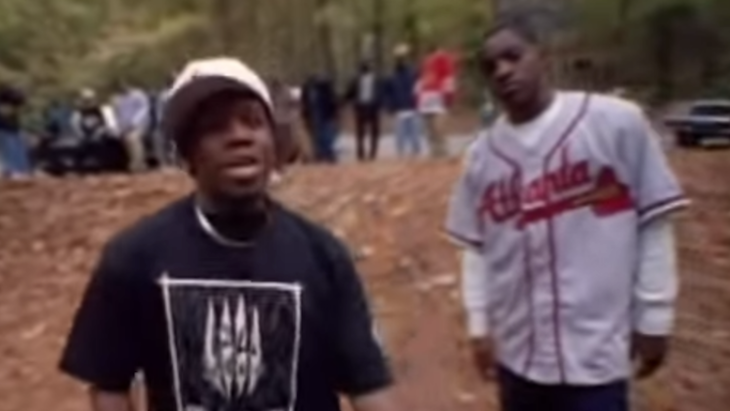
“Git Up Git Out,” offers an equally epic contrast, with Goodie Mob’s Cee-Lo and Big Gipp teaming with Dre and Big Boi to deliver day-in-the-life vignettes of four young men trying to make a way forward in a world as oppressive as the southern humidity.
While the album’s meticulously crafted singles, with their monster hooks and soul stirring melodies, were the lure for the uninitiated, it’s the album cuts that truly lay the blueprint for what southern rap would become. “Call of Da Wild” counterpoints the defiant aspirations of “Git Up Get Out” with a bass heavy paean to the allures of the street; Dre with weary introspection, Big Boi with primal bravado.
“Claimin’ True” delves deeper into the unconscious indoctrination into street life that is often a product of poverty, and the constraining nihilism that ultimately comes with it. Seen through the prism of today’s southern rap, the track feels like a conceptual prototype for early trap music. “D.E.E.P.” delivers an exposition on expectations breeding outcomes, while ultimately turning stereotypes on their head in Dre’s show stopping verse:
No, I ain’t never been pimped by the system That’s because I ain’t no slave Don’t be trying to sunbathe, never lived off in no cave Bloody old chap and in this head of mine is full of naps And the only thing I know is how to f*** and how to rap Y’all think I’m stupid cause I shoots ’em up like cupid And if you gave me a basketball, I’ll show you how to shoot it My head’s polluted cause I’m truly bobbin to the bottom If a pair of Jordan’s came out, y’all figure that I got ‘em But no I don’t because I don’t be having funds The gold that I am wearing is really made out of bronze It weighs a ton and making my neck turn green And I got a criminal record that will never come clean Oh, and it seems that I make babies like a rabbit And then never taking care of them has just become a habit I grab my tablet and get busy with the pen Y’all could not be just like me if y’all was my twin So you get mad and try to make me inferior You pissing me off, I’m in that a** like interior Oh, step in my Cadillac, let’s ride through the hood Eh, why don’t you roll that window down so you can see it real good And take a look at all the pimps and all the pushers and the players That’s living on a whim, thin ice and a prayer Oh and mayor, can I get a little backup Please don’t let them p**** motherf***ers put that flag up But let me shut up cause they say we need dough Whenever the f*** our record comes out in 1994
In what would become a staple of nearly every Outkast album, Southernplaylisticadillacmuzik even offers a preview of the group’s next destination, with the slow, meditative “Crumblin’ Erb” elevating above simple smoker’s anthem to a somber reflection on time, earthly existence, and elevation to other dimensions (in this case with herbal assistance). If “Crumblin’ Erb” is a preview of their ingenious 1996 sophomore outing, ATLiens, “Funky Ride” looks further into the group’s group’s future by channeling the past with the type of sumptuous funk excursion that would later carry 2000’s seismic Stankonia into the stratosphere.
It’s precisely the sort of holistic musical circularity that has held southern music at the vanguard of hip-hop for longer than any other region. The rhythms of Africa bleed seamlessly into the spirit of the the black church. The church gives way to the sweaty debauchery of the juke joint. The juke joint absorbs the brutal urgency of the trap.
That Southernplaylisticadillacmuzik is not as ubiquitous today as class of ’94 counterparts like Illmatic and Ready to Die speaks more to the levels of greatness that Outkast would reach on subsequent releases than any inherent weaknesses. It may not always spin in your favorite DJ’s old school sets, but its DNA can be felt in the sound and spirit of countless southern classics that followed. Perhaps more importantly, it assured that hip-hop’s spirit would forever be embedded in that rich southern soil, right alongside the blues, gospel, and soul that give the region its rich legacy.
By the Numbers
Production: 9 Lyrics (how the words are put together): 9 Delivery & Flow: 9 Content (Substance): 9.5 Cohesiveness: 9 Consistency: 9 Originality: 9 Listenability: 9.5 Impact/Influence: 9.5 Longevity: 8
Total — 90.5
Backspin is a look back at the albums that shaped and defined hip-hop. It explores what made them resonate, the impact they had on the culture, and where they fit in today’s ever-expanding hip-hop canon.