
Back to the Garden (and the Fountains and the Statues and the Crêpe Stalls)
The Jardin du Luxembourg is the greatest local park in Paris
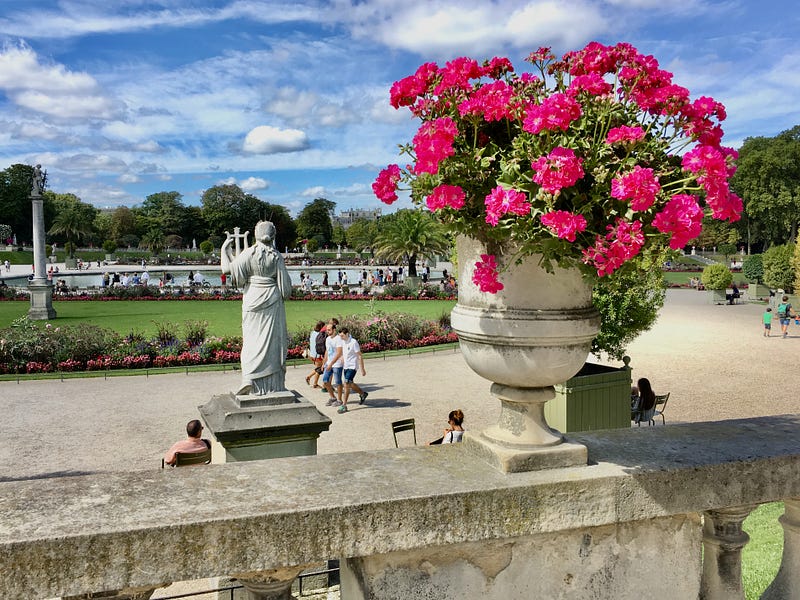
Sixty acres of peace, recreation and color in the middle of Paris. In 2022 an internet poll pronounced the Jardin du Luxembourg the most beautiful park in Europe.
So what does the internet know? In this case, it’s spot on.
I was shocked a few years ago to read that among European cities, Paris has the smallest percentage of green space within city limits — just under 10 percent in 2019.
The city administration has been working hard to increase both traffic-free public space and the greenery that mitigates pollution and heat.
But meanwhile, my shock arose from my own long time experience of the beauty and accessibility of Paris’s historic parks. And the Jardin du Luxembourg, though not the most central, is kind of a flagship for the ideals of Paris public space.
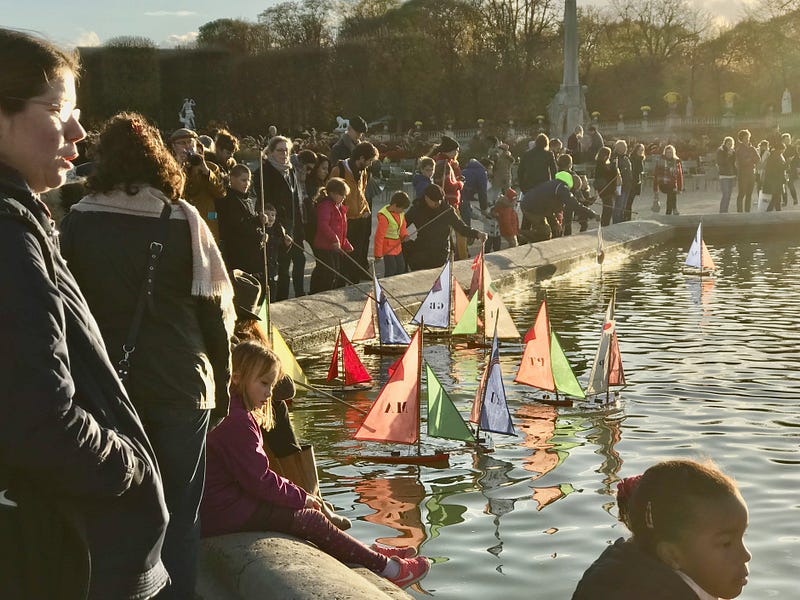
Water — trees — little boats — birds — statues — snacks — groomed paths — recreation — a carousel — seasonal flowers.
And the French Senate overlooking all of it.
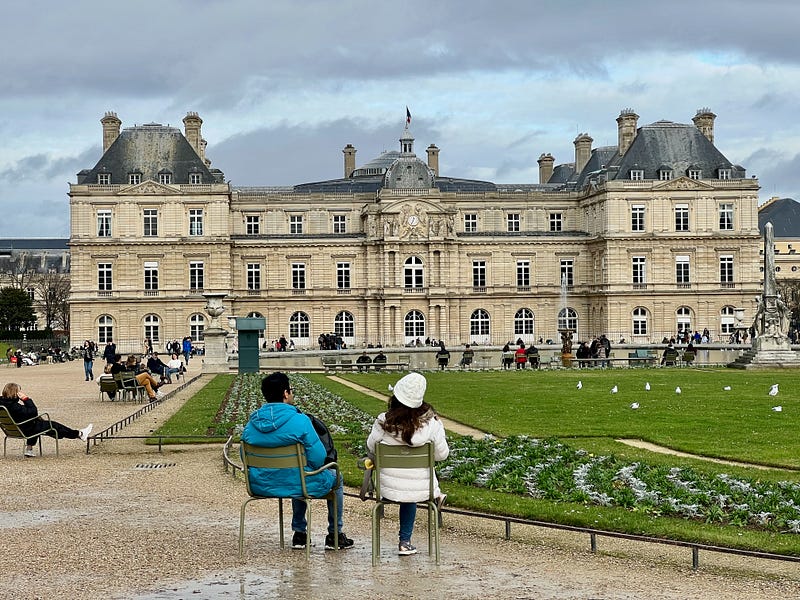
In fact the Jardin du Luxembourg is managed by the Senate. The park dates back to Marie de Médicis, who became regent after the 1610 assassination of her husband, Henri IV, until her young son, the future Louis XIII, came of age. She comforted herself by moving the royal residence from the Louvre to a hôtel particulier on the Left Bank (later called the Petit Luxembourg). She developed the grounds around the palace.
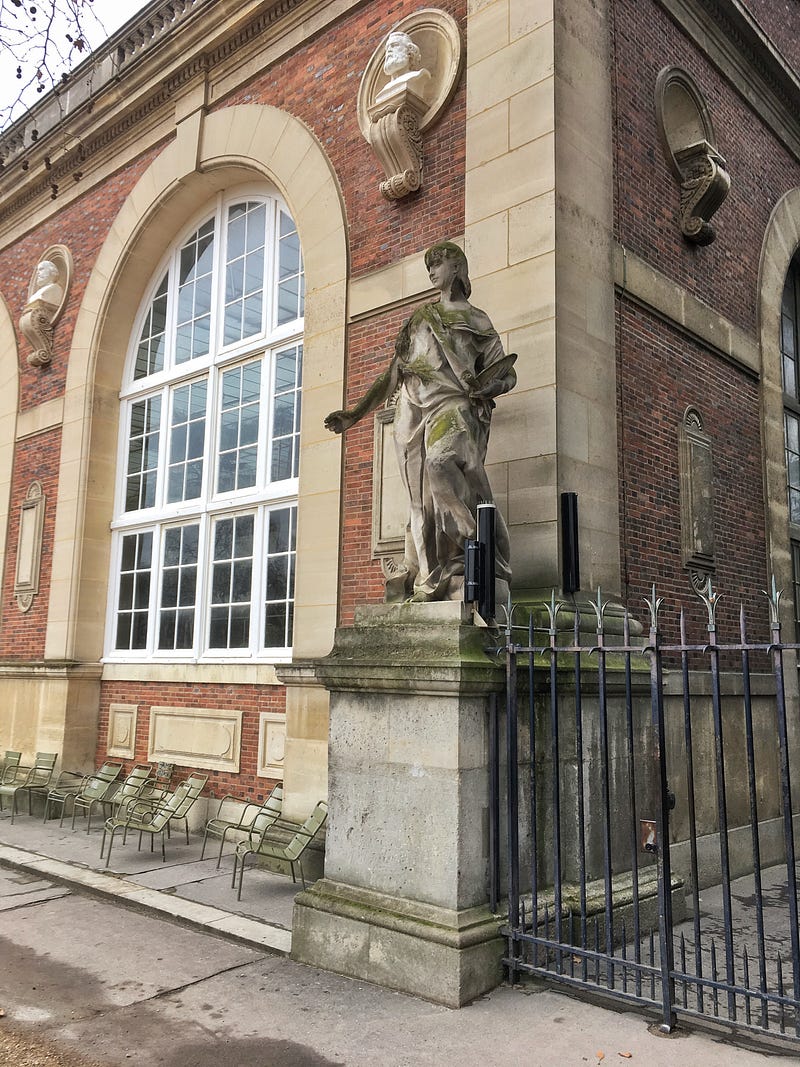
Later, the original orangerie became the Musée de Luxembourg, the first public painting gallery in Paris, dating from the eighteenth century. There is a newer orangerie that often hosts art and artisanal exhibits.
The area that became today’s Jardin has a long and colorful history dating back to the Romans, and includes a stint under the supervision of a medieval king later excommunicated, a Carthusian monastery, and a bit of finagling of the shape and size of the parkland by Baron von Haussmann, appointed by Napoleon III to renovate and modernize the city of Paris in the mid-nineteenth century.
(A mid-stream footnote on Haussmann: I live in a Right Bank building whose exterior was part of Haussmann’s design plans. Much of what we think of as characteristic Parisian architecture was part of that huge set of projects. Like most innovations in Paris history, it had vociferous detractors. Thank heaven some of the protests were effective, and the Marais was spared. On the other hand, I’m rather fond of my distinctively Haussmannian neighborhood.)
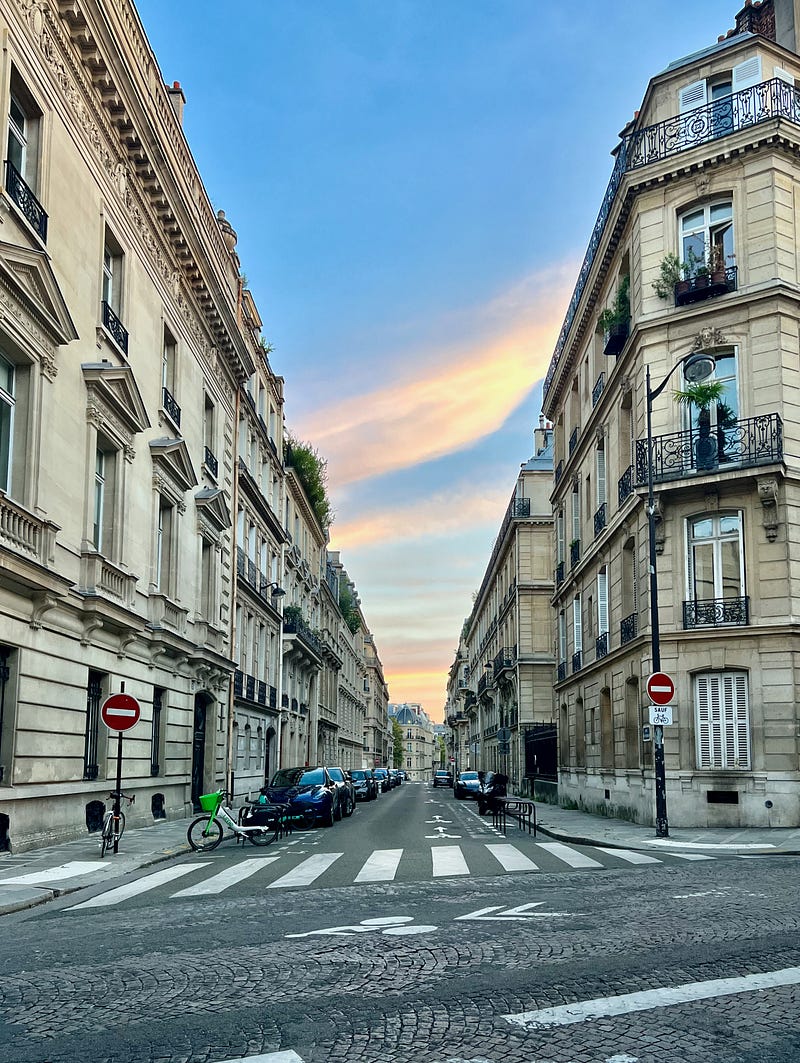
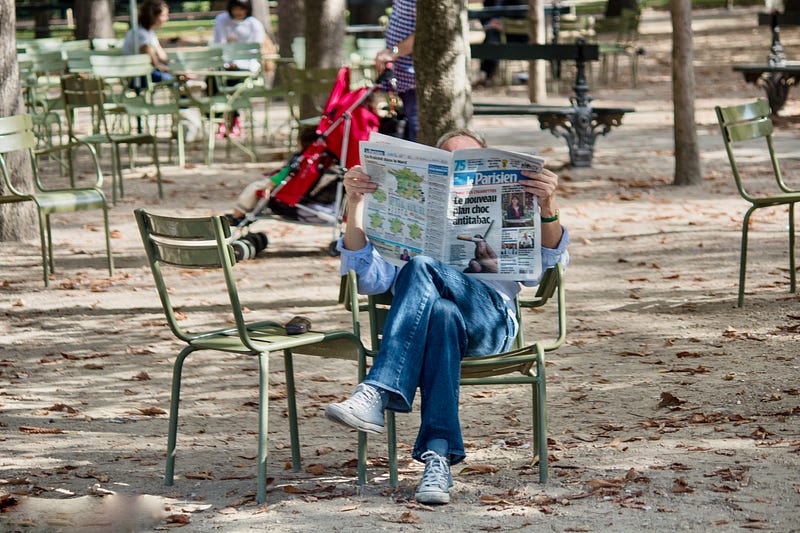
Today the Luxembourg Garden attracts literally millions of visitors each year. Unlike the Tuileries on the Right Bank, the Luxembourg, on the eastern edge of the 6th arrondissement, is as extensively used by residents as by tourists.
One of the distinctive landmarks in the Jardin du Luxembourg is the Medici Fountain. Commissioned by Marie de Médicis, it was actually moved to its current position during the nineteenth-century park renovations.
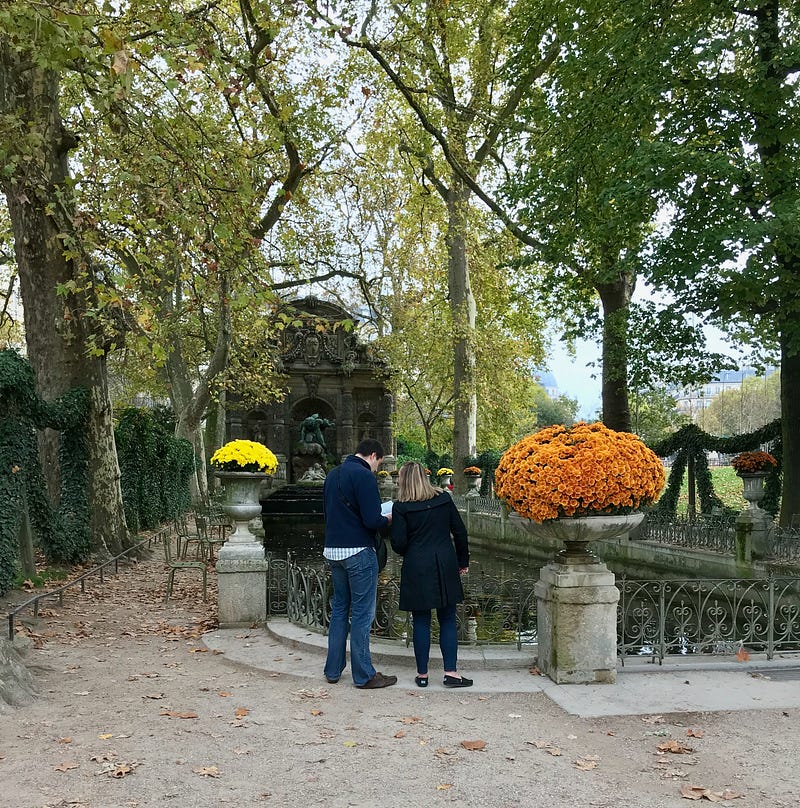
The fountain, like the rest of the park, has been redesigned several times. The huge stone grotto with its statuary looms over a long, narrow basin, surrounded by stone vases and garlands of ivy. It is a favorite place to watch ducks, sketch, read, and contemplate life.
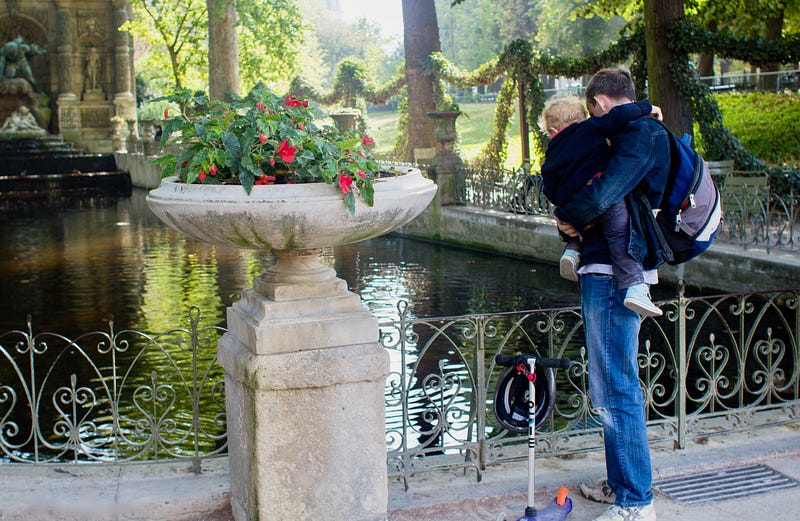
Like other park features, its profile changes seasonally. In the spring and summer the basin is surrounded by huge bouquets of red, white, pink, or purple flowers. In November, the flowers are orange and yellow: the chrysanthemums of a period of mourning and commemoration.
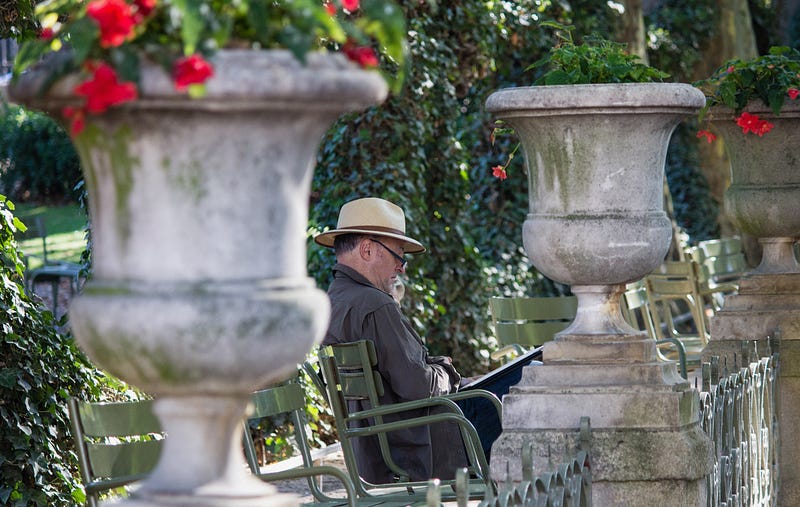
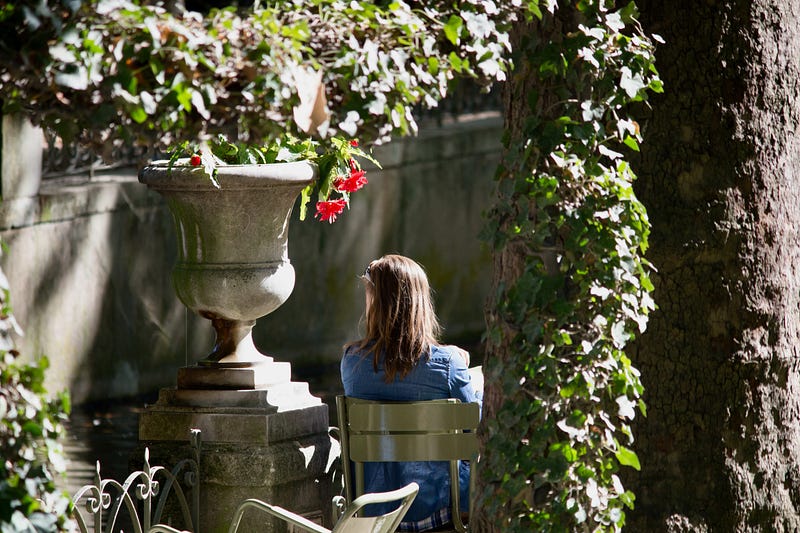
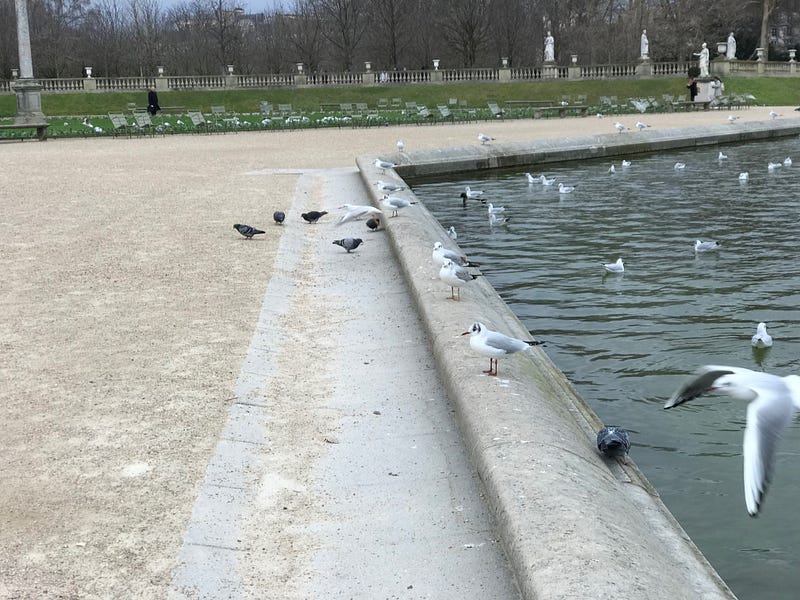
This month, February, is a month of getting ready for spring. The grass glows green but the stone vases are empty around the park. Gardeners trim the trees and bushes, clearing out the winter detritus to make way for new plantings and blossoms.
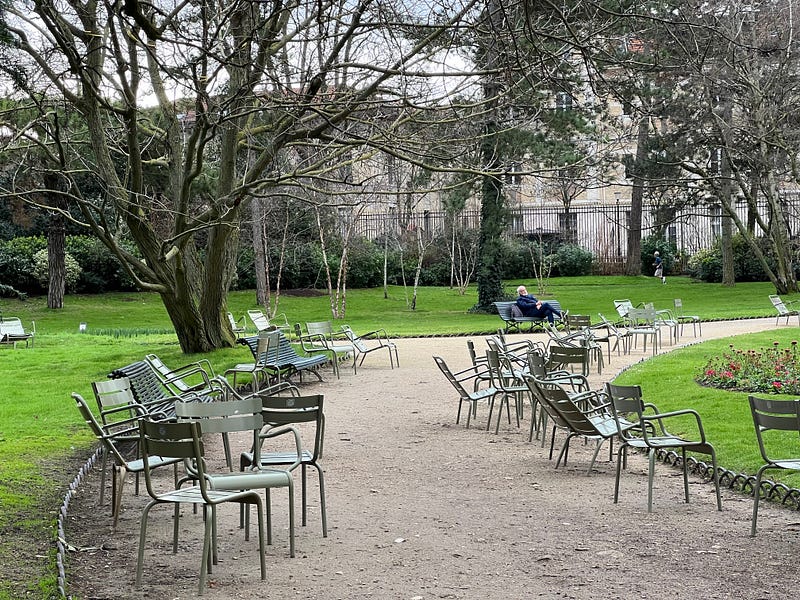
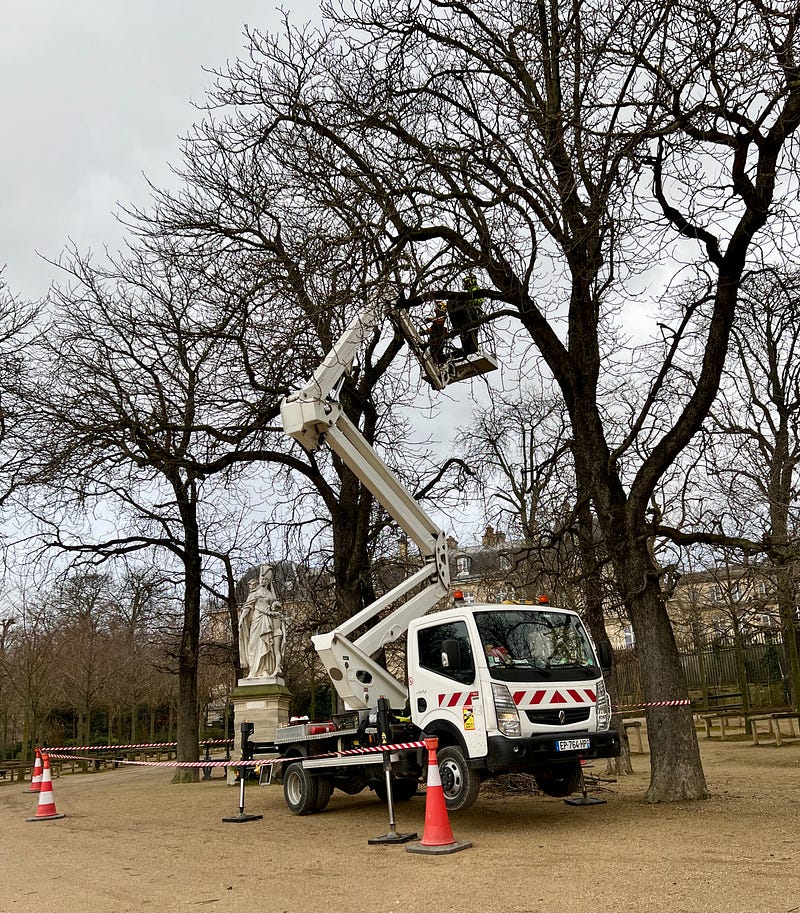
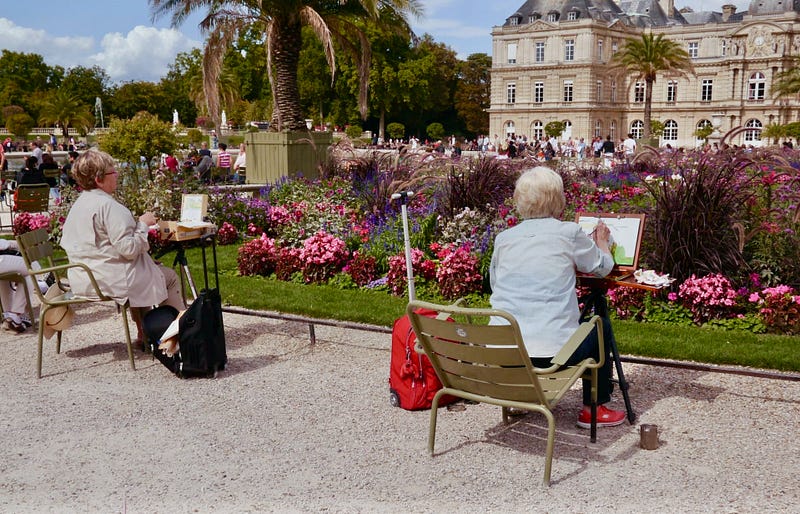
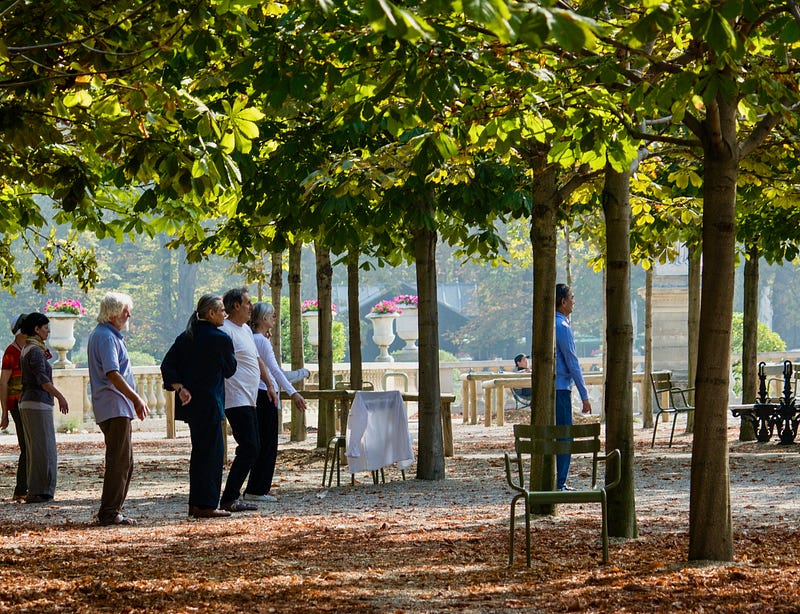
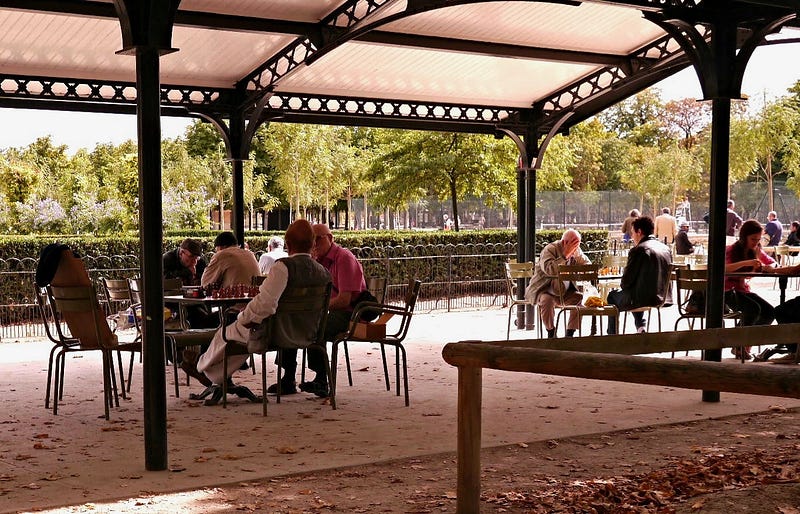
Year round, people play tennis on the public courts and boules on the wide pathways. They paint and practice Taekwondo. There is chess under the picnic shelters.
If it snows, life slows down even more. These are some of the park’s most seductive moments.
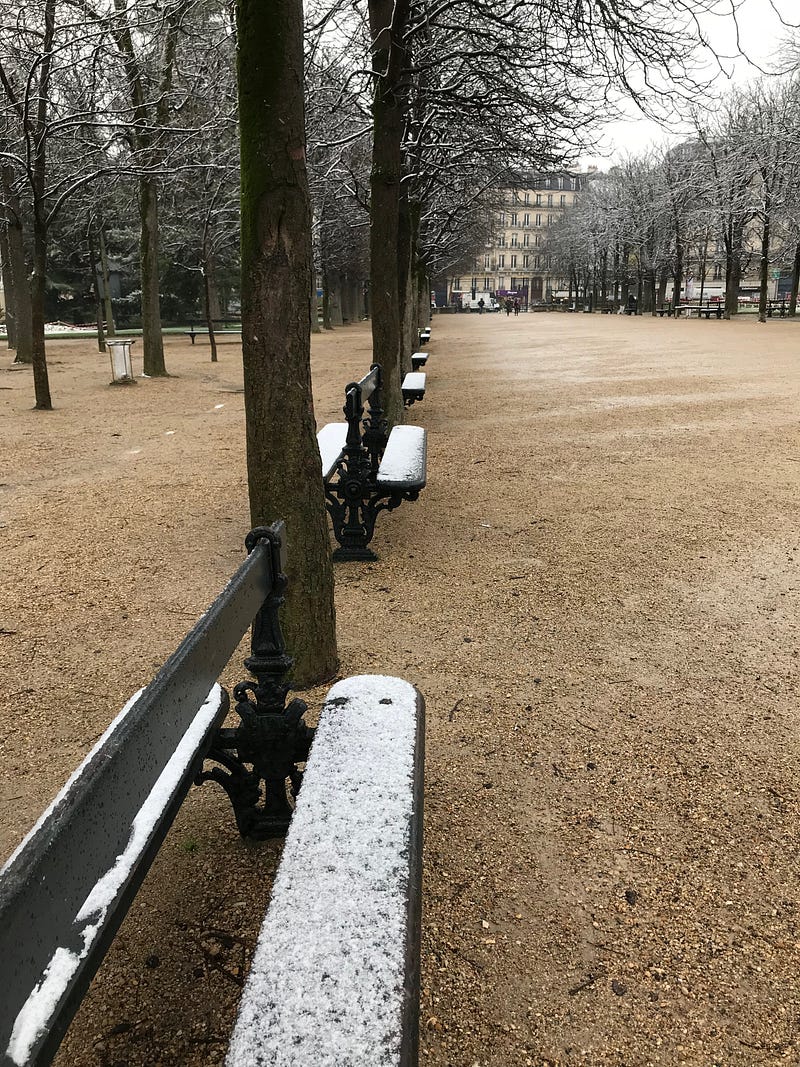
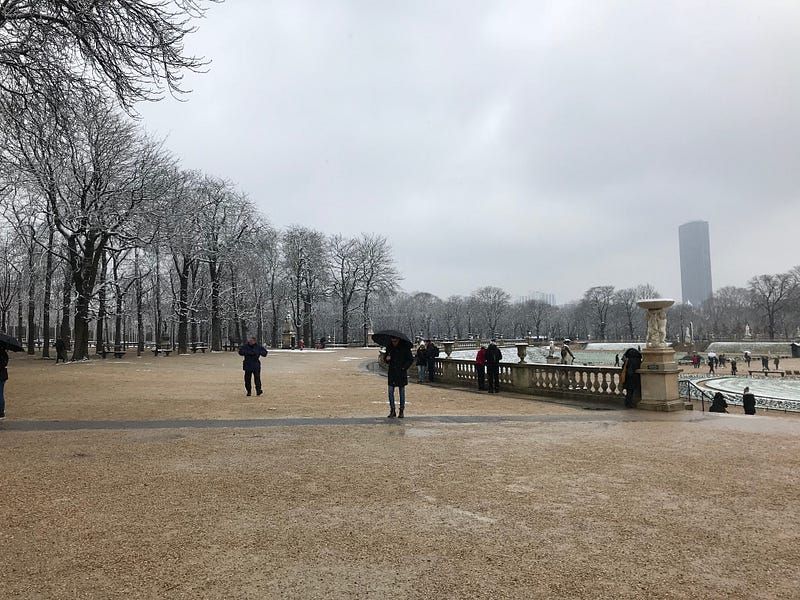
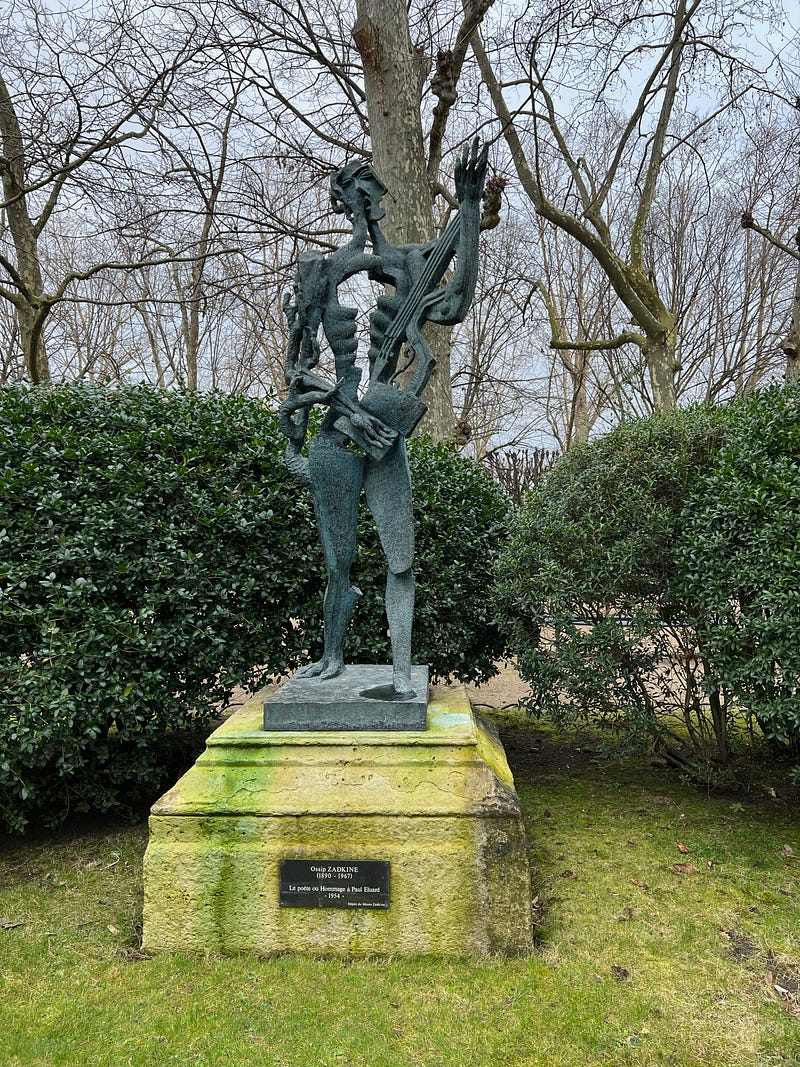
There are over a hundred statues in the park, from all periods and all styles. Some are quite contemporary, like this mid-Fifties sculpture by Zadkine.
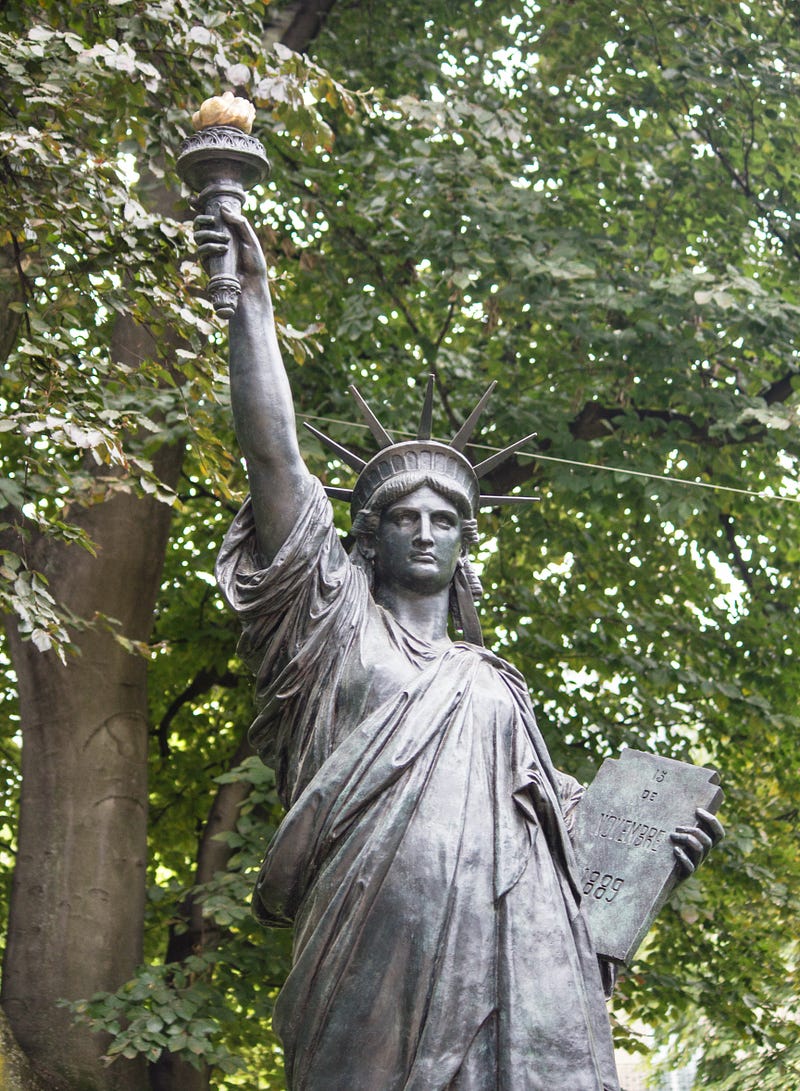
This copy of Bartholdi’s ‘Liberty Enlightening the World’ will resonate with American visitors.
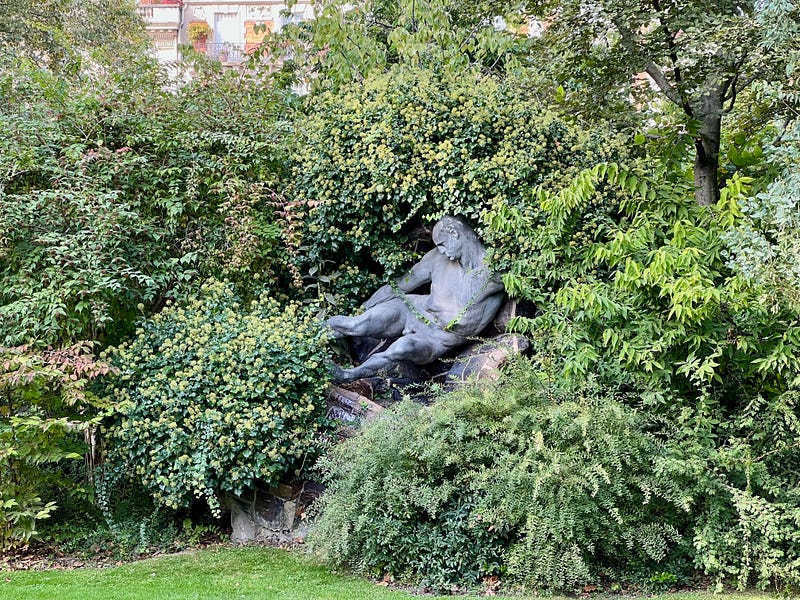
This one, ‘L’Effort’ by Pierre Roche, pictures one of the tasks of Hercules. The statue is half hidden in a riot of greenery in a large grassy area — which of course one is forbidden to trespass.
Speaking of forbidden grass, there is a series of grassy areas in the southern part of the park which are monitored by signs rotating them in and out of picnicking permission. Sometimes the signs are heeded and sometimes not.
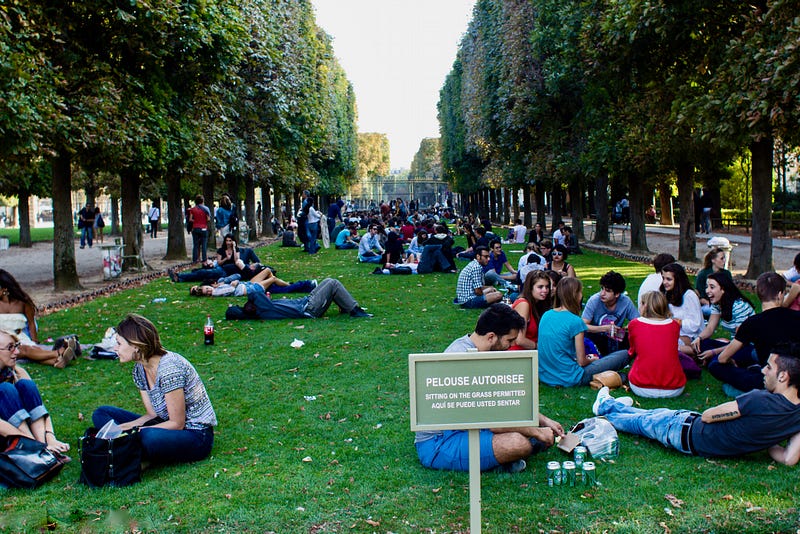
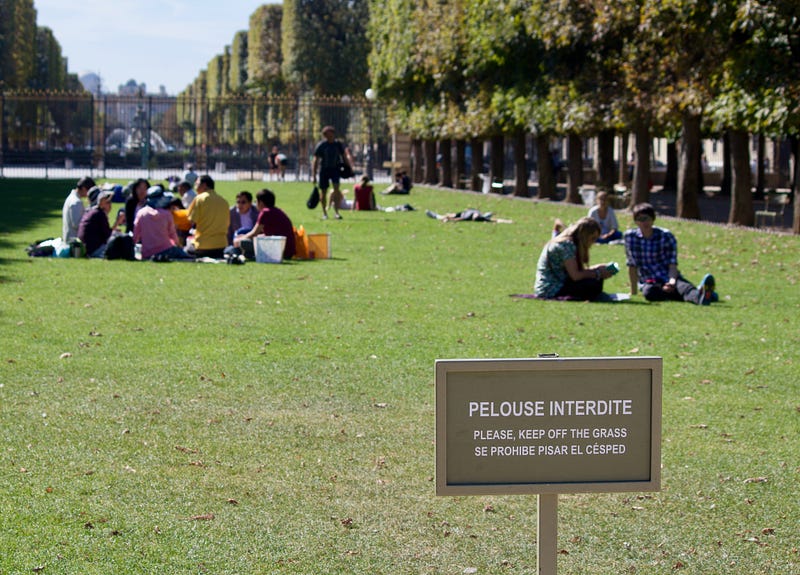
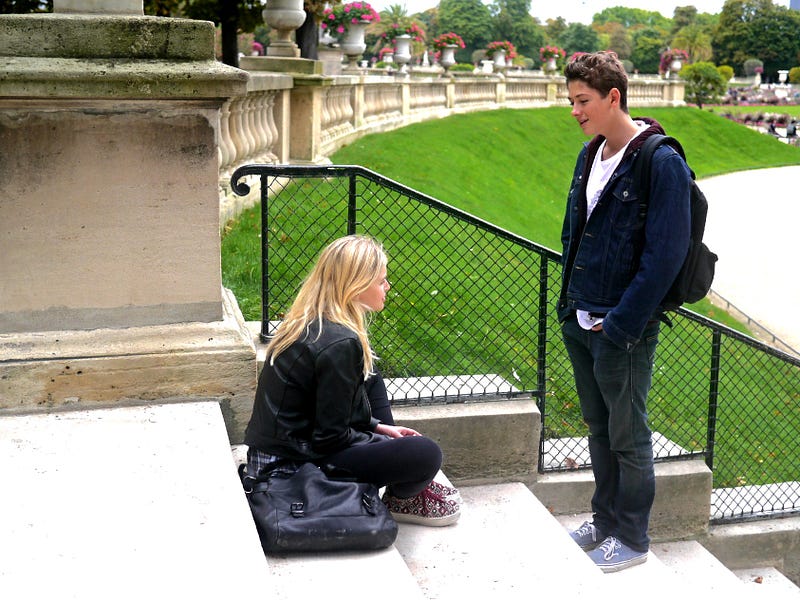
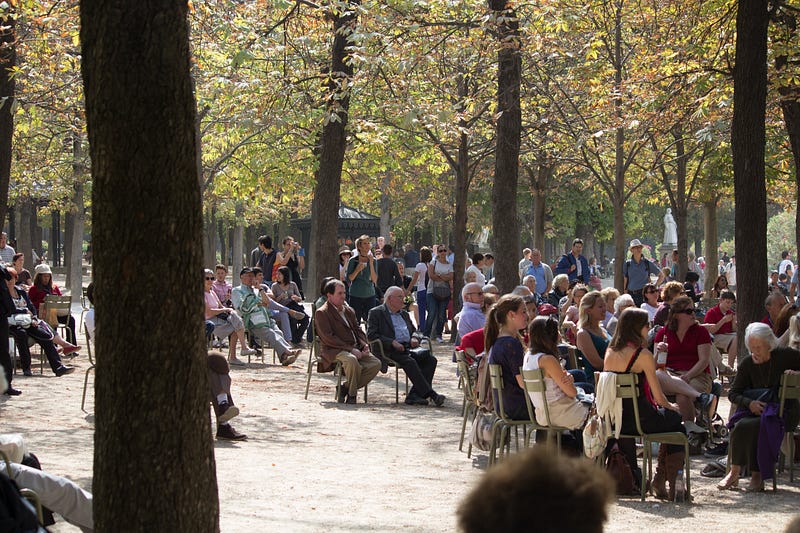
One of the most endearing things about the Jardin du Luxembourg is that it attracts people of all ages, to participate in all kinds of activities. Teenagers are not too cool for this park.
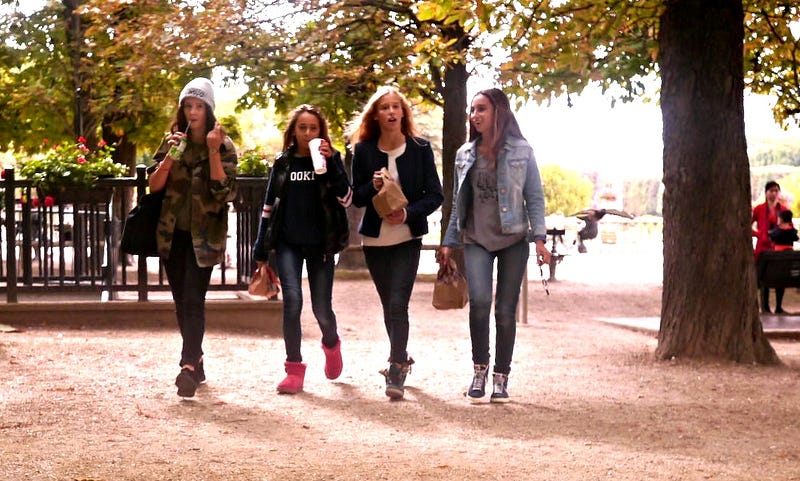
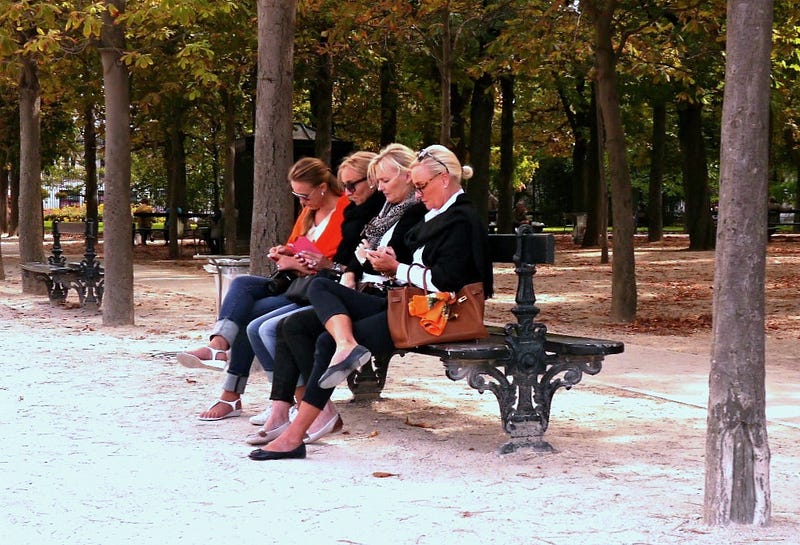
Older friends get together to do nothing side by side.
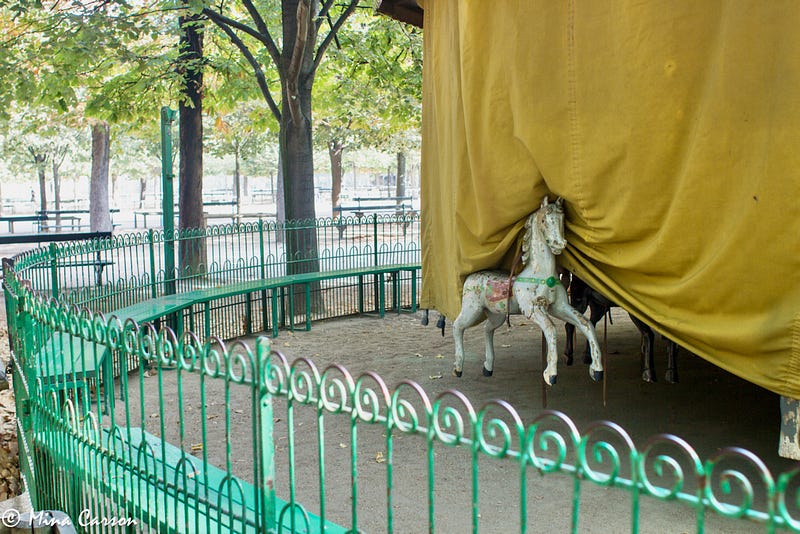
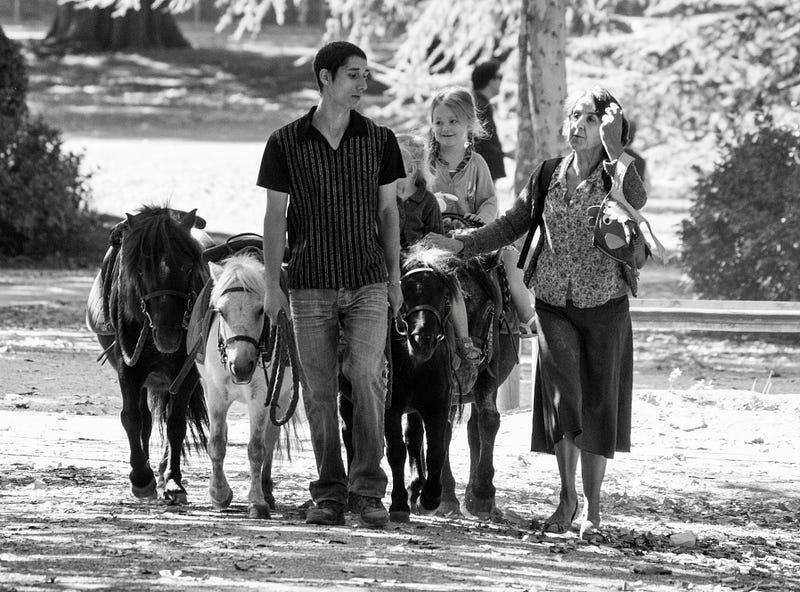
Kids have a carousel, miniature ponies, and marionette shows, as well as a playground.
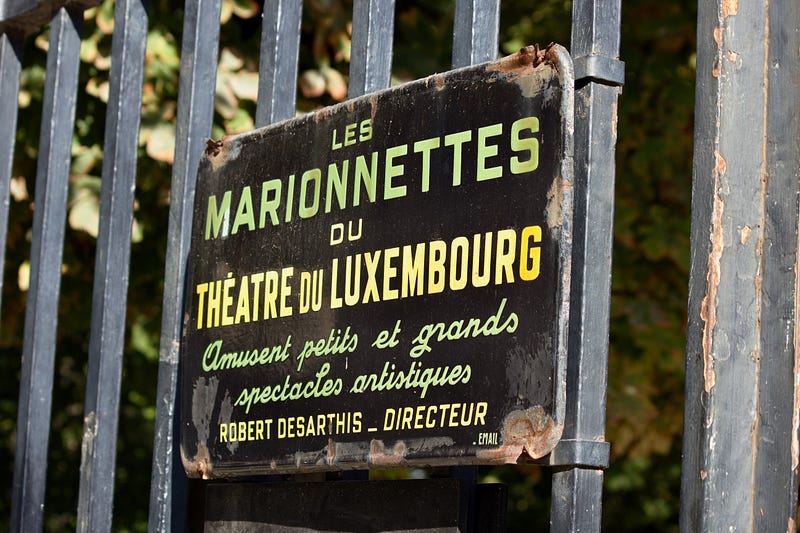
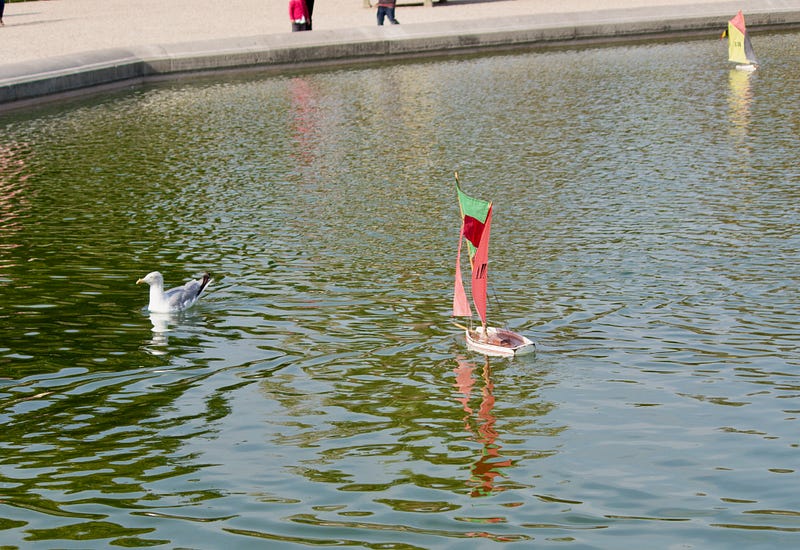
And the boats, the boats.
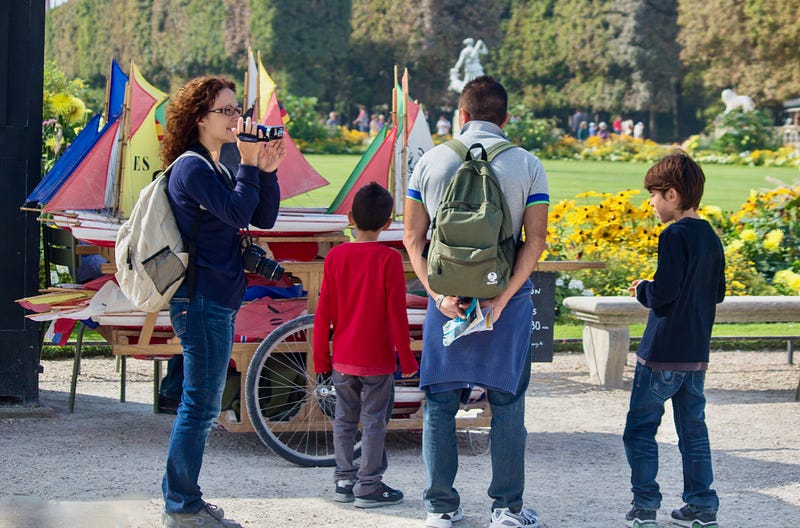
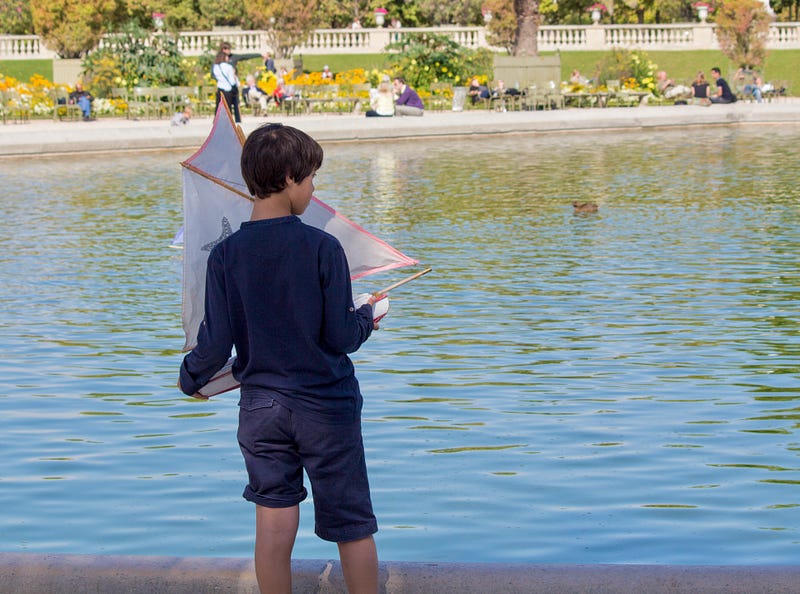
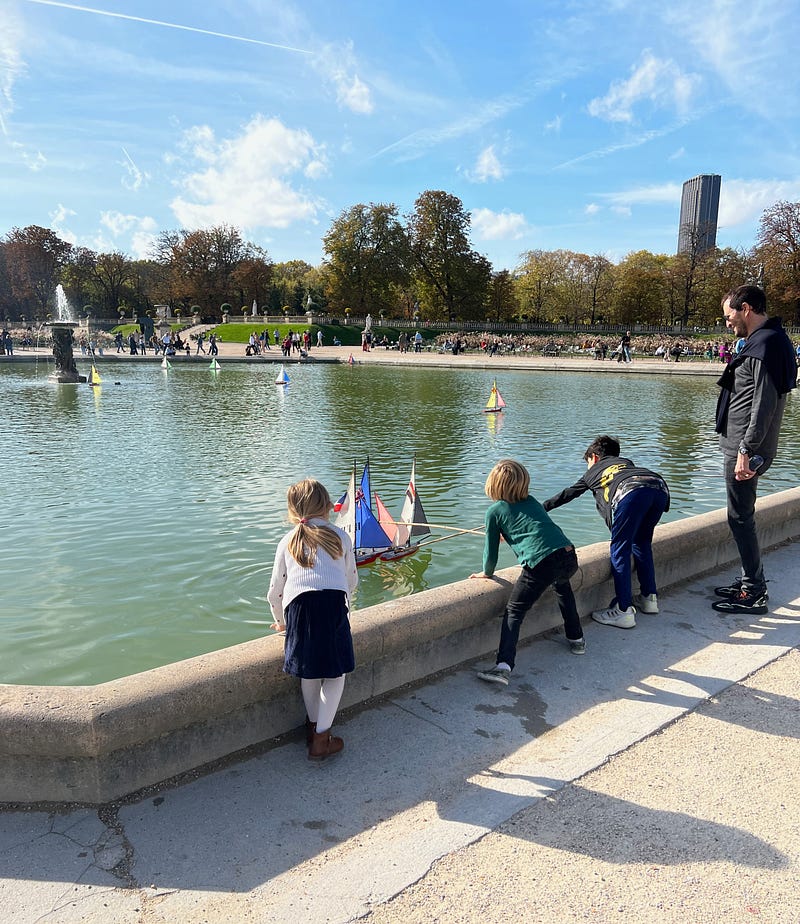
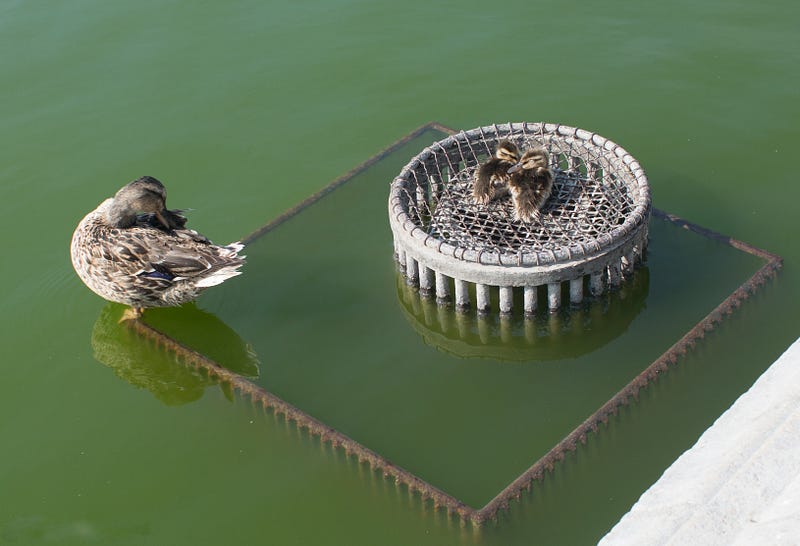
The boats and the birds somehow accommodate each other.
No matter where I enter the park, I generally end up at the café, which used to be the Pavillon de la Fontaine (named for its proximity to the Medici fountain), and now is called the Terrasse de Madame. Go figure. Open year round, the café offers both outdoor and indoor seating, as well as a take-away counter.
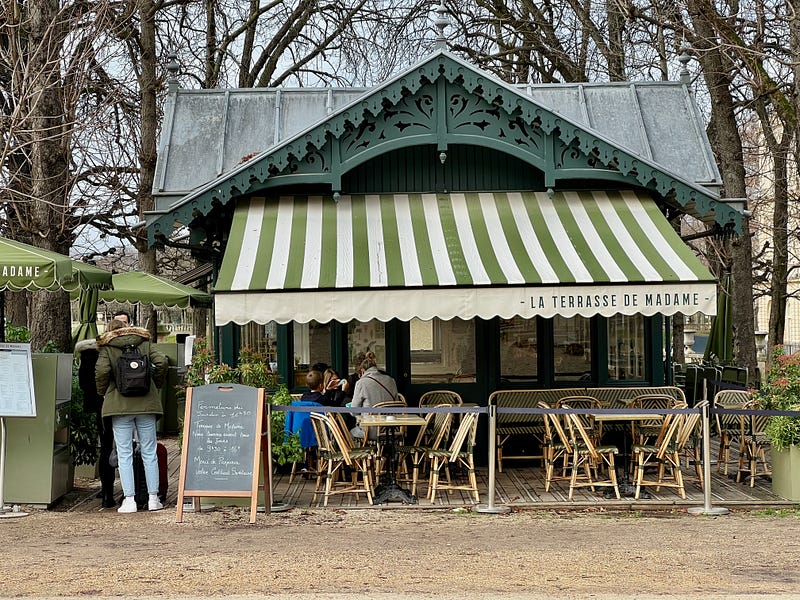
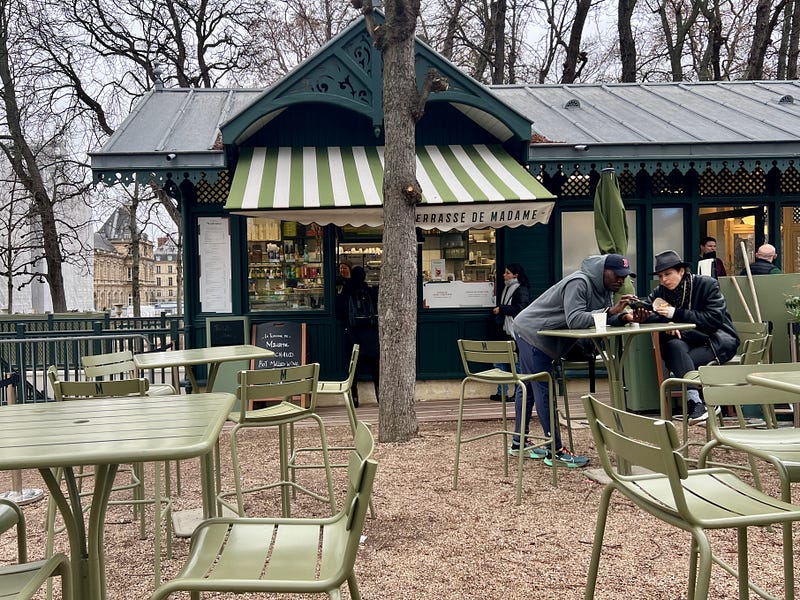
When I’m stumped about where to meet wandering friends, I’ve taken to directing them to the Terrasse. The lunch is fine and the park is just enough out of the way so that a true out of town visitor might not have chosen to go there otherwise. And that would be a huge omission.
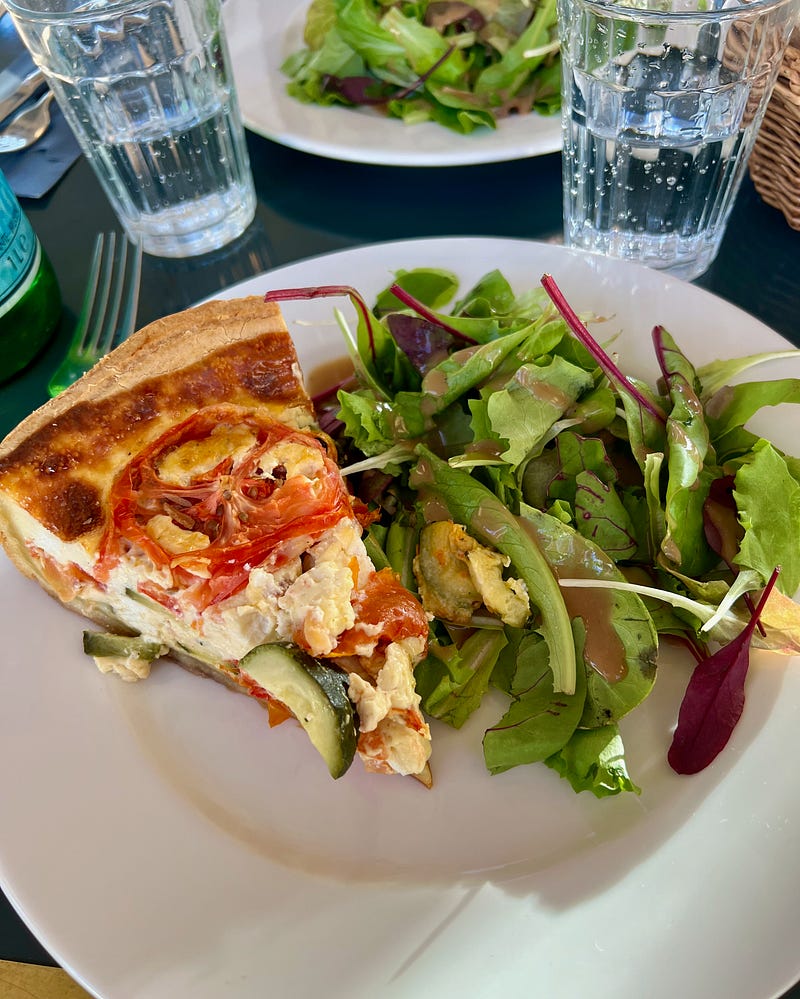
When I moved here longterm in October 2021 — post-pandemic shutdown — I ate my first lunch as a picnic from the take-away counter. You can see that it wasn’t what one might call fancy — but it meant that I was back in Paris and made me happy. Very happy.
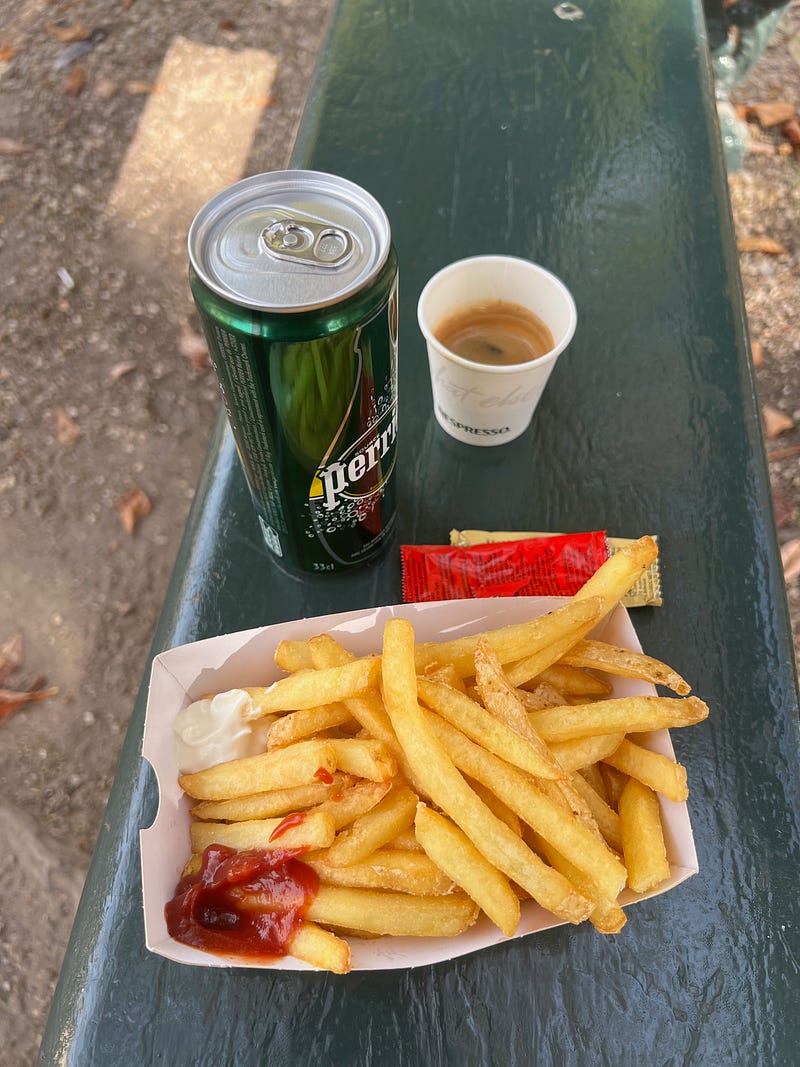
The other day I walked through the Luxembourg garden at mid-morning. I ordered a chocolat chaud to emporter. I forgot to tell her to omit the whipped cream and she forgot to ask. The hot chocolate arrived topped with a thick coating of melting cream. So glad I forgot. Maybe I’ll forget on a regular basis. What the heck.
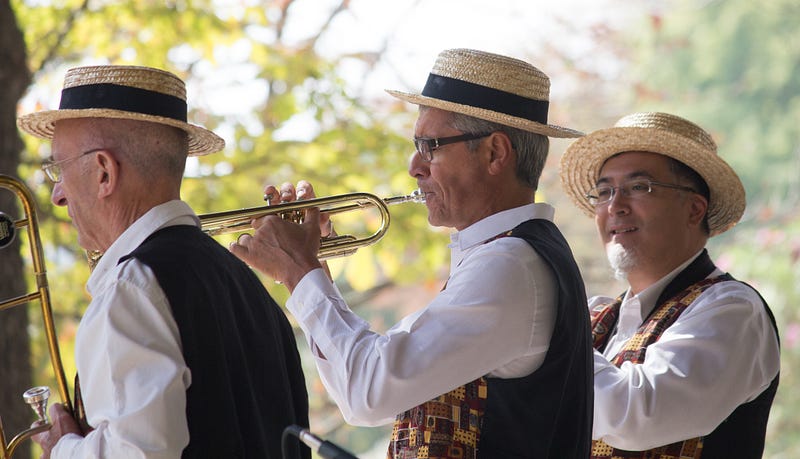
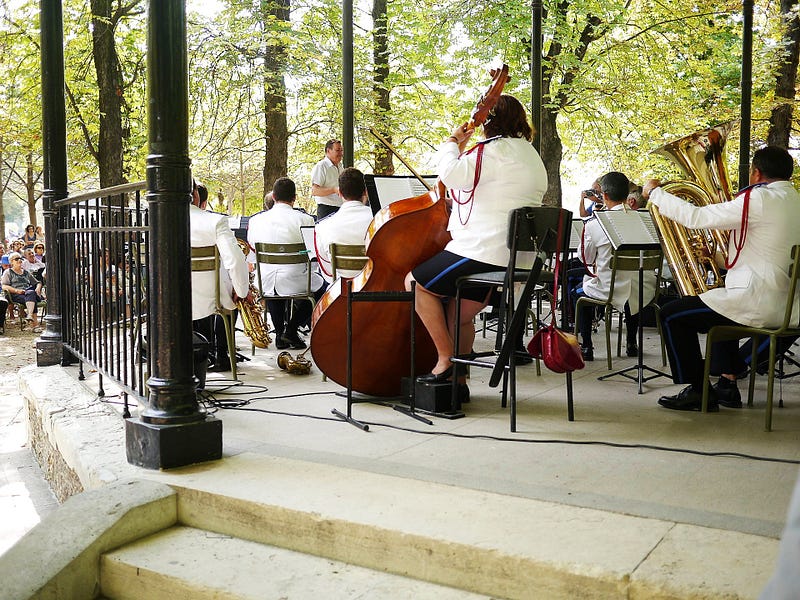
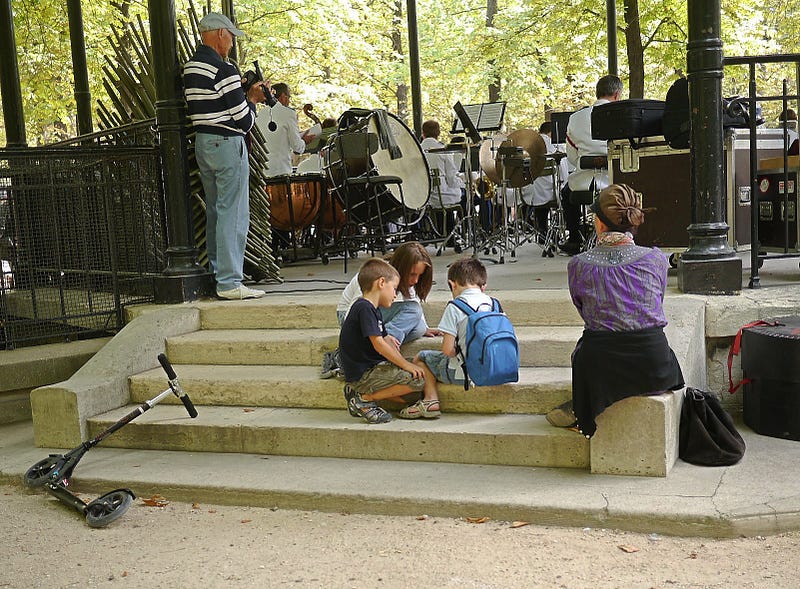
I almost forgot to mention the bandstand, close to the café. In warmer months there is a regular schedule of music and performance, all free and fun.
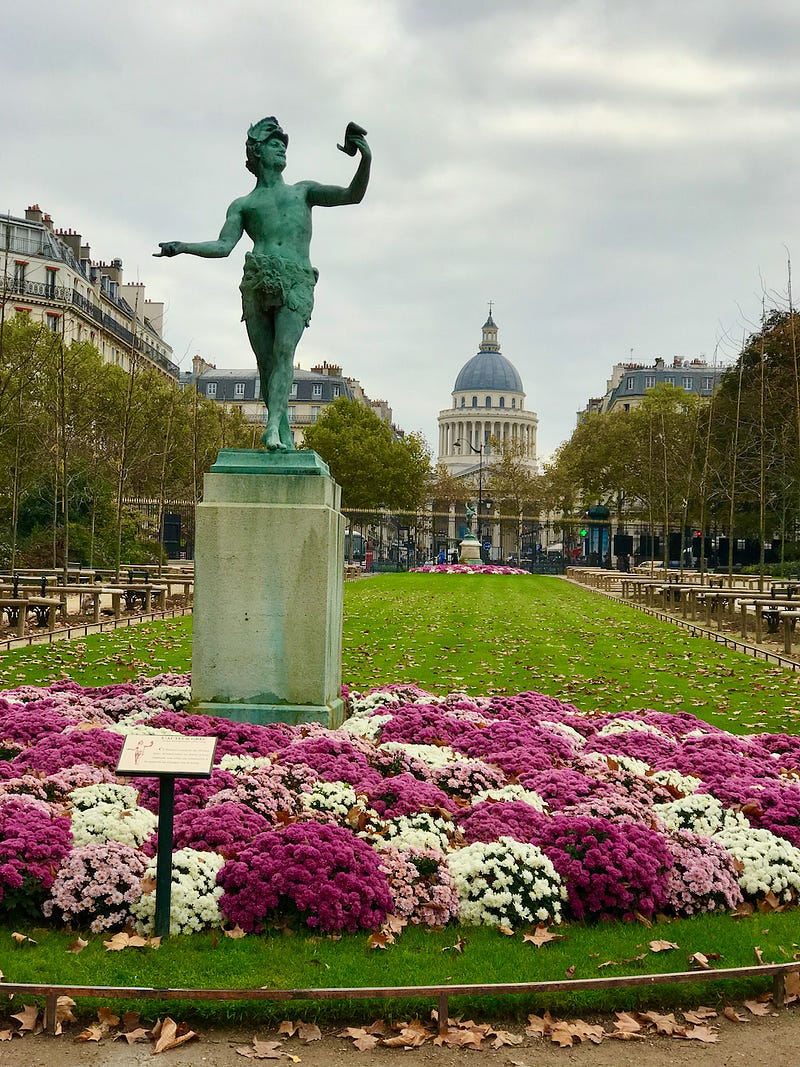
And finally, the Greek Actor, with his back to the Pantheon; and behind him the beloved dancing faun, who captures the spirit of the Jardin du Luxembourg.

More stories of Paris:
Thanks for reading!