
Technology
Back to School: How AI Will Change Education
…and improve the flaws of traditional teaching
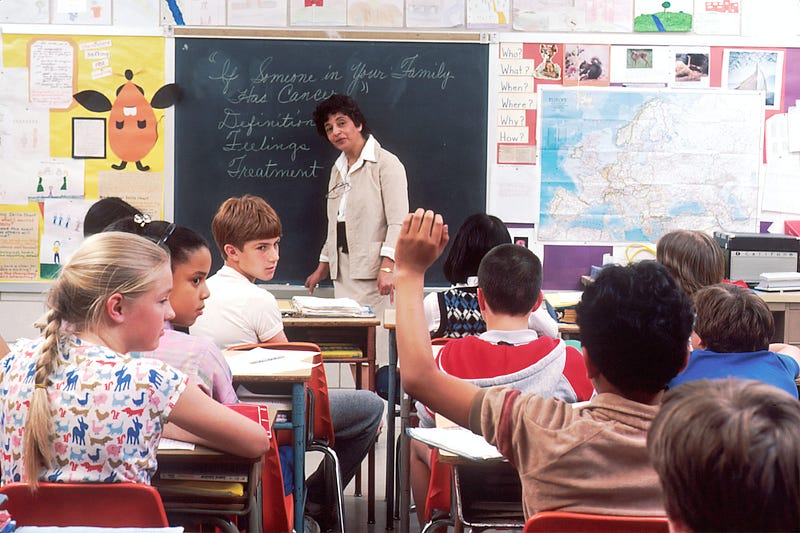
According to UNESCO, education is a systematic method of creating, applying and defining the entire educational process of teaching and assimilating knowledge, taking into account technical, human resources and their synergy.
When UNESCO was founded in 1945, its Constitution already expressed the belief in ‘full and equal opportunities for education for all’ and ‘the education of humanity for justice and liberty and peace.’ There have been dramatic political, economic and social changes since then, but these ideals remain as relevant as ever.
Nowadays, education is one of the major public sectors that experience a significant technological upgrade.
According to Investopedia, the concept of EdTech, which is a portmanteau of ‘education’ and ‘technology’ refers to “hardware and software designed to enhance teacher-led learning in classrooms and improve students’ education outcomes.” Although EdTech is currently at the beginning stages of its development, it already shows to be a promising method of customizing education program to match the student’s level.
One of the largest flaws in traditional teaching is — uniformity of educational program and the inability of teachers to convey knowledge to students of different levels and study abilities. The recent developments in the EdTech field allow teachers to ensure every student will be receiving and comprehending the studying materials in a way that is the most convenient for his brain.
How AI will change education sector:
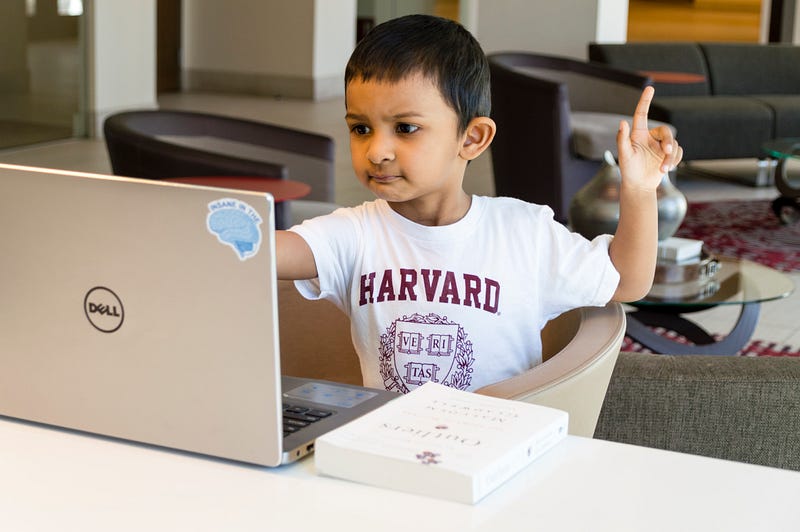
AI will improve the quality of education
Even the greatest teacher can never meet the needs and learning skills of each student from a class of 40. The recent developments in EdTech have the potential to fill this gap and provide a massive improvement to the standard education model, where AI helps to adapt lessons to the individual characteristics of each student.
AI will make education more accessible in the remote areas
AI can fill the gap of qualified teachers in many countries, which will make primary, secondary and higher education accessible for everyone everywhere.
AI can make trial and error learning less intimidating
Trial and error is an essential part of learning. However, from the psychological point of view, it can be extremely difficult to face failure. Especially, in front of your peers. AI-powered applications offer a judgment-free environment, where students can learn by trial and error method without any psychological harm.
AI will increase the effectiveness of education
Prior to adapting each lesson to each student, AI-powered system has to analyse the progress of each student on a continuous basis to identify tendencies and patterns in the knowledge consumption process.
AI will make education a fun and engaging process
The AI-powered system identifies the level of familiarity and confidence the student has across different areas of knowledge. Then, AI will assess if a student enjoys certain activities in order to evaluate the student’s preferred way of receiving the studying materials.
AI will bring universal access to education
Whether a student speaks a different language, have visual or hearing impairment or is not able to attend school due to illness, AI-powered systems will adjust its program to every particular need.
AI will automate school/ teachers’ administration
Apart from teaching responsibilities, the educator has to spend a massive amount of time to manually grade assignments and tests. AI can not only provide teachers with a quick analysis of each homework/ test/ coursework but also offer personal recommendations for each student, according to his performance. Since AI will help with automating manual tasks, teachers are left with more time to spend with each student.
Which teaching method would you prefer for yourself or your children?
Teacher only? AI only? Or Teacher + AI?
Comment your opinion below!


