
Back In The Saddle: Learning To Love My Dad, Myself, And The Bicycle Again
How I stepped away from cycling, lost myself to drugs and alcohol, and came back to a life worth living
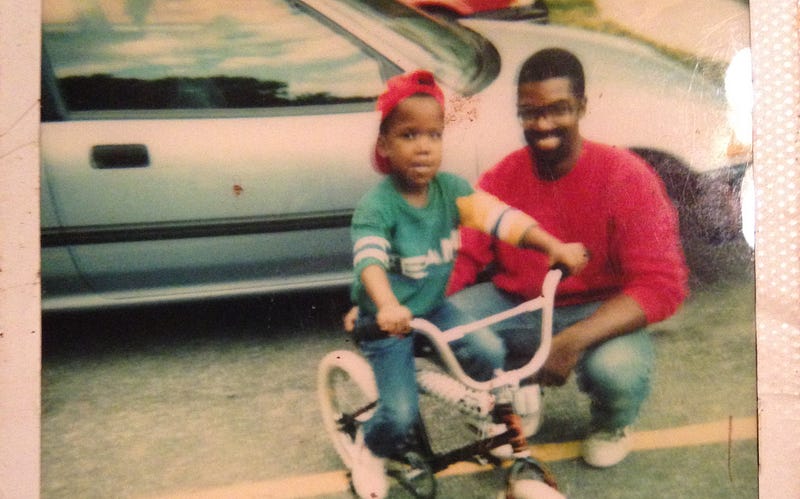
“I don’t just call you son because you’re mine, I call you Sun because you shine!” my father told me, smiling as he knelt down and bolted on my training wheels, then adjusted the straps on my helmet to prepare me for the day’s adventure. He used to say that to me a lot, before the whole world came crashing down on me, and we both had to be rebuilt after years of pain and alienation.
These days, I sometimes pass by the little strip of pavement where I learned to ride a bike. Taken in through a car window, usually. A dead end street where my father knew there wouldn’t be much traffic, with charming, if uniform, three-story houses on one side and a small hill and sidewalk separating the length of it from one of Baltimore’s busiest streets. He was so patient and gentle, bringing me into the world of cycling one tentative pedal stroke at a time.
His love for me felt like a thing I could hold in my arms then, like my stuffed animal Dog-Dog. Spoken. Felt. Known. Both held closely against my onesie every night as one or both of my parents tucked me into bed with a story and a kiss.
There I was that afternoon, just straight sending it, now without training wheels or my father’s comforting hand at my back. My tense body learned to trust itself, as it found rhythm and comfort, loosened up, and convinced my mind to follow.
My dad had hand-painted my bike in black, with red and yellow lightning bolts and MAGGOT BRAIN lettering on the down tube. I still remember feeling it underneath me as it eventually became more of a compliant companion than a contraption to be skeptical of.
Mission accomplished, I rode behind him as we biked back home and later leaped into my mother’s arms to tell her the news when she got home from work. My love of pedaling and coasting and climbing and flowing on two wheels took hold then and there.
So often the things we want to remember are lost to time, and the things we want to forget take up too much space at the front of the mind. It took me years to reconnect with the warmth of moments like that one, to the thought of my dad as someone capable of loving me. For a long while, the formula was, my father, plus a bicycle, meant misery. This logic often applied equally off the bike.
I’m at the age now that he was when he and my mother had me, and I’ve been thinking lately about the sacrifices he made, that they both made, to show up the way they did for us. Having left the workforce to raise me and my little sister while my mom worked six and seven days a week to provide for us, my father would ride up to my lily white private school each day, my disassembled BMX bike strapped to his back, and my baby sister in a carrier mounted in front of him. Like so many Black fathers, he defied the anti-Black stereotype that Black men don’t show up for their kids.
During those rides home across town though, I thought he was cruel and needlessly harsh. Everyone was sure I had the Cool Dad. For most of my life I certainly couldn’t reckon with the fact that I was fortunate enough to have a father in my life. But I would’ve given anything to trade dads with one of my friends.
When he lost his temper and his verbal abuse turned physical, such as when a car ran a stop sign and almost clipped my back wheel as I lagged behind him, I now know that’s not the man he wanted to be.
The way his sturdy frame always seemed coiled and ready to strike, I now understand, was a product of his own childhood. The son of a Chicago pastor, his youth was punctuated by verbal and physical abuse meted out by Black adults doing what they had learned from their beloved adults as children themselves.
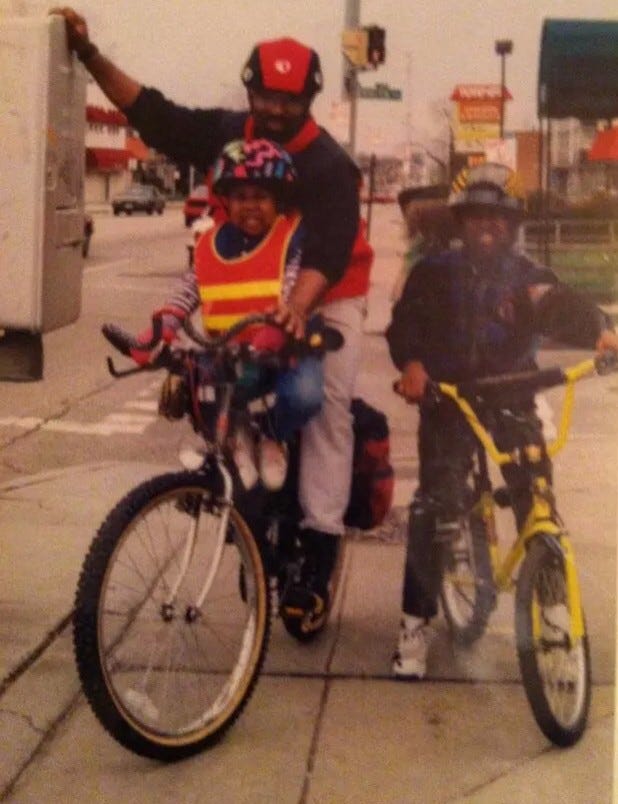
The bike always meant so much more to my father. It was his sole mode of transportation. To this day I’ve only seen him behind the wheel to gingerly move my mom’s car in the driveway. He rode his bike to DC regularly, notably for the Million Man March, and would stay up through the night repairing the bikes neighbors had dropped off for him to fix. His physical presence was always an outsized one to me, even beyond the standard adults-as-giants perception we have as children. He seemed indestructible.
The barking drill sergeant energy he took on during those rides to and from school, long after having been drafted into the Vietnam War, was adopted to try to keep us safe the only way he knew how. To keep us alive. On streets not set up for bicycles and their riders. In a city where policy violence forced Black residents to bear the brunt of poverty, neglect, and death for generations. And in a country not intent on seeing us as human. My half-brother had been killed a few years after I learned to ride my bike, and I know my father never wanted to feel that anguish again when it came to us.
For years the sight of a bike made me tense up involuntarily, trauma poisoning my body with the freeze response that works as advertised. Riding home miserable in the rain. Friends’ parents rarely offering us rides because they were afraid that the only Black kid in the class lived somewhere “sketchy.” The dog attacks. Pinkerton Security guards stopping my father in Guilford, because he “fit the description” of a suspect in a murder in the city’s wealthiest neighborhood. The shame, completely misguided on my part, of having a father pull up to school on a bike when other kids’ parents pulled up in BMWs and boxy ’90s SUVs.
All of it came together to push me away from riding a bike, and to distort how I viewed my father as a person.
Don’t let me front like all my time on the bike was bad though. Coming up in my neighborhood, entirely Black and created in the early 20th century in response to Baltimore’s racist housing ordinances, my friends and I would zip around on sticky summer days, with one of us usually tasked with carrying a boombox to blast No Limit, Bad Boy, and Cash Money tapes, until we were soaked with sweat. Even though our Black mothers explicitly told each of us not to get dirty.
I remember the rush of trying to get my little legs to turn the cranks over as quickly as possible, speeding up and down the straightaway that was our street on the same electric yellow BMX bike I rode to and from school.
This was one of the few times in my life I felt truly free as a Black boy. Plus, whenever I needed a repair or an upgrade, my dad could always be counted on to hook my bike up better than all the other kids’.
But whatever good there was in riding a bike for me withered and died the week I bought a mountain bike with money saved over an entire summer. I was 13. Fussing with the gears, I plowed right into the back of our neighbor’s fire engine red Jeep Cherokee, smashing up the driver’s side taillight, damaging my bike pretty badly, and picking up some cuts and bruises. I remember my dad being more heated with me later that night than the neighbor had been.
I cried myself to sleep and made a promise to myself that I would never ride a bike again. “Why should I feel like this if I don’t have to?” I thought.
I don’t believe it was a coincidence that I began to drink and do drugs shortly after all this. As an alcoholic-in-training, all the anger, fear, self-centeredness, and dishonesty that would become hallmarks of my later life of demoralization, hopelessness, and misery began to take hold.
From the start, if I was drinking and enjoying it, I wasn’t controlling it. And if I was controlling it, I wasn’t enjoying it. I did have my fun while drinking, no doubt. But in running back the tape, the horror show well outlasted the party.
For years, if I wanted to stop, I couldn’t stay stopped. And when I did somehow keep my brain from obsessing over seeking oblivion, there was no telling how long the pause would last. Usually only a week or two at best.
There was a year, after being kicked out of college after just two semesters, when I went stark raving sober. It’s a miracle I didn’t end my life, given the unbearable pain of not being able to seek the release I found in drugs and booze for that long. Surely enough, I got right back to it when the pain became too much.
No consequence was grave enough to get me to stop drinking and doing drugs. Blacking out behind the wheel and crashing into someone’s car on I-95 going 80, collapsing on a dealer’s bathroom floor at 6am, drunken run-ins with cops that miraculously didn’t end with me losing my life at the hands of the state, as so many Black people have during our past and present. Lots of lost opportunities, even more ruined relationships.
A normal person, a normal drinker, would’ve taken the hint right away. I was hard-headed and knew everything but how to live like an adult human being. I couldn’t have given less of a shit about riding a bike at that point. Unless that bike was made of coke or produced alcohol somehow.
Eventually, booze and drugs stopped giving me any sort of relief. That’s when I felt a terror and a loneliness unlike anything I’d ever experienced. If I didn’t have oblivion to retreat to, what was the point of going on living? I was certain I had reached the end of the line.
My reentry was more crash landing, flailing, raw, and terrified. Those sickest parts of me burned up in the atmosphere and I eventually landed knees first. I was done. Done running, done fighting, done trying to figure it out. Completely out of answers. I know my family was too. It was either die at 26 years old or try a new way of living. By some miracle, I got sober on January 9th, 2012, finding myself in meetings alongside my then-girlfriend most nights that winter.
In that past life, I wanted to die every day. Leaving a life of killing myself and those closest to me, I still carried the pain that’s often bundled up with guilt and shame. Those first few months of recovery, cycling was the last damn thing on my mind.
The thoughts of hopping on a bike — for fun, for fitness, to get around when I didn’t have a car — all just reminded me of my father and riding with him. And that felt like failure. It felt like frustration and the familiar taste of tears and the stomach-ache that sidles up with anxiety.
For so long, I couldn’t extend the grace to him that I can now, to see that he was living with his own struggles, while also trying to work with my mother to ensure my sister and I were taken care of as best as they could with what they had.
Getting sober helped me see him differently and allowed me to understand things beyond just what was in my own head and heart. I learned about true empathy at the same time I was learning how to live as a sober person, as a human being in general.
In those early weeks and months, I found myself no longer lying every other sentence, not wanting to harm myself and others, and showing up for my loved ones for a change. I moved out of the party bunker of an apartment that I had ended my drinking life and began my sober one in. And while living back home for a bit, I impulsively bought a single-speed bike from Nashbar’s website.
Taking that black and purple bike out for its maiden spin, I was legitimately worried that I had forgotten how to ride.
I was back on that quiet strip of pavement for a bit there, training wheels coming off a second time. My brain made all the necessary connections eventually, balance confirmed, pedals churning underneath me, and I was off for my first ride in 13 years.
That same night, a derecho hit the city, whipping the trees with wind and rain and making everything look like Isla Nublar from Jurassic Park. As the directional wind storm picked up in intensity and started snapping branches, I rushed home.
But I got another lap of the neighborhood in because it felt that damn good! That night, I got a rush like the one I used to get snorting pills, smoking crack, drinking, and all the other things I used to do to get outside myself.
I briefly thought about risking the 70 mph winds to get some more riding in. My alcoholic logic: If one extra lap felt good, then 10 laps would feel better than sex! This scared me, but I was told by early minders of my recovery that I couldn’t get into the same kind of trouble riding as I did partying (or disastering, more accurately).
I wanted to share with my dad how it had felt to be back on a bike, but he didn’t seem interested when I returned, and this still felt like a thing I needed to protect from him and any potential negativity that would’ve taken me back to the bad old days.
Getting on the bike those first few times after having not ridden in over a decade: Awkward. Thinking I could ride heroic distances right away: Comical. My will to stick with this cycling thing this time around: Unbroken.
This new shot at riding the bike helped me feel more comfortable in my own body, even if just to allow my nervous system a meaningful way to let off some steam. Between working for small business tyrants at the time, piecing back together a shattered life, and being Black in America, that was no small feat. Unclenching my jaw and dropping my shoulders away from my ears had never been an option before this.
A couple months into my cycling renaissance, noticing that I had just modified my bike to be fixed gear, my dad cracked one afternoon, “Fixed gear? You’re not 19 anymore, your knees are gonna start talkin’ to you!”
I still didn’t want to hear any feedback from him just yet. And our relationship at this point was in its own sort of recovery, on a positive trajectory, but still full of misunderstandings. But he was right. Grinding up hilly Baltimore streets with only an 18-tooth cog in the back was starting to become a massive chore, and my knees were indeed engaging in conversation. Loudly.
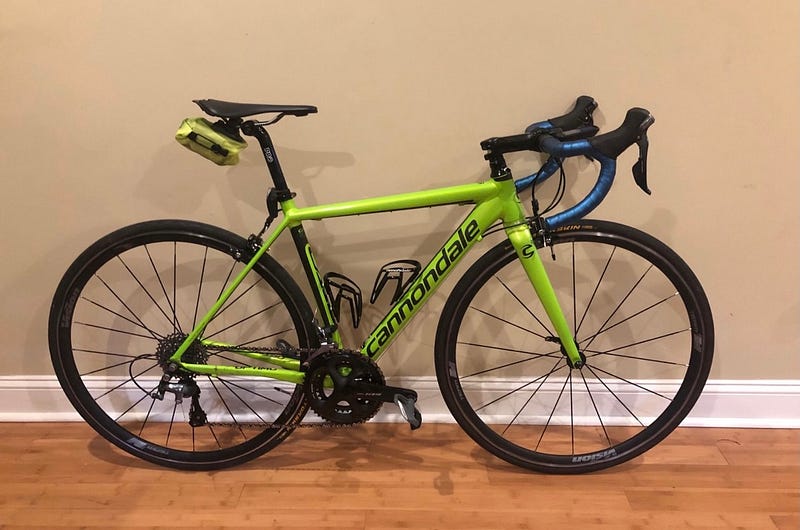
After a few years sober, and some time off from that fixed gear, one night I just up and bought a road bike online. I had to guess at whether it fit me based on hours spent poring over the bike’s geometry chart and measuring myself with little clue what the numbers meant in practice. What’s a little more debt? I told myself right before I hit COMPLETE ORDER.
One of my first rides on my new bike was a doozy. I tipped over at an intersection because I momentarily forgot that my new cycling shoes were clipped into my pedals. Unable to unclip my left foot before gravity took over, I slammed into the ground and busted my knee up pretty badly. Bleeding, but undeterred, I rode 10, mile-long laps around Lake Montebello. On the way home, I crashed again trying to hot dog it over a curb. I dusted myself off and heard somebody nearby say, “Well, anyway…”
Yet, even after busting my ass (and my ego) in public twice inside 30 minutes, I was the happiest I’d been in years!
In the time since I’d bought that fixed gear bike, a good number of former fixie riders had similarly made the leap to road bikes. There weren’t too many people there at the start to tell me how they did things in roadie world. I fell victim to eight million bits of cycling etiquette and “rules,” watching too many hours of YouTube videos, mostly made by white, presumably moneyed, men.
Cycling socks shouldn’t be too short, nor should they be too tall. AVOID THESE BRANDS (all the affordable ones). The arms of your cycling glasses should be worn outside the helmet straps. All your kit (cycling clothing) must match, brand and color-wise. And so on and so on.
It took a bit for me to realize even the pros these people sought to emulate didn’t follow all these damn rules. And that cycling didn’t belong to the “serious” riders (read: Middle-aged white dudes with $10,000 carbon fiber race bikes designed to the specs of 21 year old professionals) any more than the land they rode on belonged to them. What did it mean, after all, to ride on stolen land?
I began to ride this more capable bike longer distances. Solo, then with other people. 100% of them were faster and fitter, but I was still down for the challenge and the sense of community that came with group rides. I started upgrading the bike I’d bought, spending money meant for other things on parts, cycling shoes and kit, and maintenance.
An obsession had taken root. I subscribed to the popular virtual cycling platform Zwift so that I could ride indoors on a smart trainer when the weather turned cold or wet, and I began structured training to get in better shape for riding with those faster and fitter types. I was riding more in a single month than I had in the entire decade prior.
Sober for several years at this point, I started to share more with my dad about my cycling, and we would talk shop and exchange tools. I was riding farther and more often, and I committed to not let bad days in the saddle deter me the way I did back when I was 13.
A handful of cyclists tried to convince me that suffering was a crucial part of riding a bike. This made no damn sense to me. When virtually all of us aren’t being paid to have a bad time on two wheels, unlike the pros. I knew how it felt to push myself to my limit, and beyond it.
That was what drinking and doing drugs felt like. That’s how those rides home with my father felt. All I knew was that I was going 10, then 30, then 60 miles and more, actually enjoying hours in the saddle. It’d all been mostly fun, and I aimed to keep it that way.
The pinnacle of the joy of riding for me so far came in Colorado in 2019. On a trip for work, I rented a bike and rode from Denver to Boulder and back. Seeing mountains for the first time, I teared up when I got to an overlook at the city’s edge. To date my longest ride, with only my phone in my jersey’s back pocket to guide me, it wasn’t without its stresses.
At one point, a gust of wind almost blew me and the Specialized Tarmac I’d rented right into a culvert. I got lost more than a little bit. Yet this ride still stands out as one of the best experiences I’ve ever had.
Cycling, along with meditation and other things drunk me would’ve kicked sober me’s ass for enjoying, has helped me get more in touch with my body, back for the first time like Ludacris and listening to what it has to say for a change, knees and all.
As I’ve gotten deeper into my 30s, my reentry into the world of cycling has seen new challenges. As the pandemic dragged on, and I began to train on the bike more, mostly indoors, I also started to focus on my diet and weight more than I had before.
While tracking what I ate and having less of the food that made me feel like shit was a good thing, standing on the scale six times a day expecting 15 pounds to suddenly vanish did nothing but make me feel worthless, like all the hours on the bike were for nothing.
I would find myself fasting excessively to try to keep calories down, which led to not properly fueling my rides and workouts. My mental health, in turn, suffered.
After the self-injury of obsessing with looking like lean pro cyclists who ride 30 hours-plus a week, for money, I figured out a mantra to help me be gentler with myself. This body is beautiful because it’s mine and there’s not another one like it in the world. I gradually learned I could enjoy cycling and love on myself at the same time.
Yes, power-to-weight ratio is a thing. A lighter rider will be faster, up climbs in particular. But what if I could just drop the obsession with faster times and power data and my friends’ stats and Strava KOMs that had crowded my brain and just have fun out there, in whatever version of my body I brought to the bike?
As men, we don’t often discuss things like body image insecurities and disordered eating among each other. These issues are coded as exclusively affecting women, despite the evidence of how many men will be affected by them in their lifetimes. Cycling in particular, among both amateur and professional ranks, has a high rate of incidences of eating disorders. It’s said that there’s “nowhere to hide” in the Lycra that cycling kit is usually made of, but why should we have to hide?
There is no reason for people to be ashamed of the bodies they’re in, and it’s no less true for someone riding a bike. There’s no body that doesn’t belong on a bicycle. I try to remember this every time I throw a leg over the saddle.
Unfortunately, the anti-Blackness, misogynoir, and overarching white supremacy underpinning fatphobia dovetail frighteningly well into a sport that focuses so intently on body type, performance, and valuing ability over humanity in many of its spaces. This culture unfortunately trickles down from the elite professional ranks to amateur racing, group rides, and cycling clubs.
Which bodies are encouraged to ride, and which are forbidden, is made abundantly clear. And the cis male/white/thin/able/middle and upper class ones are those most often deemed sport-appropriate, by cyclists, cycling media, and the bike industry itself.
Over these last few years, I’ve also had to grapple with what it means to bike while Black. Not just for myself, but for all Black people, who have been historically excluded from opportunities such as racing professionally and viewed as threats while on the bike. Because white supremacist capitalist patriarchy is as alive now as it was when I was a kid, I know my father lived through similar struggles while shepherding us home each day.
I’ll be damned if I let white supremacy and all its rotten ass children take this incredible, ever-changing, feel-good thing from me or anyone else. Like my sobriety, cycling is too precious, particularly after having gone so long before discovering a new and deeper love for it.
And with each milestone on the bike, it seems there’s been a similar milestone in repairing my relationship with my father, and with my mother and sister as well. Unsure of whether my newfound love of cycling was fleeting, my father was skeptical at first, but now I know just how proud he is of me, a sober man and a cyclist to boot.
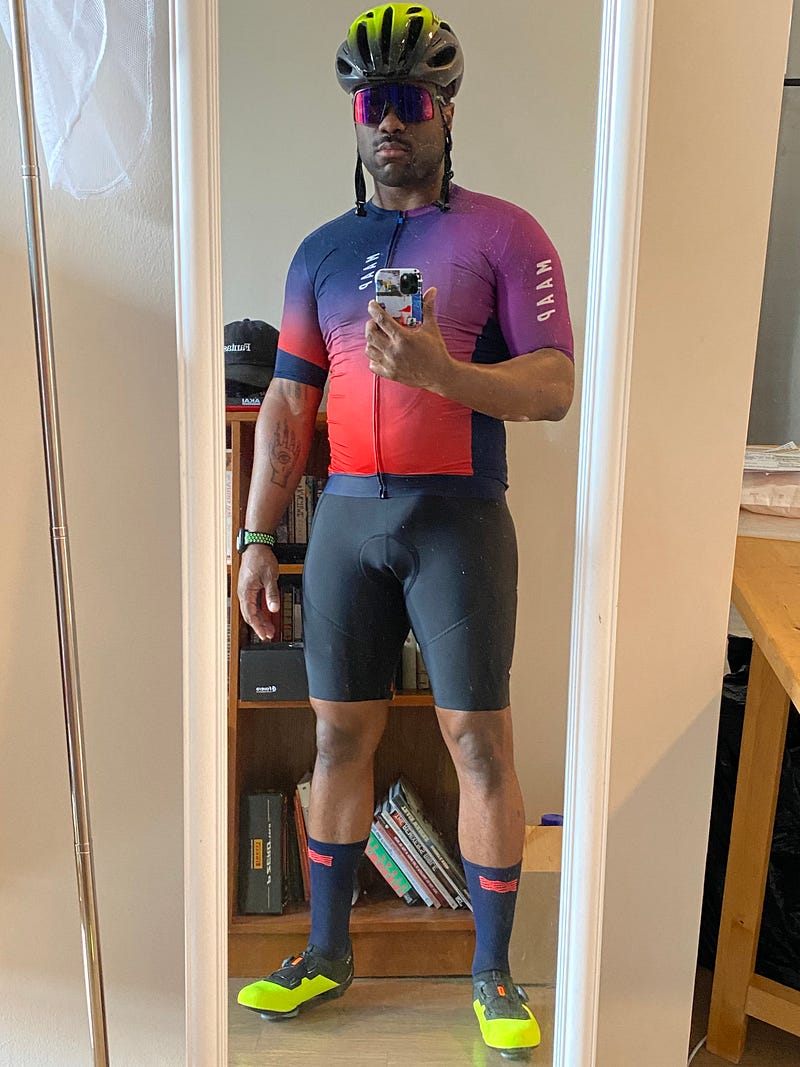
Healing has been weird, I’m not gonna bullshit. One day, forgiveness is as routine as preparing tea or coffee on a winter morning. Almost involuntary, once you build up the muscle memory for it. The next, you’d give anything to make that certain someone feel 100 times the pain they inflicted on you. Shutting the door on the past is not something I’m capable of doing, but growing into who I was meant to be, and who we were meant to be as a family, has meant learning from it at the very least.
Most often, the lesson has simply been that people can and do change. So long as we work each day to become and do better, we can work to heal our wounds, both physical and emotional, be it with time, professional help, loving compassion, or all of the above. My family stands as a testament to this.
Cycling has been a vital tool in furthering my recovery and reconnecting me with my father, the rest of my family and friends, and myself. I thought I was alone for so long, living both in the grip of addiction and with suicidal ideation. I felt like a stranger in my own family. I didn’t see a way out.
I came back to my mother, father, and sister much in the same way I came back to cycling. Slowly, not without a few scrapes and some tears, but with a strengthened connection to the world around me, a newfound appreciation of those in it, and a sense of gratitude that felt impossible before. I believe gratitude is an action more than anything. Just saying I’m grateful to have this second life doesn’t feel like enough.
The only way I can come close to repaying my family for providing for me and loving me even when I was at my most unlovable is through the living amends of staying sober and doing the next right thing. And each member of my family has had to do work on themselves to get in right relationship with one another and heal.
For my dad, it was getting an official PTSD diagnosis and attending group therapy sessions with other veterans. My mom was able to retire, and the lightness and joy with which she now moves through the world is inspiring, knowing how hard she worked to provide for us as a family. My sister has been coming into her own as an artist and has become my best friend since I got sober.
We’ve all still got work to do. I expect this is a lifelong assignment. We do still have the ability to get on each other’s last damn nerve, as I’m sure is the case with any family. But we’ve come so far from those days of heartache and hopelessness.
When I first got sober, my mother told me she no longer had to worry every night about getting a call saying I was locked up or dead. That’s a gift. So is being able to be a brother to my sister finally, and having a relationship with my dad where we both hear one another and love on each other. I’ve been fortunate both to have them and to have received many more gifts of sobriety. And to pass them along to others who may be struggling, as I once did.
I don’t have any of this because I’m special or smarter than the average drunk. I just was done and lucky enough to have gotten out of my own way all those years ago.
Coming back to cycling has felt like a bonus round in this new game of life. While not perfect, it’s been better than anything I could’ve ever imagined for myself before January 9, 2012.
In 2020, I got myself a new bike. I couldn’t resist! I like to go fast, and it obliges. I have a Wahoo bike computer, a power meter, and countless other accessories and upgrades. I think I’ve spent more on my bikes and parts and cycling clothes than I have on paying back my student loans. I’m a Bike Jerk by most measures.
But I can accept that most people riding bikes, especially in a city like Baltimore, are like my dad. Getting their kids to and from school, or themselves to work or elsewhere, because cars are expensive as hell and public transit is trash in most places in the US. Then there are those just casually riding to feel younger and freer.
And if I can be welcoming to that majority of cyclists and ride with someone who may struggle that much more up a hill, help someone coming back to cycling pick out a bike, or throw somebody who just started commuting, exercising, or just plain vibin’ on the bike a wave, so that they might get even a slice of the joy I have out of cycling, I’ll take that.
I’m similarly here today for people trying to get sober. That blows my damn mind! I was a mess for so long. I once got so cracked out I put my phone on top of my refrigerator during a bender and couldn’t find it for weeks. Anyone relying on me for anything is still a bit unreal. But now people trust me to watch their kids, pets, and homes. I’m as shocked as anyone, trust me.
The same way I’ll shout at the top of my lungs JUST RIDE THAT BIKE, I want anyone who’s struggling with drinking, drugs, depression, eating disorders, or suicidal thoughts to know that there’s a way out, that they’re worth it, and that they’re not alone. Somebody who was as hopeless as I was is evidence of as much.
“We never thought we’d see you this into cycling. Dad was surprised. But then, we also never thought we’d see you sober,” my mom told me one day recently.
I’m grateful that my family’s been able to see me sober today. And I’m grateful my dad has been able to see me back on a bike. Even if, mostly because of the pandemic, he hasn’t pulled up yet on the e-bike he built himself so we can ride together.
It took some time for me to make it here, but I’m finally ready to ride with him again.


