
Bach’s Music
Much Better than Sex
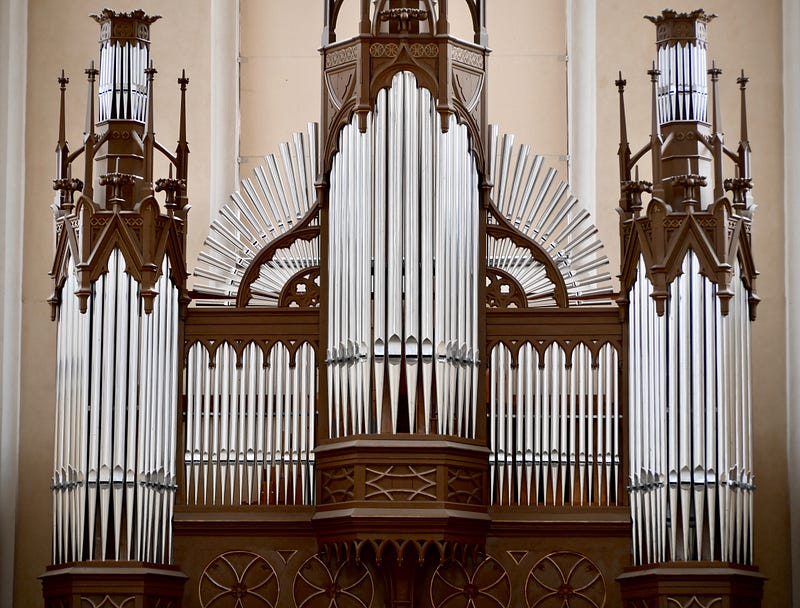
The pure melody outshines sex This is a profound blessing
Immersed in, or embraced by Bach’s Toccata and Fugue in D-Minor, I have zero thoughts about sex.
I’m eighteen and hormone-charged to the gills. The average day sees about a thousand reflections on sex, say one or two a minute (some wispier than others) — which is probably below average for my gender and age. I’m in my freezing Stockholm flat, it’s dark winter evening outside and I am listening to Karl Richter playing the Toccata and Fugue inside. I visualize the organ as the northern lights descending through my ceiling, shifting with the music.
Every note is an ice crystal, every ascent a galaxy, the base-pedal thunder shakes the cold-room air and me with it — Bach is like a waterfall, Bach is like God laughing. And I laugh with him. I am music right now — one hundred percent music, and so filled with Bach there is no room left for sex.
There is no room left, period. This is a blessing.
Handel knows the same trick: filling me to the brim, outshining sex. I had a recording of his Water Music transcribed for the symphony orchestra. This was mesmerizing. I’d swim in this music, in this sex-less music. I still prefer this arrangement to the original brass and wind.
I believe that to compose bliss like this the musician (I almost said magician, which would not have been off the mark) has to leave the body and all those sexual tendrils that fetter you in it. Not so with popular music of the “I love you, can’t you see, it’s gotta be, just you and me, forever, honey” variety though, which screams mating game and drips lusting so sloppily that it seeps through the record sleeve and stains my carpet.
Give me Bach anytime.
Jazz does the same for me. Immersing myself in the creative free-fall of Keith Jarrett’s piano, or breathing the shrill desert air of Nils Petter Molvaer’s trumpet I am body-less and free to soar and leap and fall and soar again with every run, every harmonious disharmony, every pregnant silence anticipating the next cascade. It engages all of me. No bandwidth left for sex.
This is a blessing.
Recently, I heard a lovely version of the Irish folk song “The Parting Glass” rendered by the lovely Wailin’ Jennys. This is three-part beauty. This, along with Bach and Handel and Jarrett and Molvaer fills me completely, and when you are completely filled with beauty you are beauty.
This is a blessing.
© Wolfstuff
P.S. If you like what you’ve read here and would like to contribute to the creative motion, as it were, you can do so via PayPal: here.