
Addiction Advice
Baby Steps Holding on to the Coffee Table
How Sobriety Starts
What follows is a correspondence, published with permission, between me and a young man struggling with sobriety. He asks:
When you started making big changes, how did you do it? Did you do it all at once or try gradually? Did you literally sit and write out a plan of action or just kind of wing it? How do you hold yourself accountable so you stop making self-destructive choices and start making decisions that serve you? How did you deal with any setbacks or failures so that you didn’t just piss away all the work you already put in?
Did you make excuses? I always make excuses for my self-destructive habits. I can always justify it. I know it’s bullshit and always regret and loathe myself for it. How did you keep focused in the moment of temptation or when down, when it is easy to say fuck it and retreat to the comfort of old habits?
My Response
Baby steps. Baby steps holding on to the coffee table.
I had so many false starts. I wanted the best of both worlds, a formula that would let me continue drinking without the life-altering consequences.
“I’ll only drink light beer.”
Great. Now I’ll spend more money, and be even more bloated.
“I’ll only drink before midnight.”
Turns out that trying to tell drunk Oscar at 11:58 pm that this is his last beer is like putting a milk bone under a dog’s nose and telling him to save half for tomorrow’s breakfast.
“I’ll only drink one day a week.”
This method didn’t even last through that first week.
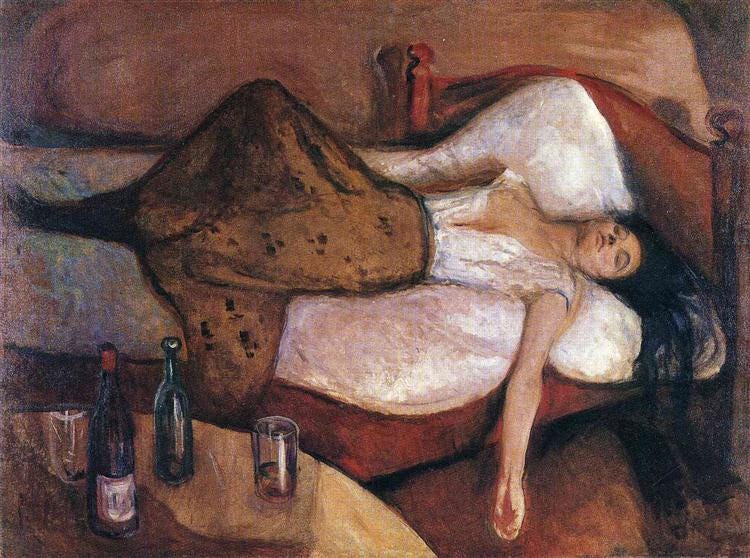
I was incredibly good at quitting. Big changes are very appealing when you’re still hungover when your stomach is upside-down and a bus is rolling over your brain. I quit drinking dozens of times before I truly quit drinking. Sometimes it would last for a week, sometimes a month. My longest dry stretch was 52 days. The shortest was 2 days.
I always found excuses to go back to drinking whatever the fuck I wanted whenever the fuck I wanted.
I was very good at convincing myself I was not an alcoholic. I told myself that alcoholics can’t keep a job, alcoholics can’t pay their rent. I compared myself to my brother, who in any given week drank twice what I drank. There was always a mess of a role model I could point to and say: ‘See? That’s an alcoholic.’
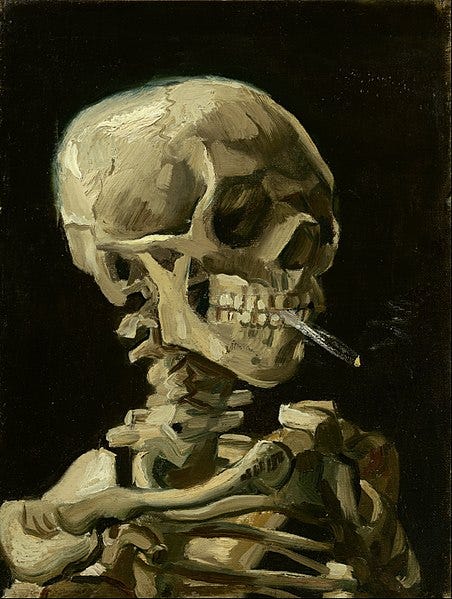
When I fell off the wagon — when I walked into one of my favourite bars to abandon my shitty adult responsibilities and play in the Smirnoff sandbox — I always had a hero in my head.
Hunter S. Thompson, Charles Bukowski, Jim Morrison, and Anthony Bourdain always walked into the bar with me.
These were myths, men who supposedly drank and drugged themselves stupid and yet still produced some of the greatest writing of their generation. If twelve beers on a Tuesday didn’t stain their legacies, then it won’t stain mine.
Never mind that drunk Oscar couldn’t write for shit. Never mind that everything hungover Oscar managed to put to paper was tepid garbage. Every single drink delayed my dreams of producing and publishing a piece I was truly proud of. I thought of myself as a writer, but I was little more than a drunken scribbler.
What happens to a dream deferred? It orders another pint.
So first I was just someone who drank. Then I was someone who drank too much. Then I was someone stuck in a cycle of quitting and continuing. Picture an old-timey gumball machine, where you put in a quarter and the gumball rolls in a corkscrew, down down down, until it finally lands in the latch. I wasn’t just going around in circles. I was in a downward spiral.
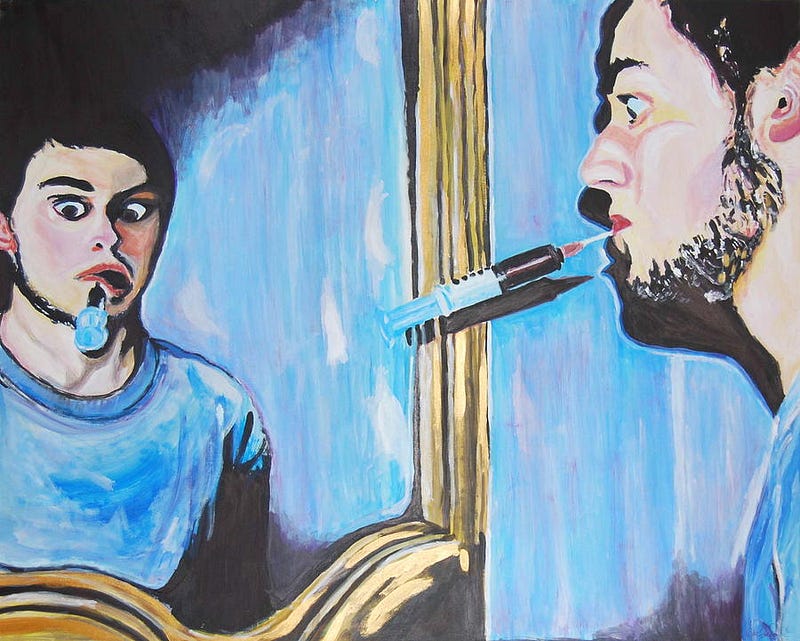
At my worst, I took all the mirrors out of my apartment. I really hated looking at the guy who couldn’t quit.
What was different about December 20th, 2020 was that I wasn’t alone. That day I called half a dozen friends and told them I was an alcoholic. I made myself accountable, and a few of those friends helped keep me accountable.
You don’t have to involve the people in your personal life in this process if you don’t want to. That’s the beauty of anonymous support groups. Here is a circle of people who give a shit, who understand the experience of addiction, and none of them will be sitting across the table next Thanksgiving.
Sobriety comes with a thousand humble discoveries. I discovered that alcohol turns people into narcissists. I discovered that there was nothing I could get from a bottle that I couldn’t get from bravery. I also learned about self-sabotage.
My self-sabotage was tied to my self-worth. In other words, the me in my imagination inspires my behaviour. Once I had accumulated seven days of sobriety I could begin to accumulate self-worth. I cleaned my apartment. I performed unsolicited favours. I went an entire week without lying to anyone. I stopped skipping workouts. I finished the books I was reading.
Little victories, and then eventually those little victories became bigger victories. I had no debts. I bought a car. I took a chance and asked a woman I liked out on a date. I climbed a big ass mountain.
The good news? The very brain that’s trapped in entropy and afraid to change, is the exact brain that gives an addict a huge advantage on the other side. When entropy gives way to momentum, and an addict’s brain becomes an asset.
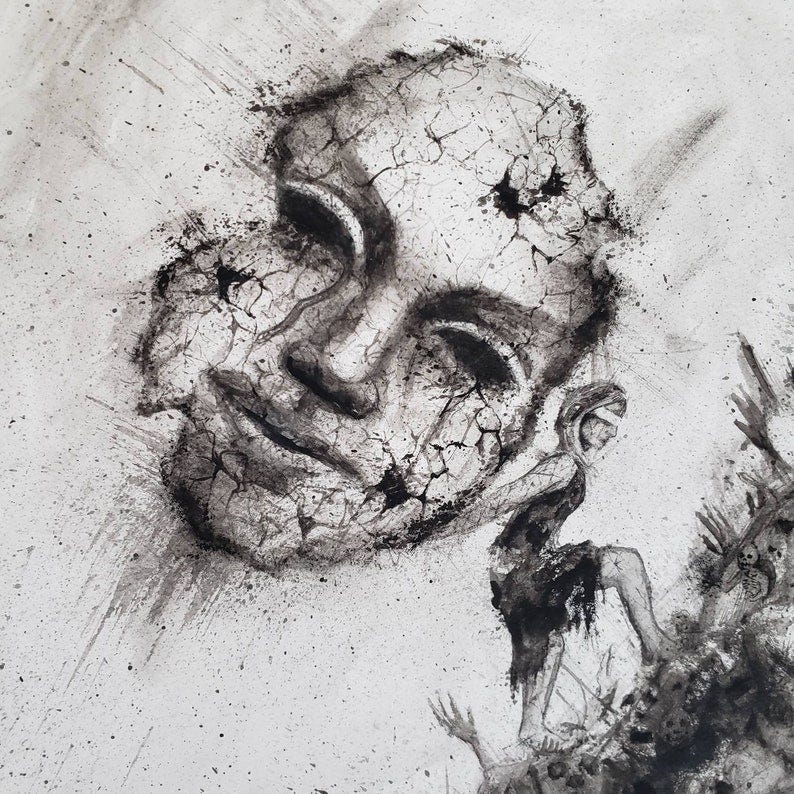
What’s my big advice? Don’t beat yourself up. All that’s past is merely prologue. You are not your failed attempts. If a batter takes two strikes and hits a home run, the only thing that matters is the home run. Nobody is going to talk about the first two swings.
It’s easy to retreat into temptation, but easy lives aren’t all that worth living. Take it from Kennedy. Everyone knows the first sentence, but pay attention to the second and the third sentences too.
“We choose to go to the moon in this decade and do the other things not because they are easy, but because they are hard. Because that goal will serve to organize and measure the best of our energies and skills, because that challenge is one that we’re willing to accept. One we are unwilling to postpone.”
— JFK, September 12, 1962
Change is hard. That’s why it’s worth it. Just don’t try to change alone.
Texting me was a damn good start.
Want something silly to counter all this serious?
For more on sobriety, check out this article by Diana Leotta:


