
Babri Masjid and the desecration of the sacred.
Babri Masjid, was built in 1529 by the Mughals, destroyed by Indian nationalists in 1992, and buried by the Supreme Court of a secular India in 2019.
On November 11, the Supreme Court of India ruled in favor of rebuilding a temple where a mosque once stood. When the decision was announced lawyers congratulated each other amidst chants of Jai Shri Ram.
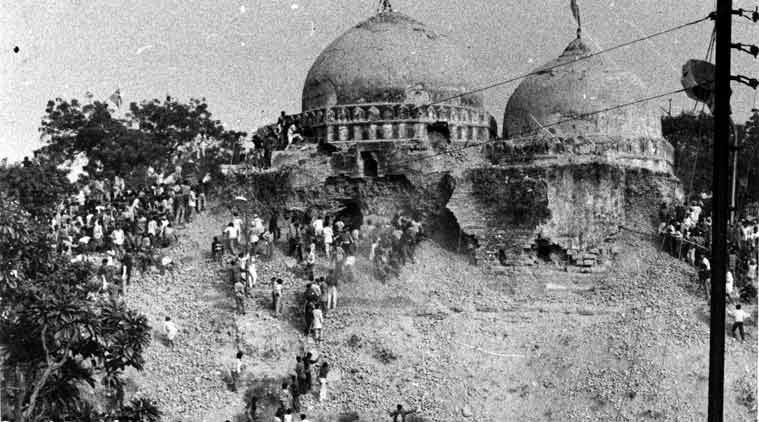
Afterward, the op-eds poured in. A New York Times headline read ‘Court Backs Hindus on Ayodhya’, Guardian followed suit with ‘India’s top court gives Hindus site claimed by Muslims.’ The die was cast, the tone set. As a belligerent Indian government spewed a belligerent ideology of exclusion, academia declared that India should be understood at the level of Hindus versus Muslims; Hindutva versus Islam.
How curious then, that immediate after the verdict, the voices on the ground said something quite different. Speaking to Al Jazeera, a representative of the Babri Masjid Citizen Resolution Committee reflected:
“We want closure and the Supreme Court has shown us the way. We have no issues if it [the temple] is built there but we would have been happier if the court had specified the place where the mosque would be built.”
We like conflicts where the lines are clear. We gravitate toward dichotomies because it makes for a better story. The stories we spin have identifiable heroes and villains because it reinforces our sad, unitary worldviews. The reality, as always, is not that simple.
Islam is not indigenous to India. Neither is Hinduism — and here I must punctuate facts with a disclaimer — as we know it today. A handful of lawyers chanting Jai Shri Ram tells us nothing about a country of 1.4 billion.
Let’s tackle the Hindu-nationalism bit first.
The term Hindu does not appear in the Vedas, and the word, of Persian, descent, literally translates to the ‘people of the Indus’. The religion we know as Hinduism is an amalgamation of Vaishnavism, Shaktism, Shaivism, Jainism, Smartism, and indigenous animist spiritual traditions brought together by force. The first time we do see the term Hindu gain widespread acceptance is in 1893 when Swami Vivekananda uses it during his speech at the World Parliament of Religions. Vivekananda, interestingly, is frequently cited as one of the ideological predecessors of Hindutva.
That does not mean that Hinduism is a meaningless terminology. It’s not. Hindu- nationalism is. The ideological basis for India isn’t religion, but secularism. The history of India isn’t Hindus revolting against imperial rule, it’s a multitude of spiritualities (including Muslims) protecting heterodox traditions from orthodox worldviews. A Hindu nation has no philosophical nor ideological basis, and when we use it, we lend meaning to the meaningless.
When we say Hindus destroyed Babri Masjid we forget the incredible multiplicity of spiritualities that exist within the umbrella of Hinduism; and we mute the politics of Hindus who don’t spend their weekends lynching Muslims and Dalits.
The desecration of Babri Masjid was deplorable. Of course it was. The aftermath bathed the streets of Gujarat in blood, left 2,000 dead, and split communities apart with banal indifference. It is our moral responsibility to critique it, and to remember it as it happened. When we paint it as a Hindu versus Muslim issue we fail to do that, because we see it as a clash of religions, and add our voices to a never ending echo chamber of moral superiority. Essentially, we sidestep the reality of the forces at play: belligerent nationalism; morally corrupt governments; and historic amnesia.
The need to remember ethically.
History doesn’t start with 1992. For 800 years, conquerors under the banner of Islam wreaked havoc across the Indian subcontinent. Bakhtiyar Khilji burnt the world’s oldest university, Nalanda, to the ground; Aurangazeb repeatedly attacked Vrindavan; Ghori forcefully converted citizens and slaughtered those who refused to convert; and Babur built Babri Masjid on a site locals widely believe to be the birthplace of Ram.
Remember, during all of this, ‘Hinduism’ does not exist as a unitary faith, but spiritual traditions do, as do humans and communities and modalities of being. Temples don’t have ornate pillars draped in gold; but they do have teachers, libraries, and knowledge banks that under-gird civilization itself. When Nalanda, the oldest university in the world, was destroyed, the library — a nine story building — burnt for three days. The communities that had grown around it were desecrated, people displaced, and traditions of introspection eviscerated. Should we simply push that under the rug?
Of course not. But it’s equally important reflect on how much we remember, and how much we are willing to forget.
When Khilji destroyed Nalanda, did he do so on behalf of all of Islam, with all of its different modicums of being, or was the sacking of Nalanda the result of a particular, antagonist interpretation of religion that demonized the ‘heretic’ other? Remember that even as emperors were desecrating ‘Hindu’ sacred spaces, they were also targeting Sufis. And as Sufis were being targeted, Sufi thinkers were conversing with subcontinental spiritualities as alternate, valid modalities of being.
We see clear evidence of that in al-Insan al kamil, where Jili writes:
‘The barahimah (people of the Indus) worship God absolutely, without prophet or messenger. In fact, they say there is nothing in the world of existence except that it be the created of God. Their worship of Truth is like that of the prophets before their prophetic mission.’
It barely matters whether we agree with that or not. What is important is to recognize the existence of a world where traditions sought to understand one another in the pursuit of coexistence. The battle was never one religion against another. The battle has always been orthodoxy versus heterodoxy. Institutional religion versus lived tradition.
More recently, here’s Talal Asad on the need for nuance in our study of religions:
‘To write about a tradition is to be in a certain narrative relation to it, a relation that will vary according to whether one supports or opposes the tradition, or regards it as morally neutral. The coherence that each party finds, or fails to find, in that tradition will depend on their particular historical position. In other words, there clearly is not, nor can there be, such a thing as a universally acceptable account of a living tradition. Any representation of tradition is contestable. What shape that contestation takes, if it occurs, will be determined not only by the powers and knowledges each side deploys, but by the collective life to which they aspire or to whose survival they are quite indifferent.’
Let’s be real: Hindutva is representative of Hinduism in the same way Islamism is representative of Islam: halfheartedly, selectively, and barely at all.
A definitive history of India does not exist, because no writing of history can ever be definitive. And so, the stories of the subcontinent have teetered at the cross-section of amplification or minimization; erasure or institution. It has always wrestled with amnesia and cognizance; remembering and ignorance. Shuttled violently between objectivity and fetishization, the stories themselves have disappeared; disfigured beyond recognition. To understand what is, it is important to unearth what was; to interrogate niche-creating texts that birth niche-creating narratives.
Babri Masjid was important, of that there can be little doubt. It helped nurture communities of Muslims in a land where they were the minority, and it allowed Muslim political power to take root in UP. The Supreme Court’s decision was an affront on religious liberties in a secular India where, increasingly, a virulent form of nationalism has pushed Islam and Hinduism on a collision course with each other. But that dichotomy is an unnatural one; because within each of those traditions, there existed alternate ideas, thoughts, and approaches toward life.
A mosque and a temple , after all, are but buildings without the people.