
“Now What Castle Was That Again?”
Honeymooners cling to the rugged Welsh Coast in Harlech Castle
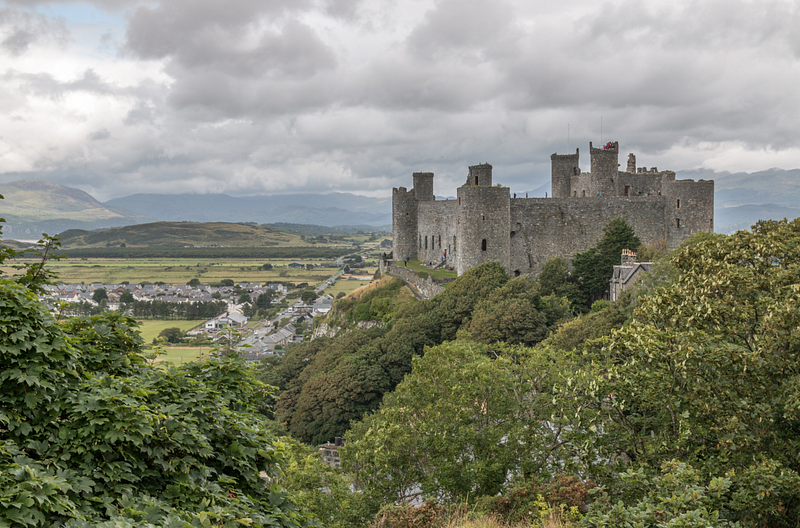
Castles have always fascinated me. Whether crafted from wooden blocks or from multi-colored Lego Monstrosities, or the complex sandcastles I still design at fifty-two, castles have appeared in my imagination as places of mystery, romance, and danger.
As a Romantic, too, ruins intrigue me. Who lived here? What was life like then? How many died on this pleasant lea or battlement or beach? Each room of ruin contained secrets and ghosts and love stories and death stories and whispers on the wind of old conversations.
How many hands chiseled this stone? Where are those bones now? How many slaves and low-wage laborers toiled under a despotic ruler?
How many castles, ruined or dissolute abbeys, monasteries, Roman walls, baths and aqueducts, temples, and churches had I visited?
And all before my honeymoon with Mary Jane in Wales? Well, dear reader, so many.
Ruins are to me like tractor beams. Some places, even deep in the dark and mysterious Pine Barrens of New Jersey, transmit signals that become pilgrimages irresistible— a sort of calling. Can I discover a Civilization Lost? Or to stumble upon the cellar of a solo home? A home that once contained life and trinkets that once possessed emotional memory for someone long lost?
I think of my own basement. My own house and garden. What will still be around in 500 years? 1,000 years? Maybe this essay and pictures, at least.
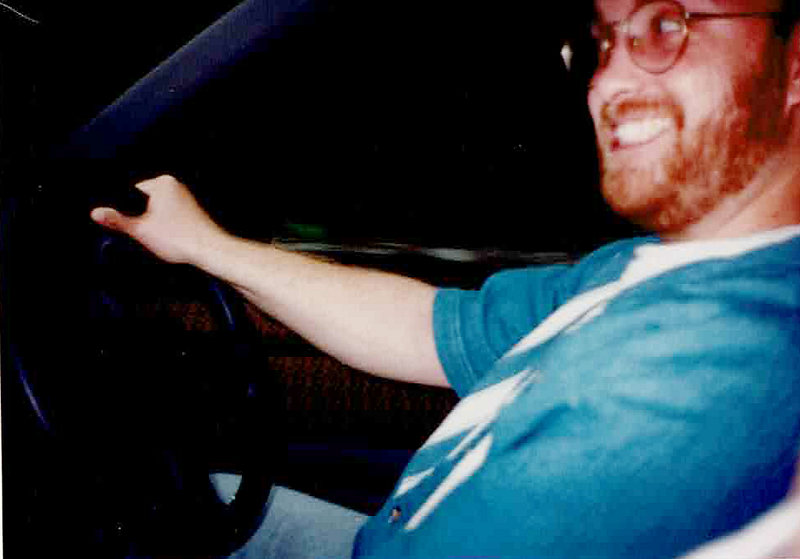
So when it came time to romance Mary Jane in 1995, just married, why not take her to the Realm of Many Castles — Wales?
She was, after all, my first legitimate girlfriend. Crazy, right? For twenty-six years I had plenty of time to travel and to conjure fantasies of a knight leading his lady fair around the Old World. Such travels could not be by horse — as we’re both highly allergic to horses. Animals, also, sense my fear and trepidation toward higher life forms.
The horsepower of a four-cylinder, bright blue Ford Fiat, however, with a manual shift and the driver’s seat on the — well, the wrong side, maneuvered quite well in my hands.
Sorry, Brits. Was it indeed Napoleon's fault at Waterloo for not wanting to clash swords while parading in defeat against the victorious Duke of Wellington? Or were British professors wrong?
Instead of marrying Sir Lancelot or Sir Galahad, Mary Jane hitched up with Sir Travel at the Speed of Light-a-Lot.
“How many castles and ruined abbeys will we visit?” she asked.
“Well, we have a week in Wales — so maybe 100,” I said. “But then we spend a week in London — and you’ll love London. We will see like 100 shows!”
Then add three or four extra days in London. I had purchased cheap-ass “standby tickets” unknowingly from a cheap-ass consolidator in New York on Air India. So we camped out in gorgeous Hounslow (sarcasm) with a racist British woman in her rental who was glad we weren’t “Indians.” The reasons so horrified me I should have taken the few pounds she charged us to another establishment. But the place was within walking distance from Heathrow.
Mary Jane desperately had to get back to her dietitian job at Temple University. I was just out of graduate school — and still well underemployed as a waiter.
To me, an ass, it was like “bonus London days.”
To Mary Jane, it was like “come home or find your ass gone days.” While one of the top employees at Temple, with plenty of awards and accolades, her boss, who was eventually fired too after other imbroglios, was jealous of Mary Jane. And we all know how petty middle management can be — and how one sister can really hate another sister.
She should have flown home on a new ticket, but money was tight and as I said, I was an ass. Honey babe, Mary Jane — I truly am sorry. This is still not funny. So please no one laugh. Stop!
I didn’t realize at the time I had Overfocused ADD. When I mean I was focused on castles, I was “overfocused.” Fortunately, she did not give up on her “better than Byron” Romantic. I am now on medication(s) and therapy. Do I need another one or two psychologists from say, Austria, for further analysis of my Walter Brain?
Now I ask: “Mary Jane, what would you like to do?”
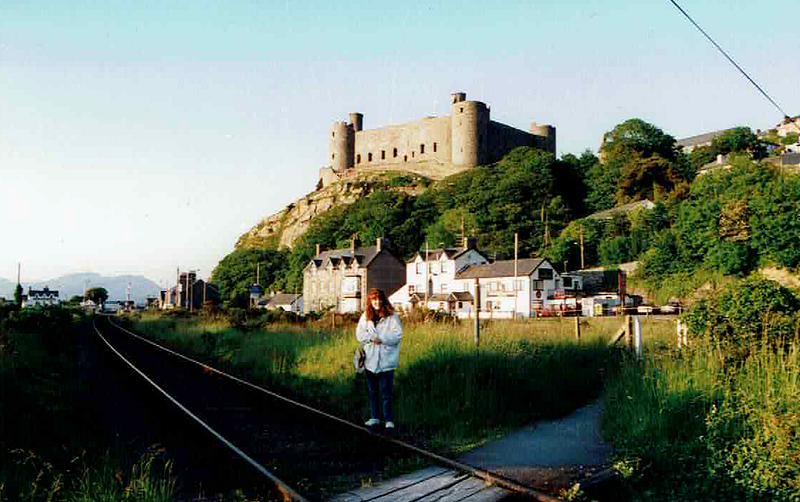
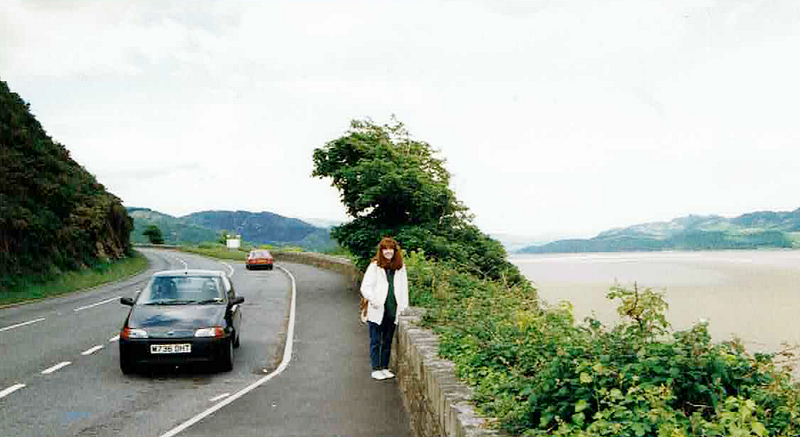
We found ourselves on the rugged West Coast of Wales — there really is no East Coast of Wales
That’s England. But Mary Jane remembers Harlech because of where we stayed — a Bed and Breakfast adjacent to the castle and for the sweeping command from high atop a cliff, looking over the Irish Sea. The owner of the B&B was also delightful. His home contained a museum of a medieval armory.
At the time of King Edward I, the sea came right up to Harlech Castle. But the sea is now a walk across roads and train tracks and sandy beaches that at the time, were full of really irritating bugs.
No “Beach Blanket Bingo” on that day!
“If you wanted me in a swimsuit, Walter,” she said, “We should have gone to Bermuda!”
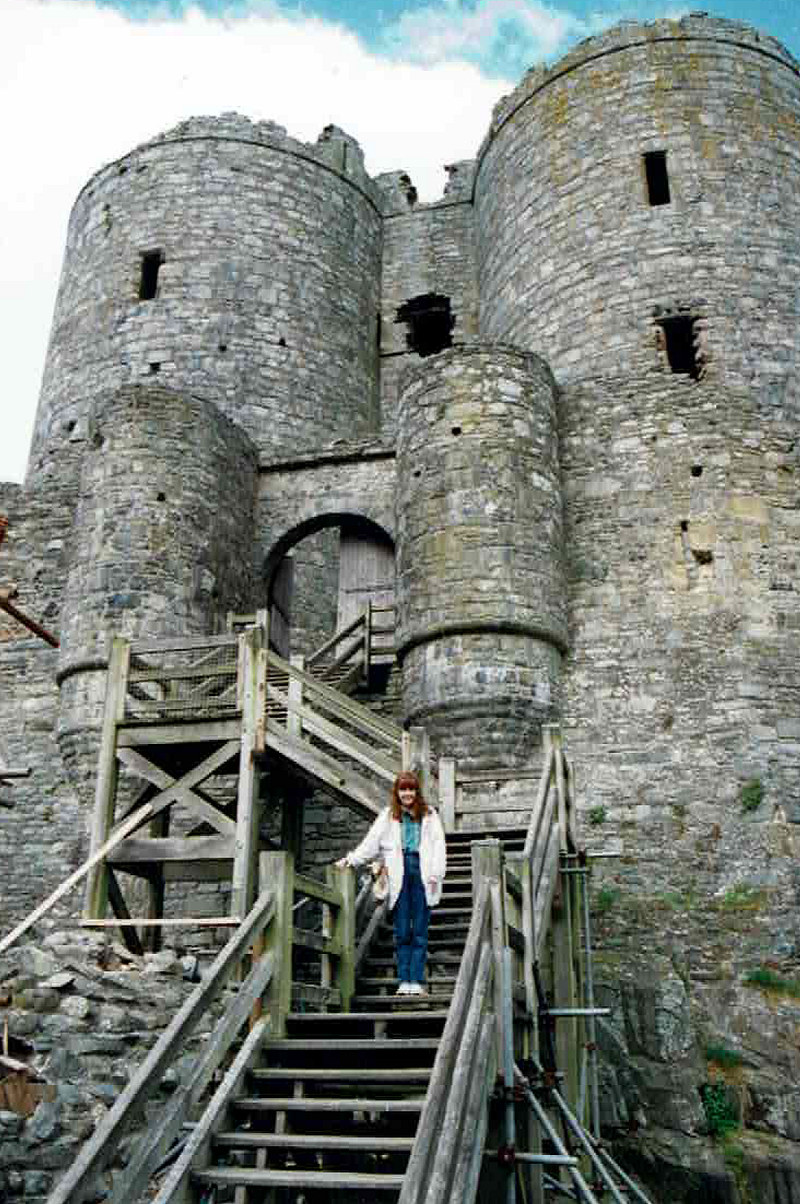
We mostly had the castle to ourselves
It was so much fun. I tried to imagine the engineering feats of such projects in the 12th century. It’s still so hard to imagine harvesting such rock and moving such rock and the teams of horses on muddy roads and ropes and pulleys needed to build such a structure.
And like the Romans, these places were built to last — at least, last for another 1,000 years or so. As a Yank, I’m used to old things in this relatively new country getting demolished for “progress” — like a new CVS or Dunkin’.
It’s rare Mary Jane and I travel anywhere without buying a book of the area. The Wales Tourist Board, or Bwrdd Croeso Cymru, in Welsh, published “Wales: Castles and Historic Places.” I believe I secured a copy prior to the trip. Such things before Amazon seem impossible, but I guess I just walked into a Borders and went to the travel section. Wow.
Before we left, I read the travel narrative by Gerald of Wales. It’s called Itinerarium Cambriae and Descriptio Cambriae, or The Itinerary Through Wales. Harlech is also connected with a great Welsh myth — as Wales is rich in legend.
One tragic heroine tied to the magnificent castle was called Branwen, the daughter of Llyr in the tales of Mabinogion. There are four tales. She is discussed in the second tale. The area was called Harddlech. (“Timeless Myths”)
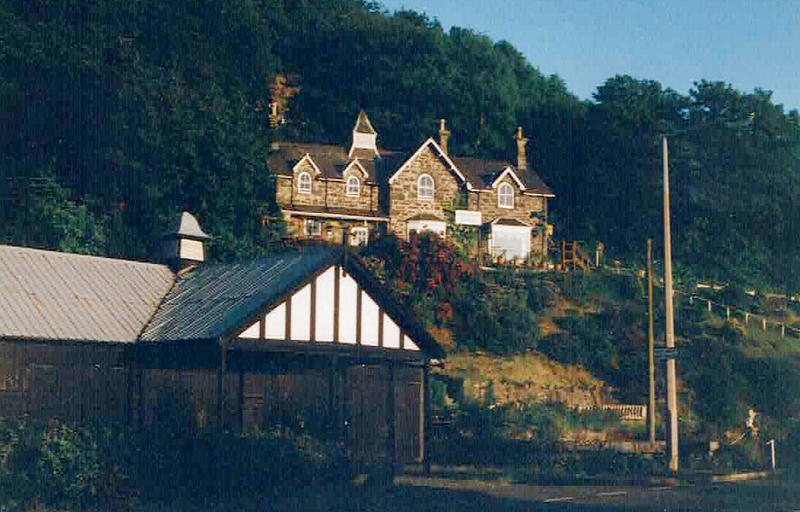
We can thank “the castle creator” for so many of these magnificent structures
The royal castle maker of the day — Master James of St. George “adapted the natural strength of the site to the defensive requirements of the age and created a building which combines a marvelous sense of majesty with great beauty of line and form” (Wales: Castles and Historic Places 80).
Harlech was one of a ring of castles on the coast of Wales created under the rule of Edward I. The king’s forces and builders arrived in Harlech in 1283. It took six years to construct. “950 men were employed” under the supervisor of Master James. (Wales: Castles and Historic Places 80).
The outer wall of the castle is ruinous — but one can still imagine what it would have been like in the 13th century — especially when the sea came right up against the walls. When we were there, I thought of Harlech like Helm’s Deep in Lord of the Rings.
When I looked over the battlements or raised an imaginary crossbow through a window, I imagined a sea of orcs and trolls and goblins besieging the castle. While I was doing this, Mary Jane was reading every sign she found. Mary Jane is always curious to know “everything there is” about where we go and what we see. She is a true student — and just so intellectually curious.
Any wonder why I married her? It’s so much more than her gorgeous, auburn hair, man!
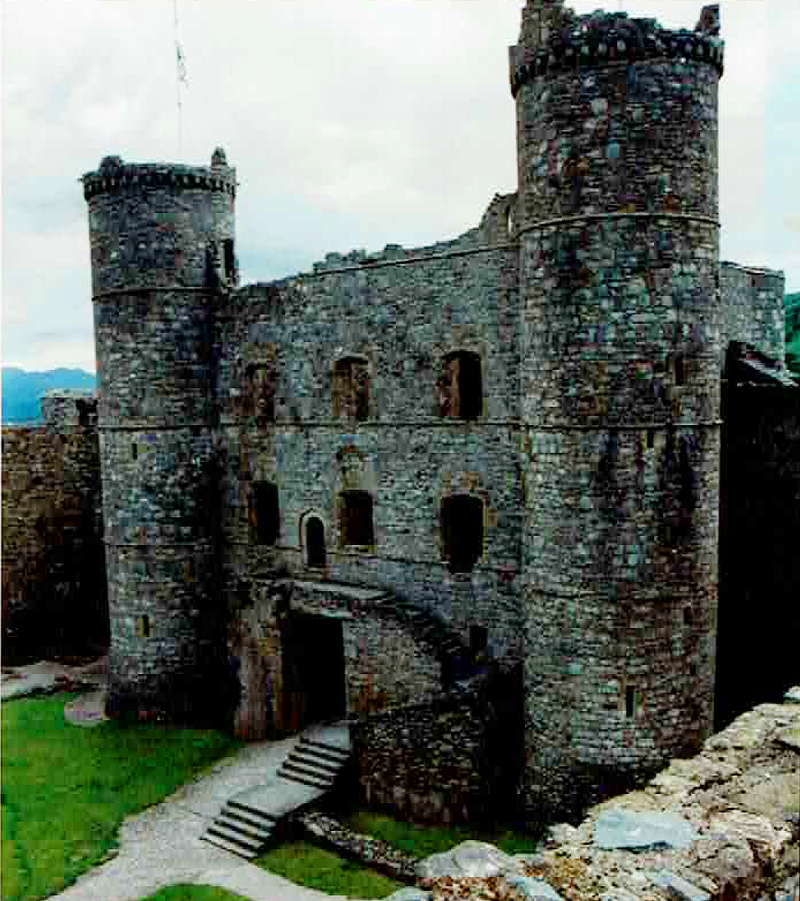
Harlech did see its share of battles
In 1404, the castle fell to the rebel forces under Owain Glyndwr. There had been a long siege. His supporters held a type of “parliament” here — at least for four years.
The castle was retaken after another long siege in 1408 by “the English forces of Harry of Monmouth” — later the famous Henry V. I cannot think of Henry V without thinking of Kenneth Branagh playing his role in Shakespeare’s famous play. Think of the “merry band of brothers speech” in France — the St. Crispin’s Day Speech. We study that speech in AP Lang and Comp. (“Siege mentality”).
Flash forward sixty years later: it’s now the War of the Roses — and no — not Alice in Wonderland, but close. It was the House of Lancaster and the House of York. Lord Herbert took the castle for the Yorkist side. The prolonged siege led rise to the song, “Men of Harlech.” (“Siege of Harlech Castle, 1461- 14 August 1468).
There are many versions of the song. Here is the Charlotte Church version of the song from Brixton Academy. It’s in Welsh, it’s gorgeous. Here is an English translation from 1830:
Verse 1 Hark! I hear the foe advancing, Barbed steeds are proudly prancing, Helmets in the sunbeams glancing Glitter through the trees. Men of Harlech, lie ye dreaming? See ye not their falchions gleaming, While their pennons gaily streaming Flutter in the breeze?
From the rocks rebounding, Let the war cry sounding Summon all at Cambria’s call, The haughty foe surrounding, Men of Harlech, on to glory! See, your banner famed in story Waves these burning words before ye “Britain scorns to yield!”
Verse 2 ‘Mid the fray, see dead and dying, Friend and foe together lying; All around, the arrows flying, Scatter sudden death! Frighten’d steeds are wildly neighing, Brazen trumpets hoarsely braying, Wounded men for mercy praying With their parting breath!
See! they’re in disorder! Comrades, keep close order! Ever they shall rue the day They ventured o’er the border! Now the Saxon flies before us! Vict’ry’s banner floateth o’er us! Raise the loud exulting chorus “Britain wins the field.”
Thank you for reading!
Read more of my European adventures in The Masterpiece:
- The One and Lonely
- Children of Younger Time
- The Diary of a Drama King
- The Pursuit of Love and Romance
- All the Romantic Elements of Paris Without the Romance
You can share your outstanding stories and inspire others. Just click the below image and be a writer for The Masterpiece.


.jpg)