
Are Some People Afraid of Driving?
You’d be Surprised there are!
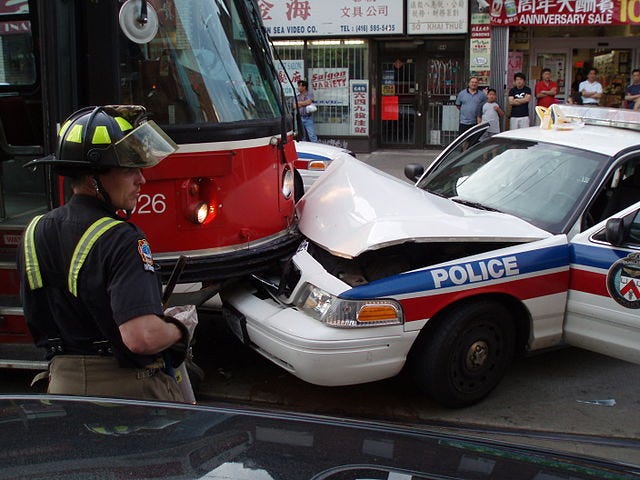
I discovered a new phobia today. It’s called Amaxophobia or Fear of Driving. Amazingly, many people who have the misfortune of experiencing an accident, that traumatic event can cause Post Traumatic Stress Disorder (PTSD) in the victim.
Now most people associate PTSD to people who have served in the military who have been through a harrowing experience in the battlefield. However, even civilians can also experience that when they experience a traumatic event like an accident, which can nearly kill them.
So, what exactly is Amaxophobia? It is the psychological fear of driving a car. It creates a physical disorder in a person. Common causes that can trigger Amaxophobia are:
Traumatic traffic accident in the past, having a panic attack during a traffic jam, even hearing a story about a car accident during childhood or even losing a loved on or someone close to you in a car accident, seeing them in videos documentaries and films about traffic accidents, the mere sight of large numbers of cars during a traffic jam can cause the phobia.
In addition, there is also Performance Anxiety where you have that pressure of having that added responsibility of looking after the wellbeing of not just your own life but that of your passengers in your own vehicle. You also wonder if people are comfortable or trust in your driving abilities.
There are altogether 13 phobia that affect drivers. A few are:
Hodophobia: or Fear of Travel- Which entails movement through all forms of transportation and the fear of exploring new places or routes
Chionophobia: Which is fear of driving in the snow.
Claustrophobia: This happens to people and fear of being inside enclosed spaces as a passenger or as a driver.
The symptom related to driving phobia can exhibit in many different ways in different people but they are for the most part similar to those we relate with other anxiety or panic attacks. They can be confusion, heart palpitations, dizziness, sweaty palms, perspiration, shortness of breath, dry mouth, and also being disoriented.
Some people won’t experience all these physical symptoms, but will avoid them by not driving, and will keep their fear of driving a secret from their friends and family.
Many survivors of accidents can have severe anxiety disorders either as drivers or as passengers for many months or years and can impair their quality of life. It is good to take advantage of psychotherapists to assess the pattern of driving anxieties if they have more anxiety as drivers or as passengers. Some get anxious when they are driving at high speeds or in the rain, as pedestrians or when crossing the streets or walking next to the road.
There are very few measure that are available to measure amaxophobia for clinical assessments of post-MVA patients. Whetstone Vehicle Anxiety Questionnaire is the most comprehensive and it consists of 31 questions. Some of the questions are: if the driver is concerned if a vehicle is following too close or if the driver would take an alternate route to avoid highways, intersections or locations and if their sleep is interrupted by thoughts of collisions and also by driving. Also, if others don’t understand their fears of being in a vehicle.
Novice drivers also have a fear and that is due to their lack of experience as a driver. This can be evaluated using the Driving Cognitive Questionnaire. They have questions on their questionnaire like: if people will think they are a bad driver, if they will hold up traffic and make people angry, or if they will lose control and act stupidly or dangerously.
To get over these fears, the only way is to face them. It is better to take baby steps under the guidance of a professional and in a quiet area where you feel secure. Then once you are confident in that area, move to an area with more movement under the watchful eyes of professionals in both psychology and automotive security.
PS: As always, please follow and also subscribe to my emails so that you know when I post a new article.
Please clap for the article and also leave comments, follow me and also please consider joining medium by clicking here.
To see my website, articles, novels and short stories, please visit my website www.trevordsilva.com


