SOCIETY
This Pandemic Is a War That Never Ends
How to make peace with the nightmare scenario we’re living in
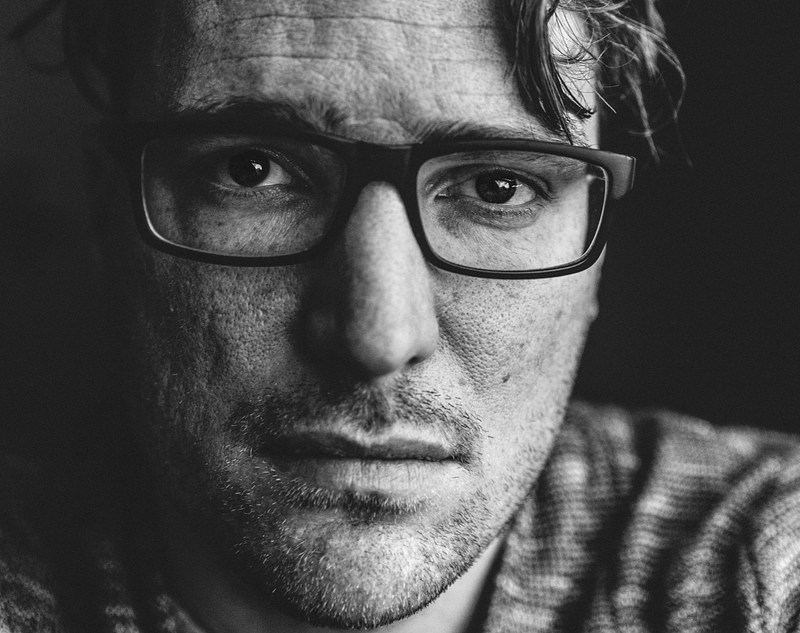
That’s not me in the photo. But I share the great concern on this man’s face. It says it all. What if the pandemic just never ends? What if the New Normal is not some accommodated version of the old normal, but instead is just…this? What if what we are experiencing now — this constant state of anxiety and change and daily back-and-forth and in-and-out of masks and lock-downs — is what the 21st century will be? What if the economic recovery is DOA or if it somehow only makes things worse? What if this is just the beginning of much larger and more frequent health, climate, political, and economic disasters?
I have no interest in being alarmist. I have just been thinking more and more about this since I read 1946: The Making of the Modern World by Victor Sebestyen. I bought the book at my favorite bookstore (Rizzoli in the Flatiron, here in New York City) as research for a project I am writing. 1946 was the start of what we know to be the modern world — a world dominated by America, a world in which Israel and Palestine are in a state of constant turmoil, a world of innovation and invention and technology. As World War II ended, 1946 re-shaped the entire world. It re-assigned power. It re-drew borders. It birthed ideas and beliefs that now run the lives of 7B people on the planet.
As Americans, we don’t really know what war is. Yes, a group of us have served. Not me. Much braver men and women than I. They serve valiantly. We honor them. But the rest of us? We have no idea what it is like to be actively engaged in war. When I hear stories of bombs falling on London or Jews hiding in secret rooms or men and women battling in rice paddies in Vietnam, I am always so stunned. That happened? That was real? The closest experience many of us have had was 9/11. And that was one day. Yes, thousands of people died and skyscrapers collapsed to the ground. But it was a singular event that sparked a war fought somewhere else.
The pandemic has been a war. It’s a worldwide war that started in March 2020. And we’re still fighting. It’s a war with an invisible enemy. And some crazy fucking generals. It’s a war of information — fought at dinner tables, on screens, in the streets. It’s a war with grave stakes: the rest of the 21st century. Here at home, it has divided families as families were divided in the Civil War. It has upended our politics, our national identity, our entire economy, our job market, our idea of work, play, family, and health. In cold, hard numbers, it has killed more Americans than World War II, Korea, and Vietnam combined.
What if the war is just beginning? What if this is the start and not the end? How do we make peace with the idea that there is no going back? What if 2020 is to the 21st century as 1946 was to the 20th? But what if instead of a century of American progress we are facing a century of American decline? Many argue we are already in that decline. I argued last year that we shouldn’t go back to normal and we should use this opportunity — perhaps the only one we will ever have in our lifetime — to fix our systems, change our lives, and create a future we can be proud of.
I have not lost hope that that is possible. But as I read 1946, I did begin to wonder if 2020 was a terrible turning point in our nation’s history, one that cannot be turned around under Biden or Harris or anyone. What if the events of the pandemic become the very DNA of the next hundred years? What if this very poisoned seed grows into a very demented flower? And if the pandemic is a war, what happens to our social fabric after that war? What happens to the political landscape after that war? What happens to the narrative of America? Who do each of us become if we cannot recover from that war well?
If the future is much like this present, we must get comfortable with constant change. Like, constant change. We cannot plan very far ahead. We have to be willing to adapt immediately to ever-morphing “Normals.” In our social lives, we have to get comfortable in outdoor settings, open-air settings, smaller settings. We have to Google ahead to see if a store is open, or even exists anymore. Here in New York, we have to get used to living in a city that does, in fact, sleep. We have to truly hibernate in winter, when it is safer in our larger cities to avoid cluttered spaces. Maybe we have to let go of large weddings, large concerts, large birthday parties.
At work, we have to get used to seldomly meeting in real life. We have to make sure we love our work, because there is nothing to distract from it — no fancy office, no ping-pong tables, no craft beers or cold brew for the whole team at 5pm. Work becomes less social. It just becomes, well…work. Who pays for our home office? What do our tax structures look like if we work at the dining room table? Do we even have dedicated hours anymore? We have to adapt work to these constantly changing Normals. And we have to adapt salaries and benefits, work conditions, project timelines, the entire cadence of business.
Our democracy must adapt, too. We have no room left, no time left, and certainly no more patience left for inaction from our leaders. This weekend was a prime example. How can the entire legislative branch go on a 6-week vacation when 7–10M people stand to be evicted from their homes as a new variant spreads throughout the country? When Normals change at break-neck speed, six weeks is an eternity. Government must change — its protocols, its practices, even its function — if there is any chance of it serving us well. Biden wasn’t kidding when he said world leaders are concerned about democracy’s ability to handle a “post” pandemic world. We are equally concerned.
All that said, just like war, the pandemic has put life into perspective. It has made crystal clear that love and health are what’s important in this life. The rest is what it is. We must be grateful for what we have, find joy wherever we can, and be incredibly patient with, well…everything else. In cultures that have survived war, that made it through bombings and mass killings and attacks, people turn to all that does not change for comfort and hope. As their day-to-day reality changes around them, they find solace in anything that is constant and unifying: their food, their language, their songs, their fairytales, their games, their age-old traditions.
And so maybe it is time for America to grow up a bit. Maybe if the pandemic war is just beginning or if this war’s “reconstruction” is fraught with failure, we, too, must turn to food and language and song. If this is the beginning of a very dark age, maybe we must be bright lights for one another in ways we have not been before. And maybe now is the moment that we recognize that all the things we used to think would make us happy — a new SUV, a new house, a fabulous vacation, a promotion to SVP, a rocketing stock market, fame on Instagram — will never really bring any of us peace.
If the pandemic never ends, we must change, evolve, and adapt just as quickly as Covid has. And we must find peace in the here-and-now. Because, at this rate, tomorrow it could all look wildly different.
Julio Vincent Gambuto is a writer/director, based in New York City. His debut feature film, Team Marco, is now available nationwide. Julio wrote that Medium essay about the pandemic that went around the world to 21M readers. Follow on Twitter for small thoughts, or here for Medium ones, or his website for large ones.