
A Chinese girl travels to Japan
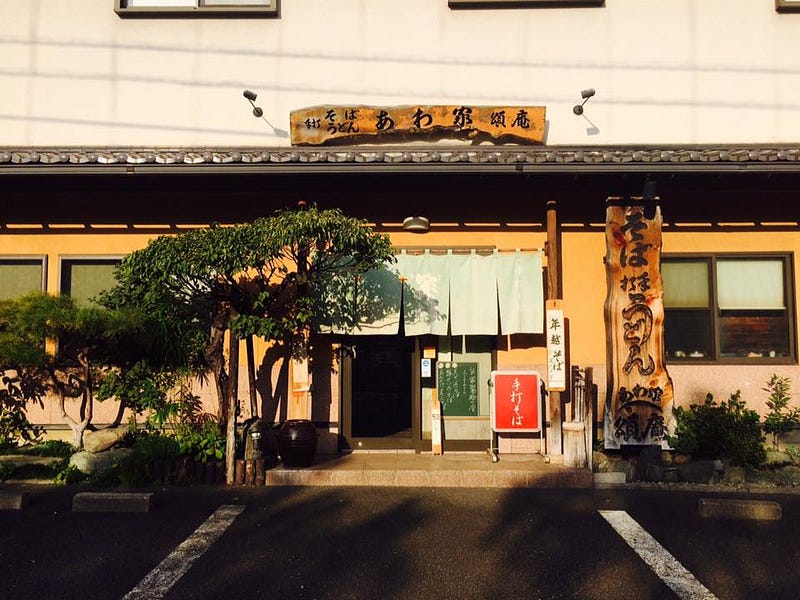
My trip to Japan was in November last year, though I still think about this country and her people every now and then. There are nearly 80 cities in about 50 countries that I’ve visited but Japan is one of the few that I have the very urge to write an article about.
My first stop was of course Tokyo. From there, I took Shinkansen to a small town called Hadano so I could get a taste of both the hustle and bustle of a big city and how life was really like in rural Japan.
If you grew up as a fan of Japanese anime, you’ll find that every aspect of Japan fits right into the anime images in your memory. Remember those small tidy streets where all the magic happened and those symbolic telephone poles with cute katakana and hiragana characters in Doraemon? Real life scenario was merely the difference in size. Walking down any street, I had this feeling Nobita Nobi would bump into me around the next corner.
Japanese people are known for being organized and perfectionists. Had I not been there, I would have had no idea what it means to be entitled as such. As a Chinese village girl born and raised in an area where everything was just a little lagging and more traditional, my only knowledge of Japan was from Japanese animes, my grandpa’s stories of the 8 years’ China-Japan war and from our history books. So “brutal” and “short” was how I would describe Japanese people back then.
I was prepared for being treated badly.
‘Welcome to Japan’ and ‘Sorry we are closed’
And there had been a mixture of different cases since I set foot on the land of Tokyo. I was greeted “Welcome to Japan” by a taxi driver outside the airport who didn’t speak much English. He struggled to understand me but made an effort to know where I was going, and drove me to the hotel with a “Thank you” and a bow.
However, there were also other occasions, where I walked into a bar with a fair amount of customers inside on a night with pouring rain, and the owner chose me to be the unfortunate customer to hear: “Sorry. We are closed.”
As much as I hate this unnecessary hatred between the two countries, I have to admit my admiration towards the way how Japanese people behave and handle things.
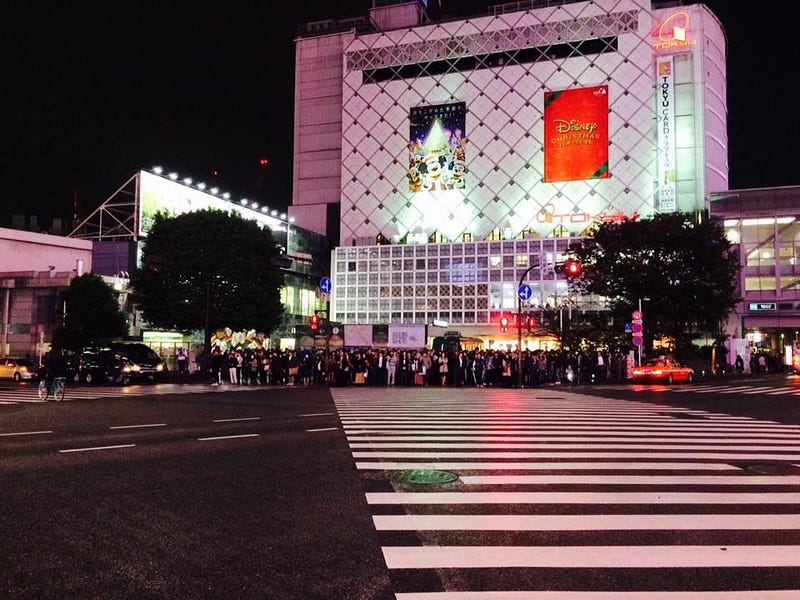
Crossing the street and… where is the trash can??
Take crossing the street as an example. I went to the busiest crossing in the world in Shibuya (supposedly 2,500 pedestrians crossing every time the signal changes), and as the green light illuminated, people walked across in a timely and calm manner. No pushing, no rushing, no car horn sound as what we usually expect at a busy crossing in China.
Both Tokyo and Hadano were the most trash-free cities I’ve seen among the most developed cities in the world. There was no trash can anywhere on the street, oddly enough the streets were very clean. The only times I saw a trash can were when I went inside a building or went underground to the subway. Even then, I found hardly any trash in the trash can.
I was confused where all the public trash went until I saw in one early morning, there were trash bags tidily lined up outside every residential building. I suppose at first Japanese people don’t produce that much public trash. Even if they do, they take their own trash home(?) Anyone who’s traveled to China knows this is not the case on our land.
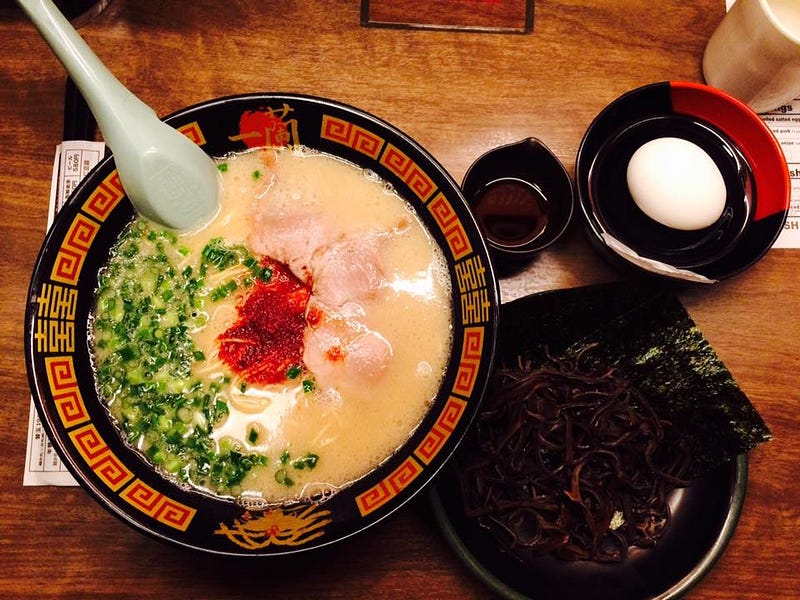
The right amount of food
During my one week stay there, I didn’t see one single person wasting their meals. Japanese cuisine is a simple one compared to Chinese cuisine. Often you get served your own food in a restaurant — whether it’s a bowl of ramen noodles or rice don, it’s always the right portion so that you can finish and be full. Whilst sharing food is a big part of the food culture in China, and there are numerous regional cuisines that I haven’t even tried as a Chinese person, what happens sometimes in a Chinese restaurant is, we end up ordering too many dishes and waste many of them by the end of the meal.
Oh the bathroom…
Have you heard that Japanese people pay a tremendous amount of attention to their bathrooms? What you heard is absolutely true. Now I’ll skip the part repeating how fancy, convenient, and sometimes…weird, the toilet sets were. Instead, I would like to address how clean and unified the standard of restrooms is.
Almost all the toilet rolls were made from easy-to-disintegrate materials. Waste bins were usually very small and again, there was hardly any waste inside. As to the toilets we have in China, I’d like to just shut up and learn from the Japanese.
Behind your back
Speaking of being humble and polite, I’ve heard from foreigners who lived in Japan and even Japanese people themselves, that there is a “behind-your-back” culture in Japan. Some say people don’t always mean it when they smile at you and be nice to you. Others say pointing things out directly to your face can be very rare cases in Japan. So to get around in Japan, you’d need to have great self-awareness when things go wrong.
I suppose it’s more common to have a “behind-your-back” culture in East Asian countries. But my Chinese folks are improving on this. At least if we are unhappy about something, we show it and most likely it leads to a conversation later where we point things out to your face.
Hold everything within
I’ve heard different voices that Japan has a very high suicide rate. I could only imagine the amount of pressure and stress they build within themselves behind that disciplined manner to a point they have to kill themselves.
I was never bothered by any systematic problems. Public transportation was efficient. Restaurants were organized and I was always satisfied with the food I paid for. Services were always to the point, and beyond sometimes. I had a great time as a traveler. And I felt bad that there were pressure, stress, and even suicides behind all these beautiful things.
As a Chinese citizen, I can empathize on how it feels to be under the social pressure of seniority. Where does this seniority thing come from? Perhaps it has something to do with the Emperor time in both of the two countries’ histories.
There are good and bad parts of bearing everything inside. Look at Japan. The pressure creates an organized society and helps to put focus on developing in a way. And because Japanese people always present a nice side of themselves, they usually leave a very good impression to the rest of the world.
I don’t wish my Chinese folks to do such extreme as we’d kill ourselves, but I do hope we work on being more organized and leaving a good impression to the world. And at the same time, I hope more and more Japanese people can speak up and release their pressure.
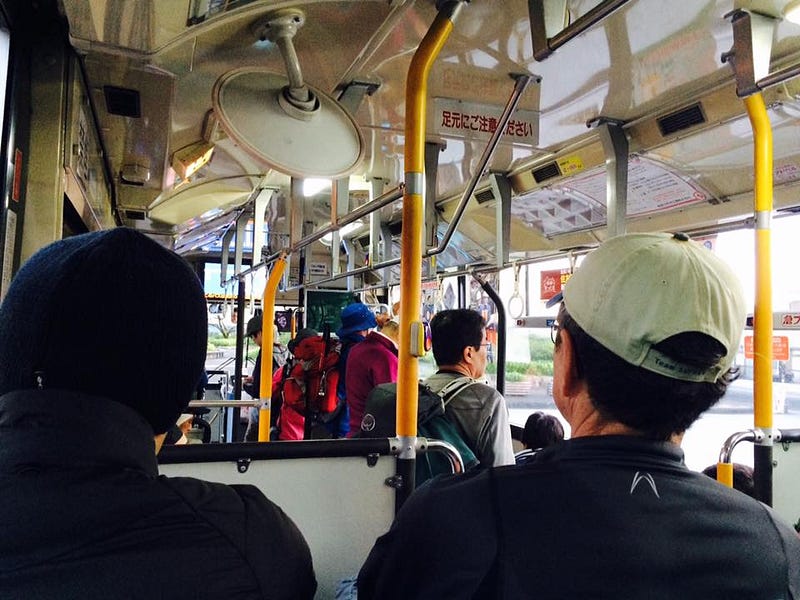
Active old people
I saw the most active old people in Japan more than anywhere else. They go hiking, they run on the street at night, they take subway trains to places without taking any seats offered by young people. They are confident, healthy and independent. As a girl who is from a relatively poor area in China, what I’ve seen in my hometown is that old people are very dependent on their kids. I’m not saying we shouldn’t take care of our parents after they worked their whole lives to support us. But there are perhaps things we can improve on to get our old people more confident, healthy and independent. A good diet? A good social system?
In the end
I had bought a pair of hand-made leather shoes in Tokyo. They are so comfortable that I wear them throughout all seasons. It’s the kind of things I wish to own for a life time. I’m proud that “Made in China” is a world label nowadays but I’m just waiting for the time to come where everyone would like to own good-quality Chinese products for a life time.
I don’t agree on Japan’s attitude towards the war happened between us. I don’t agree on many political things happening in today’s world. Countries make a point of their political stands based on their national benefits. So in my opinion, there is no absolute black and white. Regardless of what happened in the past, it never hurts for us to look at the good things in Japan and learn from them.