avatarObsidian Eagle

Free AI web copilot to create summaries, insights and extended knowledge, download it at here

2911

Abstract

d="b604" type="7">“Thou — Immediate Being — here on Earth we please thee, for next to thee nothing is lacking, oh Giver of Life!</p><p id="5b12" type="7">To thee we be but flowers, thy friends who wilt. Like an emerald, ye shatter us. As a painting, ye efface us.</p><p id="df1f" type="7">All travel to the realm of the dead; our common destination.</p><p id="a65c" type="7">What are we to thee Great Spirit? Thus we live and hence we die. Where will we end up?</p><p id="16a1" type="7">Therefore I cry, for thou seems to retire, oh Giver of Life!</p><p id="041b" type="7">Jade lies broken, plumes art torn. Thou mockest us. We cease to exist.”</p><p id="d2be" type="7">~ Cantares Mexicanos, folio 12v [National Library of Mexico]</p><p id="5f01">That isn’t the entire poem, but it should suffice to give you a glimpse into said king’s mindset. As you can see, he was quite preoccupied with existential questions concerning life, death, and even the character of divinity. I must mention that I’ve applied a bit of poetic license here to a few untranslatable concepts such as <a href="https://nahuatl.uoregon.edu/content/tloque-nahuaque"><i>Tloque Nahuaque</i></a>. In my expert opinion it takes one poet to properly interpret another and the academic versions have so far lacked a certain <a href="https://www.dictionary.com/browse/je-ne-sais-quoi#"><i>je ne sais quoi</i></a>. It’s also remarkable that this was written before the Spaniards arrived on the scene because it shows how the ancients anticipated their own eventual demise.</p><p id="81a4">Moving right along…</p><h1 id="4cbb">A Neo-Toltec Composition</h1><p id="1028">As stated, the above has been rendered purely for exemplary purposes. This is because today, Yours Truly shall attempt an ambitious feat rarely (if ever) accomplished nowadays. That is to say, I’ll be creating a completely original piece first in Nahuatl, then Spanish, and finally English. You might very well be witnessing literary history in the making! This working is made possible through the assistance of fine friends from <a href="https://speaknahuatl.com/">www.SpeakNahuatl.com</a>:</p><p id="b34d"><b>Tlainaxtli Teotl</b></p><p id="fc32">Kaki neuatl, Tloque Nahuaque</p><p id="a418">ItzQuauhtli notza teuatl:</p><p id="fae2">Xinechmoluili</p><p id="771a">Kateh teuatl Ometeotl?</p><p id="60bb">Anoso kateh teuatl Tepeyollotl?</p><p id="34a7">Anoso kox Huehuecoyotl, Quetzalcoatl, Tonatiuh?</p><p id="a58b">Notechmoneki ixpetz nik itta nezcayolt</p><p id="fb8c">Yehika nimitsitta iko mochintin!</p><p id="4dd8"><b>Deidad Occulta</b></p><p id="2936">Escuchame, Ser de la cerca y junta</p><p id="de61">Aguila Obsidian te llama:</p><p id="803c">Por favor dime</p><p id="c510">Eres El Señor y La Dama?</p><p id="5264">O eres Corazon de Montaña?</p><p id="5d87">O talvez Antiguo Coyote? Serpiente Emplumada? El Sol?</p><p id="2c3f">Necesito un buen ojo para ver vuestra seña

Options

sagrada</p><p id="dbc0">Porque yo te veo en todo!</p><p id="981e"><b>Mystery Deity</b></p><p id="ec71">Hear me, Immediate Being</p><p id="a330">Obsidian Eagle summons you:</p><p id="c24a">Please tell me</p><p id="98cb">Are you Our Lord and Lady?</p><p id="c5c8">Or are you Heart of Mountain?</p><p id="28d6">Or perhaps Ancient Coyote? Feathered Serpent? The Sun?</p><p id="7dd7">I need a sharper eye to read your sacred sign</p><p id="64d9">Because I see you in all things!</p><p id="2ec3">That’s it for now. I hope you enjoyed these <a href="https://www.dictionary.com/browse/poesy">poesies</a> and thank you so very much for reading!</p><h2 id="cd24">Further Readings:</h2><div id="d453" class="link-block"> <a href="https://readmedium.com/chronicles-of-quetzalcoatl-f22fd88581dd"> <div> <div> <h2>Chronicles of Quetzalcoatl</h2> <div><h3>Nativity of An Incarnate Deity</h3></div> <div><p>medium.com</p></div> </div> <div> <div style="background-image: url(https://miro.readmedium.com/v2/resize:fit:320/1*0CdvlBPja11wRdmucfkzAg.jpeg)"></div> </div> </div> </a> </div><div id="8535" class="link-block"> <a href="http://red-coral.net/Hungry.html"> <div> <div> <h2>Hungry Coyote</h2> <div><h3>(1402-1472) Translations by JOHN CURL The following is a selection. More Flower Songs of Nezahualcoyotl are included in…</h3></div> <div><p>red-coral.net</p></div> </div> <div> <div style="background-image: url(https://miro.readmedium.com/v2/resize:fit:320/0*rxRsXpSOGpJQ3G92)"></div> </div> </div> </a> </div><div id="e332" class="link-block"> <a href="https://books.google.ca/books?id=0XaTWlhQyzQC&amp;lpg=PA200&amp;ots=OwCi0EeAeF&amp;dq=Tecayehuatzin%20of%20Huexotzinco&amp;pg=PA200#v=onepage&amp;q=Tecayehuatzin%20of%20Huexotzinco&amp;f=false"> <div> <div> <h2>Fifteen Poets of the Aztec World</h2> <div><h3>Who were the poets of Mexico in the days of Aztec splendor? What were the poems of a culture so different from our…</h3></div> <div><p>books.google.ca</p></div> </div> <div> <div style="background-image: url(https://miro.readmedium.com/v2/resize:fit:320/0*Gwl4QjKFdrrb-AYC)"></div> </div> </div> </a> </div><figure id="9e30"><img src="https://cdn-images-1.readmedium.com/v2/resize:fit:800/1*OQ_NZt-4q_-9aK05xn5t5w.png"><figcaption>~ <a href="http://www.ObsidianEagle.com"><b>ItzQuauhtli</b></a>; Herald of Quetzalcoatl (Shutterstock image under license)</figcaption></figure></article></body>

Aztec Poetry (In Triplicate)

Intimations of Lost Lore
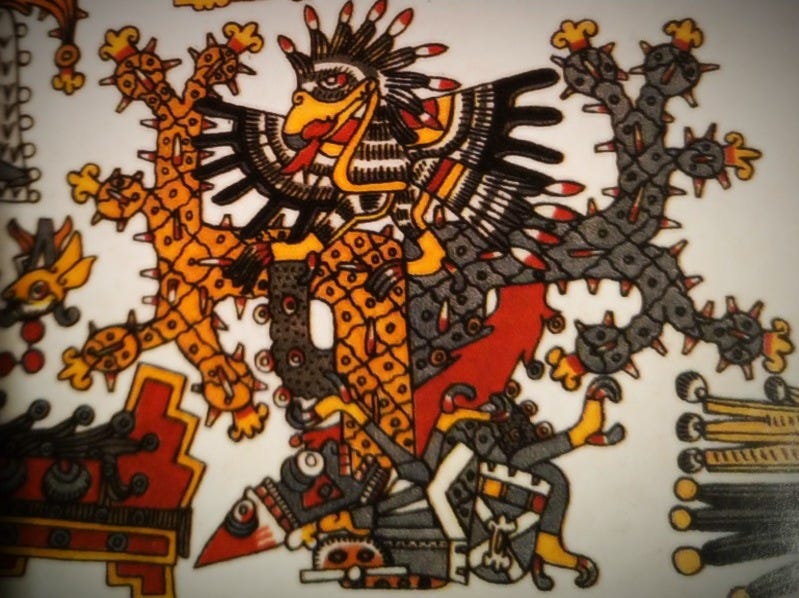
Image from Codex Borgia (author’s own photo)

Largely unknown to the modern world, the Aztecs, whom called themselves Mexica (hence the nation’s name: Mexico) were not merely bloodthirsty savages whom exacted tribute from every corner of their extensive empire. Like their close cousins, the Maya, those pre-Hispanic Mexicans were also architects, astronomers, mathematicians, and wouldn’t you know it? They were even romantic and lyric POETS.

The written form of the Aztec’s native Nahuatl was a pictographic type of script. Professor Emeritus Miguel Leon-Portilla tells us:

“The word was represented by a scroll proceeding from the speaker’s mouth; song [and poetry] by flowery scrolls.”

~ The Ancient Mexicans: Through Their Sagas and Songs (1961), pg. 64
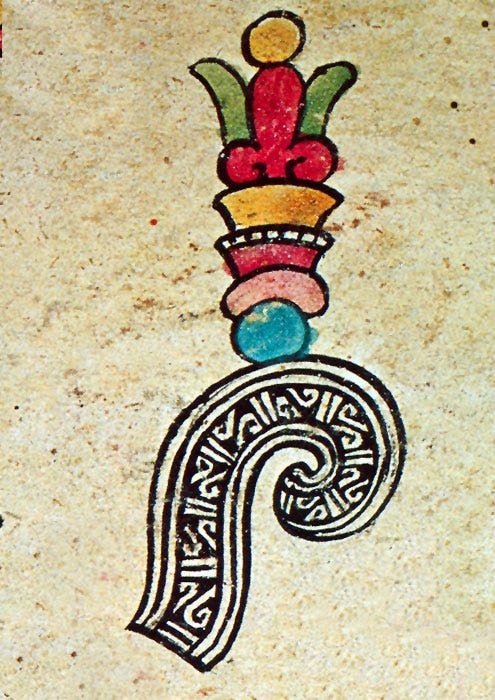
Aztec glyph for ‘florid speech’ (used with permission from Mexicolore).

Numerous archaic codices that survived centuries of book burning prior to and during the conquest were transliterated to Spanish by scholarly priests such as Bernardino de Sahagún, and they are still preserved in many museums and libraries today. From these we’ve learned a great deal regarding those ancient scribes. The most famous of them being the poet prince of Texcoco: Nezahualcoyotl (Fasting Coyote, 1402–1472).

However, since the aforementioned is extensively documented and there are already plenty of articles regarding his various exploits, I’d like to offer the words of a lesser known philosopher king as an equally excellent example: Tecayehuatzin, who ruled over the independent city-state of Huexotzinco (circa 1450–1500). Probably owing to the fact that they were more or less contemporaries who shared a similar writing style, I’ve sometimes seen the work of the latter confused with that of the former. Having perused a transcription from Nahuatl to Spanish, this is my English translation of a favorite passage by Tecayehuatzin:

“Thou — Immediate Being — here on Earth we please thee, for next to thee nothing is lacking, oh Giver of Life!

To thee we be but flowers, thy friends who wilt. Like an emerald, ye shatter us. As a painting, ye efface us.

All travel to the realm of the dead; our common destination.

What are we to thee Great Spirit? Thus we live and hence we die. Where will we end up?

Therefore I cry, for thou seems to retire, oh Giver of Life!

Jade lies broken, plumes art torn. Thou mockest us. We cease to exist.”

~ Cantares Mexicanos, folio 12v [National Library of Mexico]

That isn’t the entire poem, but it should suffice to give you a glimpse into said king’s mindset. As you can see, he was quite preoccupied with existential questions concerning life, death, and even the character of divinity. I must mention that I’ve applied a bit of poetic license here to a few untranslatable concepts such as Tloque Nahuaque. In my expert opinion it takes one poet to properly interpret another and the academic versions have so far lacked a certain je ne sais quoi. It’s also remarkable that this was written before the Spaniards arrived on the scene because it shows how the ancients anticipated their own eventual demise.

Moving right along…

A Neo-Toltec Composition

As stated, the above has been rendered purely for exemplary purposes. This is because today, Yours Truly shall attempt an ambitious feat rarely (if ever) accomplished nowadays. That is to say, I’ll be creating a completely original piece first in Nahuatl, then Spanish, and finally English. You might very well be witnessing literary history in the making! This working is made possible through the assistance of fine friends from www.SpeakNahuatl.com:

Tlainaxtli Teotl

Kaki neuatl, Tloque Nahuaque

ItzQuauhtli notza teuatl:

Xinechmoluili

Kateh teuatl Ometeotl?

Anoso kateh teuatl Tepeyollotl?

Anoso kox Huehuecoyotl, Quetzalcoatl, Tonatiuh?

Notechmoneki ixpetz nik itta nezcayolt

Yehika nimitsitta iko mochintin!

Deidad Occulta

Escuchame, Ser de la cerca y junta

Aguila Obsidian te llama:

Por favor dime

Eres El Señor y La Dama?

O eres Corazon de Montaña?

O talvez Antiguo Coyote? Serpiente Emplumada? El Sol?

Necesito un buen ojo para ver vuestra seña sagrada

Porque yo te veo en todo!

Mystery Deity

Hear me, Immediate Being

Obsidian Eagle summons you:

Please tell me

Are you Our Lord and Lady?

Or are you Heart of Mountain?

Or perhaps Ancient Coyote? Feathered Serpent? The Sun?

I need a sharper eye to read your sacred sign

Because I see you in all things!

That’s it for now. I hope you enjoyed these poesies and thank you so very much for reading!

Further Readings:

~ ItzQuauhtli; Herald of Quetzalcoatl (Shutterstock image under license)
Mexico
Linguistics
Poetry On Medium
Medium En Español
Ancient History
Recommended from ReadMedium
avatarAnn Marie Steele
Cardinals Calling

A hybrid poem

3 min read