
Autopsy Findings of Vaccinated People (With Covid Vaccines): An Update
Fatalities from mRNA vaccine-induced fulminant myocarditis are possible but extremely rare — in about 1 in 10 suspected post-vaccine deaths (i.e., 1 in 20,000,000 vaccinated individuals).
There’s nothing more powerful than seeing reality for oneself. That’s why an autopsy, ‘the act of seeing for oneself’ in Greek, the dissection of a dead body to reveal the inner physiology, is gold-standard for finalizing the cause of death.
Almost a year ago, an article I wrote, titled “What Autopsies of Vaccinated People (With Covid Vaccines) Show,” received a remarkable number of views. In that article, I scoured PubMed, a biomedical literature database, using the keywords “vaccine AND (covid OR sars-cov-2) AND (autopsy OR postmortem OR necropsy)" and derived 55 articles as of 17 December 2021.
Now, using the same keywords again, the number of articles has risen to 123. So, in this update, I will describe what new developments have surfaced and what they mean for the safety of Covid-19 vaccines, a highly contentious topic that often sets people apart into two polarizing sides of vaccines being safe or unsafe when, in fact, the reality is rarely ever black and white.
Part I: A summary
In the last article, I detailed 10 published autopsy papers, covering 33 cases of post-covid vaccine deaths that occurred shortly after vaccination and were not attributable to recent SARS-CoV-2 infection.
Among the 33 post-covid vaccine deaths, the cause of death of:
- 19 cases were unrelated to the vaccine.
- 9 cases were AstraZeneca’s DNA vaccine-induced VITT.
- 2 cases were suspected but unconfirmed AstraZeneca’s DNA vaccine-induced VITT.
- 2 cases were myocarditis likely induced by Pfizer’s mRNA vaccine.
- 1 case was myocarditis possibly induced by Pfizer’s mRNA vaccine.
*VITT: Vaccine-induced thrombotic thrombocytopenia is a known risk of adenovirus-vectored DNA vaccines from AstraZeneca and Johnson & Johnson, especially among younger females, characterized by life-threatening blood clots with low platelets. Platelets are blood-clotting cells, so their depletion makes one prone to excessive bleeding. VITT also has a specific biomarker: anti-platelet factor 4 (anti-PF4) antibodies.
Overall, the autopsies show that most cases (19 out of 33) of post-vaccine death are unrelated to the vaccine. The related ones are mostly a result of DNA vaccine-induced VITT. Pre-existing diseases, most notably cardiovascular diseases, are usually the cause of death instead.
While the autopsy studies discussed have small sample sizes and are not sampled at random, thus prone to sampling bias, such limitations also work in favor of vaccines. For example, in the study of Schneider et al. (2021), the autopsies were requested by prosecutors as the post-vaccine death was suspicious (otherwise, why request an autopsy?). Yet, only two out of 18 autopsied cases showed convincing evidence indicating AstraZeneca’s DNA vaccine as the cause of death.
This finding tells us a vital thing: A suspicious or suspected vaccine-related death is usually due to causes unrelated to the vaccine.
Moreover, the prosecutors only requested autopsy for 18 cases out of the 873 post-covid vaccine deaths reported to the German surveillance system as of 31 May 2021. By this date, 15.2 million and 20.9 million people were fully and partially vaccinated, respectively, totaling 36.1 million people in Germany. The 873 post-vaccine deaths, thus, represent 0.0024% of the vaccinated population. And the 18 suspected or suspicious post-covid vaccine deaths only represent 0.0000499% of the vaccinated population.
So, the work of Schneider et al. also tells us another crucial thing about suspected post-covid vaccine deaths — that they are very, very rare.
Again, to recap, here are the takeaways from Part I:
- Post-covid vaccine deaths — deaths occurring shortly after the vaccine — are extremely rare, affecting <0.003% of the vaccinated population.
- Post-covid vaccine deaths — with the suspected cause of death being the vaccine — are even rarer, affecting <0.00005% of the vaccinated population. And most of these suspected deaths are due to causes unrelated to the vaccine, usually pre-existing cardiovascular diseases.
- Nearly all post-covid vaccine deaths are due to DNA vaccine-induced VITT, an acknowledged risk of DNA vaccines, particularly in younger females. This is why many countries have limited the use of DNA vaccines to the older population only.
Part II
As Part I covered 55 articles, Part II will cover the remaining 68 articles out of the 123 articles derived from PubMed as of 25 November 2022.
And here is the list of newly published autopsy studies:
- Post-mRNA vaccine deaths: Takahashi et al. (2022); Mörz (2022); Kaimori et al. (2022); Baronti et al. (2022); Suzuki et al. (2022); Satomi et al. (2022); Murata et al. (2022); Ameratunga et al. (2022); Yeo et al. (2022); Kamura et al. (2022); Gill et al. (2022); Kang et al. (2022); Roncati et al. (2022); Yoshimura et al. (2022); Hoshino et al. (2022).
- Post-DNA vaccine deaths: Alunni et al. (2022); Kumar et al. (2022); Günther et al. (2022); Pomara et al. (2022); Barary et al. (2022); Mele et al. (2022).
- Post-subunit vaccine death: Dong et al. (2022).
From this overview, it seems that more post-mRNA vaccine deaths have been published compared to Part I. As all autopsy papers on post-DNA vaccine deaths are case reports, a bulk of Part II will focus on post-mRNA vaccine deaths.
Author’s note: As Part II is rather lengthy and technical, feel free to jump to the last section for the key points on Covid-19 vaccine safety.
Part II: Autopsy reports on post-mRNA vaccine deaths
1. Suzuki et al., 2022, Japan (54 cases):
In this small study, the authors described the autopsy findings of 54 individuals (34 men, mean age of 68 years, ranging from 24–91 years) who died within 7 days of vaccination, of which 37 and 6 individuals received Pfizer’s and Moderna’s mRNA vaccine, respectively. Vaccine history was unknown for the remaining 11 cases.
Based on the autopsy findings, the cause of death was natural in 43 cases (i.e., due to diseases), non-natural in 8 cases (e.g., drowning and poisoning), and undetermined in 3 cases.
Among the 43 natural deaths, ischemic heart disease was the most frequent cause of death (16 cases). A causal relationship to the vaccine was ruled out in 36 cases. In the remaining 7 cases, the cause of death was:
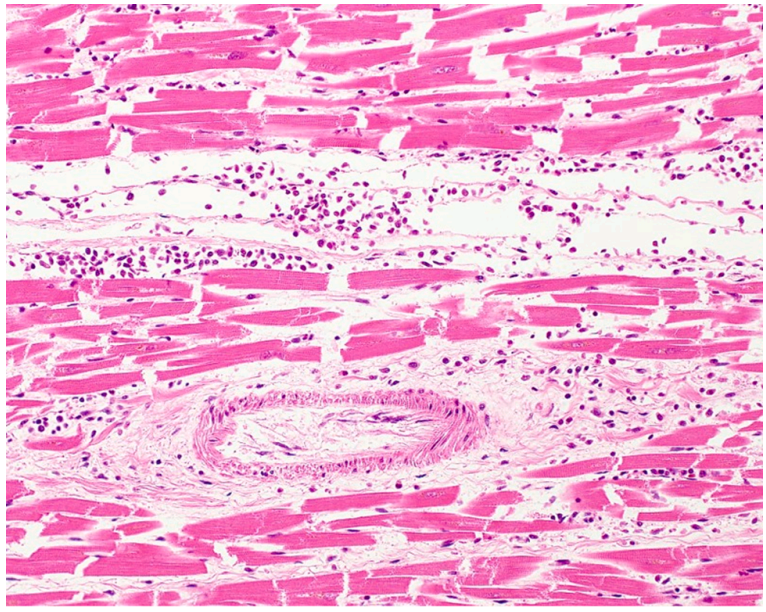
- Myocarditis in 2 cases who received Moderna’s mRNA vaccine, with a causal link to the vaccine (Figure 1).
- Myocarditis with pre-existing ischemic heart disease being the competing cause of death in 1 case who received Moderna’s mRNA vaccine. A causal link to the vaccine is unclear.
- Ischemic colitis secondary to superior mesenteric artery thrombosis (blood clots blocking intestinal blood supply) in 1 case who received Pfizer’s mRNA vaccine. A causal link to the vaccine is unclear.
- Transverse sinus thrombosis (blood clot in the brain) in 1 case with unknown vaccine history. A causal link to the vaccine is unclear.
- Pulmonary artery thromboembolism (blood clot in the lungs) in 2 cases, with one case who received Pfizer’s mRNA vaccine and the other case with unknown vaccine history. But organized thrombi were found in these cases. As organized thrombi take 1–3 months to form, the cause of death was unlikely to be related to recent (<7 days) vaccination.
Among the 3 undetermined deaths, a causal relationship to the vaccine was ruled out in 2 cases and considered unknown in 1 case, where slight immune cell infiltration in the heart muscle tissue was observed.
2. Gill et al. (2022), the U.S. (2 cases):
This case series described two teenage boys (age unspecified; SARS-CoV-2-negative) who died within 4 days of getting Pfizer’s mRNA vaccine and were referred for judicial autopsy. One boy had a history of attention deficit hyperactivity syndrome, and the other boy had obesity.
The autopsy confirmed the cause of death to be fulminant (sudden and severe onset) myocarditis causally linked to the vaccine, with evidence of myocardial fibrosis (scarred heart muscles) and cardiac hypertrophy (thickened heart muscles). Notably, the lack of immune cell infiltrates in the autopsied tissues suggests a distinct form of myocarditis, perhaps Takotsubo, toxic, or stress cardiomyopathy.
3. Yeo et al. (2022), Singapore (28 cases):
Herein, the authors described the autopsy findings of 28 out of 33 cases (26 men, median age of 69 years, ranging from 23–96 years) of deaths occurring within 72 hours of Covid-19 vaccination (Pfizer’s/Moderna’s mRNA vaccine) that were referred for forensic investigations.
Five out of the 33 cases were not autopsied as the cause of death was obvious and unrelated to the vaccine, such as pneumonia and pre-existing heart diseases.
In all 28 autopsied cases, the cause of death was deemed unrelated to the vaccine and likely due to pre-existing diseases instead, usually cardiovascular diseases. Specifically, the autopsies found no evidence of vaccine-related anaphylaxis, myocarditis, pericarditis, or thrombotic complications — which are known complications of Covid-19 vaccines.
4. Baronti et al., 2022, Italy (5 cases):
In this case series, the authors reviewed all cases of post-covid vaccine sudden cardiac deaths referred for a judicial autopsy at the Institute of Legal Medicine of Pisa, Italy, as of March 2022.
They then described 5 autopsied cases (4 men; mean age of 64 years, ranging from 50–76 years; SARS-CoV-2-negative) of sudden deaths following a heart attack. Four died within 8 hours, 2 days, 3 days, and 21 days of receiving either the first or second dose of Pfizer’s mRNA vaccine, and one died within 2 days of Moderna’s mRNA vaccine.
The cause of death in all cases was confirmed to be a heart attack, as evidenced by coronary thrombosis (blood clots obstructing heart arteries). Anti-PF4 antibodies and tryptase were negative, ruling out VITT and allergic reactions. None had a history of cardiovascular disease, except for some common risk factors (e.g., hypertension). But genetic testing revealed that all cases carried at least one pro-thrombotic gene mutation, suggesting that genetic risk factors may be involved.
As the pathology seen during the autopsy was typical of what we would normally see for heart attacks, the authors concluded that “no definitive causal relationship with vaccine administration could be postulated in the subjects analyzed in this series.”
5. Murata et al. (2022), Japan (4 cases):
This case series described 4 individuals (all men, aged 23–52 years) who died within 10 days of vaccination (3 received Moderna’s and 1 received Pfizer’s mRNA vaccine). Autopsies revealed no obvious cause of death, concluding those cases as sudden deaths with unknown causes.
This study also performed RNA sequencing of the blood sample from the autopsied cases and another two control cases (mRNA vaccine-vaccinated women who died from blood loss and strangulation). Results showed that genes related to neutrophil activation and cytokine production were upregulated in the autopsied vs. control cases, suggesting cytokine storm as the cause of death in the autopsied cases.
But one major limitation of this study is that the control cases were two women, whereas the autopsies cases were all men. So, it’s possible that the results attained from blood analyses were a result of sex differences.
6. Roncati et al. (2022), Italy (3 cases):
This case series examined 3 cases (2 women; age range of 52–84 years; SARS-CoV-2-negative) of deaths following Pfizer’s mRNA vaccine. Autopsies confirmed the cause of death to be lung thrombosis (blood clots) in the two 81- and 84-year-old women and heart thrombosis in the 52-year-old man.
In the autopsied women, the thrombotic findings overlap with anti-PF4 antibody staining in the lung tissues. But anti-PF4 antibody staining of tissues is inadequate to diagnose VITT as this technique is sensitive but unspecific. To diagnose VITT, blood measurement of anti-PF4 antibodies is necessary. And VITT is not known to occur from mRNA vaccines. The final cause of death is, therefore, inconclusive.
7. Other autopsy case reports demonstrating a causal link:
- Takahashi et al. (2022), Japan: A man in his 90s died two weeks after getting the third dose of Pfizer’s mRNA vaccine. He had neither pre-existing diseases nor a history of drinking and smoking. Autopsy then revealed immune cell infiltrates in the lining of heart muscle cells, confirming the cause of death as pericarditis causally linked to the mRNA vaccine. No other possible cause could be identified.
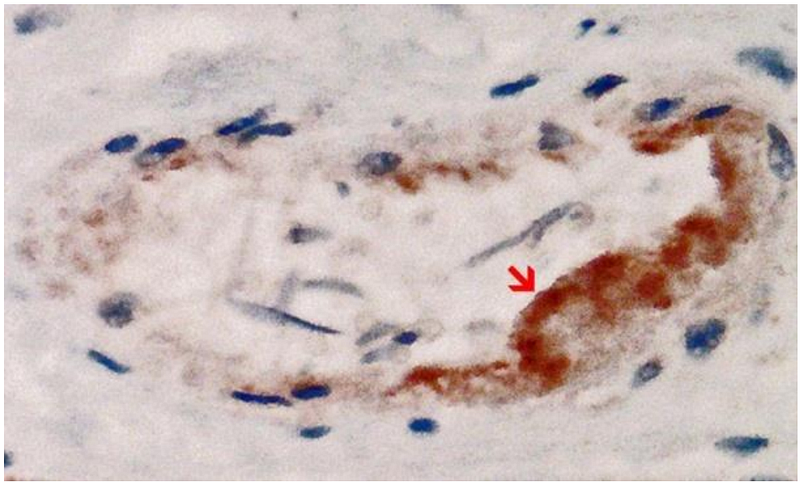
- Mörz (2022), Germany: A 76-year-old man with Parkinson’s disease died three weeks after the third Covid-19 vaccination (two doses of AstraZeneca’s DNA and one dose of Pfizer mRNA vaccine). An autopsy found vasculitis (inflamed blood vessels) and multifocal necrotizing encephalitis in the brain, as well as myocarditis and vasculitis in the heart. Spike but not nucleocapsid protein staining was detected in the inflamed brain and heart. Since nucleocapsid staining was absent and this man had no Covid-19, the spike protein staining is attributed to the vaccine, and the death is causally linked to the vaccine (Figure 2).
- Hoshino et al. (2022), Japan: A 27-year-old healthy man was hospitalized for fulminant myocarditis on day 8 and died on day 28 of getting Moderna’s mRNA vaccine. An autopsy revealed scarred, and enlarged heart muscles, as well as immune cell infiltrates, verifying the cause of death as fulminant myocarditis causally linked to the vaccine.
- Ameratunga et al. (2022), New Zealand: A 57-year-old healthy woman died on the third day of getting Pfizer’s mRNA vaccine. An autopsy found dead myocytes and immune cell infiltrates in the heart, confirming the cause of death as fulminant myocarditis causally linked to the vaccine.
- Kang et al. (2022), South Korea: A 48-year-old woman with a history of hypothyroidism was hospitalized for fulminant myocarditis on day 4 and underwent heart transplantation on day 11 of getting Pfizer’s mRNA vaccine. An autopsy of her heart showed immune cell infiltrations and dead myocytes, confirming the cause of death as myocarditis linked causally to the vaccine.
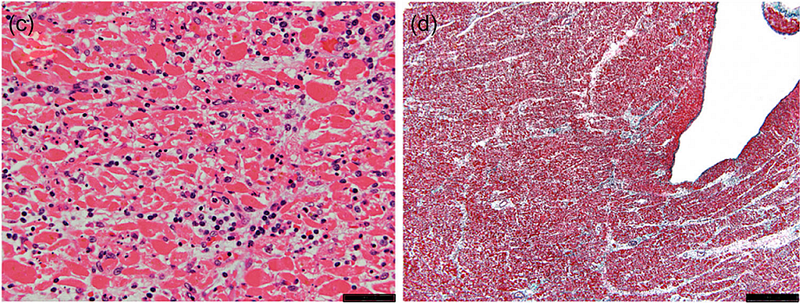
- Satomi et al. (2022), Japan: A 61-year-old healthy woman died 10 days after getting Pfizer’s mRNA vaccine. An autopsy found immune cell infiltrates and scarred tissues in the heart, confirming the cause of death as fulminant myocarditis causally linked to the vaccine (Figure 3).
8. Other autopsy case reports demonstrating a possible causal link:
- Kaimori et al. (2022), Japan: A 72-year-old woman with a history of B-cell cancer and hyperthyroidism died two days after getting Pfizer’s mRNA vaccine. An autopsy revealed multiple microthrombi (micro blood clots) in the brain, liver, kidneys, adrenal glands, and especially the heart. A causal link to the vaccine is deemed likely but unclear.
- Kamura et al. (2022), Japan: A 57-year-old healthy man developed rhabdomyolysis —when damaged muscles release their proteins and electrolytes into the blood, damaging organs— about a month after getting Moderna’s mRNA vaccine. He died 18 days later. An autopsy further revealed thrombosis in small arteries, determining the cause of death as thrombotic microangiopathy with rhabdo. As the man had no other trigger for rhabdo (e.g., virus, medications, alcohol abuse, etc.), the death is likely causally linked to the vaccine. (It’s likely because, unlike myocarditis, thrombotic microangiopathy or rhabdo is not a known complication of the mRNA vaccine).
- Yoshimura et al. (2022), Japan: A 88-year-old woman with several comorbidities (hypertension, dyslipidemia, asthma, peripheral neuropathy, and insomnia) was hospitalized 9 days after getting Moderna’s mRNA vaccine, and died from respiratory failure on day 18. An autopsy confirmed the cause of death as acute respiratory distress syndrome (ARDS). SARS-CoV-2 infection was absent in the autopsied tissues. As there’s no strong evidence for other causes than the vaccine, the death is likely causally linked to the vaccine.
Part II: Autopsy reports on post-DNA vaccine and post-subunit vaccine deaths
From the latest literature, there are six published autopsy studies on post-DNA vaccine death and one study on post-subunit vaccine death. All of these studies, however, are individual case reports.
1. Autopsy case reports demonstrating a causal link:
- Alunni et al. (2022), France: A 70-year-old man with hypertension died 25 days after getting AstraZeneca’s DNA vaccine. An autopsy found evidence of bleeding and blood clots in the brain, with blood samples positive for anti-PF4 antibodies, confirming VITT as the cause of death.
- Günther et al. (2022), Germany: A 54-year-old healthy man was hospitalized for thrombocytopenia on day 12 after getting AstraZeneca’s DNA vaccine. His symptoms improved but kept recurring. Four months later, he developed intracerebral hemorrhage (brain bleeding) and died. An autopsy confirmed the cause of death as VITT with positive blood anti-PF4 antibodies.
- Pomara et al. (2022), Italy: A 37-year-old healthy woman was hospitalized for VITT in the brain on day 11 of getting AstraZeneca’s DNA vaccine. She then died on day 24, with an autopsy confirming the cause of death as VITT that spread to the heart, lung, liver, kidney, ileum, and deep veins, with positive blood anti-PF4 antibodies.
- Dong et al. (2022), China: A 36-year-old woman developed fulminant myocarditis on day 10 of getting Zifivax’s protein subunit vaccine and died two days later. An autopsy revealed dead myocytes, immune cell infiltrates, and spike protein staining in the heart tissues (Figure 4), confirming the cause of death as myocarditis causally linked to the vaccine.
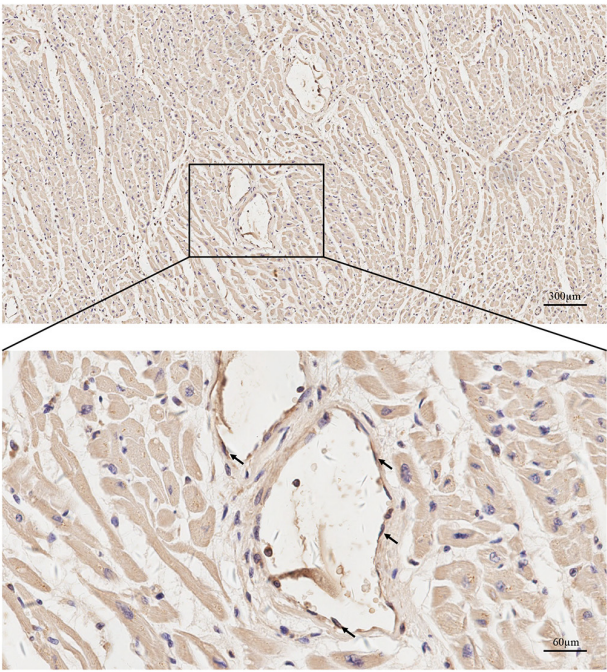
2. Autopsy case reports demonstrating a possible causal link:
- Kumar et al. (2022), India: A 40-year-old woman with hypertension was hospitalized on day 14 of getting AstraZeneca’s DNA vaccine and died one week later. An autopsy confirmed the cause of death as acute disseminated encephalomyelitis (ADEM), characterized by an inflamed brain and spinal cord that damages myelin that coats neurons. As the woman had muscle pain one week before vaccination, past viral infection contributing to ADEM cannot be ruled out, although she tested negative for SARS-CoV-2. A causal link to the vaccine is thus unclear.
- Barary et al. (2022), Iran: A 35-year-old man with a history of mental disorder was hospitalized for abdominal pain on day 8 of getting AstraZenca’s DNA vaccine and died 3 days later. Liver biomarkers were abnormal and suggestive of hepatitis. An autopsy then confirmed the cause of death as drug- or toxin-induced hepatitis with a possible but unclear causal link to the vaccine.
- Mele et al. (2022), Italy: A 54-year-old man with a history of vascular disease was presented to the emergency room for leg thrombosis on day 17 of getting Johnson & Johnson’s DNA vaccine. He died one day later when the thrombosis occurred in the brain. An autopsy confirmed the cause of death as cerebral venous sinus thrombosis. But blood anti-PF4 antibodies were not measured, and vaccine causality can’t be inferred.
What it means for vaccine safety
Overall, most autopsy papers published in Part II concern the mRNA vaccine rather than the DNA vaccine observed in Part I. In part II, a total of 104 post-mRNA vaccine deaths (15 studies), 6 post-DNA vaccine deaths (6 studies), and 1 post-subunit vaccine death (1 study) were reviewed.
This could be because fatalities from the DNA vaccine, i.e., vaccine-induced thrombotic thrombocytopenia (VITT), is already a well-acknowledged risk, affecting about 1 in 100,000 vaccinated individuals, especially among younger females.
In contrast, although myocarditis is also a well-acknowledged risk of mRNA vaccine, especially among younger males, it’s rarely known to result in fatalities. But judging from the autopsy papers, it’s possible for the mRNA vaccine to induce fulminant (severe and sudden in onset) myocarditis, especially in older adults.
But this fatal post-mRNA vaccine fulminant myocarditis is extremely rare, which occurred in only 10 of the 104 post-mRNA vaccine deaths — i.e., 1 in 10 suspected post-vaccine deaths. Based on Part I, suspected post-vaccine deaths affect <0.00005% of the vaccinated population. Extrapolating these numbers would mean that fatal post-mRNA vaccine fulminant myocarditis affects <0.000005% (1 in 20,000,000) of the vaccinated population.
Putting it the other way, it also means that 9 out of 10 suspected post-mRNA vaccine deaths were not or are unlikely to be caused by the vaccine. This corroborates a key point from Part I — that most suspected or suspicious vaccine-induced deaths were due to causes other than the vaccine.
Finally, to recap, here are the two main takeaways from Part II:
- Compared to Part I, most of the autopsy papers published concern post-mRNA vaccine deaths. This is probably because potential fatalities from VITT are already a well-acknowledged risk of DNA vaccines; as a result, scientists lack the incentive to publish similar findings. In contrast, fatalities from mRNA (and subunit) vaccine-induced fulminant myocarditis are relatively less known.
- But fatalities from mRNA vaccine-induced fulminant myocarditis are extremely rare — in about 1 in 10 suspected post-vaccine deaths (i.e., 1 in 20,000,000 vaccinated individuals). And this also means that 9 out of 10 suspected post-vaccine deaths are not causally linked to the vaccine.
If you have made it this far, thank you. Subscribe to my Medium email list here. If you want to become a member to get unlimited access to Medium, you can use my referral link, and I will receive a small commission at no extra cost to you. You can also tip me here if you are feeling generous today, and I’ll appreciate it.
Correction (5th March 2023): I mistakenly wrote the patient survived in the report of Kang et al. (2022). The sentence, “She survived,” was deleted.
6 June 2023: Here is a new update to this vaccine autopsy series:


