
Autophagy Is Heartless. But We Need It For Self-Renewal.
Much like what a corporate organisation does with the hiring and firing of personnel.
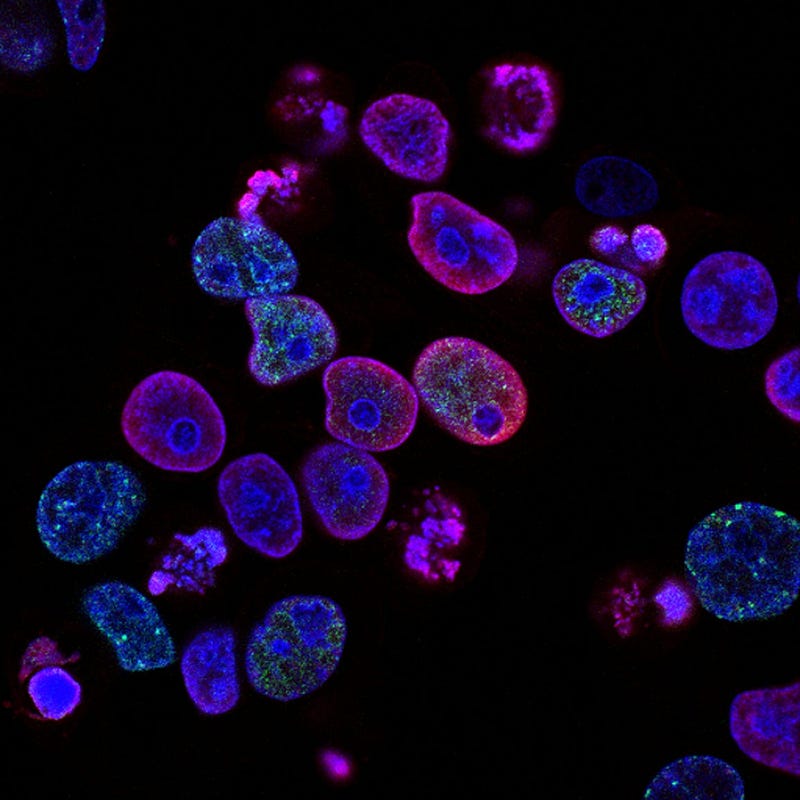
There are many types of systems that exist in today’s modern society. The definitions of a system on Dictionary.com include:
1. An assemblage or combination of things or parts forming a complex or unitary whole.
2. A coordinated body of methods or a scheme or plan of procedure; organizational scheme.
Every healthy organisation is an example of a well-oiled system. In the grand scheme of things, an employee who works in a company is part of that company’s system.
Within that system exists many different departments — some departments deal with internal organisational functions, such as Human Resources (HR) or Information Technology (IT). Without those departments, an employee may not be able to work efficiently with current technological tools, or they may not get paid their wages promptly.
There are other departments that deal with the external side of things, such as the sales department, which focuses on providing solutions for clients. A person who is working in HR would not necessarily be suited to work in sales, for instance.
All these individual departments have mid level managers and higher level management tiers, who are present to regulate the workflow and the tasks that are required for each department to function and to improve.
Communication is key for each department to be on the same page — hence emails, messenger apps and phone calls are necessary to get messages sent across effectively. A nastily worded email can create its own issues inasmuch as a vague email can cause confusion.
The cells in our human bodies are also organised into various systems for conducting different functions. We hear of the “digestive system” and the “immune system”, for instance — these are an assemblage of different cells, tissues and organs within the human body that carry out various biological functions.
A liver cell that carries out detoxification work functions very differently from a brain cell that provides us with cognitive abilities.
As a corporate organisation conducts routine renewals to maintain its productive efficiency (via the firing and hiring of personnel), many of the cells in our systems will also undergo that form of routine renewal.
Most cells are able to reproduce asexually via binary fission. The parent cell is able to split up into 2 daughter cells during reproduction, and it can then carry on the work of the parent cell.
Inefficiently operating cells are “fired” from the efficiency standpoint, because business is business. Our bodies are therefore as cruel to the living cells inside its various systems as corporate organisations can be to their inefficiently operating employees or departments.
When our cells are earmarked for destruction, they get tagged by the p62 protein and are marked for elimination, much like how a defective product at a supermarket is tagged for disposal, or marked down at a discounted price (for the customer to dispose of it).
However, a living cell will not go out without a fight — it has to be put down via apoptosis first, where it is programmed to commit suicide. As it is written in this article:
Apoptosis is described as an active, programmed process of autonomous cellular dismantling that avoids eliciting inflammation.
Therefore, a cell that is earmarked for elimination will be first programmed to commit suicide via apoptosis.
The autophagy mechanism then kicks in to decompose the dead apoptotic cell and reuse the nucleic acids that constitute its DNA identifier (dexoyribonucleic acid), because these nucleic acids are precious materials that can be used to synthesise new DNA strands for new cells during the binary fission stage.
We even see that in corporate organisations. Some employees get fired, their laptops get wiped by IT, and these cleaned laptops get reissued to the next incoming employee. All in a day’s work.
It’s very clinical and soulless.
Autophagy, therefore, functions as a cleanup mechanism. It cleans up the dead stuff and recycles it for the next successive generation of cells. Apoptosis, on the other hand, programmes a cell to commit suicide so that it can be cleared efficiently by autophagy.
Ideally, autophagy and apoptosis are highly regulated processes in the body.
Our cells all have a finite lifespan. The red blood cells in our body, for instance, are replaced after 115 days on average. That’s how well regulated their reproduction process is.
Ideally, we would need that sort of regulation for all the cell populations in our body. If reproduction were occurring more quickly than elimination, we’d be facing an accumulation of a certain type of cell population in our body, which can lead into an uncontrolled growth of these cells. It’s all a matter of dynamic equilibria:
Hence cellular reproduction and death have to be tightly regulated.
Once we lose that ability to regulate cell death and renewal properly, then we do open up the avenues for more dysfunctions to occur. Furthermore, it is also said in this article that “dysfunction of autophagy is associated with obesity and type 2 diabetes”.
And we can see too, that the autophagy and apoptosis mechanisms are closely linked with a well oiled immune system function, especially with the phagocytes (associated with the immune system) that swarm dead apoptotic cells for decomposition and digestion.
It isn’t surprising, then, that an autophagy dysfunction would also lead to immune system dysfunctions. After all, if we are experiencing oxidative stress in our body, multiple pro-inflammatory pathways in the body are activated. These pathways, if not regulated properly by the immune system, can contribute to the development of different metabolic dysfunctions.
Apoptosis has to be well regulated too. Neuron cells are unable to reproduce, and a permanent loss of neurons from the brain would lead to a decline in one’s cognitive functions, leading to the symptoms of Alzheimer’s, Parkinson’s or dementia in general:
Therefore, the morals of the story are:
- Autophagy and apoptosis are highly regulated processes in the body that affect immune system functions.
- A dysregulation of autophagy ain’t that great for health.
- Neither is a dysregulation of apoptosis great for health.
- But our bodies have to be callous in shedding the most inefficient of cells to keep on maintaining system efficiency.
However, as we age, it’s going to be harder to keep on shedding and eliminating those cells, and that’s where we start getting into more and more biochemically dysfunctional pathways that open up the doors to more diseases!
The nuclear respiratory factor 2 (nrf2) pathway supports the autophagy function, hence providing good nutrient support to the nrf2 pathway would possess a dual function of supporting immune system and graceful aging.
But it’s not just the nrf2 pathway — we do have to factor in all the other various pro-inflammatory pathways that are precursors for disease development. And all that comes in with how we sleep, how we manage our stress, how we eat, and how much we do work out physically!
Joel Yong, Ph.D., is a biochemical engineer/scientist, an educator and a writer. He has authored 5 ebooks (available on Amazon.com in Kindle format) and co-authored 6 journal articles in internationally peer-reviewed scientific journals. His main focus is on crafting strategies to support optimal biochemical functions in the human body at https://thethinkingscientist.substack.com.


