
Autodidactic
It’s how we learn.

My friend and fellow writer Jill Ebstein has begun a series about a fictional character named Joey. Joey is a fourteen-year-old boy whom teachers have labeled as an autodidact. In other words, he’s a self-taught person.
I can relate to Joey.
In junior high, which in my school included only 7th and 8th grades, we had carts that contained sets of encyclopedias (I know, I’m dating myself, but bear with me). A student would go to the library and wheel a set of the encyclopedias to our classroom. Students could then use them to look up information for their assignments. That was how information flowed in the late 50s.
The encyclopedias were not the greatest reference tools. I think they were either World Book or Americana, both popular at the time. The king of all such reference works was the mighty Encyclopedia Britannica, which is no longer in print but maintains a presence online. Even the new ones were often out of date and the better ones came with “update” volumes that made an attempt to keep them up-to-date.
To encourage me, my parents bought a set of the Encyclopedia Britannica the summer before I entered high school. I didn’t realize it at the time, but that set of reference books would change my life.
Before those books came into our house, whenever I came up against a question that stumped me, I would go to my mother and ask her. Once the Britannica came on the scene, her pat answer became “I don’t know. Go look it up.”
I ran into those four words “Go look it up” at every turn. After a while, I stopped asking and just consulted the books. Like Joey, I became more and more autodidactic.
In addition to becoming quite familiar with how to find things in the Britannica and how to follow the reference trail from one article to another, I had an excellent English teacher who taught us how to use various other library reference materials such as the Who’s Who books, Atlases, and various parts of the dictionary.
Years later the internet and Google came along. Now I’m convinced anyone can learn about anything using search engines such as Google. True, we have to evaluate what we find and everything available online may not be factual or accurate, but with care and good research techniques, we can learn.
For many years I had a set of the Encyclopedia Britannica gathering dust on the bottom shelves of a bookcase in our family room. Last year, I loaded them up, all 24 volumes, and took them to Half-Priced Books. As expected they had a value of $0.00. The kind clerk helped me wheel them into the store and said they would be happy to recycle them for me. Those precious books had outlived their usefulness. Valued at around $500 when new in 1959, they now had no value at all.
It is now much easier to find current information online than to flip through old books to find information that may be obsolete.
Those books had served their purpose. They had taught me how to “go look it up.”
Ironically, when I looked up the launch date for Google just now, the first link listed was Britannica! The date? Google launched September 4, 1998. It will turn 24 this September. Kids graduating from college now never knew a time Google did not exist.
These days, with Google and other search engines at our fingertips, we all must become a little autodidactic. Survival in the digital age depends on it.
Jill Ebstein knows this. She’s an excellent researcher and I’m sure her skill will become apparent as she fleshes out her character, the autodidactic Joey, in the new sequel she’s writing to her Alfred and Hannah stories. As she says, “stay tuned.”
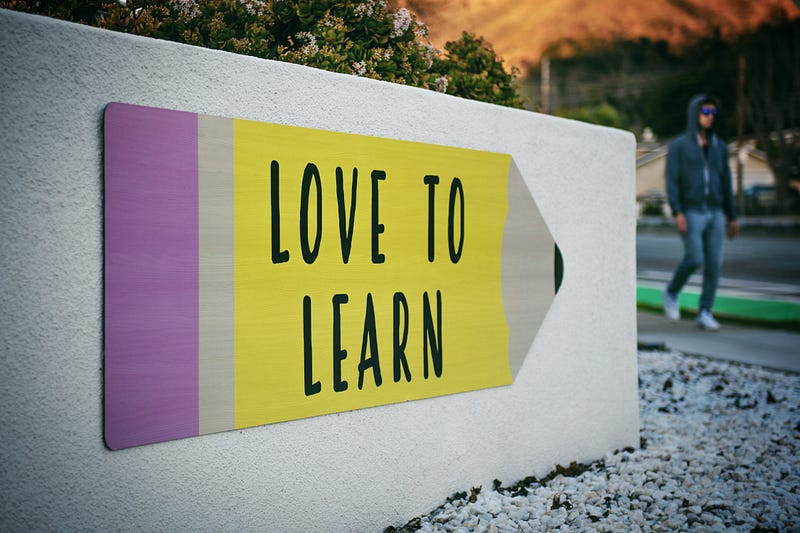
Something else I gained along the way as I looked things up was a love for learning that remains with me today. I love learning new things. To my mind, a day without learning something is a sad day.
I buy a lot of books, mostly 2nd hand. I love finding bargains at Goodwill and other thrift shops. My wife and I share a philosophy about buying books: if we learn one thing from the book, it was worth the price, especially if it is a $1.99 special from Goodwill.
Happy Reading, Writing, Researching, and Connecting, dear friends.


