
The Beauty in Disordered Language
How the “deficits” of autism render my son’s language poetic
Diego’s language is disordered. His grammar and vocabulary are relatively strong; understanding and application of conversational rules are atrocious.
Diego’s disordered language is largely the result of his autism and intellectual disability. When he was last tested (at age 18; he’s now 25), his standard language scores were all below average, except for the Information subtest of the WAIS-IV (Wechsler Adult Intelligence Scale).
This higher score wasn’t surprising. Diego surely has a great memory, especially for areas of supreme interest, which include movies, animals, nature, geography and birthdays.
Such “obsessions” are, after all, one of autism’s diagnostic criteria. The DSM-5 (Diagnostic and Statistical Manual of Mental Disorders) describes the criterion this way: “Highly restricted, fixated interests that are abnormal in intensity or focus (e.g, strong attachment to or preoccupation with unusual objects, excessively circumscribed or perseverative interest).”
While Diego scored average in the information subtest, his pragmatic language score in the TOPL (Test of Pragmatic Language) was particularly low (2nd percentile). This, too, is part of autism’s diagnostic criteria: “Persistent deficits in social communication and social interaction across multiple contexts.”
Deficits and scores notwithstanding, Diego’s language is evocative and complex. How can this be?
Diego’s special needs require accommodating and extra effort on his part and on ours. Diego’s deficits, however, are also part of his unique mind. Other components include his personality (animated, needy, affectionate) and heart (innocent and full of love for everyone).
Diego’s unique mind necessarily shapes his language. As a result, there is a special beauty and poetry to Diego’s language that reflect the unusual way in which he makes sense of his experience and expresses his feelings.
Here are just a few examples:
Diego loves movies, fairy tales, legends and myths. He’ll say, for example, “I’ll go to Eugenia’s [cousin’s] bedchamber,” not the bedroom. “I’ll get the cauldron for the pasta,” not a plain old pot.
When we talked about him going to a residential program, he said, “No matter where I go, you will always be my mother.” That one came straight out of Disney’s Tarzan.
When his dad asks him to do something, he’ll sometimes reply, with a mischievous look on his face, “Yes, your majesty.” He handed me an envelope the other day and said, “This is for the queen.”
Diego also uses lots of imagery associated with the animal and natural worlds he so loves. He has a simile or metaphor for everything.
A puddle on the pavement looks “like Lake Tanganyka.” Water going down the drain is akin to “a typhoon in the Philippines.”
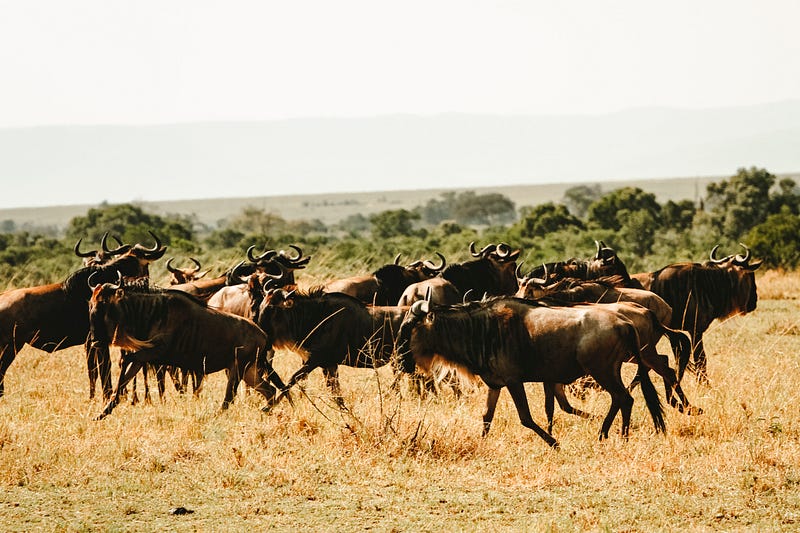
At the Turkey Trot, he runs like “an antelope” and finds himself “running in a stampede like a wildebeest.” When we’re approaching the race start line, “The herd is moving.”
Diego can also “swim faster than a manatee.”
When Diego walks around the house, he is “patrolling like a lion.” 🦁
After a meal, he says: “I’m going to put away the remains,” not the leftovers. For breakfast, he eats “krill like a whale,” not cereal. 🐋
When he had his wisdom teeth pulled out, he looked like a “puffer fish.” 🐡
When he takes a long nap, he’s “hibernating.”
At his favorite restaurant, Diego once decided to “change to pizza like leopard seals change to penguins in the summer.” Makes total sense! As you may know, leopard seals in Antarctica usually eat other seals, but switch to penguins in the summer when penguins go back to feed in the ocean. 🐧
He asks if I love him “like a mother blue whale.” 🐋
And this utterance that seared my heart since Diego has such a hard time not interrupting: “I didn’t interrupt. I walked away like a sad dog that is homeless.” 💔


