
TRAVEL MEMOIRS
Author George Orwell Was a British Policeman in Myanmar
His experience inspired his political satires ‘Animal Farm’ and ‘1984’
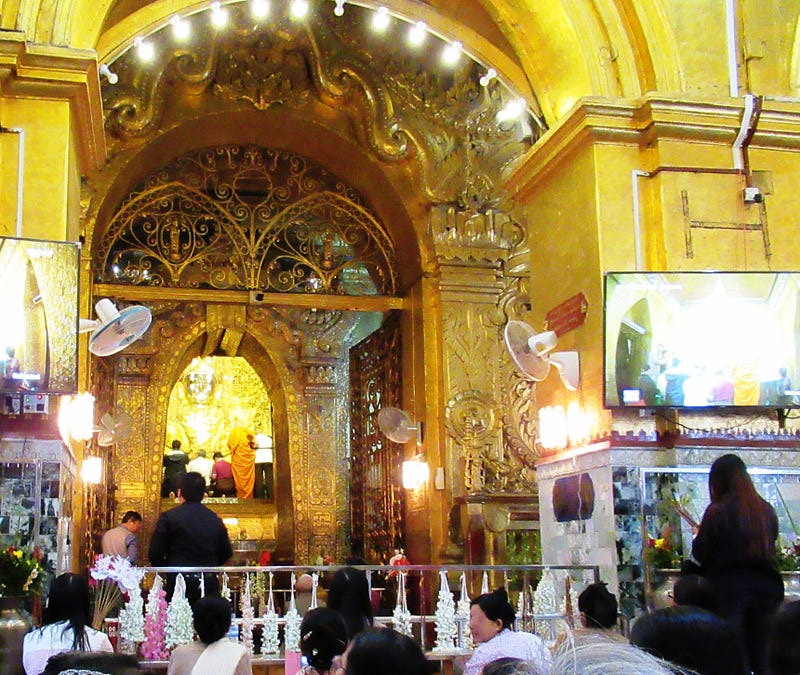
If you were to ask me to name one place I would visit again, it would be the country of Myanmar (Burma).
We’ve been all over Southeast Asia, exploring and getting to know the locals. Each country has something unique to offer. Some have ancient temples and ruins to explore, others have fantastic food, and different cultural practices.
Myanmar has all of these and more.
I didn’t travel much when I was young. Leaving home at 16 and fending for myself didn’t leave me much room to dream. I was too busy feeding myself and keeping a roof over my head.
When I turned 60, I decided it was time to break out of my routine and travel.
It was a dangerous time to travel to Myanmar. The country was open to tourists, but some scary reports were surfacing on social media.
The Rohingya people were being persecuted and forced to leave the country through the northern borders. The country had an elected leader, Aung San Suu Kyi, but her actions were controlled by both the military and the Buddhist monks.
Tourists were warned to avoid crossing any land borders due to ethnic clashes and violence. Even my mother begged me not to travel there.
Despite all of these concerns, I was determined to go.
The George Orwell connection intrigued me
George Orwell is the author of “Animal Farm” and “1984”. He came to Myanmar as a nineteen-year-old British Imperial policeman during the British occupation. His job was to patrol the countryside, keeping the locals in line.
When Myanmar became independent from the British in 1948, the military staged a coup and sealed the country from the outside world. This military action launched the ‘Burmese way to socialism’, turning the country into one of the poorest in Asia.
The story of Myanmar’s independence mirrors the story told in ‘Animal Farm’
“Animal Farm” is a tale about a socialist revolution gone wrong in which a group of pigs overthrow the human farmers and run the farm into ruin.
When you compare the situation in Myanmar, the military were the revolutionaries (pigs). They were the ones who imposed socialism on the people using propaganda and intimidation to control the other animals. They created a hierarchy of social classes and ultimately became corrupted by their power.
‘1984’
Orwell’s description of a soulless dystopia in “1984” provides a chilling and accurate picture of Myanmar. It’s a country ruled by one of the world’s most brutal and tenacious groups.
When I discovered the connection to these books, I knew I had to visit the country that inspired the stories.
We arrived in Mandalay in the pouring rain. As I sat in the small waiting room of the airport, I wondered what I’d gotten myself into.
Our first surprise was the taxi service. A couple of young men ushered us to the taxi and asked for a couple of US dollars for the service. It was an obvious scam, but we decided to pay instead of getting into an argument.
The young men refused to accept our US dollar bills. That’s when we discovered people wouldn’t accept US money that was creased or folded in any way. Only new bills or very new ones would be considered.
Their banks were closed to the outside world and most currencies weren’t accepted. International banking was still being developed, and most of the population couldn’t access a bank. Cash was best and US dollars were preferred. Myanmar’s currency is the Kyat ( chat).
In hindsight, I understand. When you can’t deposit or exchange old bills, you don’t want to be stuck with worn-out bits of paper.
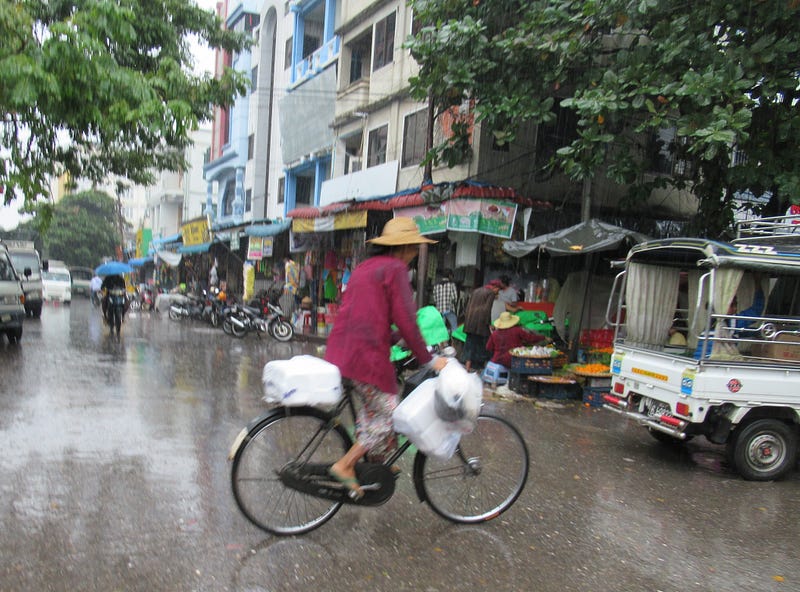
We spent the first few days exploring the local markets in the pouring rain.
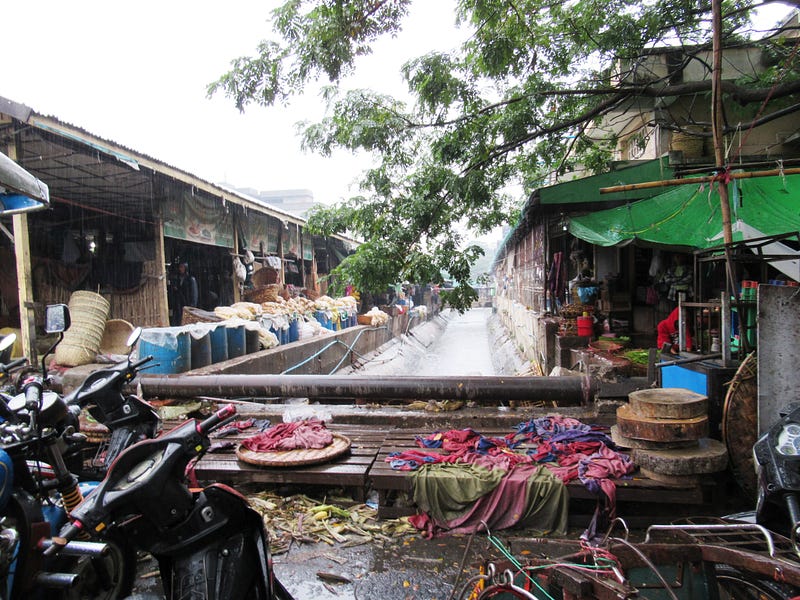
The vehicles were ancient and they were held together with wire and ingenuity.
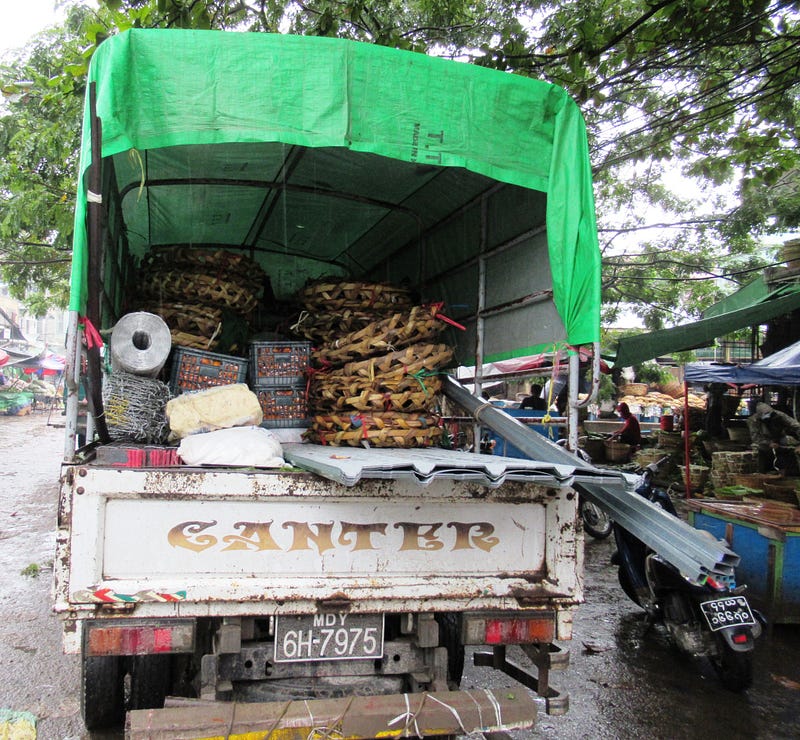
There were a lot of scooters and bicycles on the street. And a lot of military guys with guns. That’s not something I was used to seeing.
We were careful to avoid any conversations about the Rohingya people. The government refuses to give them citizenship as they’re Muslim, not Buddhist, which is the recognized religion.
There was one taxi driver who seemed interested in talking about them. He was curious to hear what outsiders might know about his country.
“Have you heard about the troubles in the north?” he asked, glancing around, checking for eavesdroppers. “Do Westerners know what is going on in our country?”
We smiled and changed the subject, asking him to take us to the historical site of the Mandalay Royal Palace (the grounds are now used as a military residence).
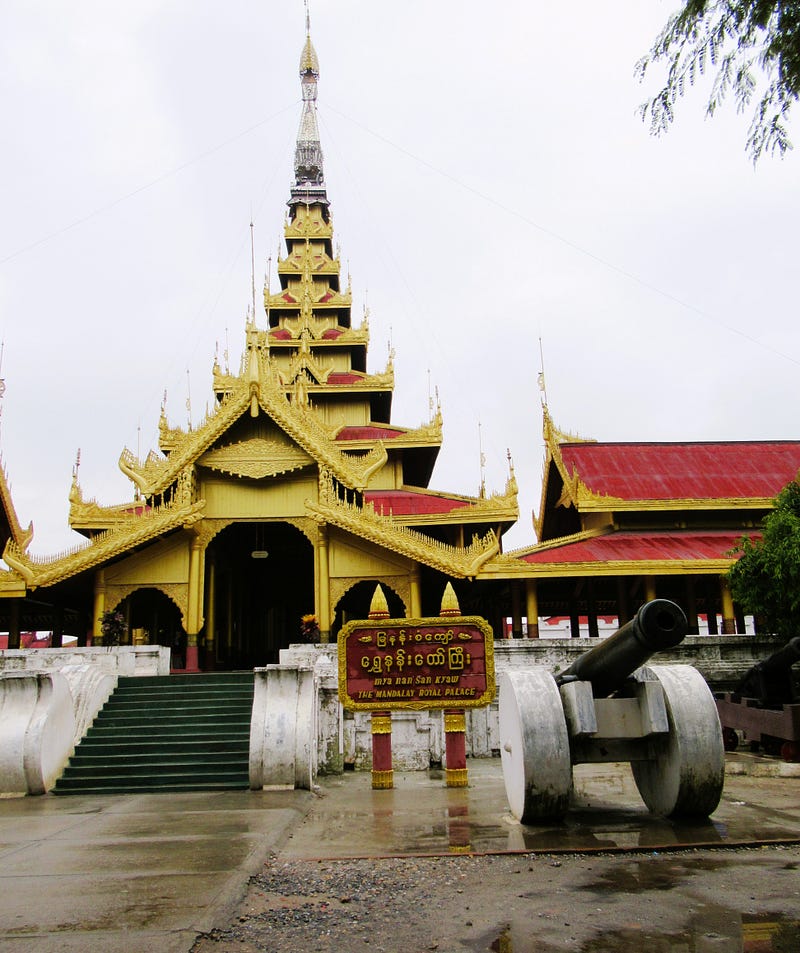
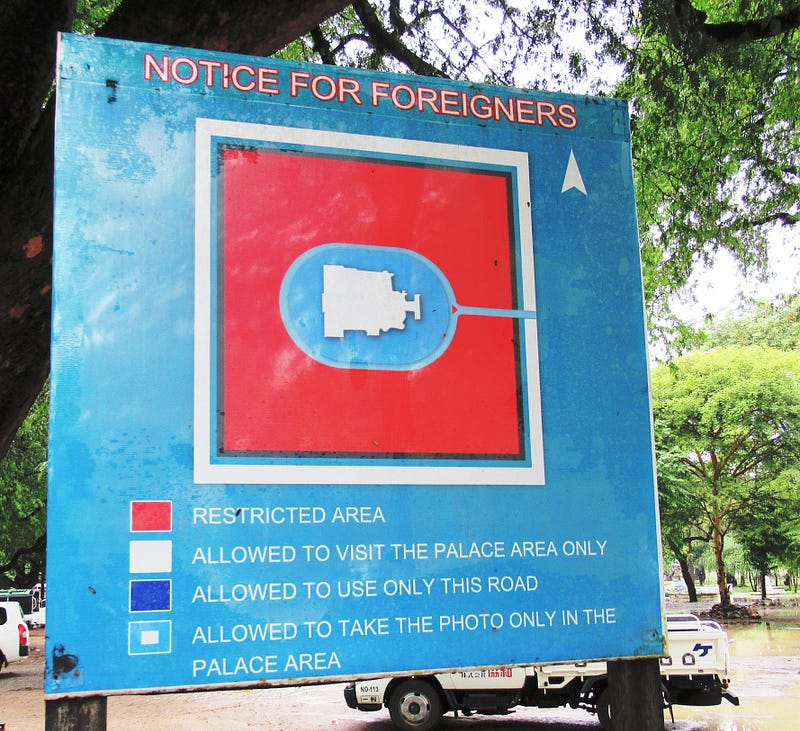
We arrived at the parking area and paid the driver. The first thing we noticed was a sign that restricted our movement to certain areas.
In “Animal Farm,” the pigs created a social hierarchy with a class system. Pigs and dogs were on top and the other animals were lower class. Eventually, the pigs restricted the movement of the animals, taking the farmhouse and the beds for themselves. The lower-class animals slept on the ground.
At the entrance to the Palace grounds, we saw another sign on the outer wall. This one was more of a propaganda notice.
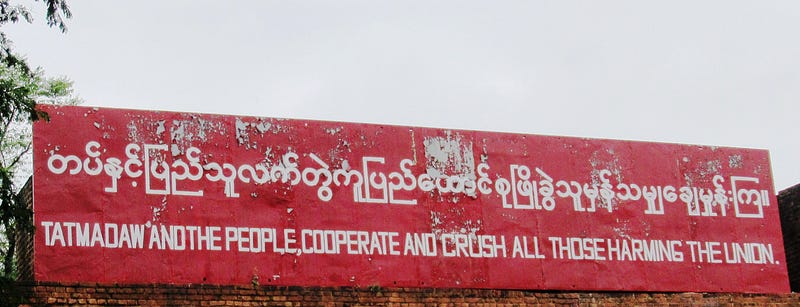
The Tatmadaw is the current military authority. They have huge powers in the country and global notoriety. “Cooperate and Crush” was a pretty strong statement. Now we could understand the taxi driver’s nervousness.
In “Animal Farm”, the pigs use slogans and sayings to inspire the population. They made the slogans short so they were easy to remember. The slogan “Four legs good, two legs bad” reminded the animals that they were superior to the farmer.
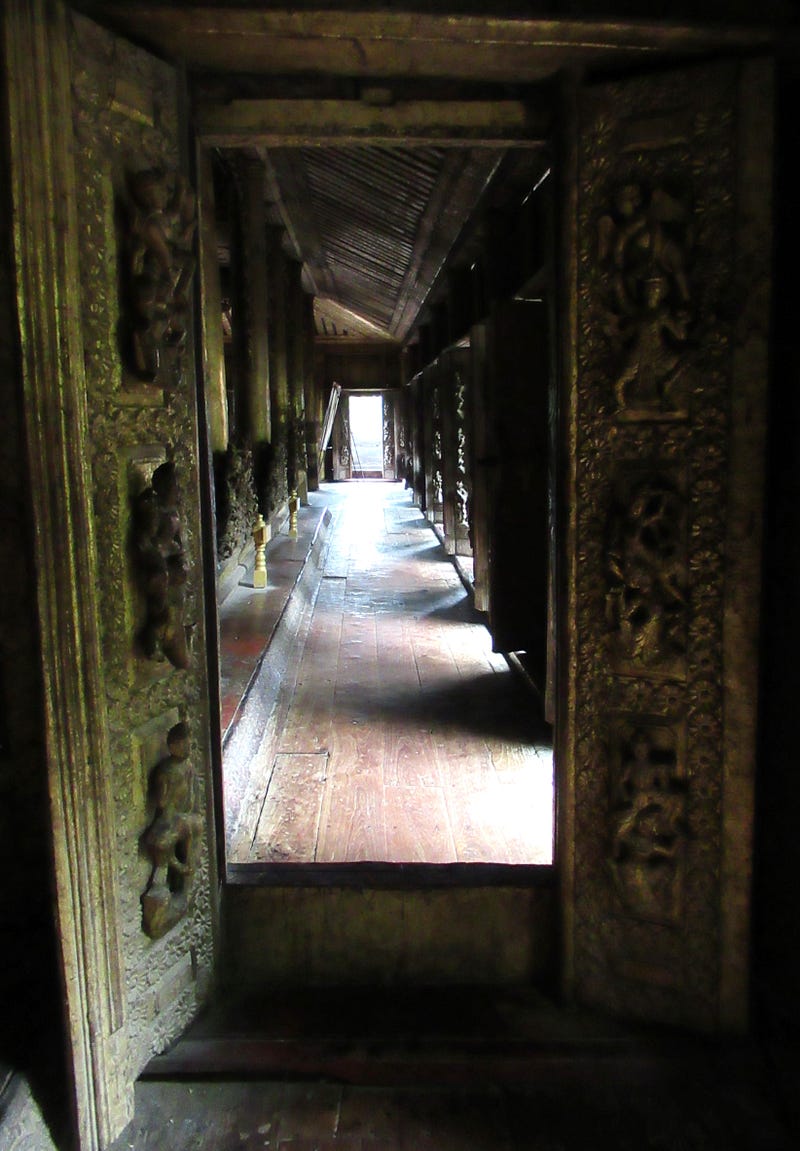
We continued exploring, taking in the ornate carvings on the walls, and the overall feeling of neglect of what was once a king’s palace. There was still a feeling of royalty, steeped inside the walls.
We found ourselves whispering out of respect for the spirits we could feel there.
Buddhism and the Military
Most people are Buddhist and the religion is closely intertwined in their daily lives. They are very traditional and observe religious rituals.
All young men and boys are expected to spend time as novice monks, living in a monastery, and learning more about the religion.
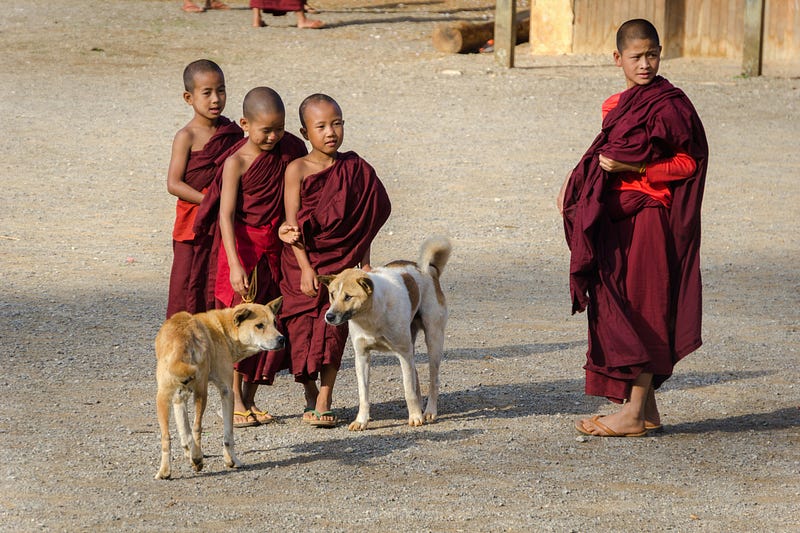
The military formed close alliances with high-ranking Buddhists in an attempt to win favor among the people. Some monks accept employment in the military, further blurring the lines between state and church. The military is using religion as a tool to control the population.
Individuals from other faiths are encouraged and sometimes forced to convert to Buddhism. That’s why the Rohingya and other ethnic groups are persecuted. They’re Muslim.
I was surprised to hear such negative reports about the behavior of Buddhist monks. My impression of their religion was one of tolerance and acceptance. Things aren’t what they present to the world.
Orwell’s book “1984” is a cautionary tale about what can happen if you let the government have total control. When the military controls the powerful Buddhist monks, it sets up a similar situation. Total control allows the military to manipulate the people into believing anything.
Drivers follow a dodge-and-beep system that everyone understands
Your position in the system depends on your size and driving experience in the country. The main rule is that the largest vehicle goes first. The second rule is that pedestrians have the lowest priority.
No one stops for sirens or red flashing lights. In the west, we pull over and let the emergency vehicle through. In Myanmar, an injured person is lucky if they can afford to hire an ambulance. And doubly lucky if it’s equipped.
We asked the taxi driver if it would be possible to go on an evening tour, to see the city sights at night.
“No night,” he said, shaking his head. “Not safe. Not allowed for me to drive at night.” He was worried they would see us and he would get into trouble.
I’d forgotten there was a strict curfew. It was another reminder of Orwell’s writing. In the book “1984”, total control included restrictions and surveillance systems.
Later that night I realized how naive my ideas about Myanmar had been.
I was sure I understood what it would be like on the ground. I believed my research would give me enough background to understand the culture.
Orwell’s writing allowed me to reframe some of the country’s history in a different context. But I wasn’t prepared for such clear connections between his books and real life.
Nothing prepared me for the reality of traveling in a country where the people had been oppressed in so many ways for so long.
I wondered how we as Westerners could study Orwell’s books in school without being told about their connection to his life in Myanmar. At the very least, it would have made the books more interesting and relevant. It would have prepared us for the possibility of the same thing happening at home.
And the events in the Western world now echo the same themes.
Power corrupts
The Buddhist monks and the Tatmadaw military control the money, the gold, and the country’s government. It’s complicated and I found it somewhat unexpected to see them working together.
Recently I was asked why the people in Myanmar didn’t revolt and save the Rohingya people from genocide.
I took a moment to consider the source. The question was asked from the privileged perspective of someone raised in a democratic society in the West.
Before I could answer, I realized we would need to understand what living in a society that inspired “Animal Farm” and “1984” would be like.
Imagine your perspective if you’d grown up in similar circumstances.
Sources: Brittanica, Orwell — “Animal Farm”, Monks
© Tree Langdon 2024. All Rights Reserved