
Australians have voted No to give Indigenous Australians a Say in their Future
What will this say about how kind we are?
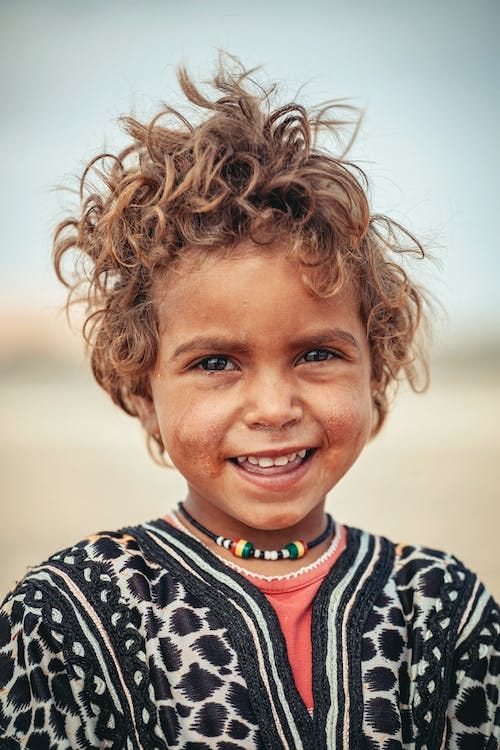
(This article contains images of First Nations People, past, present and future)
Aboriginal Australians make up only 3% of the Australian population. This contrasts, according to the 2021 Census, with 33% from England, 9.5% from Ireland, 8.6% from Scotland, 5.5% from China and 4.4% from Italy. There are still more nationalities, which number more than Indigenous Australians.
They arrived in what is now known as Australia more than 50,000 years ago and thus have long and deep relationships with this land.
After Australia was colonised from 1770 — the 1850s, their populations were rapidly absorbed into colonial populations and exterminated from their lands. In Tasmania, their entire population was almost driven to extinction.
They have experienced significant challenges since, including deaths from infectious diseases introduced by European settlers. These include smallpox (which killed over 50% of their entire population), influenza and tuberculosis.
Another challenge was when, after World War II, the forced removal of Aboriginal children from their families increased under government policies at that time. Between 1910 and 1970, it is estimated that more than 70,000 had been removed. The policies advocated a “better life” for these children, with non-Aboriginal families in urban areas, rather than in their rural communities.
In contrast with the non-Indigenous population, Aboriginals have had poor economic opportunities, with huge differences in health, life expectancy, and infant mortality rates. Alcoholism and domestic violence in the Indigenous population is also higher.
Progress in Recognising Indigenous Peoples
There has been progress made in the recognition of Aboriginal Australians, their rights and their culture:
- In 1962, all Aboriginals were given the right to vote in federal Australian elections, with the States following in 1962–1965.
- In 1967, a referendum (a vote by the Australian people) was held, allowing Indigenous Australians to be included in the federal parliament’s power to make laws for certain races, and to include them in electorates. This was passed with a majority of 90% in favour of it.
- In 1992, the Australian High Court handed down its decision to recognise the pre-colonial land interests of Aboriginal people within Australian common law, thereby giving them land rights (termed Native Title).
- In 2008, Prime Minister Kevin Rudd made a formal apology to Aboriginal people taken from their families under previous policies. Those taken are called The Stolen Generation.
The Statement From the Heart
This is a statement, shared in 2017, from a group of representatives of Aboriginal communities to non-Indigenous Australians to advocate for their rights. It is the result of decades of research and calls for reform to policies concerning their lives.
Its key points are:
- A Voice to Parliament (an advisory body comprising elected Aboriginal community representatives), to be included in Australia’s constitution (so it cannot be removed). This would give advice to Parliament and the Government to raise awareness about issues affecting their lives.
- A treaty, to acknowledge the culture and rights of Indigenous people, and recognise their sovereignty over land in Australia.
- The Truth, a process to expose the injustices that Aboriginal people were subjected to post-colonisation, leading to a shared understanding of Australian colonial history.
In March this year, the Australian government announced that a referendum would be held, asking Australians if they would vote yes or no to recognise the rights of Indigenous peoples by setting up The Voice.
As with all elections and referendums, there are campaigns involved, with a LOT of information in the media and social media.
Australians have voted overwhelmingly “no” to the setting up of a Voice to Parliament, with approximately 60% against it and 40% for it.
Their reasons are those spearheaded by the No campaign:
- It would have created “more bureaucracy” within the Australian government, and that it would not listen to the needs of remote Aboriginal communities. Actually, if it had been approved, it would have included elected representatives of these communities.
- It would have led to legal challenges if its advice was not implemented by the Parliament. This has been challenged by many legal experts.
- It would have led to the abolition of Australia Day (our national holiday celebrating the founding of our nation) and the Australian flag as well as, giving compensation to Indigenous Australians for injustices committed against them in the past. As it would have been an advisory body only, these changes would have to have been approved by both the government and opposition in both houses of Parliament before being put into law.
- It would have been divisive, as it would have given one race within Australia an advisory body within its Parliament, leaving other races, such as the Chinese, Vietnamese, and those from England, with no representation — it would go against Australia giving all its races equal recognition. The No campaign did not state that not one of these races has had a history in this great land going back over 50,000 years and a long link to it, including sacred sites.
The Yes Vote
The “Yes” campaign had a smaller message:
- If it had been successful, it would have been permanent — no future government could remove it.
- As it would have been comprised of elected representatives of their communities, it would advise on the issues affecting them, such as health, education, and employment.
- It would be a direct link to the Australian Parliament for these communities.
Now that it has been defeated, what does the “No” campaign have as an alternative?
He stated that, if elected at the next federal election, his shadow (opposition) minister for Indigenous affairs, Jacinta Nampijinpa Price, would create a better outcome for the Aboriginal people.
He has not detailed how she would achieve this.
I have voted ‘YES” and so has my wife, to no avail, and I am sad about how the “No” campaign has succeeded in influencing so many Australians.
To me, our Prime Minister Anthony Albanese showed great courage in bringing this proposal to the fore, and has copped much criticism for its outcome.
He has now pledged to improve the lives of Indigenous Australians by focusing on policies to improve their health, education, and employment opportunities.
It stumps me that there are so many advisory bodies to the Australian Parliament, and the inclusion of one more can cause so much unfounded misinformation, which in the end, prevents our First Nations People (Aboriginals) from having a direct say in their future.
What do you think, world, and how does this outcome make us look?
If you enjoyed reading this, gain access to more amazing stories by becoming a Medium Member via this link. As a member, part of your $5.00 per month membership fee goes to supporting the amazing writers whose stories you read.


