
FICTION
Aunt Laney’s Bus Ride — Part 2 of 2
Choices we wish we had made

TO ENJOY THE BUSRIDE FROM THE BEGINNING, CLICK BELOW:
While sharing a seat during a long bus ride across the Sunshine State, Laney and her new friend Karen had discovered a certain kinship with one another. They had struck up an easy conversation that lasted all afternoon and continued long after the sun had fallen beneath the flat horizon.
They spoke of trivial things like the weather and personal things, politics, even religion. Despite the substantial difference in their ages and their nearly opposite physical appearances — Karen’s colorful, smooth, vibrancy versus Laney’s gray, wrinkled, stiffness — the two seemed to be instinctively compatible. They communicated with the ease and economy of old friends, even though they had only just met. By the time the bus stopped in Jacksonville they were, in fact, best friends.
They shared a table in the all-night diner at the bus stop. Laney ordered a slice of cherry pie, a la mode, and a cup of coffee. Karen just had coffee.
“You should eat something,” Laney said with a sly smile. “Keep up your strength for the wedding night.”
Karen giggled at the implication and said, “No. I couldn’t eat a thing. My stomach’s a little upset, I’m afraid.”
“Oh, I’m sorry,” said Laney. “It must be all the bumping around on that darn bus all day. I don’t think they put any springs at all in those things. This morning, the driver ran over a penny at the rest stop and I swear I could tell the date on it!”
The two laughed out loud. They were still giggling like school girls at a slumber party when the waitress brought their coffee and silverware. “Your pie will be right out, ma’am,” she said to Laney.
When the waitress had walked out of earshot, Karen leaned forward and lowered her voice a notch. “It’s not the bus ride, Elena,” she said. “I’m pregnant.”
“Oh, my,” Laney exclaimed, a little shocked at the girl’s bluntness. Even in the modern ’50s, proper ladies were more likely to use phrases like “with child” or “expecting” to describe that particular condition. Laney sat for a second with her hand flattened against her chest and her mouth slightly ajar.
Karen took the opportunity to tease Laney a little. “Why Elena,” she said, “you’re blushing. Did I embarrass you?”
“Of course not,” Laney recovered, “you just surprised me, that’s all. How exciting! You’re not showing at all. Have you been to see a doctor yet? How far along are you?”
“At least two months, maybe more,” said Karen. “I haven’t gone to a doctor, but I know I’m right. I can just feel it, you know?”
Laney nodded and said, “No wonder you are so anxious to see your lieutenant again. The two of you must be very proud.”
“Well,” Karen hesitated briefly, “I haven’t really, well, actually told Joey about the baby yet.”
“Oh. I see,” said Laney. “It is… I mean, it must be…”
“It’s definitely Joey’s baby alright if that’s what you mean. It’s just that this is going to cause a hell of a stir. Both our families are going to practically disown us when they find out. My parents don’t really approve of Joey as it is.” Karen’s face had lost all humor by now.
“Nonsense,” Laney assured her, “your families will support you all the way. And even if they don’t, you can’t live your life according to what your mother wants, now can you?”
“It’s not just the families, either. Joey has another eighteen months to go on his enlistment. He can’t support a wife and a baby on his Navy pay.” Karen was close to tears. “I’m really afraid of losing him, Elena. I’ll never care about anyone the way I care about Joey. And he loves me too; I know he does. But what if he gets scared and runs away? What if he says, ‘Whoa, I don’t want any part of this.’? Losing Joey would hurt worse than, well, almost anything.” Her lips quivered visibly and she could no longer hold back. She used the corner of her paper napkin to dab at the outside corners of both eyes, but it was too late to prevent several wet tracks from forming on her pale, smooth cheeks. “I wish I knew what to do,” she whispered.
Laney reached across the table and placed her hand on Karen’s as the waitress returned with the pie and ice cream on a saucer and then left again. She wanted to reassure the girl, but she knew there was little she could say that would accomplish that. It was going to be a difficult time for her and her young man. “It will all work itself out,” she offered as a summary of years of collected wisdom. It sounded like a platitude to both of them, of course.
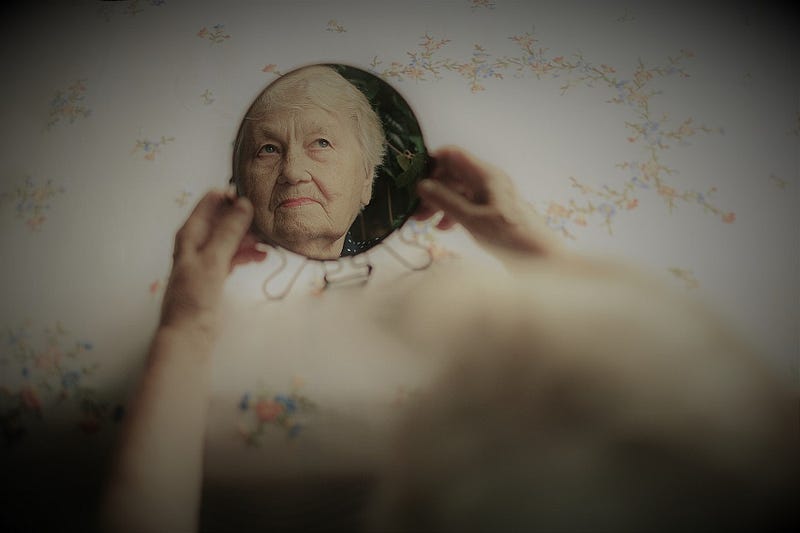
Karen slowly regained her composure. She fetched a small mirror from her purse and used the napkin, a powder puff, and lipstick to repair the slight water damage. “My girlfriend Carol knows about a place,” she said, “a clinic down in Fort Lauderdale. Reba Clark had to go there the summer before our senior year in high school. It doesn’t cost a lot, she says. Carol doesn’t think I should risk losing Joey over one little mistake.”
Laney didn’t immediately understand what Karen was suggesting. When she did, she was once again mildly shocked, although this time she was determined not to show it. “Listen to me, Karen,” she said. “No one can tell you what you should or shouldn’t do. You’re the only person in the world who can make this decision. But you can’t make it based just on today’s wants and needs and pressures. Never make your choices based on what is easiest, safest, or most convenient right now; now is such a tiny part of a person’s existence. If there is one thing I’ve learned in my many years it’s that some decisions can change your entire life, for better or for worse. And believe me, dear, you cannot conceive how much of your life is still ahead of you. You literally do not have the ability to imagine how many long years of happiness or misery, blissful companionship, or bitter loneliness lie in your future.
“But you have to try,” Laney continued. “You must try to imagine what it will be like when you are my age or older. When your parents are gone and their influence and support, long gone. When the shock and embarrassment and disapproval are just dim, impotent memories — when you and Joey have had your time together, however long or short that may be. Try to imagine what your life will be then and ask yourself, ‘what choices will I wish I had made?’”
Laney still held Karen’s hand and still looked directly at her as she spoke. Her eyes, however, were focused, not on Karen’s young face, but something far away in her own past. “What choices I wish I had made…” she whispered.
The waitress returned once again. She paused to scribble a few final notations, replaced her pencil behind her right ear, and then put the check, face down, beside Laney’s untouched dessert. “Pie a la mode and one coffee,” she said. “Will there be anything else, Ma’am?”
This brought Laney back from her reverie. She looked at the half-melted ice cream, now blending unappetizingly with cherry juices and soggy crust. “No, thank you,” she said. “I guess I wasn’t as hungry as I thought.”
The waitress started to hurry away again but paused at the last moment, turned to Laney, and said, “Are you all right Ma’am? Is there anything I can…do for you?”
“No, thanks,” Laney repeated. “That will be all.” She began opening her wallet, without removing it from the big black purse.
The waitress still seemed unsatisfied with Laney’s answer. She sat down in the chair opposite Laney and lowered her voice. “Isn’t there anybody I can call for you?” she asked. “A friend or relative or something?”
Laney’s face briefly lost all expression. Then she smiled and continued fumbling in her purse. “That won’t be necessary,” she said with a tight smile. “I am traveling with a friend tonight — a very nice young lady. She should be returning from the lady’s room any moment now.”
Grandma, rest her soul, lived to be eighty-three years old. Aunt Laney stayed with her all those years, caring for her, cooking for her, earning a living. I am certain she thought from time to time about meeting someone, a man, and settling down in a conventional marriage, raising a family of her own. But after so many years, as with most of us, Laney’s days came to be ruled more by habit than by conscious will. After the funeral, at the age of fifty-eight, Laney went home to an empty apartment and a solitary future.
In the years before Grandma passed, I hadn’t seen much of Aunt Laney; my own family and responsibilities kept me occupied and busy. I have seen her a few times, though, and each time she seemed to have lost more and more of the girlish quality I remember so vividly. It wasn’t just growing old or her situation that robbed Laney of these qualities, I think. Laney’s relationships with all her siblings, including my mother, deteriorated slowly as she came to resent, more and more, having all the responsibility of caring for their mother. In return, the rest of the family developed a certain bitterness, the kind born of unspoken guilt I believe, toward Aunt Laney.
Call me Elena
They had to change buses in Jacksonville for the trip across the haunch of the Florida dogleg. Laney and Karen boarded just as the last suitcases were being tossed unceremoniously into the baggage compartment. The two women found seats together and settled in for the night.
Neither of them slept at all, even for a minute. Instead, they talked constantly, about anything and everything. Laney was intensely interested in Karen’s life. What were her hobbies? What did she like to read? What were her friends like? Did she have many boyfriends before Joey? What kind of car did she drive? What kind of music did she like?
No subject was off-limits or taboo. Laney asked questions as they occurred to her, without hesitating, and Karen answered them without inhibition, often going into long, detailed accounts. They moved from the mundane to the philosophical, from the concrete to the esoteric with infinite ease.
Nor was their conversation limited by the temporal and causal constraints of the conventional physical world. Karen, remarkably, was able to move backward and forward in time in the wink of an eye. Now she was a young mother enduring the emotional ambiguity of dropping off her son for the first day of kindergarten. Now a thirty-six-year-old college student suffering through Composition and Rhetoric I. Now a teenager on her first date. Karen spoke about these things, not from distant memory or imagination, but from recent experience. Laney, for her part, listened with keen interest, asked questions frequently, and occasionally offered advice.
At one point, long after midnight, a man sitting in the seat in front of them became annoyed at the incessant talking. He turned around and addressed Laney directly, saying, “Look lady, we’re trying to get some sleep up here. Why don’t you give it a rest for a while, huh?”
But they continued whispering, continued exploring the things that were most important to both of them. Karen had just given birth to an eight-pound baby boy, and Laney wanted to know everything about it. What was it like? How did it feel?
“They say it’s like passing a watermelon,” said Karen, “but I don’t think so. Oh, it hurt all right. That’s for sure. But it wasn’t just an object, you know? It was a part of me. And even the pain wasn’t your normal kind of pain, like breaking your arm or burning your hand on the stove. It was a pain deep inside me, too intense to be just physical. It was like a piece of my soul was being torn away so that I could share it with my baby. And when the pain was over, that thing that had been a part of me for so long wasn’t just a thing anymore. It was a person. A person with his own separate identity, his own separate little body, his own soul.”
“Did you love him?” asked Laney. “I mean did you love him right away, or did it take some time?”
“It was like meeting a total stranger, Elena,” Karen patiently explained, “but I knew everything about him the first time we met. We knew each other, and we loved each other as deeply as people can love from the very first second of his life.”
When my aunt arrived in Pensacola at 6:30 in the morning, I was waiting at the old bus station on Palafox Street. I spotted her gray hair and green dress immediately through the window of the bus. She looked happy, and she was talking to someone in the seat next to her, smiling and nodding her head in conversation. I waited for most of the other passengers to step off before boarding through the folding doors to help Laney off the bus.
As I stepped up beside the driver, who remained in his seat making check marks on a printed form of some sort, I could clearly see and hear my aunt. She was sitting several seats behind the driver on the opposite side of the bus, and she was still talking animatedly to the person sitting next to her. I could also clearly see there was no one sitting next to my Aunt Laney.
“She’s been doin’ that all night,” said the bus driver, “talkin’ to herself like that. Several of the other passengers complained about her, but my job is to drive this rig, not babysit the riders. She belong to you?”
Laney still hadn’t noticed me, and I wasn’t quite sure what to expect when she did. “Yeah,” I said, “she’s my aunt. Come to visit for a few days. I’m sorry if she’s been any trouble.” The driver just shrugged and went back to scribbling on his clipboard.
I never got the courage to walk back toward Aunt Laney and interrupt her solitary discussion. She finally noticed me standing there after several minutes. Her recognition of me seemed to transform her face; her smile was full of energy and purpose. She got up from her seat, practically ran down the aisle of the bus, and then hugged me with surprising strength, nearly lifting me off the floor, while repeating how nice it was to see her young nephew again.
Before I could completely regain my composure, Laney led the way down the steps and into the bus station. She walked with me, arm in arm, with her head resting on my shoulder, taking long, springy steps, each foot crossing in front of the other as she strode.
“It’s really great to see you again, Aunt Laney,” I told her on the way to the car.
“Oh, it is wonderful to be here,” she said. “But please, call me Elena.”
Jim Dutton © 2021


