
Attila the Hun’s Death: Investigating an Ancient Mystery
Can history and forensics join hands to solve the puzzling death of one of history’s great conquerors?
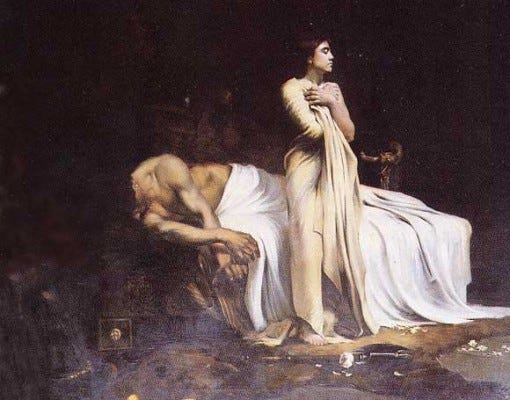
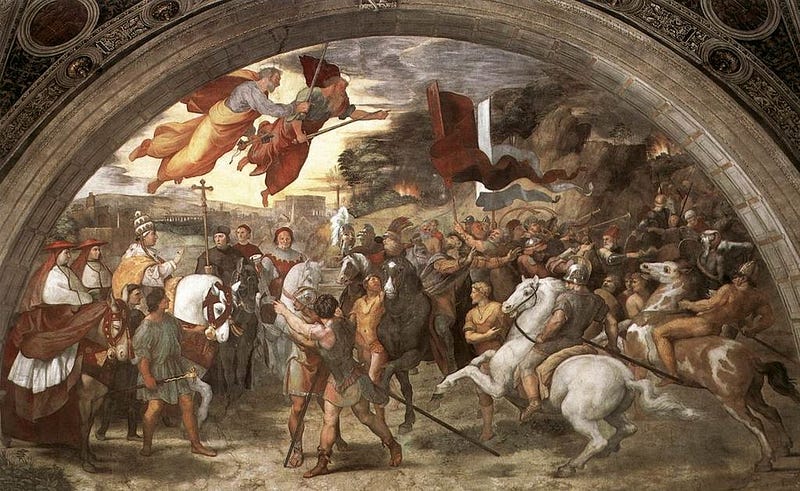
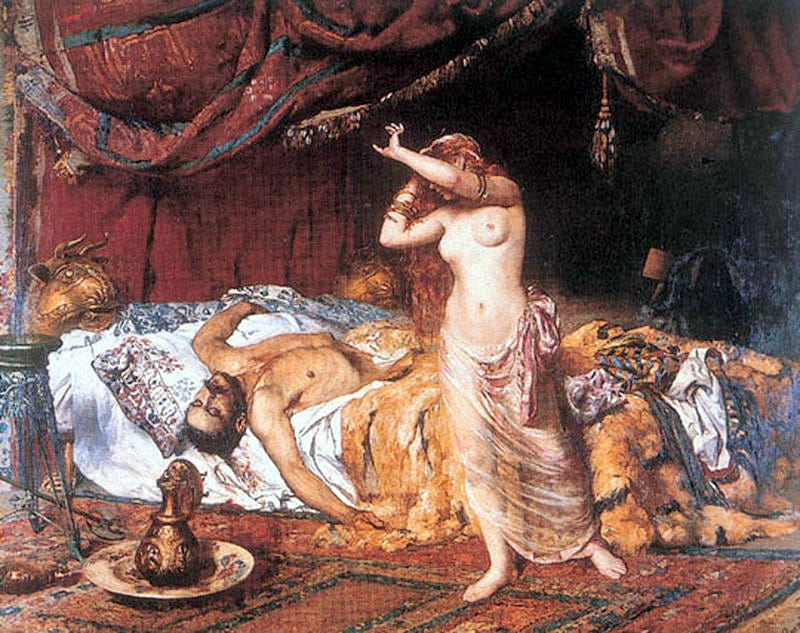
The year was 453. Attila the Hun, Europe’s most powerful man, had ravaged Italy. After promising the Pope that he would pull his troops back, he was enjoying his wedding with his new wife.
Her name was Ildico.
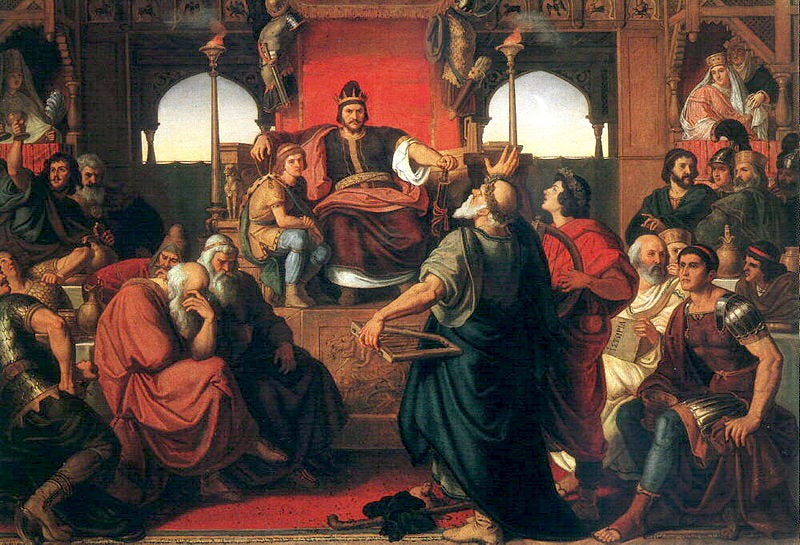
Attila prepared a sumptuous banquet. Everyone ate, drank, and enjoyed themselves. After the party, Attila and his wife went to their room.
The next morning, the world’s most feared man was dead.
His bodyguards found him bleeding from the nose.
Attila, who had brought Rome to its knees and set off a chain of events that eventually led to the fall of the Roman empire, was gone.
Was there foul play involved? Or was his death because of an accident? Could he have died from natural causes?
Attila the Hun’s death has long been a subject of debate among historians and forensic experts and is one of the greatest unsolved mysteries of the ancient world.
Some of you may have read a story on the death of Attila the Hun I wrote earlier this year. Though the story had a comprehensive historical analysis of Attila’s death, there were some unanswered questions.
Shoutout to Inge E. Knudsen, a fellow writer in this publication and one of my regular readers for raising relevant questions about Attila’s nosebleed as recorded in a source.
I didn’t have sufficient answers then. However, upon further investigation, I’m in a better position to discuss the possible medical reasons associated with Attila’s death.
Attila’s puzzling demise merits a re-visit.
I joined hands with Dr. David Miano, Professor of Ancient History at the State College of Florida, to solve the mysterious death of Attila the Hun for his YouTube channel The World of Antiquity.
You can find the video at the end of the story.
Let’s begin with an analysis of the historical sources about the Hunnic warrior’s strange death.
What do the historical sources tell us about Attila’s sudden demise?
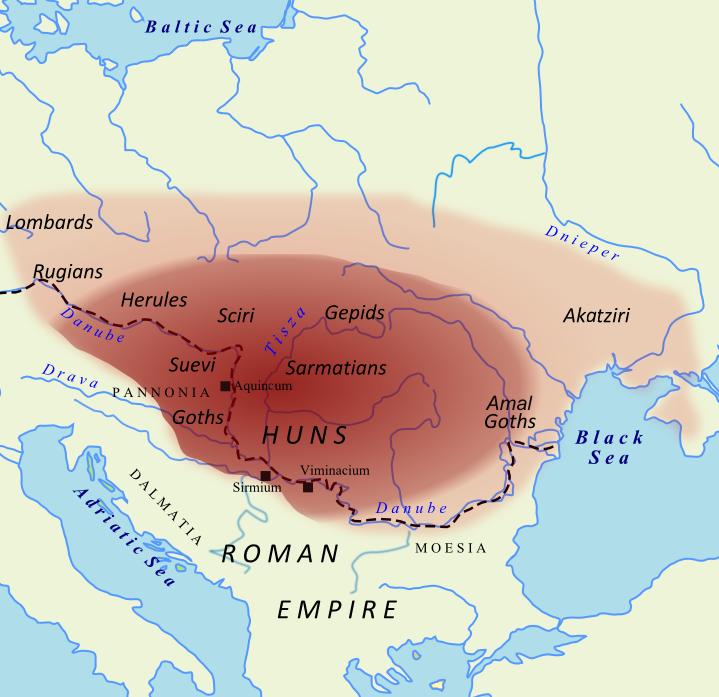
The Huns were one of ancient Rome’s most formidable adversaries. According to historical records, they appeared out of nowhere in the Hungarian plains and destroyed the region. The Huns, led by Atilla, forged one of the world’s largest empires in the fifth century.
The Hunnic Empire’s glory was brief, and it collapsed soon after Atilla’s death. Hence Attila’s mysterious demise has received attention from scholars, as it was a major turning point in history.
Let us begin with the last person to see him alive, his new wife Ildico.
Marcellinus Comes, a 5th-century Roman chronicler writes:
Attila, King of the Huns and ravager of the provinces of Europe, was pierced by the hand and blade of his wife.
What was Ildico’s motive in killing a man of Attila’s stature, knowing it would result in certain execution? Marcellinus is our only ancient source who says Attila was killed by his wife. He’s also the only one who talks about a murder weapon.
The name Ildico suggests that she was most likely of Ostrogothic origin. A popular theory among some scholars is that she murdered Attila because her village was destroyed by the Huns and her family died during the raid.
The wedding night presented her with a perfect opportunity for revenge as she stuck a dagger into Attila’s chest.
Case closed right?
Not so fast!
There are some problems with Marcellinius’ narrative. He wrote about the events surrounding Attila’s death 80 years later in Constantinople, far away from where Attila died. He wasn’t present at Attila’s wedding, nor did he mention the sources from which he got the information.
We have other accounts, which we’ll discuss, that don’t talk about a “blade” being used as a murder weapon. Rather they say Attila was bleeding from his nose. Marcellinius also gets the year of Attila’s death wrong.
A similar tale was also spun around Genghis Khan’s death who was born seven hundred years after Attila.
Author John Man, an expert in Steppe empires, believes such stories were told by their people( the Huns and Mongols) because they saw Attila and Genghis as larger-than-life figures who couldn’t have died from natural causes. The death of a great leader has to be an extraordinary event. How could men who defeated mighty empires die like mere mortals?
Though there are flaws with Marcelinius’ theory, we can’t rule out foul play or Ildico’s involvement.
Attila survived an assassination attempt in 449. While the exact culprits were never caught, Onegesius, a Hunnic minister close to Attila, was believed to be involved in the plot.
Onegesius and his brother Skottas, along with the Hun ambassador to the Byzantine court, Edko were part of a larger plot to get rid of Attila. Priscus mentions that Onegesius wanted better trading relations with the Romans. The plot suggests the conspirators had to gain both in terms of money and power.
Who else could have wanted him dead?
There are two other suspects.
Attila and his brother Bleda co-ruled the Huns for 11 years until Bleda was assassinated in 445. According to ancient texts, Bleda attacked Attila first, and in his defense, Attila murdered him during a hunting trip. So the Huns have a history of assassination.
Perhaps some of Bleda’s disgruntled supporters decided that the wedding was the perfect opportunity to kill Attila and take their revenge.
Our next suspect is the Roman emperor Marcian( reign 450–457).
Marcian, the Eastern Roman emperor, had reasons for despising Attila. He was paying huge sums of money to the Hun warrior to prevent an attack on Constantinople. This was emptying the Roman coffers.
Could he have sponsored a hit on Attila?
One scholar suggests Ildico was part of a larger plot hatched by Marcian. Attila was poisoned by his new bride, with the help of Edko.
Both suspects had their reasons for murdering Attila.
Before concluding, we need to consider another possibility.
Jordannes, a 6th-century Byzantine scholar, in his book Getica (The Origins and Deeds of the Goths) says:
Shortly before he died, as the historian Priscus relates, he took in marriage a very beautiful girl named Ildico, after countless other wives, as was the custom of his race. He had given himself up to excessive joy at his wedding, and as he lay on his back, heavy with wine and sleep, a rush of superfluous blood, which would ordinarily have flowed from his nose, streamed in deadly course down his throat and killed him, since it was hindered in the usual passages. Thus did drunkenness put a disgraceful end to a king renowned in war.
Jordannes’ account is more reliable than Marcellinius’ because cites the primary source, the historian Priscus, who was a Roman envoy to the Hun court and knew Attila well. Priscus’ original writings have not survived, but historians believe Jordannes had access to them and copied them down.
In this version of events, there was no wound or murder weapon. Attila’s end sounds less poetic in which a great warrior overindulged and passed away.
Could Attila have died after drinking too much and overdosing on alcohol?
Possible.
However, there is a major problem with Priscus’ descriptions. Priscus was not present at Attila’s wedding. He was in North Africa at the time. He must have heard about Attila’s death through his contacts in the Hunnic court.
The Church used Attila’s tragic ending as propaganda, holding him up as a symbol of evil and gluttony. The heathen emperor drank himself to death, and Constantinople was saved by God. It was the perfect story to tell people what would happen to even the most powerful pagan ruler if he challenged the will of God.
Was Priscus under pressure to produce a sanitized and church-friendly version of the Hun emperor’s death? We don’t know for sure. But, like with any ancient source, we must exercise reasonable skepticism.
Another issue with Priscus’ story is that in his earlier writings, Priscus says Attila was not a big drinker. He describes Attila’s conduct as measured. Did Attila suddenly start overindulging in alcohol?
We have two competing theories:
- Attila was murdered
- Attila drank himself to death.
We have analyzed the historical possibilities behind Attila’s death.
Let’s see what forensic experts have to say about it.
What do forensics tell us about Attila’s final hours?
Leading forensic pathologist Dr. Stuart Hamilton believes that if Attila had been poisoned, Priscus’s account of localized bleeding from the nose is less likely.
We would observe generalized bleeding from all over the body.
What if Attila drank too much and suffered a stroke?
A stroke or a heart attack doesn’t cause external bleeding. An internal hemorrhage would result in blood coming out from one’s mouth. Priscus talks about a nosebleed but doesn’t say anything about blood coming out from Attila’s mouth.
There is a possibility that Attila choked on his own vomit from overdrinking, but there is no mention of any vomit. In fact, the bleeding is what caught the attention of the guards.
Jordannes writes:
On the following day, when a great part of the morning was spent, the royal attendants suspected some ill and, after a great uproar, broke in the doors. There they found the death of Attila accomplished by an effusion of blood, without any wound, and the girl with downcast face weeping beneath her veil.
From Priscus’ description, the blood flowing out of his nose ran into his airways choking him. Where could this blood have come from?
Could the blood have flown from his lungs to his airways choking Attila? Lungs don’t suddenly bleed without an external force. A disease like tuberculosis could have caused a slow flow of blood. If Attila was suffering from TB, then he would be coughing blood regularly, and the event would be a slow, painful death rather than a sudden end as described by Priscus.
Another theory is that he was suffering from a peptic ulcer due to the stress from his campaigns. He could have developed an ulcer for a long time and may not have known about it. Ulcers are not always painful and can develop silently without any major symptoms.
After a night of heavy partying, the ulcer ruptured causing him to vomit. He couldn’t respond because of the exhaustion from partying and died.
A more convincing theory proposed by some forensic scientists is that Attila’s drinking habits could have resulted in a complication called portal hypertension, associated with liver cirrhosis. Those who suffer from portal hypertension have elevated pressure in the portal veins. Portal veins are responsible for draining blood from our stomach, intestines, spleen, and pancreas and sending it to the liver for filtration.
Priscus in his first diplomatic encounter with Attila mentions the Huns preferred to import Roman wine. Historians and scientists suspect Huns had a culture of heavy drinking, Attila could have developed liver cirrhosis and portal hypertension after twenty years of campaigning and regular drinking.
Portal hypertension causes swollen, weakened veins throughout the body, which can burst without warning.
Let’s recreate the scenario:
Attila after a successful campaign takes a new wife. Throws a lavish banquet, enjoys a few drinks, and gets intimate with his bride. He’s above 50, suffering from portal hypertension, and exerts himself too much. One of his blood vessels bursts, and the blood runs straight into his lungs. Under normal circumstances, he could have spat out the blood and survived. But because he was lying on his back, he choked on his own blood.
This is a believable story assuming Priscus’ account is accurate. But then why does the death of Attila remain a mystery?
One of the reasons is his tomb has never been found.
Hurried burial and a secret grave?
Jordannes describes Attila’s internment as:
Then in the secrecy of night, they buried his body in the earth. They bound his coffins, the first with gold, the second with silver, and the third with the strength of iron, showing by such means that these three things suited the mightiest of kings; iron because he subdued the nations, gold and silver because he received the honors of both empires. They also added the arms of foemen won in the fight, trappings of rare worth, sparkling with various gems, and ornaments of all sorts whereby princely state is maintained. And that so great riches might be kept from human curiosity, they slew those appointed to the work — a dreadful pay for their labor; and thus sudden death was the lot of those who buried him as well as of him who was buried
Scholars who prefer the “Attila was murdered” theory point out that his body being buried in the dead of night in a secret location suggests foul play was involved. But the hypothesis is more like a contemporary homicide scene from a CSI episode.
The people of the Eurasian Steppes had a long-standing custom of concealing the whereabouts of their leaders’ graves. Genghis Khan was also buried in a secret place, and those who buried him were executed by the Mongols.
Attila’s internment was not unusual, and a continuation of burial customs that could be traced back to the 3rd century BC Xiongnu empire, the first major unified empire to rise from the Eurasian Steppes.
Attila’s funeral was lavish, with the Hun’s coffin wrapped in gold, silver, and iron. The argument of a “hurried burial” is weak. Scholars believe Attila’s grave is somewhere in Hungary, although the specific location of his burial is yet to be discovered. In 2014, a burial room near the Danube was said to be Attila’s tomb, but it turned out to be a hoax.
Without locating Attila’s body, it is impossible to do a forensic analysis and determine the cause of his death.
Though we have competing theories, a definite conclusion remains elusive, making it one of the ancient world’s enduring mysteries.
If you liked this story and made it this far, make sure to clap, highlight, and leave your feedback in the comments. Subscribe to my posts and never miss an update.
References
- Croke, Brian (2001). Count Marcellinus and his chronicle
- Babcock, Michael A. (2005). The Night Attila Died: Solving the Murder of Attila the Hun.
- Man, John (2005) Attila: The Barbarian King Who Challenged Rome (2005)
- Jordanes On the Origin and History of the Goths: Attila
- https://www.ancient-origins.net/news-history-archaeology/does-newly-discovered-tomb-hungary-belong-attila-hun-001488


