
Health and Mind
Attention All Writers in the Health Space
Do your readers a solid and read this

I get a lot of stories in my Medium feed along the lines of “Do These Things to Lower Your Risk of Dementia” or Heart Disease, or Type 2 Diabetes, etc.
They all tend to reference research of some sort and they all tend to suffer from the same problem: the research they reference does not support the headline of their story.
A case in point is a story with the title “Ways to Lower Your Dementia Risk.” Not that this story is a worse offender than any of the others, but it makes a good example for reasons that will, I hope, become apparent as we review it and the research offered to support the claim that the author is making with his choice of title: namely that he is going to reveal ways you can lower your risk of dementia.
An important thing to note here: To lower indicates a change. This might seem obvious, but it’s an important element in our review of the research versus the claim the story in question makes.
The subtitle of the story in question reads: New studies add to evidence that we can greatly lower the risk of developing Alzheimer’s disease or other forms of dementia. [I added the emphasis.]
But basically, the author is claiming that the research he will reveal will show us how to change our risk (i.e., to lower) of developing some form of dementia.
So, what research does he present? Let’s dive in.
The first study is related to social isolation. Kudos that it is an article published in January 2023!

This study looked at 5022 people over a 9-year period. For each person, they collected various measures of their social isolation and developed a composite score — then, each person was deemed either “Socially Isolated” or “Not Socially Isolated.”
At the end of the 9 years, they counted up the number of people in each group with dementia.
For me, there is an immediate red flag with this study relative to the claim the Medium author makes with his title and subtitle. Okay, I have a Master’s degree in Research Methods and Applied Statistics, so what’s obvious to me isn’t known to everyone (and hence this article!).
But here’s the thing: to make claims of change (X will lower Y, Z will raise W, etc.) the research needs tight controls.
This study had no controls.
It’s what’s called an “observational study.”
The researchers just observed and collected data. Then, after data collection was completed, they analyzed the data. The result they reported was that the Hazard Ratio for dementia was 1.28 for “socially isolated” older people vs. the older people who were “not socially isolated.”
The Medium author correctly interpreted this to mean that “being socially isolated is linked to a 28% higher risk of developing dementia.”
But this doesn’t mean that you can lower your risk of dementia by becoming “not socially isolated.”
I know it seems like petty semantics but being “linked” does not mean “causes.” In everyday conversation, we might use them interchangeably. In the arena of science, they are distinctly different terms.
The Holy Grail for a nutrition scientist is to find that X causes Y.
You can be sure that if a researcher identifies a causal relationship between two things (like social isolation and dementia) they would never use the word “linked” or “associated” when discussing their results.
But here’s what the research report concluded: “Social isolation among older adults is associated with greater dementia risk.” [Emphasis added.]
This means the incidence of dementia in the Not Socially Isolated group was lower (lower is being used here as an adjective) than in the Socially Isolated group. Period.
This type of research is descriptive. It does not say that if you are socially isolated now and change your ways to become socially engaged that your risk of dementia will go down.
It does not say you can lower (lower, here, being used as a verb) your risk by becoming socially engaged.
So, where did that 28% higher (adjective) risk come from? It came from looking at the observed difference between the “Socially Isolated” and the “Not Socially Isolated” groups in terms of incidence of dementia.
So, the incidence of dementia in the Socially Isolated group was 28% higher (adjective) than it was in the Not Socially Isolated group. Not 28 percentage points higher — 28% higher.
What? What??
The results are reported as a relative difference — those in the Socially Isolated group were 28% more likely to have dementia after 9 years than were those who were Not Socially Isolated.
The overall incidence of dementia for those 70 years old or older, in 2011 (when the observational study began) was 13%. That is, 13% of people 70+ years old had dementia. This was not reported in the linked abstract of the research provided by the Medium author — I found the 13% online.
To keep things simple, let’s say that at the end of the observational study, researchers found that 13% of the Not Socially Isolated people had dementia.
If the Socially Isolated group had an incidence of dementia 28 percentage points higher, their level would have been 41% (28% + 13% = 41%). But that’s not what a Hazard Ratio of 1.28 means.
A Hazard Ratio of 1.28 means the incidence of the Socially Isolated was 28% higher than 13%. 28% of 13% is 3.6%. So, the incidence of dementia in the Socially Isolated group (for this example) would be 13% + 3.6% = 16.6%. 16.6% is 28% greater than 13%.
Researchers that hope to get press for their study will typically NOT report the results in absolute terms. For example, the researchers of the linked research only report that the Hazard Ratio was 1.28 — they don’t report that incidence of dementia was 13% for Not Socially Isolated people and 16.6% for Socially Isolated people.
This, to me, is another red flag.
To me, this suggests the researchers are trying to mislead people, like the Medium author, into reporting that one can lower (as a verb) their risk of dementia by 28% by staying socially engaged.
I don’t think our Medium author would have been impressed if the researchers reported a 3.6 percentage point difference in incidence of dementia between the groups. Indeed, serious researchers don’t consider a Hazard Ratio noteworthy if it is less than 2.00.
SAY AGAIN?
Our Medium author’s other tip to lower (as a verb) your risk of dementia was to address hearing loss.
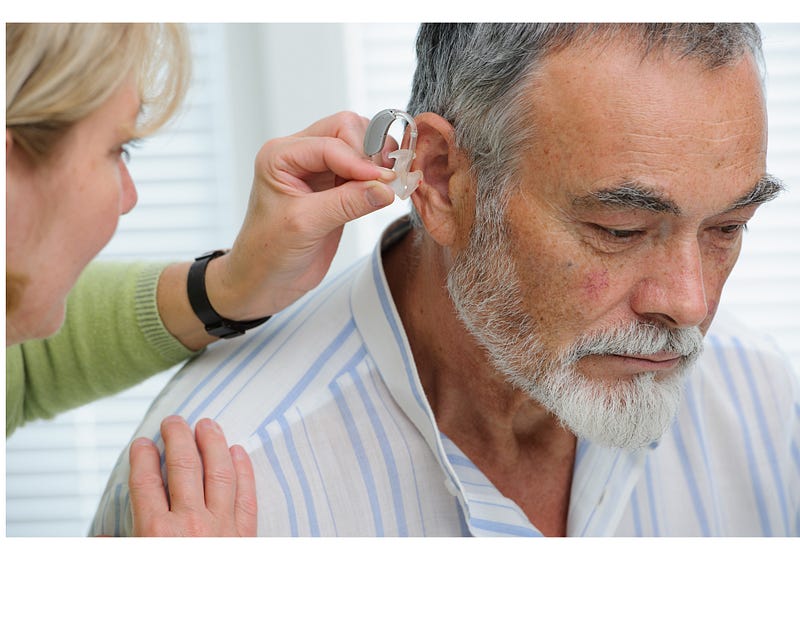
For support, he turns to another recently published study. This one uses the same database as the Social Isolation study, namely, the National Health and Aging Trends Study (NHATS), a nationally representative, continuous panel study of US Medicare beneficiaries.
In this study, a total of 2413 participants were divided into three (3) groups depending on the extent of their hearing loss: Normal (no loss), Mild Loss and Moderate/Severe Loss. This study reports results in the form of a “Prevalence Ratio,” which is essentially a relative risk measure. And, like with the Hazard Ratio, we are looking for Prevalence Ratio values greater than 2.00 at an absolute minimum before we consider it anything more than statistical noise.
After statistically adjusting for several variables — which isn’t the same as actually controlling for them but is better than not addressing them — the results showed that compared to the Normal Hearing group, the Mild Loss group had a Prevalence Ratio of 1.08, and the Moderate/Severe group had a Prevalence Ratio of 1.61.
Now, this study used Round 11 of the NHATS database, and by then, the overall rate of dementia had dropped to 10%.
So, if we use that as the baseline for the Normal group (again, they don’t report the actual incidence of dementia among study participants), incidence in the Mild Loss group would be 10.8% and in the Moderate/Severe group it would be 16.1%.
But the important thing to remember here, is that this study — like the Social Isolation study — is just stating what was observed.
The conclusions, from the study authors, reads: “In a nationally representative sample of older adults in the US, moderate to severe hearing loss was associated with higher prevalence of dementia compared with normal hearing.” So, there’s that word “associated” again — this means they don’t know if there is a cause-effect relationship between hearing loss and dementia.
The study authors go on to say: “Mediation analyses to characterize mechanisms underlying the association and randomized trials to determine the effects of hearing interventions on reducing dementia risk are needed.”
BINGO!
This is where they are up-front about not knowing if hearing loss causes dementia or not — or, at least as up-front as researchers using observational data ever get…
But you still need to connect the dots: If you already know that hearing loss caused dementia, you wouldn’t need to determine if hearing interventions reduce (as in the verb) the risk of dementia. Ergo, we don’t know if untreated hearing loss causes dementia.
What to do…?

I understand that what I’ve discussed can seem like nuance.
In fact, I commented on another story by this same Medium author about the fact that he used a study showing an association and treated it as if it showed causation.
He replied “I appreciate your nuanced and contrarian view. It is indeed extremely challenging to leap from health research findings to actionable advice…”
Well, to that I say — it’s challenging because the data typically don’t support it! The authors of the studies know this — it’s why they always point to the need for more controlled studies that can determine if a cause-effect relationship actually exists before they offer advice.

Maybe, like the researchers, our Medium author should just wait until such a determination is made rather than providing his followers with misinformation.
Thank you for reading this article — hopefully it contained something you found useful.
If you aren’t a member of Medium but are thinking of joining, please join through my page! If you do sign up to Medium through my page, some of your membership fee goes to me (but you still pay the normal membership price).
With a paid membership to Medium, you will get to read more of my work plus you get unlimited access to thousands of Medium writers. And it’s only about $5.00 a month!


