
Attempted Virality
From idea to the Product Hunt homepage in 4 hours
On April 24, 2015, the day that the very first Apple Watch went on sale, Youtuber Casey Neistat made a video called “How To Turn Your Apple Watch Gold” with the explicit intention of “making a viral video”. And it worked — the video very quickly surpassed 4 million views on Youtube, and brought in a wave of new subscribers to Casey’s channel.
Since then, I’ve been fascinated by “timed virality” and have been searching for a moment to experiment with my own attempt. Yesterday was that day.
“Every once in a while, the moons align with Pluto and there is a circumstance where there is a ripe opportunity for making a movie with a very high probability of virality. I think today might be one of those days” — Casey Neistat
The beginning — 5:15pm, May 16, 2016
Yesterday, tech blogs exploded with a story about Twitter changing the rules around its 140-character limit. Basically, links will no longer count towards the limit, which means you can sneak an extra 23–25 characters in a Tweet.
This might not sound groundbreaking, but if you’ve ever Tweeted, you’ll have some kind of reaction to the news (because the problem this solves is very real).
I first read the news during my evening commute. This was my reaction:
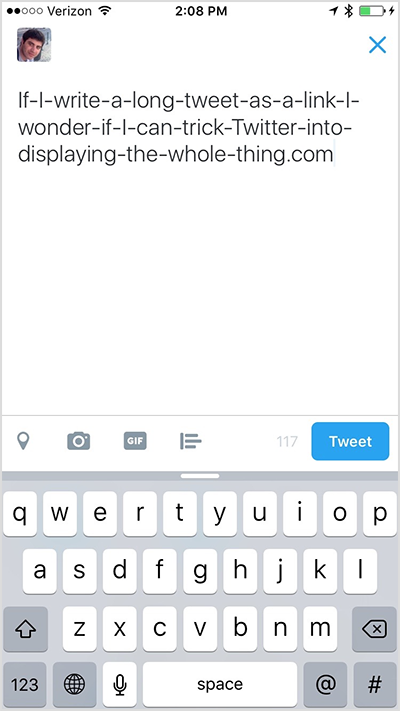
I’m not sure what this says about me, but my reflex was to find the loophole in this new rule… The Loophole: If I disguise my really long Tweet as a really long link, I can bypass the 140-character limit.
I found my Casey Neistat moment.
Here was my plan: I was going to write an amazingly long Tweet that capitalized on both the humorous loophole and the extreme media attention— ultimately propelling the Tweet to stardom via its very own TechCrunch article.
Retrospectively, I realize that my “genius Tweet” approach was pretty absurd, but it helped me start moving in the right direction.
A clear idea — 5:21pm, May 16, 2016
With my “genius Tweet” idea in hand, all I had to do now was craft the perfect Tweet. I thought maybe Tweeting out the entire first chapter of Harry Potter would get the job done.
So, I Googled “The first chapter of Harry Potter” (naturally), opened this PDF, copied the text, and pasted the whole thing into a fresh Tweet. I then went to work converting the chapter into a legitimate URL, which required removing all the invalid characters and replacing spaces with dashes.
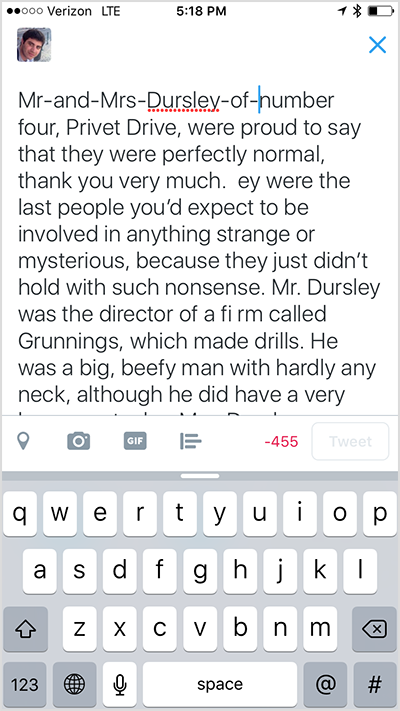
After 30 seconds, I realized that this was a horrible idea. Converting the entire chapter by hand was going to take a painfully long amount of time. If I wanted to send out my “Harry Potter” Tweet, I was going to need to write a few lines of code to do the conversion for me.
And that’s when it clicked:
What if I made a website that lets anyone exploit this loophole? Users could type up a long message and the website would convert it into a really long link they can Tweet without restriction.
I hopped over to Godaddy and checked if the domain “ReallyLongTweets.com” was available. It was.

Honey (a Chrome extension) automatically applied a coupon, and I bought the domain for $0.99. There was no turning back now.
The new plan: Build ReallyLongTweets.com (a tool for using Twitter’s new loophole) and get it featured on Product Hunt. I needed to figure out what kind of Call-To-Action I wanted on the site (i.e. follow me on Twitter), but I would figure that out later.
Crushed dreams — 5:35pm, May 16, 2016
Before I started any work on the site, I wanted to make sure that my loophole actually worked (I hadn’t even checked up until this point. It was all in my head).
So, I opened up Twitter, typed up an uninspired really long Tweet, and posted it. It didn’t work.
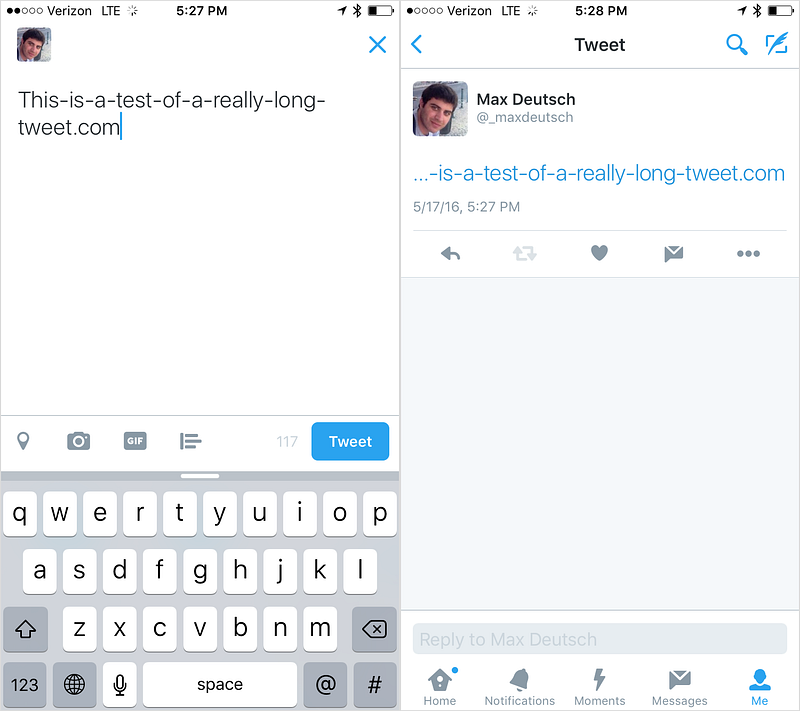
The link was aggressively truncated. My Casey Neistat moment was dead.
I checked back to the article announcing the Twitter update, and realized that the update won’t go live for another couple weeks. My Casey Neistat moment was back on — I could prepare the site and launch it as soon as Twitter pushed the change.
Then, I read a few more articles about how Twitter links work, and realized that the update might not change anything. My Casey Neistat moment was back to dead: Twitter converts the hyperlink for a Tweeted link into a 23-character URL, and truncates the display link if it has more than 23 characters. In other words, Twitter’s update wouldn’t change how links are truncated.
Heartbroken, I admitted defeat.
Back in the game — 5:44pm, May 16, 2016
I was still on the train.
I couldn’t stop thinking about my almost Casey Neistat moment. I was so close: The idea was solid. The humor was there. The loophole was playfully imaginative. The timing was right. Everything was perfect for “high probability virality”.
The only problem was that probably none of it would work. There was a chance that Twitter would change the way it truncates links, but I was doubtful.
I realized it might not matter though. If I was clear about the fact that ReallyLongTweets.com doesn’t currently work and may never work, and instead use the site as way to celebrate the humor in the “potential future loophole”, I could still get some solid traction. I didn’t want a crappy, non-functional product to backfire on me (and hurt my “personal brand”) but I figured it was worth an attempt. If it all went wrong, I could use it as a datapoint and move on.
In true Sherlock fashion, the game was on. And I was committed this time.
Building the site — 6:37pm, May 16, 2016
After getting off the train, grabbing a sandwich at Whole Foods, walking home, and catching up with my girlfriend, it was time to get to work.
I downloaded a free Bootstrap theme from Bootswatch, and put together a basic UI.
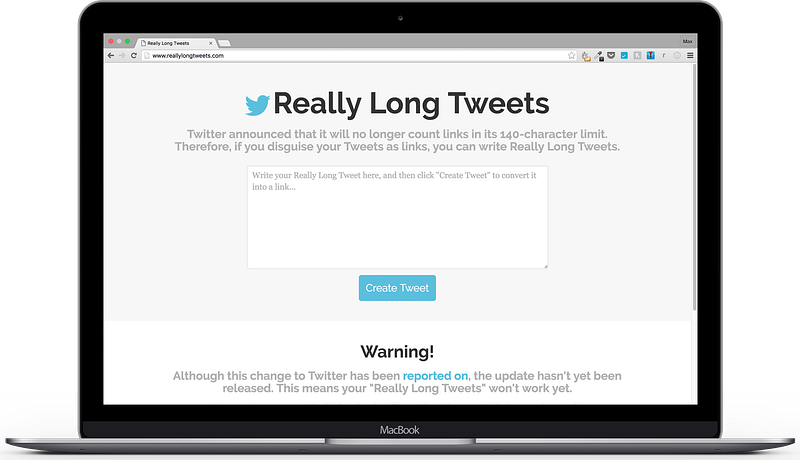
With the site looking reasonably presentable, it was time to focus my attention on the Javascript function that was going to convert Tweets to links. Thanks to Stack Overflow, this wasn’t too hard.
I start by checking if the input text has a space at the end. If it does, I remove it. Then, I replace all remaining spaces with dashes. Next, I remove all invalid characters. And finally, I check to make sure there aren’t multiple dashes in a row. I append the outputted string to “.reallylongtweets.com”, and like magic, the inputted Tweet becomes a legitimate link.
I added a “Tweet it” button (using Twitter’s Web Intents) and a warning at the bottom of the page (about how this website probably won’t work).
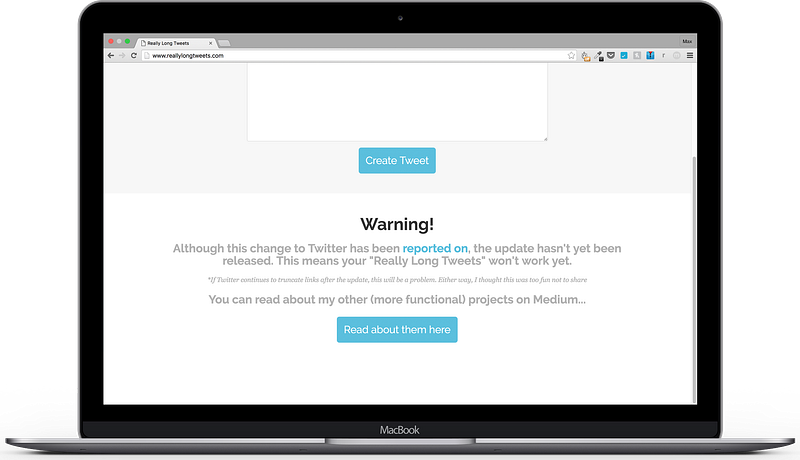
Lastly, I added a Call-To-Action button that directs users to my Medium profile (since I might as well do something with the traffic).
And the site was done. I dragged the folder from my desktop and dropped it into the upload area on BitBalloon, and my site was live.
Some extra stuff — 8:14pm, May 16, 2016
I spent the next hour on a “contingency plan”. Basically, if Twitter still truncates links after the update, I could chop the input Tweet into 23-character sections, convert all the sections into individual links, and then piece all the links together.
I was able to make it work, but the resulting Tweets were really ugly (with “.co” after every 23 or so characters). I might end up releasing this once Twitter’s update goes live, but for now, I thought this confused the story I was trying to tell.
I also tried to setup a wildcard subdomain, so that any link of the form *.reallylongtweets.com would link back to the ReallyLongTweets.com homepage. Although this is something we did successfully on the backend for Somebody.io, I couldn’t figure out how to quickly make this happen using Javascript. So, I decided to skip it.
It was an hour later, and I was starting to get tired. I needed to launch what I had.
Product Hunt — 9:26pm, May 16, 2016
I uploaded the site to Product Hunt as quick as I could, and tweeted at Ryan Hoover (the founder of Product Hunt).
Five minutes later, he wrote back.
I replied.
And that was it. The Product Hunt team took over the submission, changed the photo and description that I uploaded (they made it much better of course), and prepared ReallyLongTweets to be featured the following day.
I went to sleep.
My Casey Moment — 6:30am, May 17, 2016
I woke up and ReallyLongTweets.com was #5 on the Product Hunt homepage.
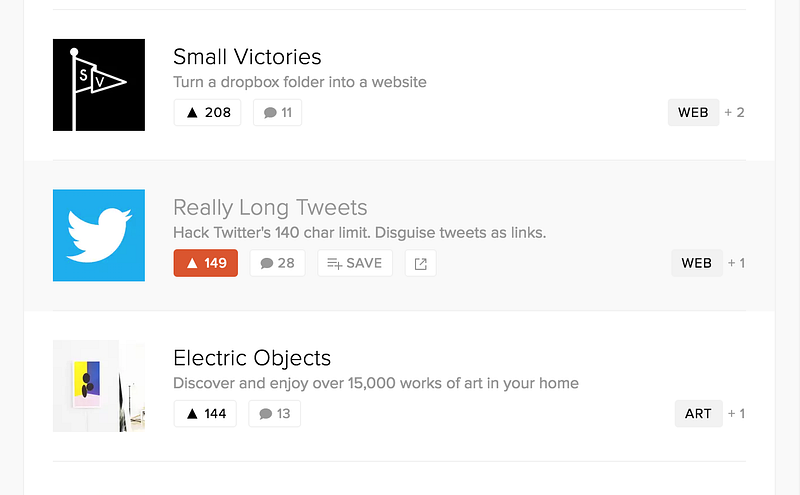
My Medium following was up 50%, there were fresh comments on many of my posts (like this one and this one), and there was a lot of activity on Twitter.
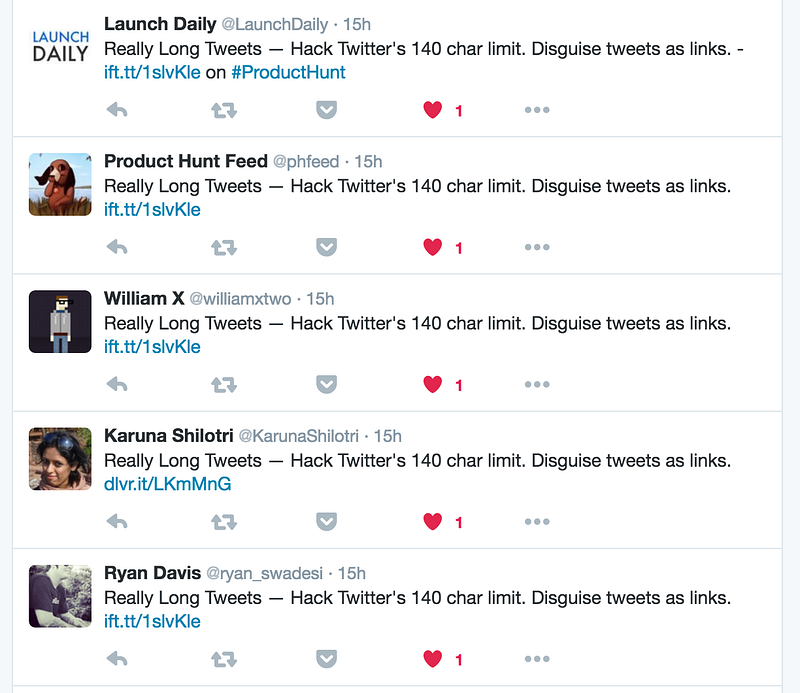
Of course, some people were disappointed that the site doesn’t work yet/ever…

But those same people were also able to enjoy the hack nonetheless.
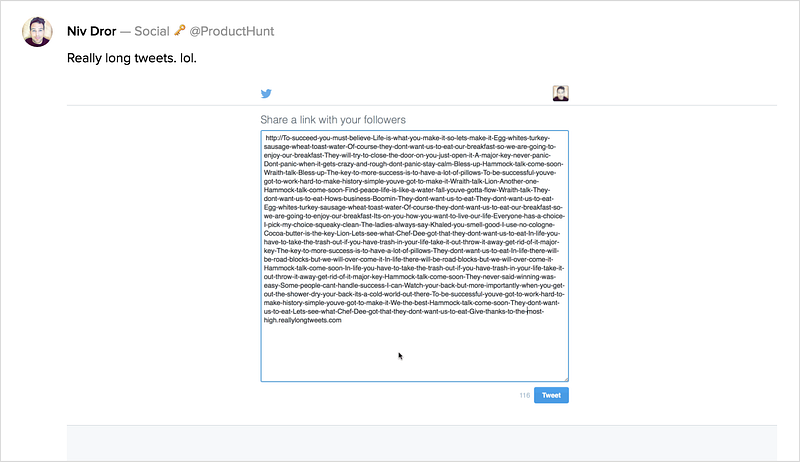
And that’s what matters.
So, what?—5:49pm, May 17, 2016
Typing this up now, after work, a day later, I’m really happy I did this. Am I incredibly proud of the product? Eh… it doesn’t work now and most likely never will. But, I think I made a lot of people crack a smile (even if it was just for a moment before they realized the fatal flaw of the site).
It wasn’t perfect, but I think Casey would be proud.
Max Deutsch is the founder of Rhombus, a Startup-As-A-Service company, based in San Francisco. Rhombus works with non-technical entrepreneurs to build stunning mobile apps.