avatarTeri Radichel

Free AI web copilot to create summaries, insights and extended knowledge, download it at here

5070

Abstract

do that:</p><div id="2e8b"><pre>eventHandler<span class="hljs-selector-class">.Handle</span>(event1, <span class="hljs-built_in">ExampleMiddlewareFoo</span>(<span class="hljs-built_in">ExampleMiddlewareBar</span>(handle)))</pre></div><h1 id="a8a5">Managing Events with Handlers and Middleware</h1><p id="f869">Most articles I read explain how to use this design pattern; this one deals with implementing the internal logic. So let's start coding.</p><p id="35c4">The full code for this article can be found <a href="https://github.com/xNok/slack-go-demo-socketmode/blob/main/examples/middleware/main.go">here</a> to help you follow along.</p><h2 id="0f88">Designing events</h2><p id="b622">First, we are going to enumerate the list of events that our system can handle. The way we create enumeration in Go is a bit different than in other programming languages. In Go, we are going to use a set of constants sharing the same <code>type</code>. Here I define a type <code>EventType</code>that represents a string with the event's name.</p><div id="b181"><pre>// <span class="hljs-keyword">type</span> <span class="hljs-type">used </span>to enumerate events <span class="hljs-keyword">type</span> <span class="hljs-type">EventType </span>string</pre></div><div id="4817"><pre>const ( event1 EventType <span class="hljs-operator">=</span> <span class="hljs-string">"event1"</span> event2 EventType <span class="hljs-operator">=</span> <span class="hljs-string">"event2"</span> )</pre></div><p id="e041">Next, we define the event itself. In our example, the<code>Event</code> as a type which can be selected among the list of <code>EventType</code> created above.</p><div id="2bc9"><pre><span class="hljs-keyword">type</span> <span class="hljs-type">Event</span> struct { <span class="hljs-type">Type</span> <span class="hljs-type">EventType</span> <span class="hljs-type">Data</span> interface{} }</pre></div><h2 id="df6c">Create an event sender (for test purpose)</h2><p id="60aa">To test our system, we will need to create a small function to send events every 2s. Each<code>Event</code> is transmitted via a <a href="https://tour.golang.org/concurrency/2">channel</a> and, the <code>eventSender</code> below sends a random <code>Event</code> of type <code>event1</code> or <code>event2</code> to a channel.</p><blockquote id="53f3"><p><i>Channels are a type which you can send and receive values, they are great for communication among goroutines. In other words, there are perfect for sending and receive event through your application.</i></p></blockquote><div id="ffd1"><pre><span class="hljs-function"><span class="hljs-keyword">func</span> <span class="hljs-title">eventSender</span><span class="hljs-params">(c <span class="hljs-keyword">chan</span> EventType)</span></span> {</pre></div><div id="7f57"><pre> for { // Send <span class="hljs-selector-tag">a</span> random event <span class="hljs-selector-tag">to</span> the channel rand<span class="hljs-selector-class">.Seed</span>(<span class="hljs-selector-tag">time</span><span class="hljs-selector-class">.Now</span>()<span class="hljs-selector-class">.Unix</span>()) events := []EventType{ event1, event2, } n := rand.<span class="hljs-built_in">Int</span>() % <span class="hljs-built_in">len</span>(events)</pre></div><div id="6101"><pre> c <- events[n] <span class="hljs-comment">// send event to channel</span></pre></div><div id="5285"><pre> // <span class="hljs-keyword">wait</span> a <span class="hljs-built_in">bit</span> <span class="hljs-built_in">time</span>.Sleep(<span class="hljs-number">2</span> * <span class="hljs-built_in">time</span>.Second) } }</pre></div><h2 id="000c">Handler and dispatcher</h2><p id="e562">We first need a struct to hold the list of events we want to listen to and which function to call whenever that event is transmitted. This struct also contains the channel used for communicating events.</p><div id="280d"><pre><span class="hljs-comment">// Create a struct to hold config</span> <span class="hljs-comment">// And simplify dependency injections</span> <span class="hljs-keyword">type</span> EventHandler <span class="hljs-keyword">struct</span> { <span class="hljs-comment">// Event channel</span> Events <span class="hljs-keyword">chan</span> Event <span class="hljs-comment">// hold the registedred event functionss</span> EventMap <span class="hljs-keyword">map</span>[EventType][]<span class="hljs-function"><span class="hljs-keyword">func</span><span class="hljs-params">(Event)</span></span> }</pre></div><p id="aa6c">Next, we need to provide an initializing constructor for our <code>EventHandler</code>.</p><div id="a4ed"><pre><span class="hljs-function"><span class="hljs-keyword">func</span> <span class="hljs-title">NewEventHandler</span><span class="hljs-params">()</span></span> *EventHandler { eventMap := <span class="hljs-built_in">make</span>(<span class="hljs-keyword">map</span>[EventType][]<span class="hljs-function"><span class="hljs-keyword">func</span><span class="hljs-params">(Event)</span></span>) event

Options

s := <span class="hljs-built_in">make</span>(<span class="hljs-keyword">chan</span> Event)</pre></div><div id="78bb"><pre> return <span class="hljs-variable">&</span>EventHandler<span class="hljs-punctuation">{</span> <span class="hljs-symbol"> Events:</span> events, <span class="hljs-symbol"> EventMap:</span> eventMap, <span class="hljs-punctuation">}</span> <span class="hljs-punctuation">}</span></pre></div><p id="98fe">Then, we can create our <code>Handle</code> function that associates the event with a callback function.</p><div id="308c"><pre><span class="hljs-comment">// register the handler function to handle an event type</span> func (h *EventHandler) <span class="hljs-built_in">Handle</span>(e EventType, f <span class="hljs-built_in">func</span>(Event)) { h<span class="hljs-selector-class">.EventMap</span><span class="hljs-selector-attr">[e]</span> = <span class="hljs-built_in">append</span>(h<span class="hljs-selector-class">.EventMap</span><span class="hljs-selector-attr">[e]</span>, f) }</pre></div><p id="e42a">Finally, we create the <code>EventDispatcher</code> function, the core of this mechanism. The <code>EventDispatcher</code>process any event sent to a channel, check its type, and if any function has been registering for that type, we call all registered functions.</p><div id="6597"><pre><span class="hljs-function"><span class="hljs-keyword">func</span> <span class="hljs-params">(h *EventHandler)</span></span> EventDispatcher() { <span class="hljs-keyword">for</span> evt := <span class="hljs-keyword">range</span> h.Events { log.Printf(<span class="hljs-string">"event recieved: %v"</span>, evt) <span class="hljs-keyword">if</span> handlers, ok := h.EventMap[evt.Type]; ok { <span class="hljs-comment">// If we registered an event</span> <span class="hljs-keyword">for</span> _, f := <span class="hljs-keyword">range</span> handlers { <span class="hljs-comment">// exacute function as goroutine</span> <span class="hljs-keyword">go</span> f(evt) } } } }</pre></div><h1 id="13e4">Using our system</h1><p id="4d4e">Everything is ready; we can start using our event handling system.</p><ol><li>Instantiate our event Handler</li><li>Register which event to listen to and what function to callback</li><li>Start the event sender</li><li>Start the event dispatcher</li></ol><div id="62ab"><pre><span class="hljs-keyword">func</span> <span class="hljs-title function_">main</span><span class="hljs-params">()</span> {</pre></div><div id="5b09"><pre> <span class="hljs-variable">eventHandler</span> := <span class="hljs-function"><span class="hljs-title">NewEventHandler</span>()</span></pre></div><div id="d244"><pre> eventHandler.Handle(event1, <span class="hljs-keyword">func</span><span class="hljs-params">()</span> { <span class="hljs-built_in">log</span>.Printf(<span class="hljs-string">"event Handled: %v"</span>, event1) })</pre></div><div id="5c56"><pre> <span class="hljs-variable">go</span> <span class="hljs-function"><span class="hljs-title">eventSender</span>(<span class="hljs-variable">eventHandler.Events</span>)</span></pre></div><div id="30f2"><pre> eventHandler<span class="hljs-selector-class">.EventDispatcher</span>()</pre></div><div id="9bf2"><pre>}</pre></div><p id="e590">The result should be along those lines:</p><figure id="5ee7"><img src="https://cdn-images-1.readmedium.com/v2/resize:fit:800/1*_D-GCRSu3K8CgTBXewJjJQ.gif"><figcaption></figcaption></figure><p id="19d6">Since we only handle an event of type <code>event1</code>, only <code>event1</code> shows as <code>Hansled</code>. All is good!</p><p id="d48a">The full code for this article can be found <a href="https://github.com/xNok/slack-go-demo-socketmode/blob/main/examples/middleware/main.go">here</a>.</p><h1 id="6f5e">Interesting Articles tackling the same topic</h1><ul><li><a href="https://drstearns.github.io/tutorials/gomiddleware/">Middleware Patterns in Go</a></li><li><a href="https://sathishvj.medium.com/web-handlers-and-middleware-in-golang-2706c2ecfb75">Web Handlers and Middleware in GoLang</a></li><li><a href="https://readmedium.com/lightweight-event-management-implemented-by-go-a654d59ac65">Lightweight event management implemented by Go</a></li><li><a href="https://readmedium.com/the-7-most-important-software-design-patterns-d60e546afb0e">The 7 Most Important Software Design Patterns</a></li></ul><p id="13e7"><i>Do you want <b>unlimited access</b> to all my content and many other writers’ content on Medium? Consider using my affiliate link to <a href="https://couedeloalexandre.medium.com/membership">become a Medium member today</a></i></p><h2 id="853a">Further reads</h2> <figure id="81d2"> <div> <div> <img class="ratio" src="http://placehold.it/16x9"> <iframe class="" src="https://couedeloalexandre.medium.com/embed/list/3f9d03f2cb8f" allowfullscreen="" frameborder="0" height="184" width="undefined"> </div> </div> </figure></iframe></div></div></figure></article></body>

Attempted IMAP connections to wrong GMAIL Server??

Looking into strange traffic on the network ~ Google or CloudFlare DNS issue? Or misconfiguration here?

~~~~~~~~~~~~~~~~~~~~~~~~~~~~~~~~~~~~~~~~~~~~~~~~~~~~~~~

⚙️ Check out my series on Automating Cybersecurity Metrics | Code.

🔒 Related Stories: Bugs | AWS Security | Secure Code | Network Security

💻 Free Content on Jobs in Cybersecurity | ✉️ Sign up for the Email List

~~~~~~~~~~~~~~~~~~~~~~~~~~~~~~~~~~~~~~~~~~~~~~~~~~~~~~~

We’ve been having periodic bouts of weird network issues so I started looking at our network traffic more closely. What is going on??

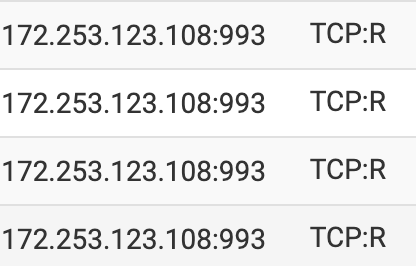
First of all I see all these Push Ack, Fin Push Ack, Reset Ack and other packets getting blocked. Somehow PFSense thinks they are invalid packets so it blocks them. For the sake of International Soccer and a happy home I unblock some of that on our “TV network” and decide I’ll deal with that later. I also double check a whole bunch of other network configurations.

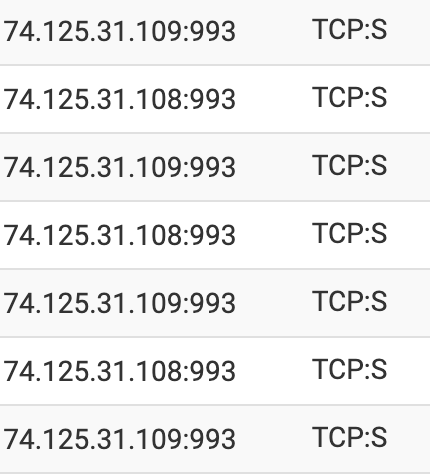
That seems to help but then the issue pops up again and this one seems a bit odd. What am I missing?

First of all I allow traffic to and from the appropriate GMail domains to send and receive mail on appropriate ports per the Google documentation.

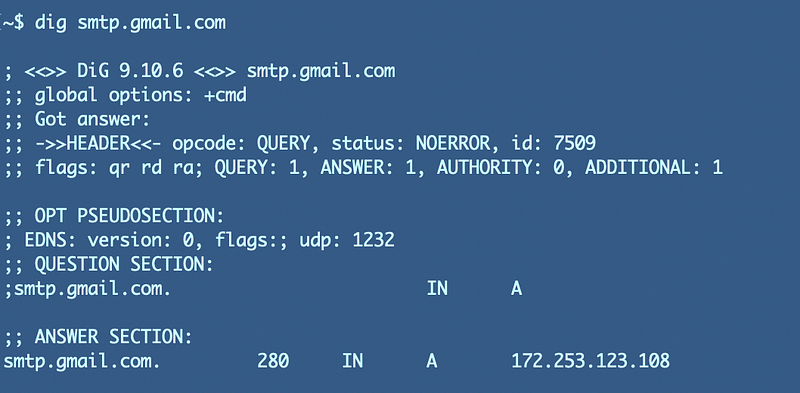
We can look up specifically what IP addresses get returned for each mail related domain name.

pop.gmail.com (port 995) for inbound mail that can be deleted after download. You can configure it to remain on the server.
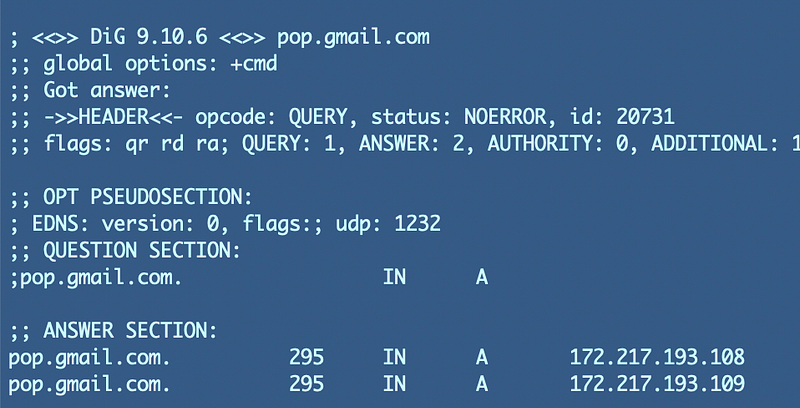
imap.gmail.com (port 993) for inbound mail that stays on the server for cases where you’re reading mail on multiple servers. This is probably the most commonly used option.
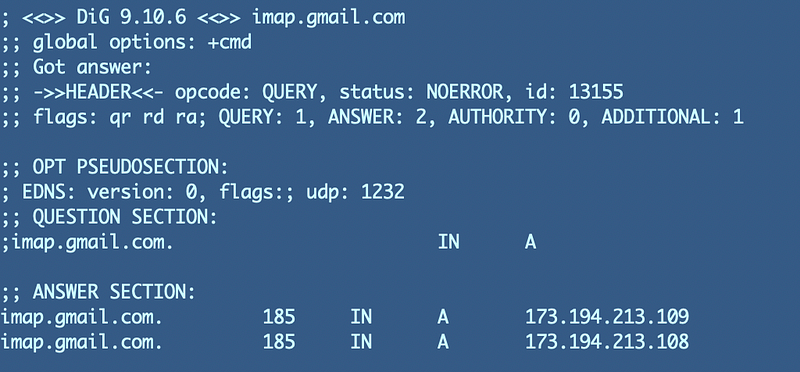
smtp.gmail.com (port 25) for outbound mail.
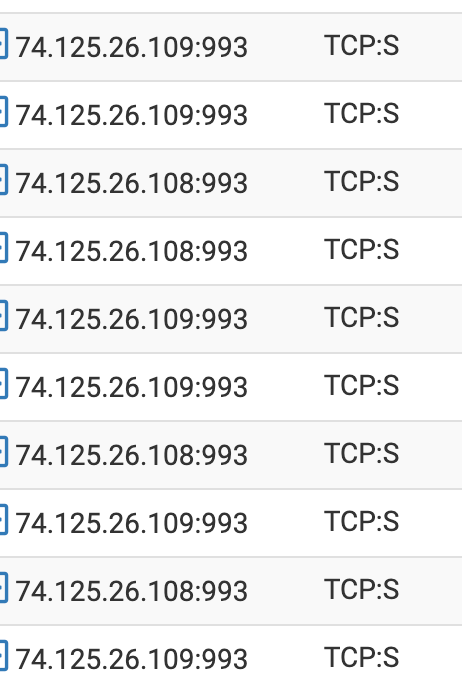
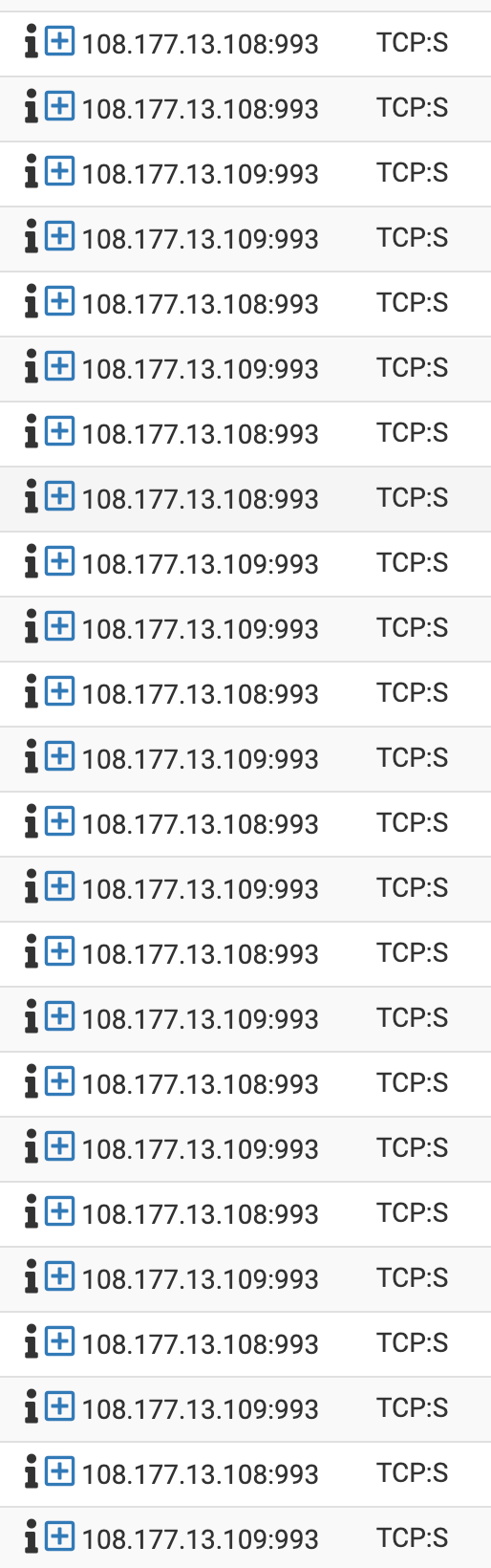
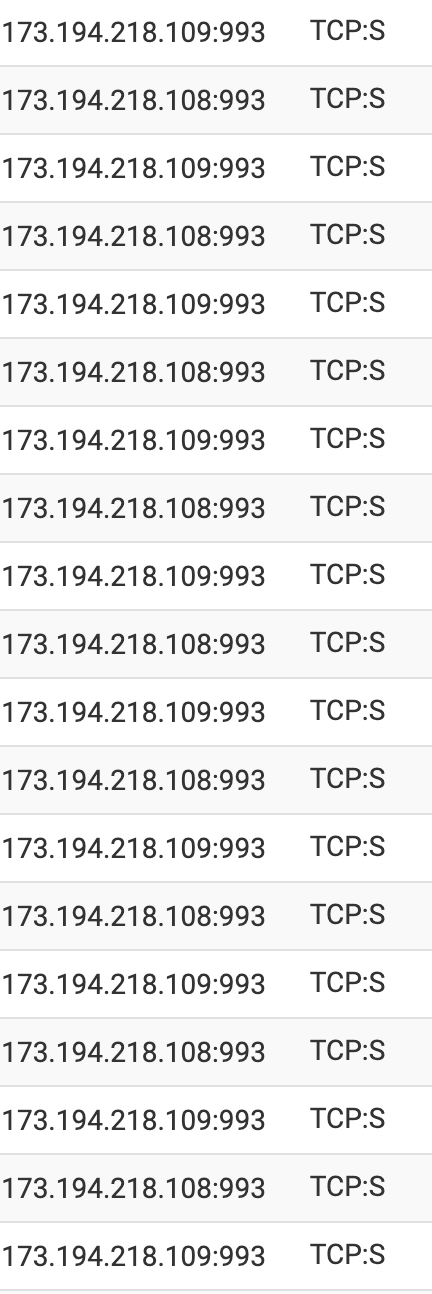
So what is this? I see port 993 so that indicates an IMAP connection, however that is not one of the IP addresses returned from imap.gmail.com by CloudFlare DNS.
It’s definitely in the Google IP space, but Google hosts a lot of other things like Google Cloud — which could be hosting a rogue mail server.
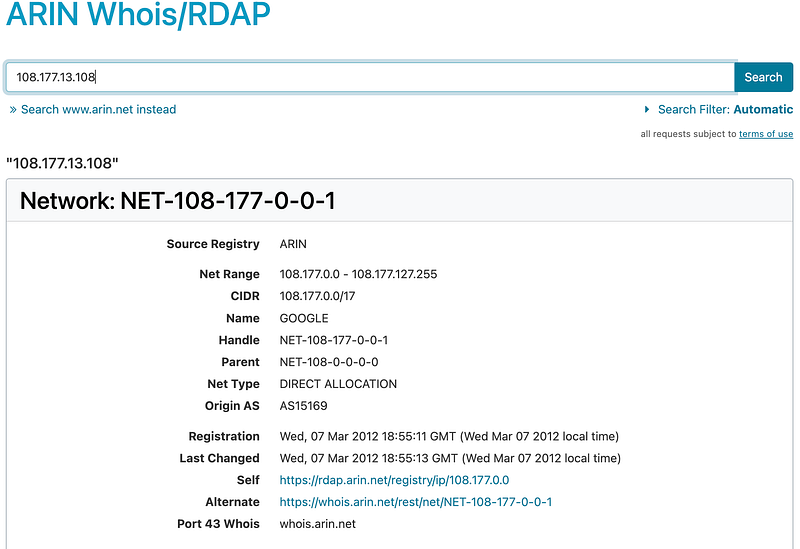
So is this a legitimate mail server or something hosted on Google cloud or what?

Next I used the approach in this post which looks at SPF records:

Drilling down the command that gets me what I’m seeking:
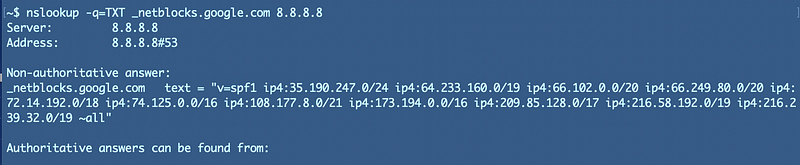
I can see the address that’s bogging down my logs is in this range, which is somehow returned via a “Non-authoritative answer” from the Google DNS server.
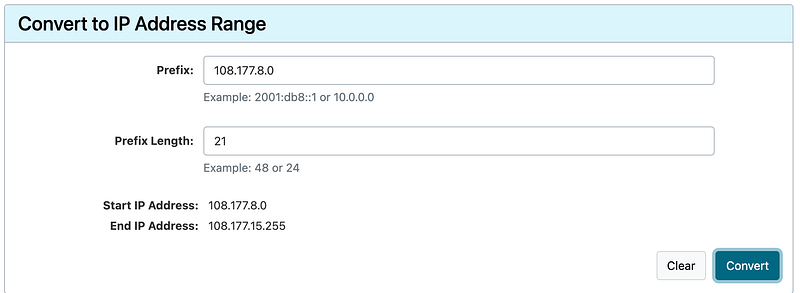
So in theory, that IP range has something to do with *outbound* mail as the article states and is in the Google IP ranges. However, I have a host somewhere on my network trying to reach those servers using IMAP to *download* mail not send it out. So how is that host not getting one of the correct IPs to use for IMAP?

I check with my house mate and there’s only once place he checks mail. I briefly take a look and it seems to be correctly configured.

I even run a query for mail.google.com just to see if that IP comes up. It doesn’t. But I would not expect that IMAP servers would be hitting the same web servers that server up gmail on the web on port 443 so that makes sense.
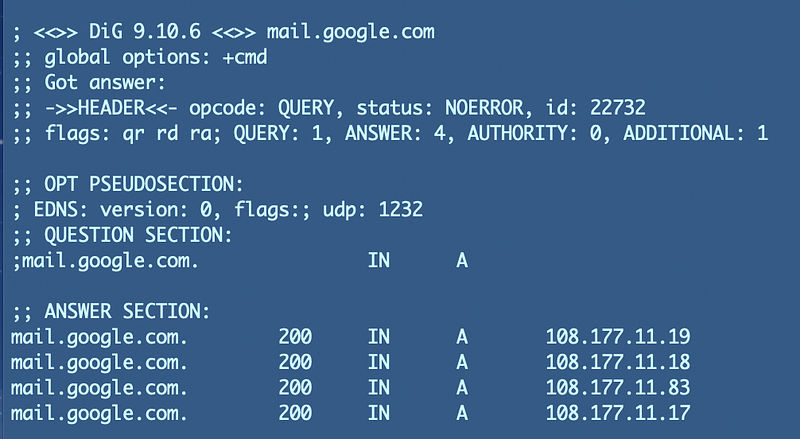
I’m guessing perhaps there’s a misconfiguration somewhere — either on my network (but I don’t think so?) Or perhaps CloudFlare DNS is not returning *all* the google IMAP IPs?

Trying to figure out how else I would determine that is a legitimate Google IMAP Server IP before adding it to the firewall.

By the way, the response here is really sad and unacceptable for businesses attempting to set up zero-trust networks.

Just noticed these IPs getting blocked as well:
More on network security:

Follow for updates.

Teri Radichel | © 2nd Sight Lab 2023

About Teri Radichel:
~~~~~~~~~~~~~~~~~~~~
⭐️ Author: Cybersecurity Books
⭐️ Presentations: Presentations by Teri Radichel
⭐️ Recognition: SANS Award, AWS Security Hero, IANS Faculty
⭐️ Certifications: SANS ~ GSE 240
⭐️ Education: BA Business, Master of Software Engineering, Master of Infosec
⭐️ Company: Penetration Tests, Assessments, Phone Consulting ~ 2nd Sight Lab
Need Help With Cybersecurity, Cloud, or Application Security?
~~~~~~~~~~~~~~~~~~~~~~~~~~~~~~~~~~~~~~~~~~~~~~~~~~~~~~~~~~~~~
🔒 Request a penetration test or security assessment
🔒 Schedule a consulting call
🔒 Cybersecurity Speaker for Presentation
Follow for more stories like this:
~~~~~~~~~~~~~~~~~~~~~~~~~~~~~~~~~~~~~~~~~~~~~~~~~~~~~~~~~~~~~ 
❤️ Sign Up my Medium Email List
❤️ Twitter: @teriradichel
❤️ LinkedIn: https://www.linkedin.com/in/teriradichel
❤️ Mastodon: @teriradichel@infosec.exchange
❤️ Facebook: 2nd Sight Lab
❤️ YouTube: @2ndsightlab

Gmail
Cloudflare
DNS
Imap
Firewall
Recommended from ReadMedium