
Atman versus Brahman
Which truth is ultimate?
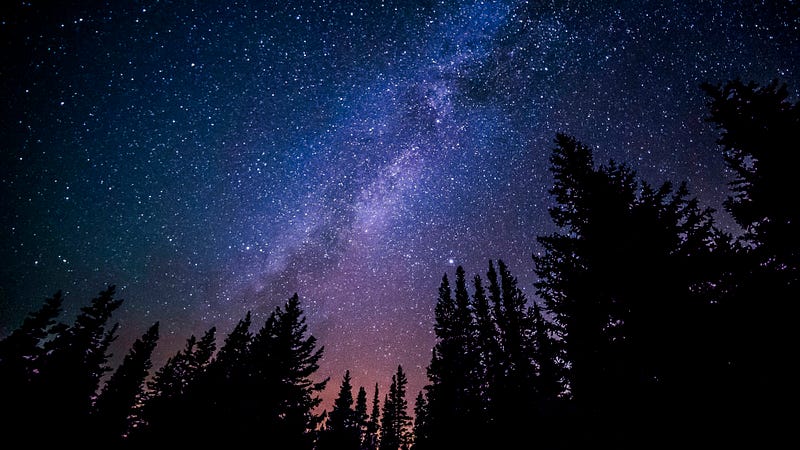
I remember walking alongside this large late-summer lawn, staying on the asphalt path (as not very politely requested by little metal signs here and there), and musing about Brahman versus Atman. I was reading a Swedish translation of the Upanishads at the time and the more I mused the more the shoe fit, so to speak.
I had arrived at the conclusion that there really was no Brahman versus Atman. That he-she-it-we-they-I were one and the same. This was gut-speak, a visceral voice. Yes, I believed this. How could I not? It rang so true.
Apparent size (for naturally, Brahman was as large as the universe and Atman smaller than an atom) had nothing to do with it. Size was only confusing the issue for, in truth, Brahman was as sizeless as Atman and Atman was as sizeless as Brahman.
Sizeless.
Earlier that week I had read a passage from Bertrand Russell’s “Wisdom of the West” where he convinced me that God, as I had grown up to know him under the tutelage of a sternly Christian grandmother — long white hair and beard and quite stern and unforgiving, especially when it came to young boys who stole things, mea very culpa and didn’t recite their evening prayers every evening — this God did not exist. He was just an invention. As I read along with Russell’s logic I could not help but nod sagely: had always suspected that. Yes.
With the last remnants of my childhood God safely out of the way, I was now free to draw and live by other conclusions. And I did.
And as I looked out I saw Brahman and as I looked in I saw Atman and knew that what little meat and blood and bone stood between us was no barrier to truth; for I, Atman, stood in, lived in, was Brahman, and Brahman stood in, lived in, was Atman. Sense was made, thoroughgoing and eternal.
I was nineteen.
This year, I am embarked upon my seventy-seventh spin around the sun, and the image — as vivid memory — of the younger me looking up and out into the Brahman sky remains as real as anything. It made visceral sense then, it makes more than that sense now.
I have been deeply taken by the Upanishads since then and read more of them over the years. One year, I even wrote a novel based on the Katha Upanishad (“Yama’s Visitor”) where I transposed and translated the entire story, almost word for word (in Easwaran’s translation), into a modern setting.
(Barbara Kingsolver did the same, brilliantly, with Dickens’ “David Copperfield” in her “Demon Copperhead” by the way).
Of course, Gotama Buddha offered his very firm take on this: There is no such thing as “Atman,” he said, there is no such thing as “Self.” The nineteen-year-old me begged to differ and as for my current me, the jury has in some sense yet to arrive back in the courtroom. I have yet to arrive at an experiential verdict, and I know that logic will never get me there.
What I believe the Buddha meant to convey with his firm self-denial is that there is no such thing as a separate Atman, no such thing as a separate, unchanging, independent, eternal Self. And there I certainly agree.
So, from what I hear, do a few other seekers.
By saying that there is no self, I believe the Buddha said that the ego is an artificial, not ultimately true, phenomenon, and to get hung up on (and in) it is not only a waste of time but unhealthy, not to say pernicious, as well.
However, rather than reasoning this out with his disciples, he decided to simply put his foot down and categorically proclaimed that there is no such thing as a permanent Self. Period.
Some Buddhist historians also point out that Gotama Buddha was — and I don’t like to put something holy so crassly — but he was in competition with other Indian gurus, other movements, both Jain and Hindu, and had to differ just to make a mark, to stand out as it were. I feel that there is some truth to that.
His no-self-at-all certainly stood out.
Oh, how I would love to have been an Indian fly on those walls.
Full Awakening is the eventual ceasing of all the mental impressions of being an ego
About a millennium after Gotama’s death, Adi Shankara (718–740), Advita’s founder (who was accused by his contemporary critics of being a “Closet Buddhist” which I must say I find amusing) and a joy to read, put it this way:
“Even after the Truth has been realized, there remains that strong, obstinate impression that one is still an ego — the agent and experiencer. This has to be carefully removed by living in a state of constant identification with the supreme non-dual Self. Full Awakening is the eventual ceasing of all the mental impressions of being an ego.”
The “supreme non-dual Self.” That, in short, are some other words for Brahman. And Shankara, to me, expresses the truth better (and less uncompromisingly, less severely) than Gotama Buddha. And this also is how I see things.
Shankara goes on to say:
“To be free from bondage the wise person must practice discrimination between One-Self and the ego-self. By that alone you will become full of joy, recognizing Self as Pure Being, Consciousness, and Bliss.”
Again, Gotama Buddha could have (should have) said that. And perhaps it wasn’t so strange that his contemporaries saw Shankara as a “Closet Buddhist,” they seem very much cut from the same spiritual cloth.
One thing I hold as absolute: There cannot be two Ultimate Truths. That’s the one thing there’s only one of (for were there “two ultimate truths,” then the one ultimate truth would be that there are two of them, and so we’re back to one — how’s that for logic?)
Gotama Buddha and Shankara obviously (to my mind) knew and spoke of the same thing. Different words, perhaps. Different political environments, perhaps. Different audiences, too. But the same Truth.
I am a practicing Buddhist. I also study Advaita. I also study Zen. As well as Taoism. Different voices. Different viewpoints. Same Truth.
And up here there is only up here.
© Wolfstuff