
Atman = Brahman
There is No Other Way
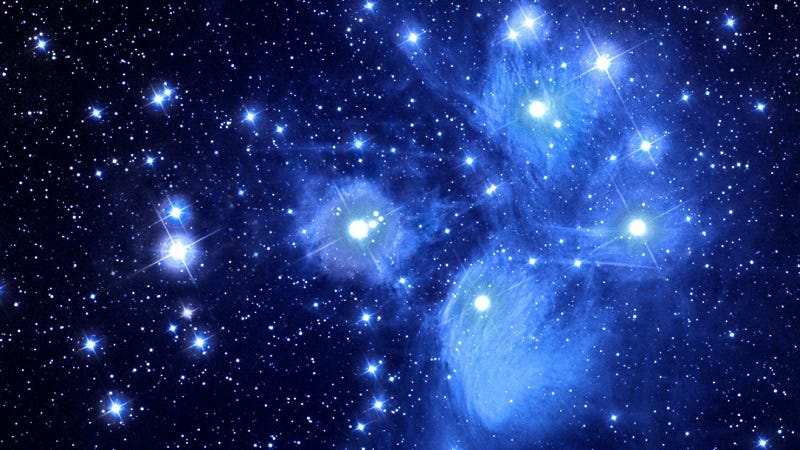
Atman=Brahman
Beyond Matter Energy Space Time There’s no where-when to separate
The ultimate truth. In Buddhism, it is known as Sunnatā, Emptiness, the Void. According to the Buddha, it is beyond space and beyond time. It is beyond, period. Or as Gertrude Stein would have put it, there is no “there” there.
But this apparent nothingness harbors two enduring elements: Intent and Awareness — this and nothing else.
How it all began: I think that the Chāndogya Upanishad (6.2.1–3) nails it:
In the beginning, this world was just Being [i.e., Brahman] — one only, without a second. And it thought to itself — “Let me become many; let me multiply myself.” Each little self an Atman.
The vital truth is that the spirit does by intending. If there is no stuff around to act upon and/or through then intention alone is the doing.
Brahman, the only, without a second, intended and, voila, he’s many.
Today, he’s very, very, very, very, very many.
But here’s the rub, in order to become many, Brahman, the one only without a second had first to intend/invent space, for without it there would be no separation of one atman from the next and so, in a spaceless void, would still remain just the one. Space, then, is a requisite for multitude, for without it there is nowhere, nowhen, noway for separation or difference.
Nirvana, says the Buddha (and 2,500 years of commentary and musings, especially in the Mahayana camp, agree) is Emptiness and is beyond space and time. There really is no there there. And without a there, without space (and time, since for space to endure, well, it needs a clock), nothing can be separate.
That is how, these days, I view annatā, the Buddhist doctrine of non-self: Ultimately, separate selves are simply impossible: there’s no there (i.e., no space) to be separate in.
And I believe that in our very physical world, the self that insists on existing is best viewed as the ego, the somewhat selfish creature that insists on surviving as creature in space through time — having lost sight of the deeper truth that says that the only thing separating atman, the inner stillness, from Brahman, the outer stillness, is this precious ego, like a bubble in space. Same space inside as outside, separated by that soapy mental film we call ego.
Shed that and all will be well.
© Wolfstuff
P.S. If you like what you’ve read here and would like to contribute to the creative motion, as it were, you can do so via PayPal: here.


