
Ask Lewis: What is the Essence of My Practical Philosophy?
Creativity, innovation, intuition, critical thinking, and synergy
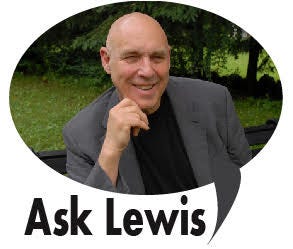
I have been very successful in my life. This success has not come form luck as much as from great mentoring, and a brilliant and powerful support team.
One thing that all humans seem to share is the desire for greater happiness (or the ability to avoid discomfort), the need to transcend obstacles and solve problems. These goals, they usually achieve through a combination of creative, intuitive, and critical thinking.
I often tell my students, that…
“through this practical philosophy you will have access to the tools, tips, techniques, and strategies you will need to be more efficient, effective, precise, productive, and self-aware in the realization and application of your creative, intuitive, and critical thinking capabilities. With these skills, you will experience greater love, kindness, compassion, empathy, wisdom, and happiness.”
This philosophy cover a broad spectrum of topics in the areas of creativity, psychology, human potential, spirituality, social consciousness, community, Eastern philosophy, health and wellness, gamer thinking, personal development and self-improvement, the exploration and experience of beauty, social consciousness, prosperity, and abundance. Here, there is much attention given to showing people the path to a meaningful life. A meaningful life is a construct having to do with purpose, significance, fulfillment, and satisfaction. In practical terms, meaning can be defined in two of ways;
1. as the connection linking two presumably independent entities together;
2. as a way of linking the biological reality of life to a symbolic interpretation or meaning.
Those possessing a sense of meaning are generally found to be happier, to have lower levels of negative emotions, and to have a lower risk of mental illness.
While specific theories vary, there are two common aspects assigned to the meaningful life:
1. a global schema to understand one’s life;
2. the belief that life itself is meaningful.
Much of my work concerning meaning is influenced by the writings of Victor Frankl and Logotherapy.
Created by Frankl, an influential psychiatrist who survived his detainment in a Nazi concentration camp. Logotherapy emphasizes finding values and purpose in an individual’s life and building relationships with others to reach fulfillment and attain meaningfulness. For Frankl, “Value” can be further subcategorized into three main areas:
• creative: values reached through acts of creating or producing something.
• experiential: Values actualized when a person experiences something through sight, touch, smell, or hearing.
• attitudinal: These are reserved for individuals who cannot, for one reason or another, have new experiences or create new things. Thus they find meaning through adopting a new attitude that allows “suffering from dignity.”
For all of these classes of values, it is because of one’s sense of responsibility that one pursues these values and consequently experiences a meaningful life. It is through the realization that one is the sole being responsible for rendering life meaningful that values are actualized and life becomes meaningful.
For certain students, especially those engaged in my various personal development courses, Victor Frankl’s Model may not be satisfying. Many of these students will build on Logotherapy with ideas drawn from Terror management theory and Hope theory.
Terror management theory studies meaningfulness and its relationship to culture. A human’s consciousness makes them aware of their own mortality.
In order to deal with their inevitable death, humans attempt to leave their mark in some symbolic act of immortality within the structured society. The structure created through society and culture provides humans with a sense of order. Through the structured society, we are able to create symbolic immortality which can take various forms, e.g., monuments, theatrical productions, children, etc. Culture’s order reduces death anxiety as it allows the individual to live up to the societal standards and in living up to such ideals; one is given self-esteem which counterbalances the mortal anxiety. Of course for the ordinary thinker, this process can present one with a serious challenge, that structured society is often spiritually, emotionally, mentally, and physically dysfunctional, and even toxic. A buffer for this obstacle is to have hope.

Hope theory operationalizes meaningfulness as having more to do with self-control that leads to higher self-esteem, rather than trying to adjust to the structures of society.
As one learns, through conservation and balance, to live by societal standards, one exercises self-control, and it is through this self-control that higher self-esteem is achieved. Meaning is found when one realizes that one is capable and able to effectively achieve their goals through successful management.
Other of my stories in a similar vein @LewisCoaches
Ask Lewis: What Is Beyond Thought?
Thinking outside of the box that is outside of the box
medium.com
Before you go…
I am Lewis Harrison, an Award Winning author of over twenty books on personal growth and strategic thinking. For over a decade I was the producer and host of the show “What’s Up” on NPR affiliated WIOX FM in New York.
Now, aside from writing on Medium, and connecting personally with my readers, I teach seminars and speak on personal development, and life strategies throughout the world.
To learn more about my thread — Ask Lewis — please read this short piece below…