
As the Ukrainian crisis deepens, how do Europeans feel?
The trauma of WW2 still haunts
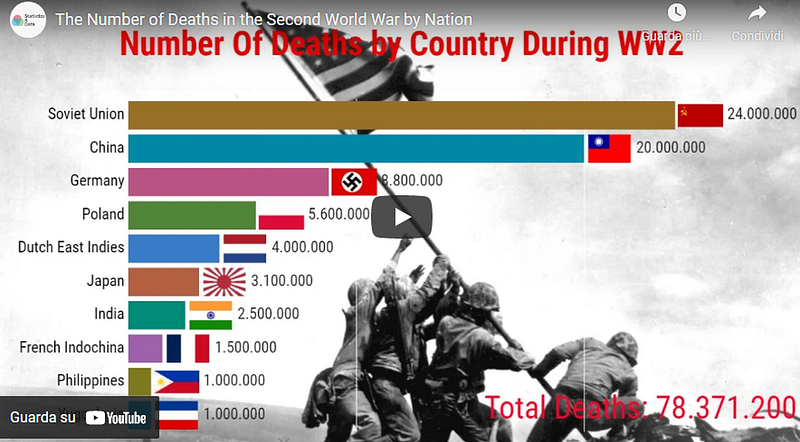
During WW2, about 30% of the dead were military personnel and the rest were civilians.
Behind every war, there is a genesis, a rational or irrational and ends with a hope for eternal peace.
I wonder, where does the dreadful spark rest to ignite the next war?- Author
Two atomic bombs made from uranium-235 and plutonium-239 respectively produced by the allied powers (USA and UK) were dropped on Hiroshima on 6th Aug 1945 and Nagasaki on 9th Aug 1945. Einstein was the most depressed as his famous equation E=mc² played a pivotal role in creating the bombs. The scale of the disaster was beyond his imagination and he became the messiah of peace.
At the end of WW1, in 1919, world leaders thought, our civilization will make a transition to a new era of world unity and peace. Then the WW2 broke out in 1939.
Yes, we had peace for a few decades in Europe and elsewhere.
Post-Cold War peace is now shattered by Russia’s threats by accumulating massive military with 190,000 soldiers and most advanced weapons around Ukraine. Question is, will Russia use Nuclear weapons? I think perhaps NOT but only Putin knows.
About 700,000 Russian speaking pro-Russian separatists are being evacuated to Russia from Donbas and Crimea regions of Ukraine. This implies future attacks on Ukraine can be initiated from these regions.
The majority of the people in Europe now believe that Russia will invade Ukraine in 2022 and that it is important for the European Union and NATO to support Ukraine. Europeans are prepared to bear the significant threats including about 1 million Ukrainian refugees, increased energy costs and cyberattacks from Russia.
This implies strengthening collaboration with NATO for European security.
Russia annexed Crimea in 2014 and Europe did very little to oppose it. Europe heavily depends on natural gas from Russia and the EU didn’t reduce their energy dependency on Russia till now. In 2020, about 38% of the European Union’s natural gas requirement was imported from Russia.
Unfortunately, the European Union has little to add beyond the threat of sanctions on Russia and in my opinion; United Nations is weak to tackle the Russian invasion except holding several Security Council meetings.
After 7 decades, now, American President Biden and European Union leaders speak amid fears that Russia is staging for an invasion on Ukraine and that could ignite the biggest conflict in Europe in decades.
A true story.
In Europe, many seniors who had experienced the trauma and agony of WW2 as children have their painful stories to tell and they wish no more war anywhere in the world.
Elfriede and Sebastian (names changed) is one such couple in their 80s and married over 50 years and they are part of my family. I have a very special affectionate bond with them. Both recall their anguish and distress on the ongoing Ukrainian issue.
Elfriede, was born in 1941 and her father was serving in the German army (Austria was annexed by Germany in 1938) was posted in Ukraine (USSR) and he was allowed to visit his newborn baby (Elfriede) and soon he went back to his duty. WW2 was razing everywhere in Europe and no soldiers were given leave. In 1942, before Easter, Elfriede’s family received an Easter greeting from her father Martin ‘I come soon’.
That was the last communication they had. He was killed in Ukraine fighting with Russian forces at the age of 31. His body could never be found. Elfriede has never seen her father. However, a burial place is reserved in his name without his mortal remains.
Since the body of Martin was never found, Elfriede’s grandmother till her death in 1986 believed her son is alive somewhere in Russia and may return one day. Such a tragedy for a mother to live with such belief….
Many young girls became widows, children lost their fathers, parents lost their sons, the unimaginable tragedy of WW2 in Europe and worldwide.
In peace, sons bury their parents, in war, parents bury their brave sons.
….
On the other side, Sebastian was 9 years old when the Red Army of the USSR invaded the place he was living with his parents and 2 younger sisters. About 12 million German-speaking people were tortured, killed, evicted and they ran for shelter with nothing in hand. The exodus started to Germany and Austria.
I asked Sebastian, do you remember the place?
He sighed a long……, Yeah, it’s now in the Czech Republic, I don’t want to remember it.
We came as refugees to Austria, Life was tough, Food was scarce, rationed. At times we use to sprinkle water on the dry bread to stick sugar….with a deep breath,
He continued, I have buried those agonizing memories…..
It’s so painful to remember the childhood memories which have turned sour.
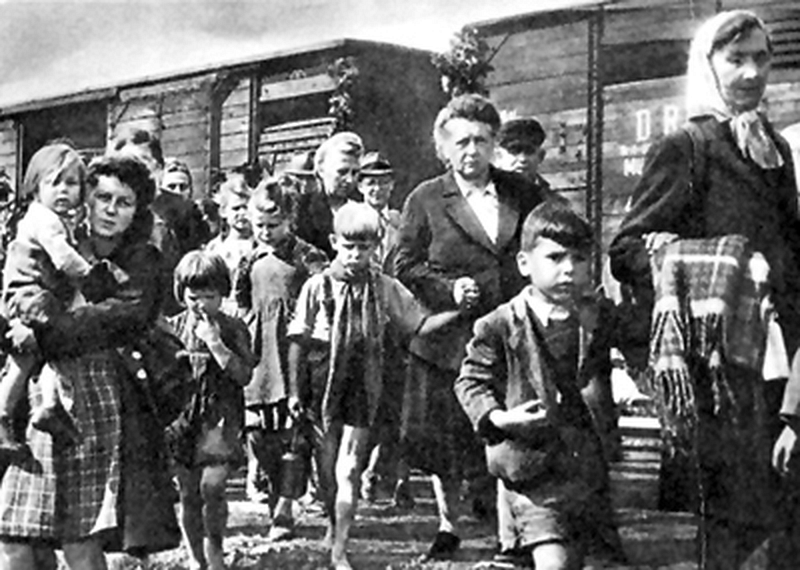
The idea to expel the German-speaking people from the annexed territories was proposed in London by Winston Churchill, Prime Minister of the United Kingdom during WW2.
By 1950, a total of approximately 12 million Germans had fled or been expelled from east-central Europe into Allied-occupied (France, UK, US, USSR) Germany and Austria.
Like Elfriede and Sebastian, many senior Europeans and commoners are preachers of peace.
We all have the faith; there won’t be a further escalation in the Ukraine situation and no tragedy of the war.
We can not erase the devastation of the past but we can hold the future from happening.
Let our faith prevail and we offer peace to our future generations.
I’m not a political analyst and the views are personal Thanks for your attention. Tara Desai


