
As the Financial Landscape Changes Forever, Is It Bitcoin’s Time to Shine?
For the first time in history, there is a way for the average Joe to protect their wealth.
In just a few weeks, the global financial landscape has changed both dramatically and for good.
And the extra irony is that no-one saw it coming, at least in the format it did. Sure, economists had talked for years about how the level of fiat creation was almost certainly unsustainable and that eventually, some form of action would need to be taken, but there was no timescale. And no-one really knew what the next step would be anyway, beyond a bunch of theories and ideas.
And while I don’t want to paint a picture of doom and gloom or start getting all dramatic, there can’t be any doubt that the recent actions of governments around the world have added extra strain to an already groaning system. The question is, will it finally give way this time, or will we find yet more ingenious ways to continue to support it and kick the can still further down the road?
My view is that it won’t give way, at least not at the moment. Once the crisis is over, however many weeks or months that may be, we will emerge intact. But we will be forever changed, as is so often the case after an event as serious as this. We will find a way to make it all work, not least because we have to.
Banks will still be there and corporations will come back on-line, each having received enormous bailouts or preferential tax conditions to ensure their survival. This will have been financed by the creation of newly minted dollars designed specifically for that purpose. It works, as was initially proved in the 2008 credit crunch (although that was on a much smaller scale), but it comes at a cost.
Effectively, it preserves the banking system and big business by devaluing what everybody else owns. Your dollar is about to experience a real drop in purchasing power, meaning you will need more of them to buy the same items. It won’t happen immediately, but it will come soon enough.
Then, if your income doesn’t increase to match it, you’ll be left behind. But if your income DOES increase to match it, it probably means everyone else’s is too, which in turn means you’re back to the same inflationary pressure you started with in the first place and the price increase cycle begins again.
In the worst-case scenario — if it carried on unabated — one day you could find you’ll need several ‘million dollars’ notes to buy a carton of milk, like those photos of ‘starving billionaires’ in far off countries that did the rounds on the internet around 2008.
Think of it like having a glass of good old fashioned squash (or cordial for you Americans) that’s been diluted with water to just the right level. If you keep adding water, there’s more of it to go round, but it becomes less desirable. If you keep adding more and more water, eventually it will taste so weak that no-one wants it anymore. At that point, it needs to be thrown away or replaced.
Let’s be clear, I’m not saying that the US dollar or any other major currency will go all Zimbabwe in the next year or so, but it’s clear that you WILL need more Dollars, Pounds or Euros to buy the same goods as before. And even if you have the money safely stored in the bank, it will be eaten away more rapidly by a combination of higher inflation levels and global historic lows in interest rates.
In short, this means that even if you have access to the highest-paying savings accounts in the world, it would still cost you, in real terms, to keep your money in the bank. This has been true for some time actually, but the rate of decline is about to get a whole lot worse.
Of course, we could debate the rights and wrongs of this well into the night and beyond if we wanted to. Are governments doing the right thing? Should they even do more? What else could they do given our imperfect financial systems and dependence on consumer spending?
However, this is beyond the scope of this article. We are where we are and there’s very little any of us ordinary folk can do about it except understanding what’s happening, strap in for the ride and try and come out of the other end with our wealth and health intact. However, in a week where 6.6 million people in just one country filed for public benefits due to loss of employment, it’s already clear that this will probably not be possible for many.
Bailouts, remember, are for corporations, industries and banking systems, they are not for individuals. Yes, there’s been some ‘helicopter money’ issued in some countries, most notably the US, but if the 2009 Australian precedent is anything to go by, it won’t make much difference.
This is partly because it’s very little money in the grand scheme of things and partly because it’s quite possible that a significant number of the people who receive it are in dire straits. Those people may well use the money to pay their mortgages or other financial obligations to keep their home or car, thereby, ironically, handing the money straight back to the institutions who received the big bailouts in the first place.
I should make it clear, incidentally, that I am not making some snide political commentary here (my focus is purely economic and not partisan). I am simply making a statement. This is where we are and it’s fairly easy to see where the path leads in certain respects.
So, what options do we, as representatives of the common man, realistically have?
Wealth protection
There are people who will no doubt come out of this in better financial shape then they went in. Some of them accidentally so, simply by being in the right place at the right time, but others by design who are both in a position to take advantage of rapidly changing trends and able to identify them in the first place.
That’s great for them and it’s a good example of how capitalism works, but it’s not going to be true for most people. Traditionally, in a global economic crisis, the common man doesn’t usually fare too well.
The problem has always been the same: if you have no control over the global financial system and little or no access to many financial instruments used by the enlightened few, what, exactly, do you do?
You’re limited to saving (not viable as we’ve seen), perhaps buying some stocks or shares (if you know how and which ones to get), certain government-issued bonds that are easily purchased via approved outlets (safe, but lower return than inflation usually), or even physically buying precious metals, such as gold, over the counter (expensive and not always possible to get right in a retail environment). None of it is ideal.
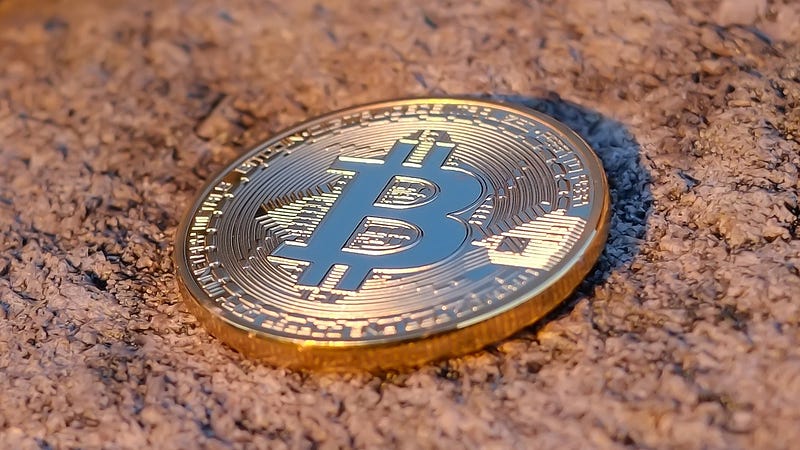
That is, until now. Bitcoin was created as a direct result of the last economic crisis for a number of reasons, one of them being a ‘hedge’ against the entire traditional banking system. You see, Bitcoin sits outside of, and is entirely unaffected by, any decisions made by any governments or individuals concerning fiscal policy.
It’s fine to print more dollars if you need them, just understand that Bitcoin will not be matching production, or, actually, changing it at all. In fact, next month, Bitcoin’s inflation rate actually drops by 50% at the exact same time all other currencies will see an increase in theirs. True, that was a happy accident, but it’s still a fact. The gap between legacy currency and new digital currency will widen by the day at an ever-faster rate, mathematically speaking.
In fact, it doesn’t matter what you do or say, Bitcoin will keep happily whirring away in the background, processing blocks of transactions every ten minutes, utterly secure and completely out the hands of human meddlers. We know exactly how many Bitcoin will exist at any point in time and we know there will never be more than 21,000,000 to share between every person on the planet.
Actually, it’s even less than that because around 4 million are lost forever due to carelessness in the early days when they were worthless and it will take another 120 years to mine the last 3 million in its entirety. There’s really not very much to go around. Bitcoin is, by design, the scarcest, safest, most versatile medium of exchange and store of value on the planet.
Put it this way. See that $1 bill in your pocket? Well, the Fed just effectively made six TRILLION more of them so your % ownership of the entire stock just plummeted. If you have one Bitcoin, then you own one out of 21,000,000. Now and forever.
You could argue there are other assets on the planet that do a similar job, and some people do, quite vocally at times. Gold is an often-quoted example, and while as an economist I certainly agree that gold is an important asset, I would point out that it is not easily accessible to the common man. If it was, we’d all buy it as soon as we needed a hedge against whatever crisis is unfolding.
Institutions buy gold, individuals, as a rule, don’t.
But what if it was available to buy in any denomination with the swipe of a finger on a mobile phone app, available 24/7? How would that affect people’s behaviour faced with rapidly falling purchasing power and the erosion of their wealth? Is it possible more people would buy it then, ignoring, for a moment, the obvious logistical problems of making that happen?
Of course, that functionality already exists with Bitcoin. You could do it right now — literally this minute — from your device using any dollar amount you wish. You could transfer part of your wealth from the old financial system you know and love (or at least tolerate) and back again any time, as easily as exchanging two currencies with online banking.
In other words, you can jump between two entire financial ecosystems, the old and the new, in real-time, whenever it suits you. This is something that has never been available at any time before in history and certainly not in a global financial crisis. We are now in uncharted territory.
That’s quite a thought.
The takeaway
No-one is saying that bitcoin should replace the entire current financial system (well, there are a few, but I don’t think it’s likely or desirable for a whole lot of reasons), but it gives a hard, real alternative that is available to the average man, here and now, that can work alongside it.
Opponents will argue that Bitcoin’s main limitation right now is the speed in terms of day to day spending, but this is not what I’m referring to here. It’s possible in the future that the almost mythical Lightning Network will come online and solve that problem for us, but for me, that’s never been a downside of using it anyway. It’s certainly a hell of a lot easier and quicker than trying to transfer gold, that’s for sure.
No, this is simply about the preservation of wealth. But it’s also the preservation of wealth that can’t be devalued by someone else, corrupted, seized or even prevented from being moved between countries if necessary. It’s the preservation of wealth that is 100% in your control, something that has also never happened at any time in human history prior to now.
In a time where stock markets seem to be heading ever higher despite record job losses and corporations admitting they are all but bankrupt, buoyed, presumably, by trillions of dollars of new money that we know can’t last forever, it’s somehow reassuring to know there is a quiet, steady alternative available at our fingertips 24/7 if we want it.
Personally, I find that incredibly reassuring.
And I rather suspect I’m not the only one.
If you enjoy reading stories like these and want to support me as a writer, consider signing up to become a Medium member. It’s $5 a month, giving you unlimited access to stories on Medium. If you sign up using my link, I’ll earn a small commission.
Want free access to articles, analysis, podcasts and training webinars? Why not subscribe to the ‘Bitcoin and Global Finance’ newsletter? Subscribers over 18, resident in Europe (see list on subscription page) & new to Bitcoin can claim £10’s worth of Bitcoin on joining! Unsubscribe at any time.
Disclosure: The author of this opinion piece has been heavily involved with Bitcoin for several years and holds a substantial portfolio, including Bitcoin. He also has a mining operation running the SHA 256 algorithm based in Siberia and is a published author on the subject of promoting the understanding of cryptocurrency.
Disclaimer: Investing in any asset class is risky. The above should not be taken as financial advice, nor construed as so. Always do your own research before investing or consult with a professional financial planner.


