
As Intelligence Increases — Speech Decreases:
Of all the religions of the world — there is one religion that sanctified the role of the intellect. There is so much in our Islamic tradition that honors and elevates the role of the intellect in human affairs.
The true nature of piety is not ignorance or obliviousness, but a Fully engaged intellect that is disciplined in the path of God, wrestles with the challenges that thinking poses to human beings, and employs the gifts of the intellect in a relationship with God.
The intellect is the gift that God gave to Adam — The intellect is the very reason God commanded angels and jinn to bow before human beings in the story of creation. It is the intellect that makes human beings the inheritors of God on earth.
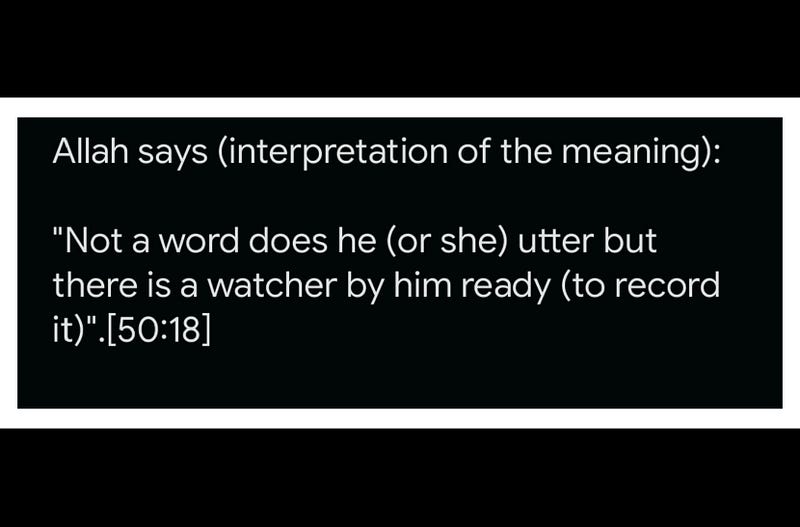
Al-Bukhari and Muslim narrated From Abu Hurayrah (May Allah be pleased with him) that the Messenger of Allah (saw) said: “Whoever Believes in Allah and the Last Day, let him speak good or else keep silent …”
Al-Nawawi (May Allah have mercy on him) said: “If he wants to speak, then if what he wants to say is good and he is confident that he will be rewarded for it, whether it is obligatory or praiseworthy, then let him speak, but if it does not seem to him that it is good and he will be rewarded For it, then let him refrain From speaking, whether he thinks it is haram (impermissible) or makrooh (disliked) or permissible.
Based on this — it is recommended to refrain From saying permissible words and we are enjoined to avoid this, lest it lead us into something that is haram or makrooh, which is what happens in many cases or in most cases.
Al-Imam al-Shafi’i understood the Hadeeth (narration) to mean that — if a person wants to say something, he should think about it: if it seems to him that it will not do any harm, then he should speak, but if he thinks that it will do some harm or he thinks that this is most likely, then he should refrain From speaking.”
The Prophet (saw) commanded us to control our tongues in more than one Hadeeth, such as that narrated by al-Tirmidhi from ‘Uqbah ibn ‘Amir (May Allah be pleased with him) who said: “I said, ‘O Messenger of Allah, what is salvation?’ He said, ‘Control your tongue, keep to your house and weep over your sin.’” (Classed as saheeh (authentic) by al-Albani).
Al-Tirmidhi also narrated that the Prophet (saw) said to Mu’adh (May Allah be pleased with him), after teaching him some of the laws of Islam, “Shall I not tell you what is the Foundation of all that?” I [Mu’adh] said: “Of course, O Prophet of Allah.” He took hold of his tongue and said, “Control this.”
I said, “O Prophet of Allah, will we be held responsible For what we say with it?” He said, “May your mother be bereft of you, O Mu’adh! Will the people be thrown into Hell on their Faces or on their noses For anything other than the harvest of their tongues?” (Classed as saheeh by al-Albani).
So the Muslim has to submit to Allah in all His affairs, and know that whatever happens to him could never have missed him, and what misses him could never have happened to him.
So,the point is that — the more knowledge a person gets, the more careful he becomes in every matter and avoids useless talk and useless gatherings.
May Allah(swt) make us live according to His Commandments.(Ameen).
JazakAllah (May Allah Reward You [with] Goodness)For Reading.
https://sanahawan.medium.com/subscribe
Kindly Follow & subscribe to receive the latest insightful stories by email.