As If! “Clueless” Turns 25
Last Sunday marked a quarter century since the theatrical release of one of the greatest teen films ever made — Amy Heckerling’s Clueless. I revisited the film in honor of its anniversary and was impressed by how well it holds up. Few movies succeed as well as Clueless at being both a time capsule and utterly timeless.
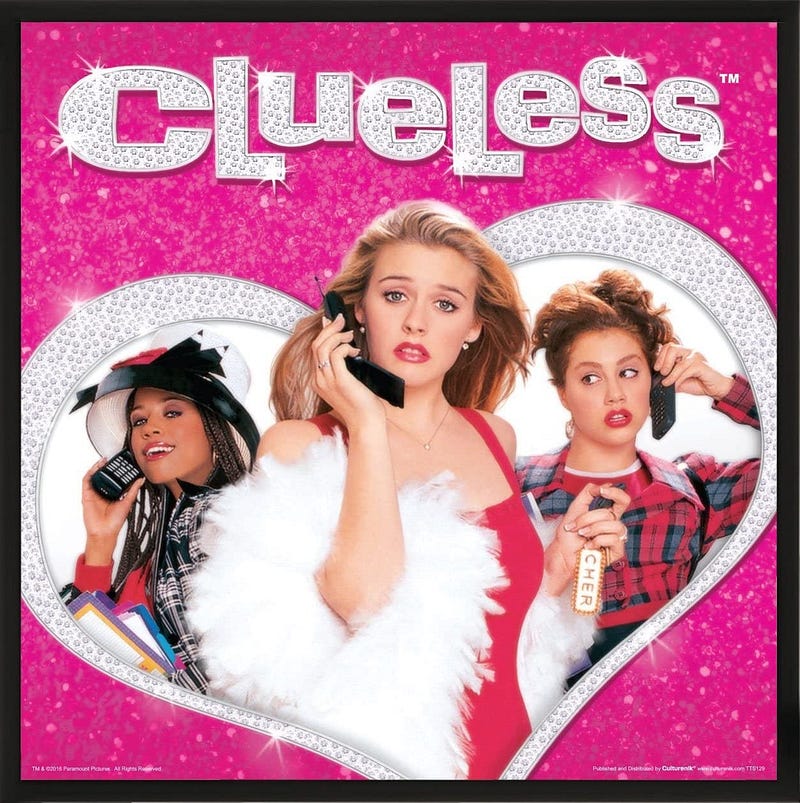
When someone says that any piece of art is “so ’90s,” it is typically an insult. It implies that the film, television show, song, album, or book has aged like a carton of milk instead of a bottle of fine wine. That which may have seemed fresh and relevant at the time now feels dated, stale, and perhaps cringe-inducingly irrelevant.
But when I say that Clueless is “so ’90s,” I mean it as a compliment. A major compliment. The film captures the essence of 1995 perfectly — the social themes, the pop culture phenomenons, the technology, the fashion trends, the music. But it is also as watchable, relatable, hilarious, and moving today as it was on its opening day 25 year s ago — July 19, 1995.
How can a movie (or any piece of art for that matter) be simultaneously so much of its time and also utterly timeless?
What Makes Clueless a Great Film?
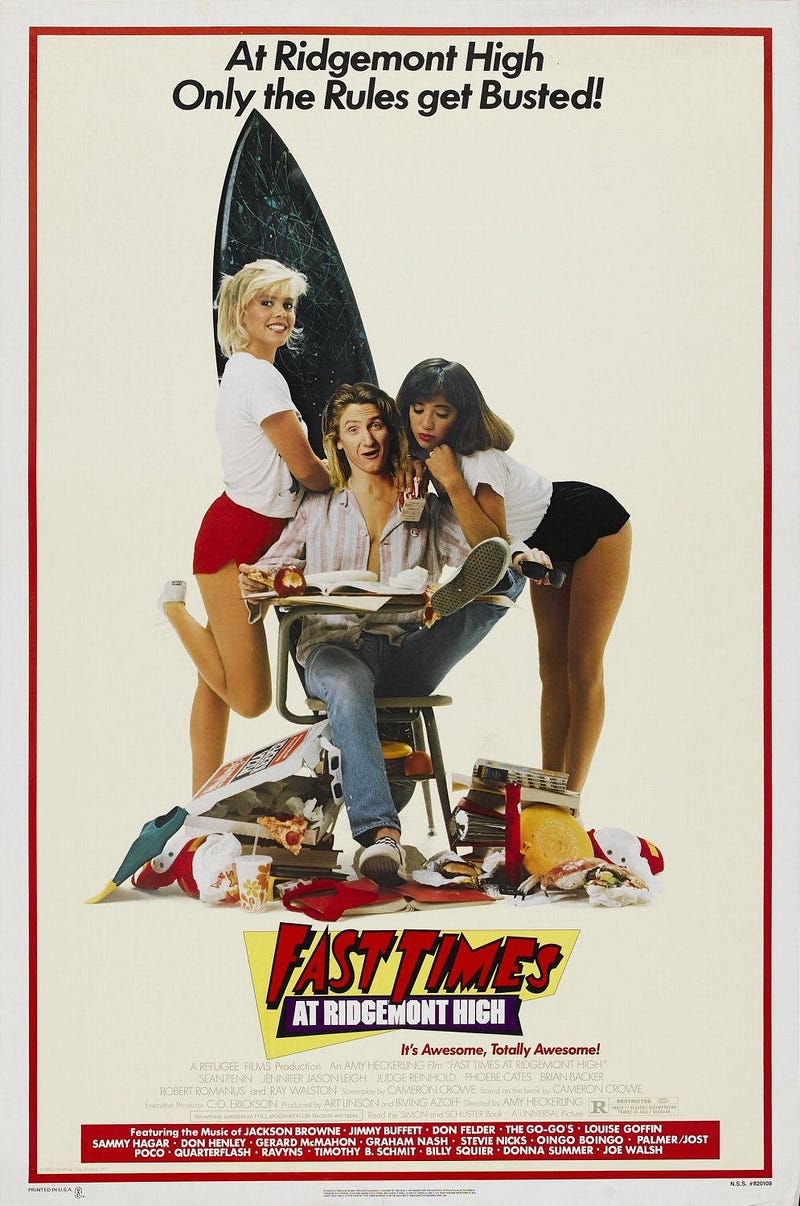
Amy Heckerling, the writer and director of Clueless, had broken out in a big way thirteen years prior to the release of Clueless when her feature film debut Fast Times at Ridgemont High was released. Also set in a California high school, the film was based on the investigative journalism of Cameron Crowe (who would go on to write and direct classics like Say Anything…, Jerry Maguire, and Almost Famous). Crowe had gone undercover as a high school student for Rolling Stone and the subsequent article formed the basis of the big screen phenomenon. Fast Times was a modest but profitable box office hit that was more notable for how it endured in popular culture. The film was included on the American Film Institute’s list of the 100 best American comedy films, ranked by Entertainment Weekly as the second best high school film of all time, and selected for preservation by the National Film Registry in 2005. It also launched the careers of Jennifer Jason Leigh, Judge Reinhold, Phoebe Cates, Eric Stoltz, and three men who would go on to win the Best Actor Oscar — Sean Penn, Forest Whitaker, and Nicolas Cage.
Heckerling had some solid successes in the intervening 13 years, most notably the 1989 comedy Look Who’s Talking, which was headlined by John Travolta, Kirstie Alley, and Bruce Willis (as the titular talking baby). Although the film was more tepidly received by critics than Fast Times, it was an utterly enormous box office success. The film grossed $140 million in the US alone at the time of its release (equivalent to $326 million today).
In many ways, Clueless was a return to what worked for Heckerling with Fast Times. It was a high school comedy set in a California high school that was based on some investigative work of her own — she sat in on classes at Beverly Hills High School when writing the screenplay. But Heckerling opted to do something different, and utterly ingenious, with Clueless. She opted to create a contemporary high school comedy that updated the 1815 Jane Austen literary masterpiece Emma. How was a 180-year-old British literary romance relevant to the exploits of contemporary wealthy teenagers in America? Most would assume it wasn’t, but Heckerling saw a special connection.
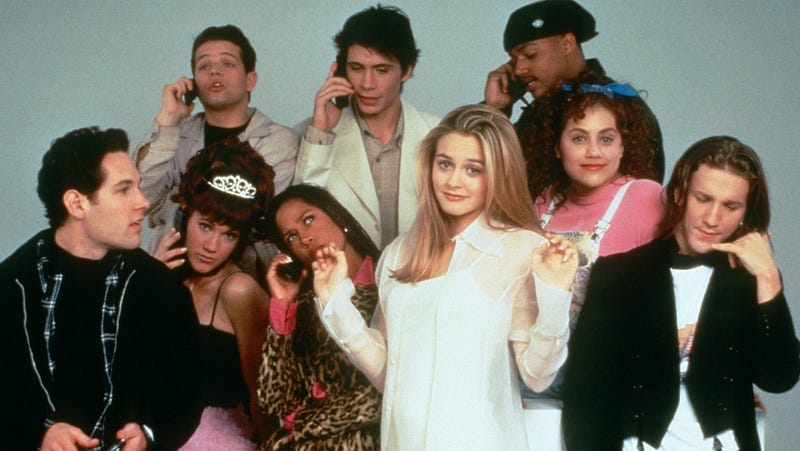
The resultant film focuses on Cher Horowitz (Alicia Silverstone), a fashion-conscious Beverly Hills teenager who spends her days navigating the complex social world of her tremendously upscale high school and her evenings tending to the needs of her domineering, hot-tempered, litigator father Mel (Dan Hedaya). Her social network is predominantly focused on her best friend Dionne (Stacey Dash), who is in a committed but conflictual relationship with her boyfriend Murray (Donald Faison). Cher and Dionne were “both named after great singers of the past who now do infomercials,” which remains my favorite line in the film.
Cher’s world is thrown into utter chaos by the presence of three people. First is Josh (Paul Rudd), her stepbrother from a recent, brief marriage by her father. Josh is a progressive, intellectual freshman at UCLA whose disdain for Cher’s vapidness drives her crazy. The second is Tai (Brittany Murphy), the awkward new girl at school that Cher decides to take on as a “project,” in part to show Josh that she cares about the less fortunate. And the third is Christian (Justin Walker), a new arrival at the school who seems to be the first “high school boy” who meets Cher’s lofty standards for a potential boyfriend.
The hilarious, heartfelt, and surprisingly complex screenplay (which was richly deserving of an Oscar nomination for Best Adapted Screenplay, but failed to secure one) juggles multiple plot arcs over the course of its brief 97 minute run time. Cher falls out and then reunites with her friends, she unknowingly falls in love with a gay man, she has an utterly disastrous night at a house party in the Valley, she fixes up two lonely teachers (Wallace Shawn and Twink Caplan) for reasons both selfish and selfless, and she ultimately discovers her true self and her true love.
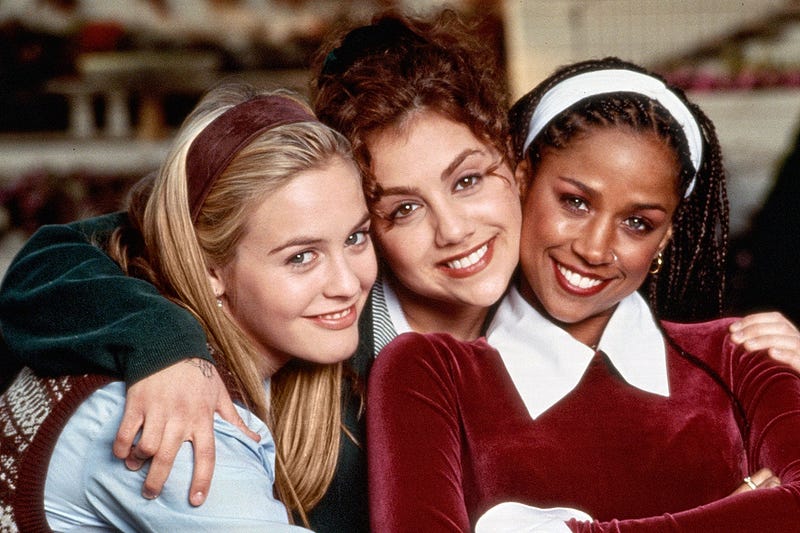
Alicia Silverstone is utter perfection as Cher. She is whiny and shallow on the surface, but never for a moment are you surprised when depth, complexity, warmth, and passion seep through the carefully cultivated exterior. Silverstone nails every line delivery, both comic and dramatic, and rarely has a role ever been so perfectly cast from an aesthetic perspective. This film should have launched her into the stratosphere, but unfortunately Silverstone never found another role nearly as good, despite continuing to work steadily for decades. The supporting cast is uniformly phenomenal, with particularly high marks going to Dash, Murphy, Hedaya, and Rudd. Perhaps unexpectedly, Paul Rudd became the film’s biggest breakout success. At first an antagonist and later a love interest for Cher, Rudd is almost impossibly charming. In hindsight, his rise to the top doesn’t seem so unexpected.
In addition to being expertly written, terrifically cast, and well-paced, the film is a feast for the eyes and ears. The superb art direction and costume design make it one of the most visually impressive contemporary teen films ever made and the superbly curated soundtrack perfectly captures the mood of the 1990s.
So, yes, Clueless is a great film. But many great films don’t age particularly well, especially when one of their primary goals is to capture the essence of a specific place and time. So…
What Makes Clueless an Enduring Film?
Sure, part of the fun of revisiting Clueless for many people is nostalgia. People like me who were budding teenagers at the time of its release can’t help but feel transported to their youth by turning on the film. But it’s far more than nostalgia that makes a contemporary viewing of Clueless work, as evidenced by the fact that it continues to be appreciated by older generations and discovered by newer ones. It’s also not the spinoff television series (which aired from 1996–1999) or the off-Broadway musical adaptation (which had a brief run from 2018–2019) that make it enduring. Both were modestly successful (at best) and didn’t particularly bolster or tarnish the film’s reputation.
I believe that what makes Clueless an enduring film is ultimately its timeless and brilliant screenplay. Perhaps it was Heckerling’s wry and insightful observations during her undercover work at Beverly Hills High School that allowed her to go beneath the surface and see what made contemporary teens tick. Perhaps it was her decision to use a nearly two centuries old piece of literature as her source material, which provided her the foundation of universal themes and character dynamics on which to build her story. Perhaps it was just Heckerling’s raw talent as a screenwriter reaching its pinnacle. Whatever the reason, the screenplay is a thing of beauty.
In addition to featuring sharp, often hilarious dialogue and numerous poignant interactions, the screenplay also features a quietly profound character arc for Cher. She is in some ways a singular creation in the sub-genre of teen comedies. Sure, she is a shallow, sheltered, fashionista who has a tendency to whine to get her way and is completely clueless about the privilege she is blessed with. But she is also loving and generous (she is genuinely tender in her interactions with Mel, Dionne, and Tai), open-minded and values-driven (her distaste for others is typically driven by their bad behavior not their lower status), and yearning to be better.
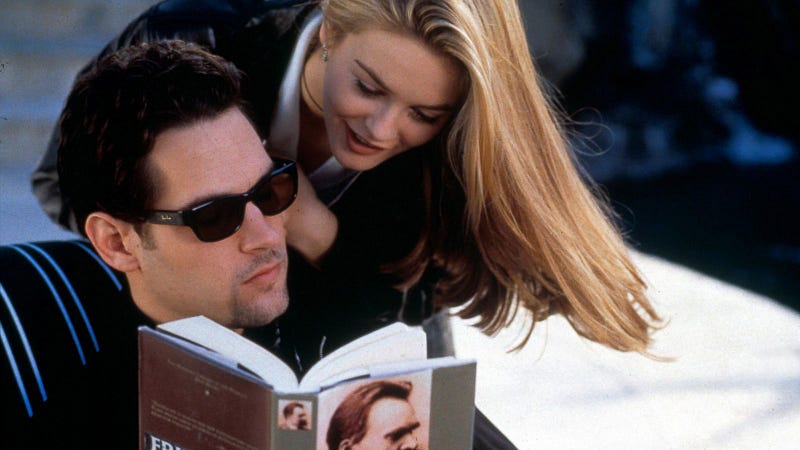
There is a beautiful montage toward the end of the film in which we see Cher’s journey to growing up and growing into being a better person. She spearheads the Pismo Beach Disaster Relief Fund (by donating skis and caviar, of course). She humbly reconciles with several people in her life. And, perhaps most notably, she deeply reflects on what it is that makes the people that populate her life special and unique. The most cynical among us could see the film’s ending as a cliche in which a girl changes herself to win over a guy she likes. But I am a firm believer that Cher comes to the realization that her growing love for Josh is not simply because he was cute, older, and teases her, but rather that he pushed her to become a better person. And she found the possibility of a deeper and more meaningful existence intoxicating. (Admittedly, the age difference between Cher and Josh is somewhat troubling, especially in the #MeToo era. But this was standard practice in movies and TV shows for several decades and is a large issue that stretches far beyond Clueless.)
Heckerling seems to have been acutely aware of the tension between being of the time and being timeless with several decisions that she made. With the exception of some references to Beavis and Butthead and Ren and Stimpy, the film features few references that feel curious and stale by today’s standards. She also made the smart decision to develop much of her own vernacular rather than use contemporary slang that would undoubtedly age poorly. And the other subjects that dominate the movie, like premarital sex, drug and alcohol use, academic performance, cliques, and economic disparities clearly remain relevant today.
Fascinatingly, had the screenplay for Clueless managed to break its way in to the Best Adapted Screenplay Oscar race, it would have inevitably lost to an adaptation of the novel Jane Austen released a few years before Emma. In sharp contrast to Clueless, director Ang Lee and writer Emma Thompson’s adaptation of Austen’s 1811 masterwork Sense and Sensibility is a straightforward take on the novel set in early 19th century Britain. There is no question that Emma Thompson was a richly deserving winner in the category (she became the first woman to win Oscars for both acting and writing), but in many ways Heckerling’s film did far more creative work with its source material and created something even more entertaining and enduring.
Follow the author of this article on Medium and Twitter.
Read relevant articles by this author:
Love, Victor: A Precious Pride Month Gift