
As an American, Traveling Europe is Not What I Expected
And that’s what makes it amazing
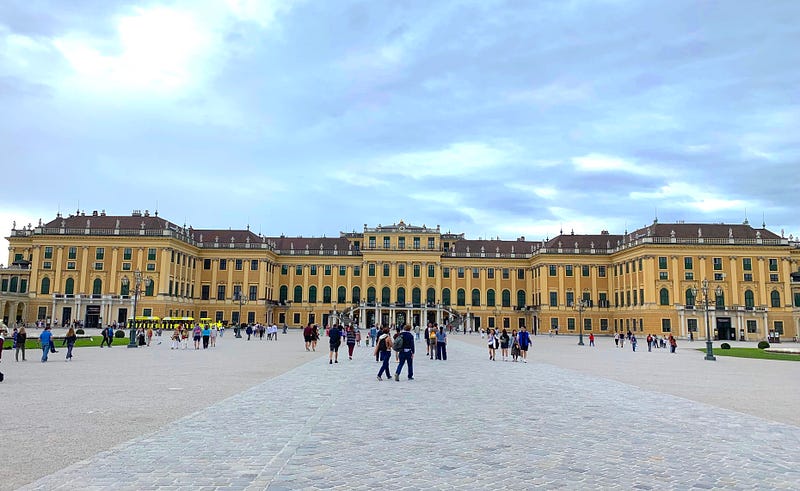
I romanticized Europe for several years.
Browsing news headlines, I thought Europe was a paradise compared to life in the United States. With better work-life balance, walkable cities, and rich culture, I was so excited to move there. But, after living in mainland Europe for several months, I’ve realized the American idea of Europe isn’t what I expected. And, there are a lot of misconceptions about the continent.
Here are a few examples:
European cities are all the same
When I tell people abroad I’m from the United States, I’m often met with a mixed reaction. For example, I’ve been asked about politics, gun safety, and an in-depth analysis of Joe Biden. They’ll also ask me about cowboy culture, celebrity encounters, or New York City subway rats. During these conversations, I’m often surprised at how people abroad view the U.S..
Even though many of the things they mention are part of life in the U.S., they’re completely separate from my life in Boston, Massachusetts. But, these misconceptions make sense. The U.S. is huge and made up of 50 states. My life in New England is in many ways unrecognizable from Texas or California. Even within the same country, the weather, culture, and norms are completely different from state to state.
The same happens in Europe. People make generalizations about the continent because many of the countries are small and closely connected. But, in fact, Europe, is a diverse continent with different cultures, cuisines, and languages.
For example, I took a bus from Vienna to Prague. Even though Austria and Czechia border each other, the language, food, and people are completely different.
European cities have some similarities, but the continent isn’t a monolith.
Everything is old and historic
Many of the benches and buildings in Europe are older than the United States. It’s jaw-dropping being surrounded by so much history. But, Europe isn’t just a place stuck in its past.
The first time I traveled to Austria and saw a skyscraper, I was surprised. I hadn’t expected it amongst all of the historic buildings and cobblestone streets. After all, I hardly ever saw these new buildings on tourist brochures or photos posted by travel influencers on Instagram.
I realized not everything in Europe is built for tourists. Obviously, the ‘old towns’ of the cities are historic and beautiful. But, many European cities also have skyscrapers and modern-looking buildings as well. That’s because these cities are living and existing in the modern age too.
‘Europe’ is just western Europe
When I was little, I dreamed of visiting the Eiffel Tower. I would watch movies set in Paris and was awe-struck by the French culture. I took French lessons in school because I couldn’t wait to travel and order a croissant in a café like a local.
I remember talking to friends in high school about one day traveling to Europe. We daydreamed about walking down a street in Rome or biking along a canal in Amsterdam.
According to Forbes, London, Paris, and Rome are among the most popular European destinations for tourists. They’re also some of the most expensive. It seems many Americans forget about an entire half of Europe when they plan their vacations.
When I was traveling around Central and Eastern Europe this summer, I talked to one of my American friends about my excitement for the trip. She was surprised when I mentioned visiting Bratislava, Slovakia, as she’d never considered going there.
Europe is a lot more than just a few big touristy cities in western Europe. There are many interesting travel destinations in Eastern Europe too.
All Europeans speak English
“There’s no point learning the language because everyone speaks English!”
I’ve unfortunately overheard many Americans say this. But, after traveling around Europe for several months, I completely disagree.
Firstly, not everyone speaks English. While many Europeans learn English, there are plenty of people who don’t. Assuming everyone speaks English (and being annoyed when they do not) is rude and entitled.
Secondly, learning the native language allowed me to fully immerse myself in my travels. I got a deeper understanding of the history and culture of the place I was visiting.
When I traveled to Austria, I only knew a few words and phrases. But, I practiced my German every day while living in Vienna. After a few weeks, I could confidently order my favorite street food, Käsekrainer, in German with ease.
I was also able to talk to locals and form a connection with them. I wouldn’t have had these interesting conversations if I had solely spoken English. Learning some German helped me show a level of respect and kindness to the country and people. After all, I was the visitor in their city, and grateful to be there.
There’s no point traveling off the beaten path
When I told my friend I was visiting Graz, she asked, “Where’s that?” She had never heard of the city, much less knew where it was on the map. That’s because even though Graz is the second-largest city in Austria, it’s not on a lot of tourists’ radar.
A lot of people want to travel to Europe for some sightseeing and there’s nothing wrong with wanting to visit a well-known place. After all, who wouldn’t want to go to the canals in Venice or see the Eiffel Tower in Paris?
Some people, however, assume that there is no point in visiting small towns and cities off the beaten path. And yet, these are some of my favorite places I’ve traveled to. Not only are there often fewer crowds, but I’m also able to discover beautiful hidden gems I never would have visited otherwise.
If you liked this article, you can sign up for free emails whenever I publish something new. You’ll get all my book recommendations, travel stories, and ramblings in one place.


