
As America Goes to the Polls, Britain Watches On
On election day, the future of the special relationship is also at stake.
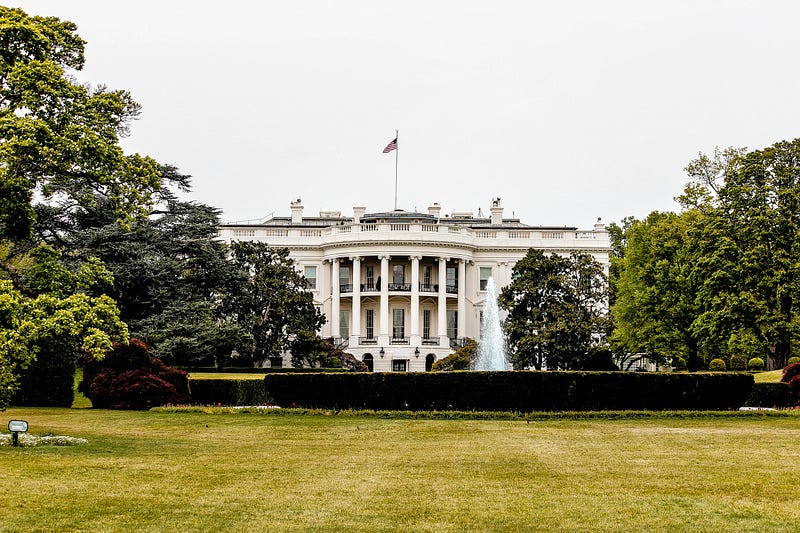
For Britain, the US-UK relationship has long remained a crucial element of its foreign policy, regardless of who controlled the White House. Dubbed the ‘special relationship’, both countries have cooperated closely in global affairs throughout the 20th and 21st centuries — most notably in two world wars and through their membership of the North Atlantic Treaty Organisation (NATO). The two nations have close economic, cultural and political ties, alongside a shared set of foreign policy and nation security concerns.
Every president has left their own mark on the special relationship, and Donald Trump is no different. From Brexit to China, President Trump has on repeated occasions found himself at odds with Britain — with the president’s combative rhetoric and unconventional style leaving the special relationship looking increasingly strained. Recent research by the Pew Research Center found that the US approval rating in Britain has fallen to a low of 41%, with only 19% of Brits reportedly having confidence in the Trump administration.
With America going to the polls, both Donald Trump and Joe Biden offer very different visions for the future — and for US-UK relations. As London observes the election from a distance, the future of the special relationship could also hang in the balance.
The Trump Show
The special relationship under President Trump can be characterized by one word — uncertainty. Britain is not the only traditional US ally that Trump has clashed with over the last four years, with the president repeatedly criticizing America’s European partners and NATO over issues such as defense spending. And despite their historic ties, US-UK relations have also had their share of disputes during Trump’s tenure.
President Trump was critical of Prime Minister Theresa May’s handling of the Brexit negotiations back in 2019, saying that he was surprised by “how badly” talks had gone. Trump admonished May as having failed to listen to his advice at the time, and said that “I think it could have been negotiated in a different manner, frankly. I hate to see everything being ripped apart now.” The president has continually displayed his displeasure with how the UK has conducted Brexit talks, and Mr Trump has not hesitated to wade into the Brexit debate throughout the years.
Brexit has not been the only point of contention over the past four years. Just last year, Britain’s GCHQ was forced to dismiss claims by president Trump that the UK intelligence agency had spied on the president’s campaign — calling the accusations “utterly ridiculous”. Trump had also clashed with Prime Minister Boris Johnson over Huawei’s involvement in Britain’s 5G network — with the White House at one point considering cutting intelligence sharing ties with the UK, until abandoning the threat.
More broadly, Trump’s ‘America First’ policy has also seen Washington deviate from London on a number of key global geopolitical challenges. Trump’s decision to pull the US out of the Paris Climate Agreement certainly did not go down well in Westminster, and his decision to abandon the Iran nuclear deal has also proved unpopular.
However, it would be a mistake to see president Trump as a complete adversary for Britain, and in particular for Boris Johnson’s post-Brexit agenda. The president has long been a keen support of Brexit — at one point describing himself as “Mr. Brexit” — and has often touted the “phenomenal” benefits of a potential US-UK trade deal.
Despite trade talks being delayed until after the election, Trump’s rhetoric has often sounded hopeful for Boris Johnson’s global Britain vision — with Britain’s Conservative Party increasingly seeing its ability to pivot the UK away from the EU as being helped by a Trump presidency.
Post-election Shift?
If the Trump administration’s dealings with Britain have become synonymous with unpredictability, a victory for Joe Biden would certainly provide more stability to the special relationship. Biden is an establishment politician who would take a more diplomatic approach to international relations should he become president, returning the US to a more conventional style of engagement on the global stage.
Mr Biden has already pledged that he would rejoin the Paris Agreement and re-engage with Iran, both of which remain the preferred option for Britain. A potential Biden administration would likely take a less combative approach to China — but tensions surrounding China’s geopolitical ambitions would likely remain.
Biden’s stance on NATO would also prove favorable to Britain, with the former vice president likely to reaffirm Washington’s commitment to the alliance. As one diplomat told Reuters last month, “Most allies want a Biden victory next month, but they would obviously work with a reelected Trump administration” — and Britain is no exception to this.
Whilst a Biden victory may return US-UK relations to more traditional terms, a potential president Biden would still present a number of challenges to the UK. In terms of Brexit, Joe Biden has remained a consistent critic of Britain’s decision to leave the European Union. Back in 2018, he said “had I been a member of Parliament, had I been a British citizen, I would have voted against leaving” and stated that US-UK relations would diminish “with Great Britain not an integral part of Europe”.
Democrats have long viewed the Brexit movement with scorn, and have threatened to block any US-UK trade deal if Brexit risked peace in Northern Ireland. Given that the UK would likely have less influence on the global stage outside of the EU, some have speculated that a Biden administration would look to boost relations with EU member states such as France and Germany.
The Not So Special Relationship?
As Americans decide their next president, the two candidates offer very different views on America’s geopolitical role. For the UK, a Trump victory would see a continuation of the abrasive and unpredictable diplomacy of the last four years. Alternatively, a Biden victory may see a return to something approaching normality, but the special relationship still faces a rocky road ahead.
Ultimately, Britain outside of the EU is a less valuable US ally than if it had remained within the bloc, and the upcoming US election will not change this reality. Despite Donald Trump’s enthusiasm for Brexit, the UK has little to show for his support — with a trade deal still looking like a distant prospect.
Regardless of the outcome of this election, both the US and the UK will still maintain close economic, cultural and political ties. However, given the UK’s awkward position on the global stage after Brexit, the special relationship between the two countries is rapidly becoming less important in Washington than it has been in previous decades.
No matter what, Britain will keep a keen eye on events across the Atlantic over the coming days, with its many of its future trade and national security interests tied to the outcome of this election. The question is whether Britain will face four more years of unpredictability under Trump, or a calmer but less receptive Biden administration. Both will leave their own mark on US-UK relations — and bring their own set of challenges.


