
As above, so below — Reflections on the Paris Catacombs
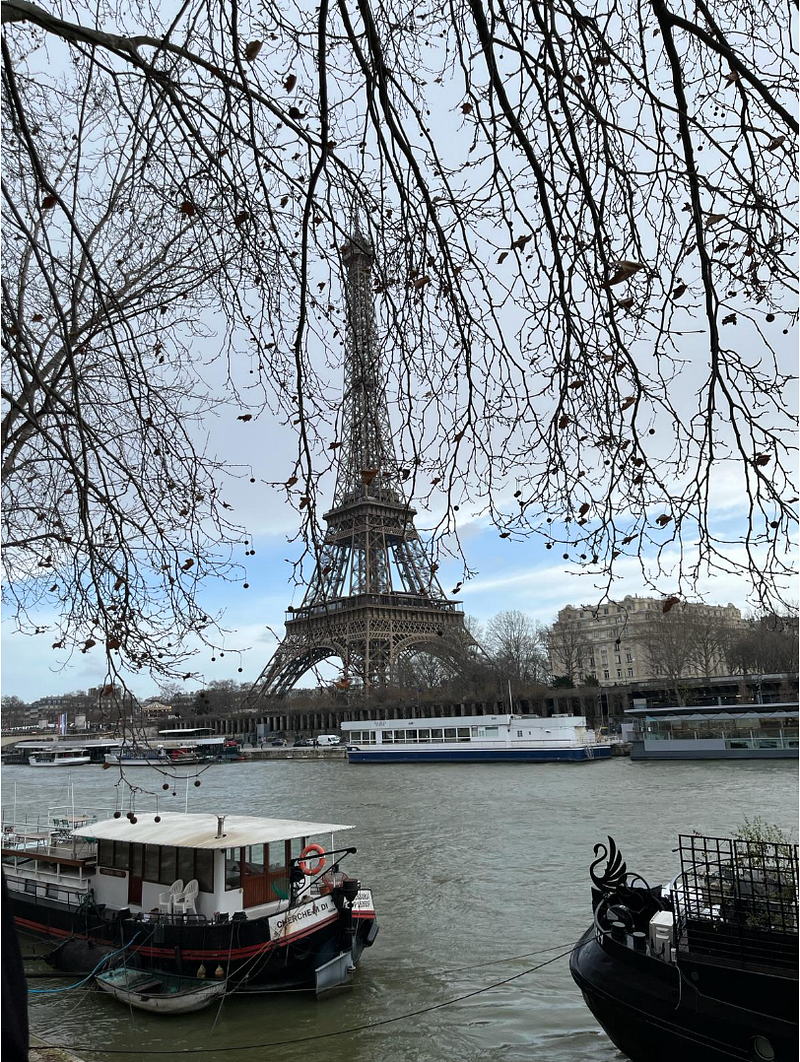
Paris, the quintessential city of romance and light, vibrant with the lives of over two million people, harbours a secret in its depths. Beneath the cobblestone streets and the majestic Eiffel Tower, the catacombs stretch — a silent, sombre underworld, home to the remains of around six to seven million individuals. Here, in this stark contrast, lies the heart of a profound paradox — the city that symbolises life and love also cradles an immense expanse of death below it.
The catacombs of Paris, a vast ossuary, hold a history as rich as it is morbid. Born out of necessity in the late 18th century, when the city’s cemeteries were perilously overcrowded, these underground quarries were repurposed to house the dead. Over the years, bones were exhumed from crowded graveyards like Les Innocents and meticulously arranged in the tunnels beneath the city. This network of tunnels, stretching over 200 miles, only a small portion of which is open to the public, became a macabre solution to a public health crisis. In these subterranean halls of the dead, history intermingles with the present, each skull and bone telling a silent story of the city’s past.
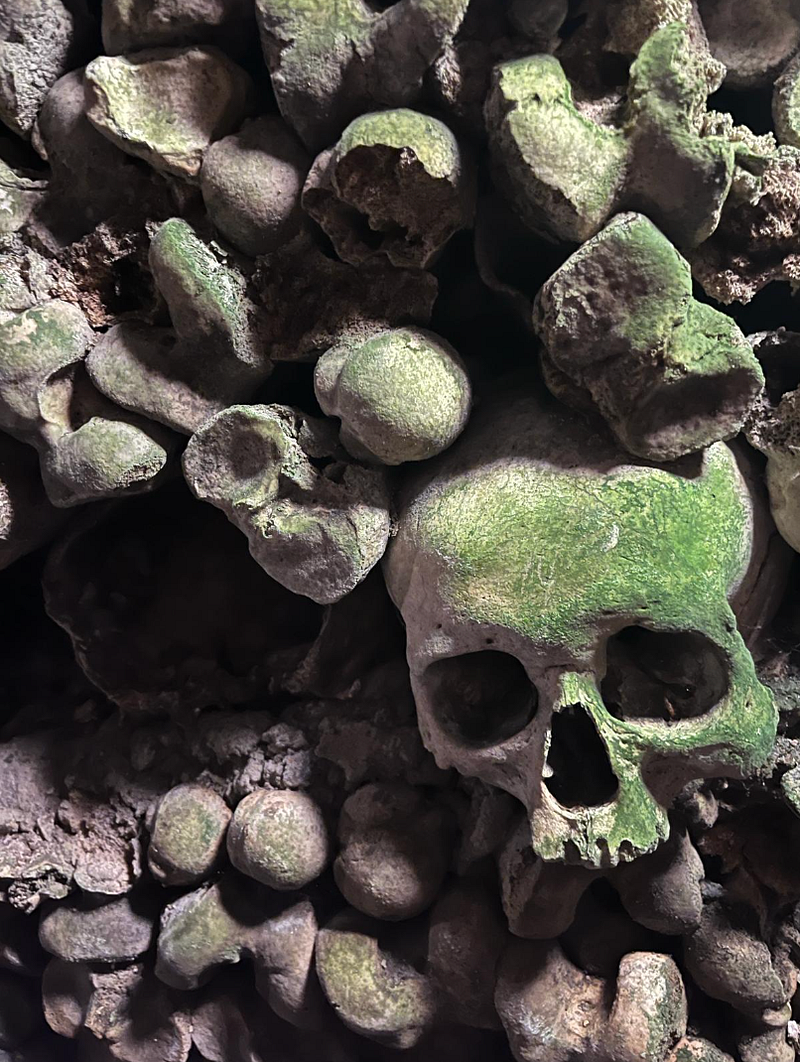
While I was visiting it, one question was always in the back of my head:
What is the meaning of life?
This age-old question, often contemplated in the quiet of the night or in moments of solitude, becomes a deafening echo in the catacombs. As I wander through this eerie labyrinth, the walls lined with the bones of the past, with different shapes, even a heart, I find myself wrestling with the existential dilemma of finitude. Some grapple with this question daily, which was the case for me, but more intense in this context, while others may confront it only in the twilight of their lives, after walking the well-trodden paths laid out by their culture.
Heidegger’s concept of angst becomes a tangible companion in the catacombs. It is not the fear of death that gnaws at my consciousness, but rather the existential angst of what it means to truly live. In this realm of eternal silence, Heidegger’s notion that we are ‘thrown into’ life, with no inherent meaning other than what we create, resonates with newfound clarity.
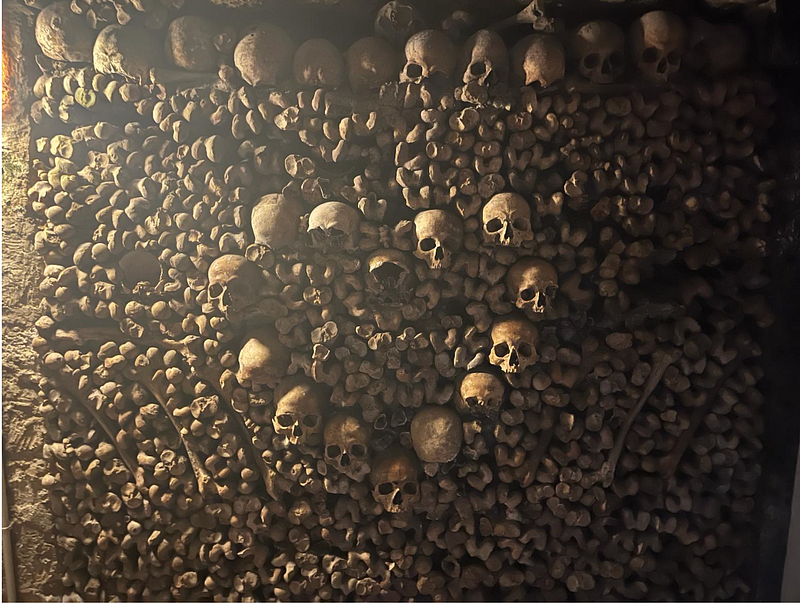
Seeing this heart shape created from skulls was strangely moving. It kind of brought out my inner teenage goth, and got me thinking about something a bit weird. Why don’t more people propose in the catacombs, just like they do in front of the Eiffel Tower? I mean, sure, the Eiffel Tower, this big, phallic symbol, might represent life and all its grandeur, but there’s something about the catacombs that hits deeper when you think about love and commitment.
Down here, surrounded by these silent reminders of our limited time, the whole idea of choosing a life partner takes on a new meaning. It’s not just about the romantic gestures or the glitzy photos. It’s about recognising how finite our lives are and deciding who you want to share that precious time with, who you want to build something real with.
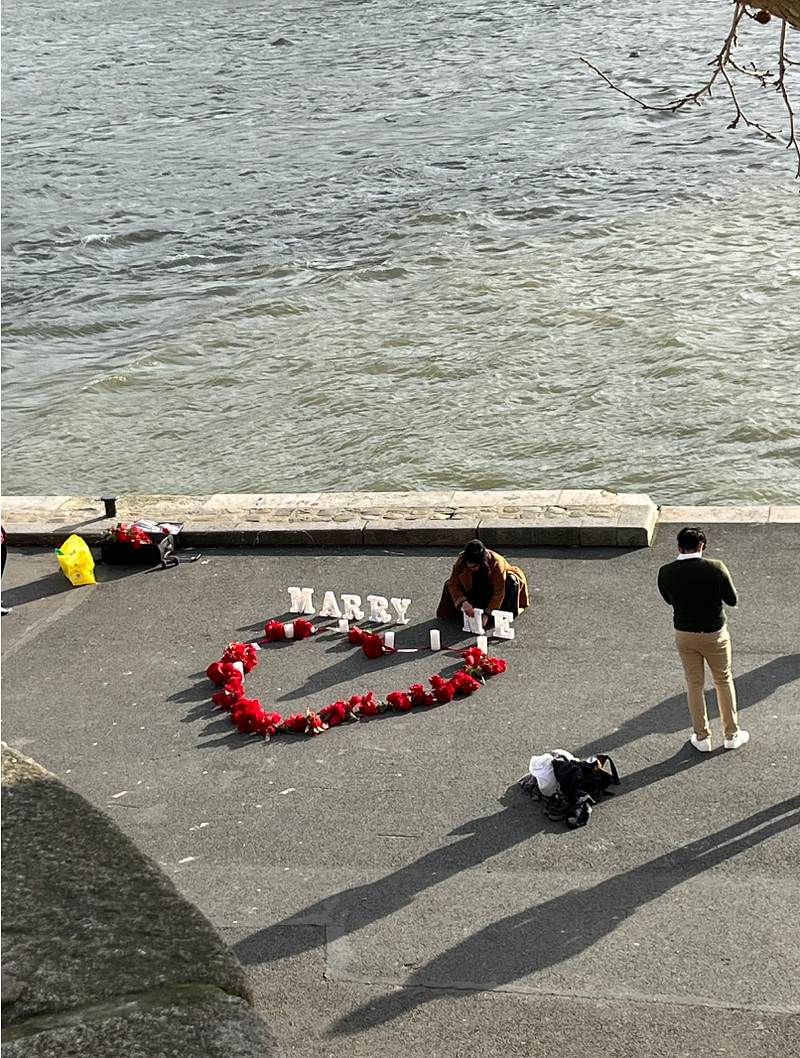
It’s kind of ironic, isn’t it? This heart made of skulls, in a way, captures the essence of love more profoundly than a traditional, lively symbol in my opinion, what do you think? It’s not just about the life you’re living now; it’s about acknowledging that this journey doesn’t go on forever and choosing to walk part of it with someone else. That’s a big deal, and maybe, just maybe, it’s a choice that should be celebrated in a place that reminds us of life’s fleeting nature, not just where it shines the brightest.
The quote from “Mr. Nobody” seems to echo through the bones around me, “As long as you don’t choose, everything remains possible.” But here, surrounded by the remnants of six million ended journeys, that illusion of limitless possibilities shatters. The catacombs bring a stark clarity to the concept of choice, urging you to make the best possible decisions while you can. The weight of freedom, the responsibility that comes with it, feels more tangible in this place.
Each skull, with its empty gaze fixed in eternal silence, seems to pose a question that resonates in the echoing tunnels: “What will you do with the time you have?” It’s a profound reminder that our choices are finite, just like our days. In the catacombs, every turn in the path, every bone that lies in rest, speaks to the inevitability of choice and the importance of living deliberately.
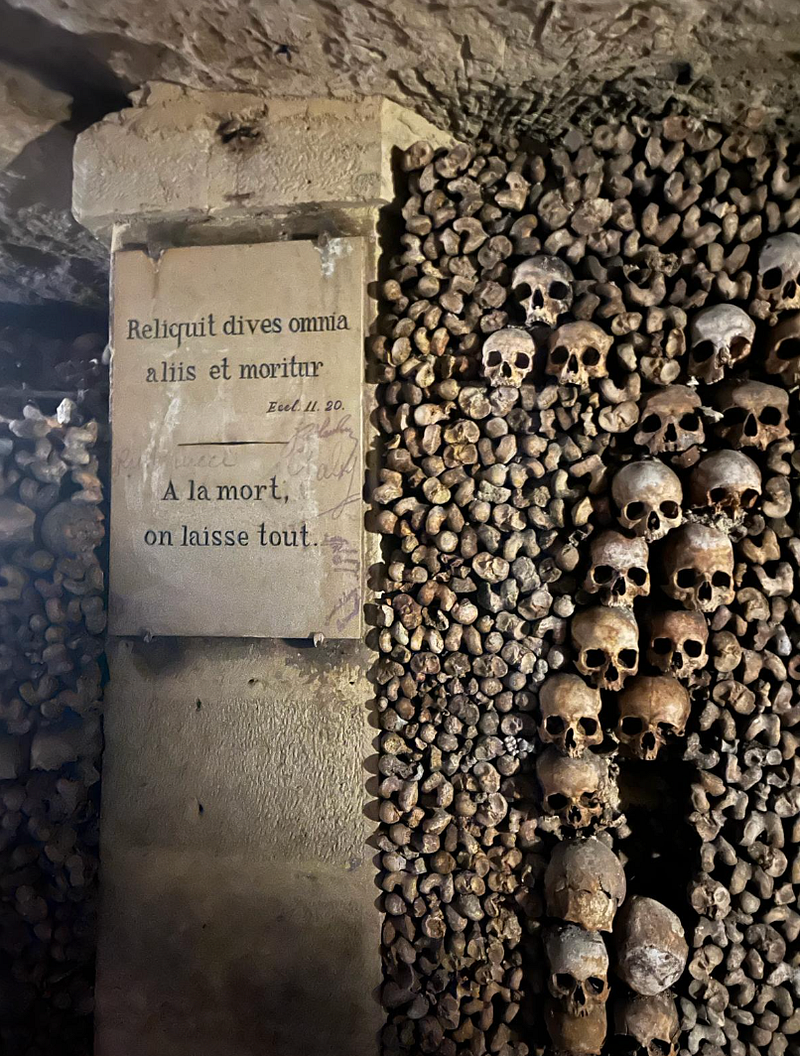
Emerging back into the light of Paris, the contrast is jarring. The city thrives with life, a marriage proposal in every corner, yet now I see it through a different lens. To celebrate life, one must first acknowledge and embrace the inevitability of death. The present moment holds a sacredness that is often overlooked.
How do we fill the existential void? Perhaps the answer lies in living authentically, embracing each second with the full awareness that it is finite. The lesson of the catacombs lingers — life, in all its fleeting beauty, is to be savoured, not because it lasts forever, but precisely because it does not.